How Shake Shack rewired its tech stack: Project Catalyst, Qu, and the road to 1,500 Shacks

Project Catalyst is Shake Shack's coordinated re-platform — Qu POS/KDS, the chain's first-ever loyalty layer, and AI analytics, all wired to a 1,500-unit target. It is McDonald's playbook at one one-hundredth the scale, and it's the most credible mid-size re-platform case study of the year.
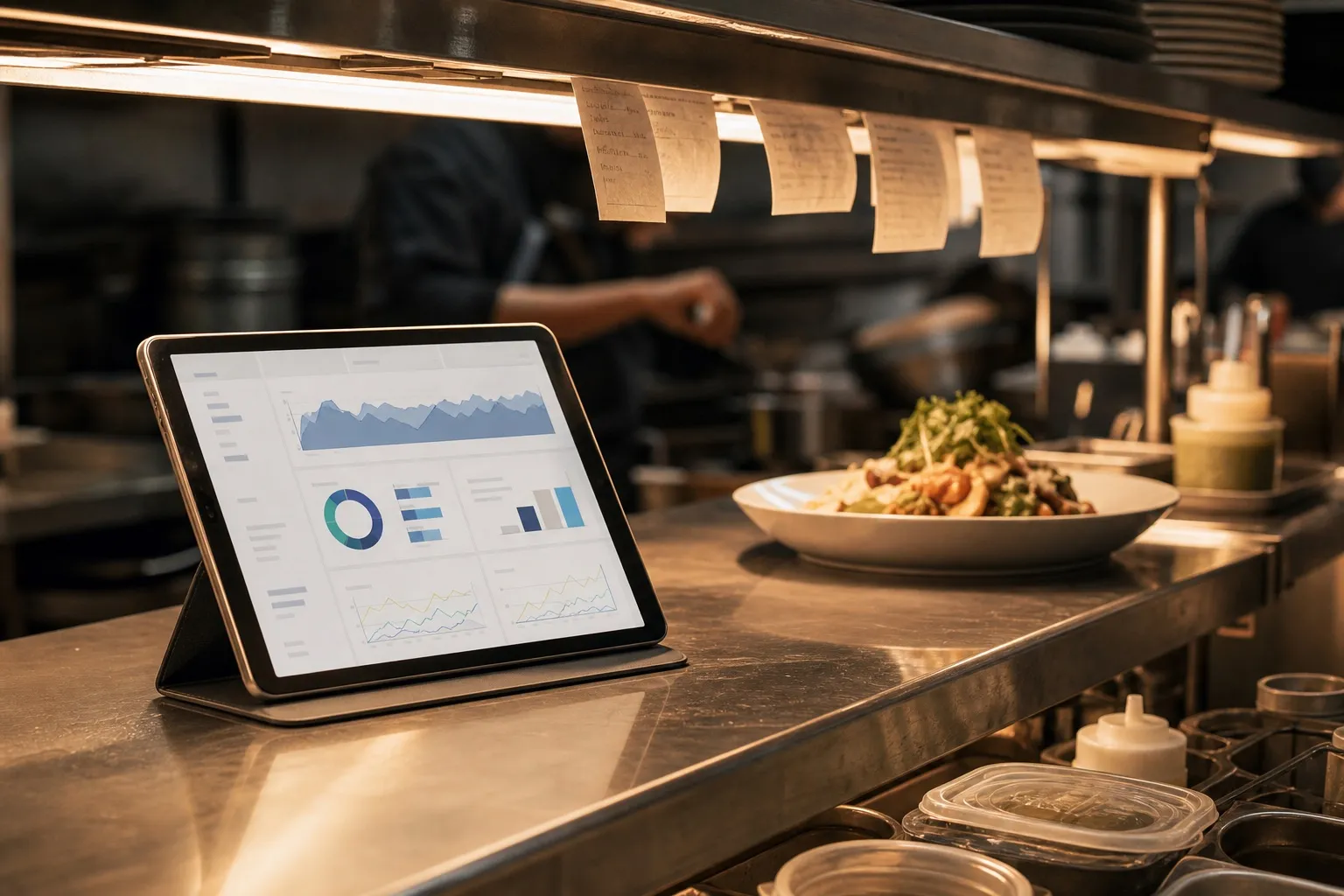
The line at the Bryant Park Shack on a Tuesday at 1:47 p.m. is doing the thing lines do at a Shake Shack — coiling, uncoiling, half-reading the menu, half-watching the park. I’m watching something else. Behind the counter, on the wall just above the shake station, there’s a tablet that wasn’t there the last time I was here. It’s running a clean, dark-themed POS UI I don’t recognize, with a tile grid that looks like it was designed by someone who has actually stood on a hot line during a Friday rush. A trainer in a Shake Shack hat is standing next to a new hire, walking her through the modifier flow on a custard order. The trainer taps three things in quick succession, the new hire repeats them, and the order vanishes off the screen and reappears, in the same instant, on a KDS monitor at the burger station. The fry cook glances up, taps once, and the ticket turns green.
Six minutes later — I’m timing it — the order is in the hands of the guest who placed it. The trainer never raises her voice. The new hire never asks a question. The tablet does not crash, freeze, or display the rotating beachball of a Windows-era POS. Somewhere in a Danbury data center, or more likely in a region of AWS, Qu is doing the work that used to be done by a wired terminal humming under the counter, and Shake Shack is one Tuesday lunch closer to operating 1,500 Shacks.
This is the contrarian read I want to plant up front, because the rest of this piece earns it: Project Catalyst, announced on April 1, is not a tech press release. It is the same coordinated re-platform McDonald’s ran with Google Cloud — POS, KDS, loyalty, analytics, all wired to a unit-economics target — executed at roughly one one-hundredth the scale. The shape is identical. The risk profile is different, mostly in Shake Shack’s favor. And the catalyst (sorry) that made it boardroom-viable is buried in a single line item from the Q4 2025 earnings release: traffic was up 1.4% year-over-year, the third consecutive quarter of positive traffic. That number is what gave CEO Rob Lynch the cover to spend on G&A in a year when most of the public restaurant set is cutting.
I’m going to walk through what Catalyst actually contains, why the 1,500-unit math forces a re-platform, why Lynch had the political room to do it now, the buy-vs-build calls embedded in the program, the integration risk that no one is talking about, and finally — the part I care most about — why this is the most usable mid-size case study any operator below 2,000 units is going to get this cycle.
The Tuesday lunch, decoded
The reason the Bryant Park lunch felt clean is that almost every interface I was looking at was new. The POS tablet is Qu, Shake Shack’s newly announced cloud-native POS-and-KDS partner, replacing a legacy stack that had been patched, in pieces, for the better part of a decade. The KDS bumps that used to live on a separate vendor’s hardware are now part of the same data plane as the POS, which means an order modification at the register propagates to the line without a translation layer in between. The receipt printer is the same. The cash drawer is the same. Nearly everything else on the guest-facing side of the line has been swapped.
What you can’t see from the dining room is the second swap: above the POS, there is now a loyalty layer. Shake Shack has never had a real loyalty program. There was a Shack Track-style order-ahead flow inside the app, there were occasional promotions, and there was a fairly limited “Shack Insider” email list. There was not, until Catalyst, a system of record for guest identity that could tie a person’s order on Wednesday in Bryant Park to their order on Saturday in Madison Square Park to their app-only Smokeshack purchase three weeks later. The loyalty layer Catalyst announced is Shake Shack’s first-ever attempt at that system of record.
And underneath both, there is the third swap, which is the one a journalist gets to call “AI” and an operator gets to call “analytics that actually run.” The Catalyst announcement is explicit that the new POS and loyalty layers feed a unified analytics environment, and that the company will use that environment for demand forecasting, labor deployment, and menu-mix optimization. I’ll come back to what that actually means in practice, because the gap between “AI-driven analytics” in a press release and “a GM who actually changes the schedule because of the dashboard” is the gap where most re-platforms die.
Three swaps. One announcement. One coordinated program with a name. This is not how Shake Shack has operated in the past, and that is the first signal worth paying attention to.
Why “Project Catalyst” is the tell
Look at the name. Shake Shack has not historically been a company that names its tech programs. The brand is Danny Meyer’s hospitality DNA wrapped around a burger chain, and the operating cadence has been more “ship a feature when it’s ready” than “announce a program at a conference.” When a company that doesn’t name programs starts naming a program, it is communicating something to two audiences simultaneously: the board, and the vendor ecosystem.
To the board, “Project Catalyst” says: we are tracking this as a portfolio of investments with a single owner, a single budget line, and a single set of milestones. That is how you justify a step-up in G&A inside a public-company quarterly. To the vendor ecosystem, the name says: we are going to sequence integrations, we will not be patching things in parallel forever, and if you want to be in the stack, get on the roadmap.
If you’ve been reading my coverage of Darden’s quiet AI strategy from a few weeks ago, the contrast is sharp. Darden’s approach — disclosed almost reluctantly on the Q3 call — is to embed AI everywhere and announce it nowhere. Catalyst is the opposite shape: a named program, a press release, a partner reveal, and (I suspect from the language) a future Investor Day slide. The two strategies are both rational for the operators that chose them. Darden has 1,800-plus restaurants across Olive Garden, LongHorn, and the specialty brands; the absolute spend is enormous, but no single line item moves the needle in a quarter. Shake Shack has roughly 600 company-operated Shacks. A program of this scope, named and announced, does move the needle — both operationally and in the equity story.
So why is Lynch willing to spend the political capital to do this loud? Because the numbers gave him cover.
The traffic number that unlocked the budget
Here is the line I want every operator reading this to memorize: Shake Shack’s Q4 2025 traffic was up 1.4% year-over-year, the third consecutive quarter of positive traffic, against same-store sales of +4.6%. Those numbers were reaffirmed on the Q4 print and re-emphasized in early-2026 investor commentary as the company laid out its growth-investment posture for the year.
In any other quarter, +4.6% same-store and +1.4% traffic would be a perfectly respectable number from a fast-casual operator and would not buy you much beyond a continuation of the current plan. In this quarter — with Chipotle’s traffic still negative by most reads, with the QSR cohort broadly defending check via mix rather than building it via visits, with the entire industry quietly anxious about whether the consumer is finally rolling over — three consecutive quarters of positive traffic is a luxury good. It is the rarest line item in the entire 2025 restaurant earnings season.
Lynch walked into the Catalyst announcement with that number in his pocket. He could credibly stand in front of investors and say: we are seeing the consumer come back to us more often, not just spend more when they show up; the unit-level economics support a step-change in infrastructure investment; and the technology debt we are paying down today is the constraint on the unit count we want to grow into. The market did not love the implied G&A step-up — the stock took a roughly 6.9% hit on the broader growth-investments framing — but a 6.9% one-day move is not the same as a thesis-breaking move. It is the market pricing in near-term margin pressure against a long-term unit-economics story.
Mark interpretation: Lynch is making a multi-year capex/G&A trade that the public market will discount for a quarter or two and then re-rate once the unit-economics show up. That is exactly the shape of trade McDonald’s made when it announced its Google Cloud and Restaurant of the Future programs, and exactly the shape of trade Sweetgreen made with Infinite Kitchen — except that Sweetgreen’s trade depends on a robotics platform that still has to scale, and Catalyst’s trade depends on three software systems that, individually, are already proven at competitor scale.
The 1,500-unit math (and why it forces the re-platform)
Here is the unit-economics shape. Shake Shack has stated a 1,500 company-operated Shack target. The current company-operated footprint is somewhere in the low-600s, with the rest of the system in licensed and international hands. AUV is roughly $3.95M, which is a number you can chew on for a long time — it is meaningfully above the QSR-burger comp set, and it is the number that makes the entire investment thesis pencil out.
Do the arithmetic. If Shake Shack triples company-operated units to 1,500 and holds AUV flat at $3.95M, that is roughly $5.9B in company-operated system sales versus a current base of roughly $2.4B. Even if you discount new-unit AUV — and you should; cohorted new-unit AUV at Shake Shack has historically come in below the seasoned-fleet average — you are looking at a multi-year doubling of the company-operated revenue line. You cannot do that on legacy POS. You cannot do that with no loyalty system. You cannot do that with reporting that requires a human to pull a spreadsheet.
The legacy stack at Shake Shack was built for a chain of 100-200 Shacks. The current stack has been stretched to 600-plus. The 1,500-unit stack has to be cloud-native or it doesn’t exist. This is the constraint that forces Qu rather than a continued patch-and-pray on the incumbent vendor. It is also the constraint that forces a real loyalty system, because at 1,500 units the marginal cost of not knowing who your guests are starts to dominate the marginal cost of building a CDP-grade identity layer.
What’s interesting about the Catalyst framing is how clearly the program is sequenced against the unit target rather than against a calendar. The press materials don’t promise “all 600 Shacks on Qu by Q4.” They promise a phased rollout aligned with where new-unit growth is concentrated and where the legacy stack is most stressed. That is a sophisticated operator move. It says: we are not going to rip the band-aid off 600 Shacks in a single quarter and torch our service times; we are going to flow Qu in where it costs us the least and earns us the most data fastest.
The buy-vs-build calls inside Catalyst
Every coordinated re-platform is, underneath the press release, a series of buy-vs-build decisions. Catalyst has three big ones.
POS and KDS: buy (Qu). This is the right call and not a particularly close one. The cloud-native, restaurant-purpose-built POS-and-KDS category has matured enough in the last 36 months that the only reason to build is if you have a workflow that no vendor supports — and Shake Shack’s workflow, while it has Danny Meyer-isms baked into the service script, is not architecturally unusual. A burger, a fry, a shake, a custard, a beer; a few modifiers; a few channels. Qu has the cloud-native posture, the multi-tenant data plane, and (critically) the willingness to be a platform partner rather than a black-box vendor. The reason this works for Shake Shack specifically is that Qu’s architecture lets the loyalty and analytics layers Shake Shack is building on top sit on top of a clean, well-documented event stream — order placed, order modified, order completed, payment captured — rather than scraping the back of a legacy POS for the same information.
Loyalty: almost certainly build, with vendor scaffolding. This is the call I’d want to ask Lynch about directly. Shake Shack is too brand-precious to white-label someone else’s loyalty UX, and the company has been explicit that this is the first loyalty layer in its history — which means they have the rare luxury of designing it without legacy commitments. My read is that they will buy the CDP and the points-engine plumbing, and they will build the program design, the offer logic, and the experiential elements (think: surprise-and-delight mechanics tied to a guest’s order history, not just a points-for-burgers grind). This is the right call but it is the hardest call in the program. Loyalty is where most mid-size chains overshoot and end up with a program that pleases the CMO and bores the operator. The way you tell whether Shake Shack got this right is whether a GM ever changes their behavior because of a loyalty signal — whether a specific guest’s repeat visit pattern triggers a specific operational decision.
Analytics: mix. The AI-driven analytics piece is going to be a hybrid. The forecasting and demand-prediction work will almost certainly use a major cloud vendor’s foundation models (the framing in the announcement is too AI-centric for it to be anything else), wrapped in a Shake Shack-specific feature store and a Shake Shack-specific set of operator-facing dashboards. The labor-deployment piece is where this gets interesting: if Catalyst’s analytics layer eventually drives the scheduling system rather than just informing it, that is the McDonald’s-shaped outcome. If it stays in dashboard-and-recommendation mode, that is the Darden-shaped outcome. Both are real outcomes. Only one of them moves AUV.
If you’ve been following the Chipotle Ava Cado launch from early March, you’ll recognize the pattern. Chipotle is also doing a mix on its AI stack — buying foundation-model capacity, building the agent layer on top — and the chain that wins this cycle is the one that gets the buy-vs-build line in the right place. Catalyst’s line, on first read, looks correctly placed.
The integration risk no one is talking about
Here is the part of the story the press release does not tell. Coordinated re-platforms fail not because the components are bad. They fail because the integration time between announcement and operational impact is longer than the patience of the people paying for it.
McDonald’s has been on its Google Cloud re-platform for years. The drive-thru AI work — see my earlier piece on the McDonald’s drive-thru program — has been live in pilot for longer than most analysts seem to remember, and the rollout to the full system has been measured in years, not quarters. The reason that works for McDonald’s is that the company has the balance sheet to absorb a multi-year program with intermittent press cycles and no clean before-and-after moment. Shake Shack does not have McDonald’s balance sheet. Shake Shack has a quarterly earnings call, an activist-adjacent investor base, and a CEO who needs to show operational results inside an 18-month window or the equity story rerates downward.
The integration risk inside Catalyst breaks into three pieces.
First, the POS-and-KDS rollout itself. Even with Qu’s cloud-native architecture, the act of swapping the system of record at 600 sites is a logistics problem. You have to train; you have to support; you have to back out the legacy contract; you have to handle the edge cases of a Shack that’s in a stadium versus a Shack that’s in an airport versus a Shack that’s in Bryant Park at lunch on a Tuesday. The Bryant Park rollout I watched looked clean. That doesn’t tell me what the rollout will look like at the Shack in JFK Terminal 4 at 6 a.m. on a holiday Monday.
Second, the loyalty layer’s relationship to the existing app and order-ahead flow. Shake Shack already has a digital ordering channel. The loyalty layer needs to plug into that channel without disrupting the conversion funnel. This sounds obvious. It is not obvious. The history of mid-size chain loyalty launches is littered with examples where the loyalty UX introduced friction into a previously clean order flow and the chain saw digital conversion drop for a quarter or two until they tuned it out. Shake Shack will go through this. The question is whether they go through it in two months or six.
Third, and most underappreciated: the analytics layer’s connection to operator behavior. A dashboard does nothing. A dashboard that a regional ops director actually looks at every morning does something. A dashboard that a GM trusts enough to override their own scheduling instinct does a lot. The path from “we shipped the analytics” to “the analytics actually changed how the chain runs labor” is the longest path in the whole program. It is also the path where the AUV gains live.
The lesson I’d take from Sweetgreen’s Infinite Kitchen rollout is the inverse of the lesson most operators take. People look at Sweetgreen and say: hardware is risky, software is safe. That’s not the lesson. The lesson is that coordinated multi-system rollouts are risky, regardless of whether the pieces are hardware or software, because each system creates dependencies on the others, and a delay in any one cascades into all the others. Catalyst is a coordinated three-system rollout. The McDonald’s lesson and the Sweetgreen lesson are the same lesson, told at different scales: the coordination is the hard part, not the components.
The “McDonald’s playbook at 1/100th scale” frame, defended
Let me be explicit about why I think this comparison is the right one rather than a clever-sounding one.
McDonald’s Google Cloud overhaul, the Restaurant of the Future program, the drive-thru AI work, and the McDonald’s loyalty program (which by industry standards is now mature) are all pieces of a coordinated stack that the chain has been assembling for about half a decade. The architecture is: a cloud-native operational data plane underneath, a loyalty and identity layer middle, and operator-facing AI applications on top — for forecasting, for labor, for guest personalization, and increasingly for the drive-thru itself. The strategic logic is that, at McDonald’s scale, marginal improvements in throughput, conversion, and labor compound into hundreds of millions of dollars per year.
Catalyst is the same architecture. Cloud-native POS and KDS at the bottom (Qu). Loyalty and identity in the middle (the first-ever Shake Shack program). AI-driven analytics on top. The strategic logic is the same: marginal improvements compound, especially as the company triples its company-operated unit count.
The difference is scale. McDonald’s has roughly 13,500 U.S. units; Shake Shack has roughly 600 company-operated and a few hundred more licensed. Catalyst is operating at roughly one one-hundredth the unit scale.
That scale difference matters in three ways. It makes the program cheaper in absolute dollars, which means the bar to ROI is lower. It makes the program easier to roll out cleanly, because 600 sites is a manageable training and support footprint and 13,500 is not. And it makes the program more visible per Shack, which means individual unit-level operational changes will show up faster in the comp number. The Catalyst trade is structurally easier than the McDonald’s trade in all three dimensions, even though it is the same architecture.
Where it is harder: Shake Shack does not have McDonald’s balance sheet, McDonald’s vendor leverage, or McDonald’s investor patience. Lynch has to deliver. The +1.4% traffic line is the runway. It is not infinite.
What I’d watch for over the next four quarters
If you are operating a mid-size chain — and most of my readers are — Catalyst is going to be the most useful comparable you get this year. Here is the watchlist.
Watch the ticket-time number. Shake Shack already operates with sub-six-minute ticket times in most company-operated Shacks. If Catalyst is doing what it claims to do, that number should improve — not by 30 seconds, but by 10 or 15 — and it should improve consistently across the day-parts that have historically been weakest, not just at peak. If the number stays flat, the POS rollout is paying for itself in maintenance avoidance and not in throughput, which is still fine but is a smaller story.
Watch the loyalty attach rate. When the program launches publicly, what fraction of transactions get attached to an identified guest within 90 days? In a chain with strong brand affinity like Shake Shack, the over-under is probably 40% inside six months. If it gets to 60% inside the first year, the analytics layer has a much richer feature set to work with and the entire program rerates upward.
Watch the new-unit-AUV cohort. This is the cleanest test of whether Catalyst is actually doing what Lynch is promising. If new Shacks opened in 2026 are coming in at higher early-cohort AUVs than 2025 new Shacks, on a like-for-like trade-area basis, that is direct evidence the new stack is improving unit economics from day one rather than at the seasoned-fleet asymptote. This is the number that earns the G&A back.
Watch the G&A line itself. Lynch took a 6.9% hit on the day of the growth-investments commentary. If G&A holds at the higher level through Q3 without a corresponding lift in either AUV cohorting or comp traffic, the trade rerates again. If by Q4 there’s a visible unit-economics gain, the multiple comes back and the spend looks vindicated.
Watch the talent moves. Coordinated re-platforms succeed or fail on the strength of two or three people — a CTO who can keep three vendors aligned, a VP of ops who can absorb the change cost, a head of data who can turn the analytics layer into operator behavior. Shake Shack’s announcements over the next two quarters about who owns each piece of the program will tell you more about Catalyst’s execution probability than any press release. If those announcements come and the names are credible, the program is on track. If they don’t come, that’s its own signal.
Why this matters beyond Shake Shack
I want to close with the point of view I’ve been circling around for two years on this beat. The mid-size chain re-platform — call it 200 to 2,000 units, AUVs above $2M, brand identity strong enough to survive the discomfort — is the single most important and least-covered story in the industry right now. The press loves McDonald’s because the numbers are huge. The press loves Sweetgreen because the robotics are photogenic. Nobody covers the chain that’s at 500 units, growing at 10% a year, and quietly deciding whether to bet the next five years on a cloud-native stack.
Catalyst is the visible version of that decision. Shake Shack is going to live or fail on this trade in public, with quarterly print and analyst day commentary marking each step. Every operator in the 200-to-2,000-unit band — the chains my inbox is full of, the chains whose CIOs and COOs send me anonymous notes about their own stack debates — is going to watch Catalyst as the closest available case study. Whether the program succeeds or it doesn’t, the public record of how it was sequenced, what it cost, and where it tripped is going to be the most valuable single artifact mid-size restaurant tech gets this cycle.
If Lynch executes, Catalyst becomes the reference architecture. Cloud-native POS plus a real loyalty layer plus a meaningful analytics tier, sequenced against a unit target, paid for out of the runway a strong traffic number gives you. Every operator in the cohort will be able to point to it and say: that’s what good looks like, that’s what it costs, that’s what it earned.
If Lynch doesn’t execute — if the integration risk catches up, if the loyalty layer ships with friction, if the analytics dashboards sit unread on regional directors’ laptops — Catalyst becomes the cautionary tale, and the cohort retreats to incremental patches for another two years.
I’m not making a prediction. I’m telling you which Tuesday lunch to keep an eye on.
The Bryant Park rollout looked good. Six minutes from order to hand-off, with a trainer and a new hire on a system both were touching for the first time. That’s the leading indicator. Now we watch whether it scales — to 1,500 Shacks, to an AUV that justifies the spend, to a Rob Lynch who in three earnings cycles is talking about Catalyst’s results instead of Catalyst’s costs.
If he is, the playbook gets copied. If he isn’t, the playbook gets shelved. Either way, this is the one to watch.
— Priya covers operators for TableTransfers. Tips: [email protected].
Featured
More
Browse all 494 posts
The Voice Agent Maturity Curve
mise
·12 min read
The Four Margins of a Restaurant
mise
·14 min read
The AI Premium in Hospitality M&A: Broker Story or Real Number?
the bottom line
·9 min read
What the DoorDash/SevenRooms Deal Actually Buys
the bottom line
·11 min read