How Yum scaled Byte to 38,000 restaurants — and what it learned at Taco Bell U.S.

Yum's Byte platform is live in roughly 38,000 restaurants globally, with 15,000 more in the pipeline and Ranjith Roy quantifying the impact on Q4 2025's call. The unlock isn't the AI — it's that Yum got franchisees to adopt a platform, at a scale no Western restaurant company has ever cleared.
The Taco Bell on a corner I won’t name in the East Bay is doing about ninety cars an hour at 12:48 p.m. on a Thursday, and I’m parked across the street in a Civic with a notebook, watching the order confirmation board through a long lens because I’m not interested in talking to the GM today. I want to see the platform behave, not the manager perform. The line of cars wraps the building and tucks back into the lot. The pre-order menuboard cycles through promos for the new Cantina Chicken whatever. A drive-thru attendant — headset, visor, the works — leans into the window and hands two bags off without pausing the next order. Six cars deep, nobody is leaving the line. The bags keep moving. This is a unit doing the kind of day that, three years ago, would have produced a Twitter thread about a melted-down POS and a thirty-minute drive-thru. Today it’s producing nothing. No complaints, no Twitter. Just bags.
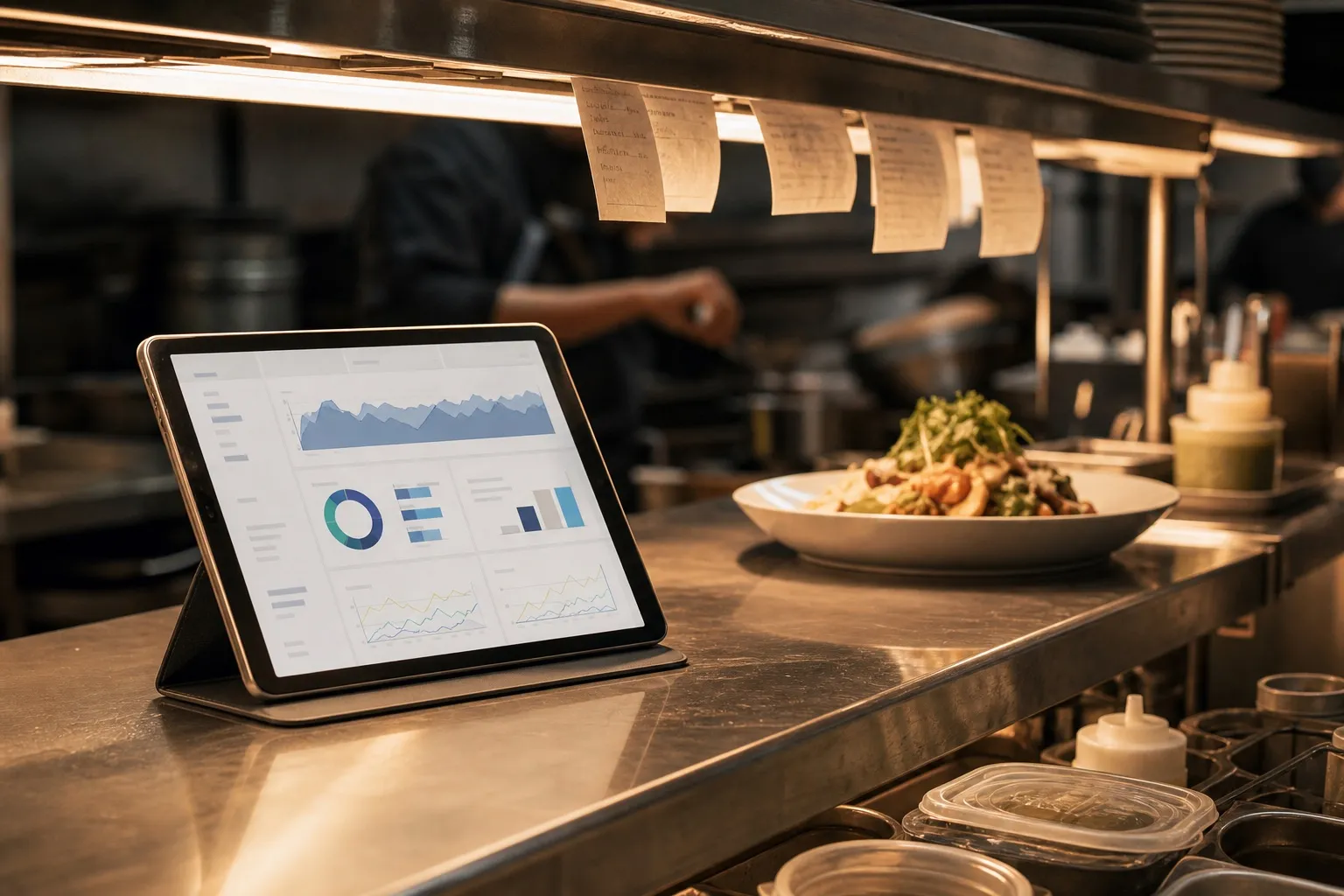
Inside that store, a tablet on the make-line is running Byte Smart Operations — Yum’s in-house operations platform — and somewhere in the back office a router is talking to Yum’s Digital Ordering layer, which is taking in DoorDash and Uber Eats orders and, more importantly, deciding which ones the store can actually accept right now. The drive-thru attendant doesn’t know any of this. The GM mostly doesn’t either. The platform is doing the work in a way that has become invisible, which is the only kind of restaurant tech that ever scales.
The contrarian read I want to put down at the top, because the rest of this piece is going to earn it: The story everyone is telling about Yum’s Byte platform is that it’s the most ambitious AI-and-data play in QSR, and that’s correct but not interesting. The interesting story is that Yum got 38,000 franchisee-operated restaurants to adopt a single operating-software platform — and that is the operational unlock, not the AI. Scale plus franchisee buy-in is what no other Western restaurant company has cleared, and it is the moat. Mark it as such. I’ll spend the rest of this piece arguing it.
I’m going to walk through how Byte actually got to 38,000 units, what CFO Ranjith Roy quantified on the Q4 2025 earnings call (which was unusually generous with platform metrics), what CDTO Jim Dausch is actually building underneath it, why the upcoming KFC UK and KFC Australia rollouts are the test that matters, and how this stacks up against the two other coordinated re-platforms in the field right now — McDonald’s with Google Cloud, and Shake Shack with Project Catalyst. The McDonald’s piece will read as the obvious comparable. It isn’t. Shake Shack is.
The Thursday lunch, decoded
The reason the East Bay unit was running clean is that, sometime in the last eighteen months, the people inside it stopped fighting their software. That sentence is anodyne until you’ve spent any time in a Taco Bell unit circa 2022, when the order screen, the make-line screen, the drive-thru timer, the inventory app on the GM’s iPad, and the aggregator dashboards were five different systems with five different login screens and three different vendors. Smart Operations — which is now live in more than 7,000 Yum restaurants globally, per Yum’s April 8 disclosure to QSR Magazine — is what replaced that mess inside Taco Bell U.S.
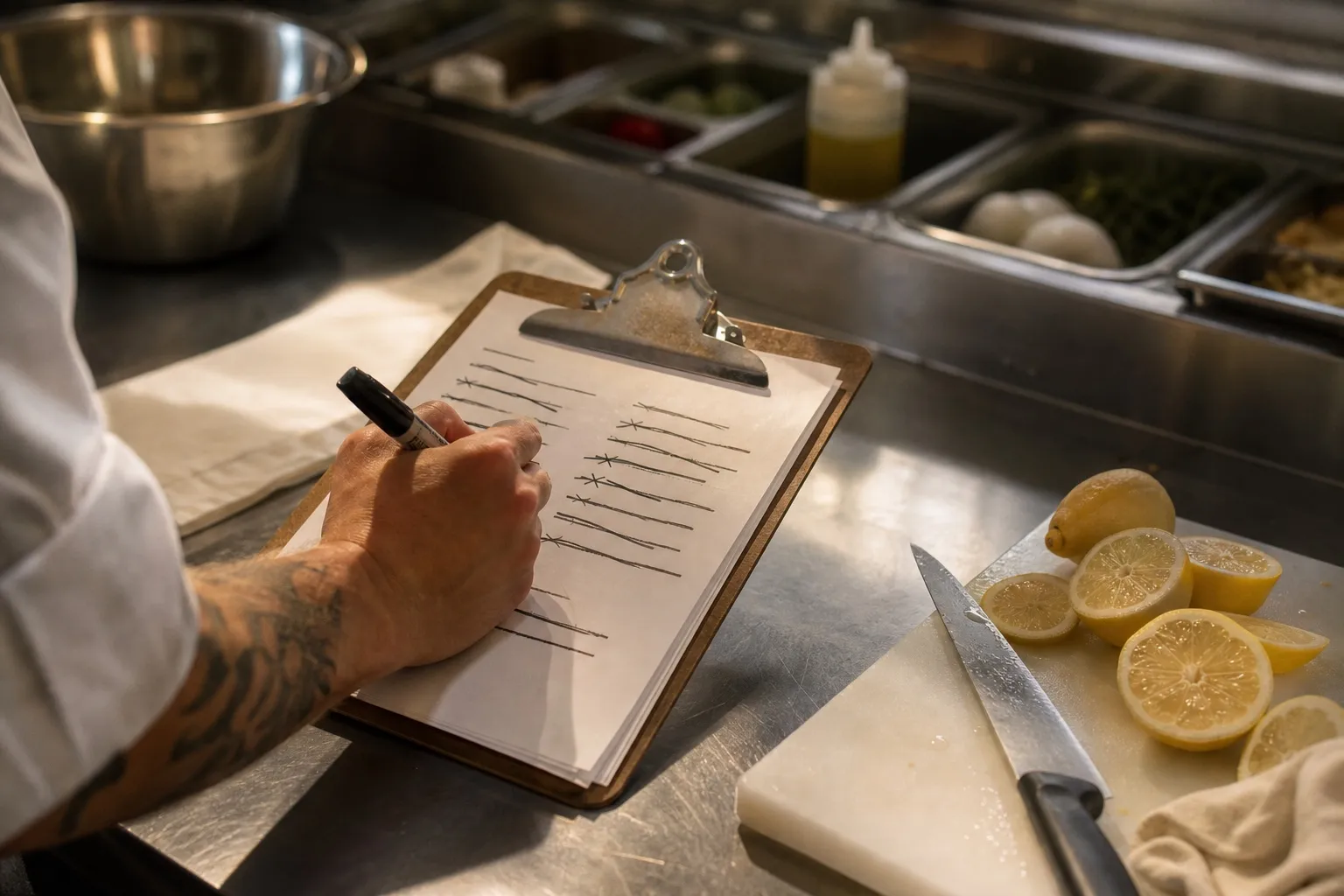
What Smart Operations actually does is unglamorous and important: it merges the operational telemetry that used to live in five places into one screen for the GM and one screen for the line. Inventory levels (which feed the menu-suppression logic that ended up driving the stock-out number Ranjith Roy quoted), labor schedules versus actual clock-ins, food-safety check timers, line-station bump rates, drive-thru timer, and the aggregator order queue all surface in a single Byte-branded UI. The GM does not have to log in to four systems to know what is happening in the store. The cook does not have to switch contexts to know what is coming. The drive-thru attendant does not have to remember which screen tells her whether the chicken supply is going to hold for the next hour.
The Digital Ordering layer, which is now in more than 18,000 Yum restaurants per the same disclosure, is the second half of what made the lunch run clean. Digital Ordering is the piece that sits between the aggregators and the kitchen. Before Digital Ordering, an order from Uber Eats hit the store’s tablet, the make-line printed it, and if the store was slammed or out of an ingredient, the kitchen ate the failure — either by making the order anyway with a substitution that the guest never agreed to, or by canceling the order back to Uber Eats and absorbing the chargeback. Roy’s number, on the Q4 call, was that Digital Ordering has driven a 75% reduction in aggregator order failures. That is not a marketing number. That is the difference between a Crunchwrap order making it to the guest and a refund hitting the store’s P&L.
Stand in front of one of these units for two hours, the way I did, and what you start to notice is that the platform is doing for the GM what a competent district manager used to do: it’s pre-empting failures before they become failures. The platform sees the chicken inventory dropping faster than the day-part forecast predicted; it suppresses chicken-based items on the aggregator menus before the store actually runs out; it surfaces a one-line nudge to the GM that says, in effect, “you are 22 minutes from a stock-out, here is what we suppressed.” The GM does not have to do the math. She just has to decide whether to push back, which mostly she doesn’t, because the math is right.
The 38,000-unit deployment, decoded
The number that should stop you, if you have ever tried to roll out enterprise software across a franchise system, is 38,000. That’s how many restaurants Yum disclosed as having at least one Byte product deployed, as of last week’s piece in QSR Magazine — and there are another 15,000 in the pipeline. For context: McDonald’s, which is the Western fast-food chain that gets credited with running the most aggressive technology platform play in modern QSR history, operates about 41,000 units. The Byte footprint, today, is functionally the same size, achieved across four brands (Taco Bell, KFC, Pizza Hut, Habit Burger) that historically had four different tech stacks and four different sets of franchisee politics.
The thing I want you to hold in your head is that “one Byte product per restaurant” is not “fully migrated to Byte.” A Taco Bell unit might have Smart Operations and not yet have Digital Ordering, or vice versa. A KFC India unit might have a regional configuration of the Byte loyalty layer that looks nothing like what’s running in U.S. Taco Bell. The 38,000 number is a coverage metric, not a saturation metric. Saturation is what the 15,000 in the pipeline represents — the chains of units that are next on the list to get the rest of the stack.
The pipeline number is also the pace number. If Yum hits the 15,000 pipeline targets in the next twelve months, you’re looking at a run rate of more than a thousand units per month getting at least one new Byte deployment. There is no other restaurant tech vendor in the world that is moving that fast across owned and franchised footprint simultaneously. Toast does it in independents and small chains. McDonald’s does it inside a single brand with a uniquely cooperative franchisee body. Yum is doing it across four brands with very different franchisee profiles in markets as different as the U.S., the U.K., India, China, and Australia.
How? The shortest honest answer is: by building the platform in a way that lets a franchisee adopt one piece without having to commit to the whole stack. This is the architectural call I want to come back to when I talk about Jim Dausch. It is also the thing that distinguishes Byte from the McDonald’s Google Cloud build, which is much more of an all-or-nothing migration for each unit. Byte is modular by design. The trade-off is that you end up with the messy coverage-versus-saturation distinction I just described. The upside is that you get to 38,000 units in a fraction of the time it would otherwise take.
What Ranjith Roy actually said
Restaurant CFOs do not usually quantify platform impact on earnings calls. They gesture at it, they reference it, they let the CEO take a victory lap. Roy did the opposite on the Q4 2025 call on February 4. The quote, verbatim from the transcript, is that Byte has produced “up to a 10% increase in consumer satisfaction and up to an 85% reduction in stock outs.” The “up to” is doing some work there — these are best-case figures, not averages — but the directional honesty is unusual. Stock-outs are not a glamour metric. Consumer satisfaction is not GAAP. The fact that Roy felt comfortable putting numbers around them on a sell-side call is a tell that he is being measured internally on those numbers.
Pair those two with the 75% reduction in aggregator order failures from Digital Ordering, and you have, for the first time in the modern QSR re-platform era, a CFO-level number set that connects a technology platform to operational KPIs that an analyst can actually run sensitivity analysis on. Take a chain doing 5,000 orders per day per unit at 8% aggregator failure rate, drop that to 2%, and you’ve recovered 300 orders per day per unit in revenue that was previously being refunded back to the aggregator. Across an 18,000-unit Digital Ordering footprint, that is real money — money the systemwide $40 billion in digital sales figure is now compounding on.
What Roy did not quantify, and what I want to flag because it’s the thing I’d push on if I were on the call, is the franchisee economic case. Yum is licensing Byte to its franchisees. The franchisees pay for it. For Byte to scale the way it has, the per-unit ROI math has to work for an individual operator running a single Taco Bell on a single corner. The fact that 38,000 units have signed up implies the math works — but Yum has not put a franchisee-level payback number on the record. I expect that to come on a future call, possibly when the KFC UK and Australia rollouts are far enough in to be quotable.
The other number worth holding in your head: the 10% consumer satisfaction lift is the one that ought to make every other QSR CIO nervous. Stock-outs and aggregator failures are operational. CSAT is the thing that, if it moves, moves traffic. Yum has, in effect, told the market that Byte is a traffic story dressed up as an operations story. That is exactly the same pitch Rob Lynch made for Shake Shack’s Project Catalyst on April 1, and it is the pitch Chris Kempczinski has been making for McDonald’s AI build all year. The platform isn’t the story. The traffic the platform unlocks is the story.
Jim Dausch on the architecture
The person to listen to, on the actual shape of what Byte is, is Yum’s Chief Digital and Technology Officer Jim Dausch. He is on the record in the QSR Magazine April 8 piece, and he is the only platform-side voice that has been allowed to set the narrative for Byte in the trade press in months. The architectural call Dausch describes — and the one I think is the actual reason Byte has scaled — is that Yum built Byte as a set of products that share a common identity, data, and integration spine, rather than as a single monolithic platform.
In practice that means: Smart Operations and Digital Ordering and the loyalty layer (which is the third major Byte product I’ve not yet named) and the back-office reporting layer all sit on top of the same guest-identity graph, the same inventory data, the same labor data. A franchisee who adopts Smart Operations first and Digital Ordering second is not doing a separate integration the second time around — the second product just turns on against the data spine that the first product already populated. The franchisee’s cost of adopting the next Byte product is lower than the cost of adopting the first one. That is what produces the 15,000-unit pipeline. The platform’s marginal cost of adoption decreases with each product.
The contrast with McDonald’s is instructive. McDonald’s Google Cloud build is, by all accounts, a single coherent platform with a single migration path per unit. The advantage is consistency: every McDonald’s unit, by the end of the migration, will be running an identical stack. The disadvantage is pace: you can’t roll out one piece, you have to roll out everything, which means each unit’s migration is a project. Yum has bought pace at the cost of consistency. There are Taco Bell units running configurations of Byte that look meaningfully different from KFC India units, and that is fine because the data spine underneath is the same. Different surfaces, shared bones.
Dausch’s quieter point, which I think is the one that matters for the next eighteen months, is that the data spine is the thing he can sell to a franchisee body as the unlock. The pitch is not “adopt our software.” The pitch is “your guest data and your operational data have been trapped in vendor silos for a decade; here is the layer that frees them, here is what you can do with it, and here is the menu of products you can adopt on top.” That is a pitch a franchisee can hear. It is not a pitch most restaurant tech vendors have been able to make, because most restaurant tech vendors are themselves the silo.
KFC UK and KFC Australia: the franchisee test
The 38,000 units already on Byte are, in large part, Taco Bell U.S. and KFC U.S. — markets where Yum has the most leverage with its franchisee body and the most institutional muscle to push a platform. The test that matters in 2026 is not what happens in those markets. It is what happens at KFC UK and KFC Australia, both of which Yum has flagged as Byte expansion targets this year, per the QSR Magazine piece.
KFC UK is a franchisee-heavy market with a small number of very large operators (KFC UK & Ireland Holdings, EG Group, etc.) and a long memory of platform missteps — the 2018 chicken supply chain crisis is now eight years old but is still referenced in any conversation with a UK KFC franchisee about technology change. KFC Australia is mostly franchisee-operated (Collins Foods is the big player, with the rest of the system distributed across smaller franchisees) and runs on different point-of-sale and aggregator economics than the U.S. Both markets have different data sovereignty requirements than the U.S. — GDPR in the UK, the Privacy Act in Australia — and different aggregator landscapes (Deliveroo and Just Eat in the UK; Menulog, Uber Eats, and DoorDash in Australia).
If Byte rolls into these markets at anything like the pace it cleared in the U.S., that is the moment to mark this as a platform that has cleared its franchisee test. If Byte stalls in either market — if the rollout gets bogged down in franchisee negotiations or compliance work, or if the regional configurations end up being so different that the data spine starts to fragment — then the moat I described at the top of this piece is narrower than Yum’s slide deck suggests. I’d watch the H2 2026 earnings calls for the run-rate number on these two markets specifically. If Roy or Dausch can quote a UK or Australia unit count by Q3, the bet is working. If they don’t, the moat starts to look like a U.S.-only moat.
The reason this is the franchisee test, and not a technology test, is that the technology already works. Smart Operations is in 7,000 units. Digital Ordering is in 18,000. The data spine has been load-tested across four brands and dozens of markets. What Yum has not yet tested at full pace is whether a franchisee body without the institutional pressure that Yum can apply in the U.S. — without the leverage of corporate-owned comparable units, without the muscle memory of a decade of Taco Bell franchisee meetings — will adopt the platform on the same economic terms. That’s the unknown. UK and Australia are where the unknown gets resolved.
Yum vs. McDonald’s vs. Shake Shack
Three coordinated re-platforms are running in the QSR space right now: Yum’s Byte, McDonald’s Google Cloud-anchored AI build (with the drive-thru voice AI as its most visible surface), and Shake Shack’s Project Catalyst. It’s worth lining them up.
Footprint. McDonald’s: ~41,000 units, single brand, mixed corporate/franchisee. Yum: ~50,000 units across four brands, almost entirely franchisee. Shake Shack: ~550 units today, target of 1,500, largely corporate. The footprint differences are enormous and they drive almost every other difference between the three programs.
Architecture. McDonald’s: monolithic. One stack, one migration path, one identity layer, one analytics environment. Yum: modular. Common data spine, multiple independent products, each adoptable on its own. Shake Shack: also monolithic, but at a scale where monolithic is easy — 1,500 corporate units is not the same coordination problem as 41,000 mostly-franchisee units. Yum’s modular architecture is the choice that maps to its footprint. McDonald’s monolithic architecture is the choice that maps to its footprint. Both are correct for the respective scale, which is part of why neither company can copy the other’s playbook.
Franchisee dynamics. This is where the spread is widest. McDonald’s franchisees have been, historically, the most cooperative large-chain franchisee body in QSR — there are issues, there are flare-ups, but the system mostly moves together. Yum’s franchisees are heterogeneous: Taco Bell U.S. operates very differently from KFC India, which operates very differently from Pizza Hut Middle East. The fact that Yum has gotten 38,000 of these units onto Byte despite that heterogeneity is the part I keep coming back to, because it is genuinely unprecedented. Shake Shack mostly does not have to negotiate with franchisees — its franchise footprint is small and mostly international.
Metrics on the record. McDonald’s has not quantified its platform impact in the way Yum did on the Q4 call; Kempczinski and team have been disciplined about not putting numbers around the Google Cloud build. Yum, as we’ve covered, has put three numbers on the record: 10% CSAT, 85% stock-out reduction, 75% aggregator-failure reduction. Shake Shack has put the comparable traffic story on the record (1.4% Q4 traffic growth) but not platform-specific KPIs. Yum is the most quantified of the three. That is going to put pressure on the other two to follow.
Buy-vs-build. McDonald’s bought infrastructure (Google Cloud) and built the applications. Yum built almost everything in-house under Dausch. Shake Shack bought POS/KDS from Qu and bolted on a partner-built loyalty layer. The buy-vs-build calls are wildly different and reflect the different scales: at McDonald’s and Yum scale, the buy-vs-build economics flip toward build for the application layer; at Shake Shack’s scale, they don’t.
The competitor Chipotle is also worth holding in your peripheral vision. Ava Cado, the deployment I covered in March, is not a coordinated re-platform — it’s a focused AI deployment on one part of the operation. Chipotle’s broader platform story is, as best I can tell, still in the planning phase, and the company has been characteristically quiet about it (in a way that Darden has institutionalized as a competitive posture). I’d put Chipotle two cycles behind Yum on platform.
The bet: scale plus franchisee buy-in equals the moat
So here is the bet, restated and earned. Yum is wagering that the moat in restaurant tech is not the AI, not the data, not the brand. The moat is the ability to get a franchisee body of 50,000-plus units to adopt a single platform. That is a coordination problem that no one else in QSR has solved. McDonald’s has scale but a much more cooperative single-brand franchisee body. Inspire and Restaurant Brands International have multi-brand portfolios but have not produced a Byte-equivalent. Domino’s has a single brand. Chipotle has corporate units, mostly.
Yum has done the hardest version of this problem — multi-brand, multi-region, multi-currency, predominantly franchisee — and has gotten further than anyone else has gotten on the comparable problem. The 38,000 number is the proof of concept. The 15,000-unit pipeline is the rate. The KFC UK and Australia rollouts are the validation. The Q4 2025 numbers from Roy are the financial case.
If the bet works — if Byte clears the franchisee test in the UK and Australia, if the modular architecture continues to compound, if the data spine ends up with the consumer-identity scale that the $40B systemwide digital sales footprint implies — then Yum will end this cycle with the deepest moat in QSR technology. Not because it has the best AI. Because it has the only franchisee-led platform at scale. The AI gets better. The platform compounds. The franchisees stay.
If the bet doesn’t work — if Byte stalls in the UK because the franchisee economics don’t translate, or if the data spine fragments because the regional configurations diverge, or if a single high-profile outage in a major market resets the franchisee body’s trust — then the 38,000 number gets re-litigated, the moat narrows to the U.S., and McDonald’s Google Cloud build, which is slower but more consistent, ends up looking like the smarter long-run play.
I think the bet works. I’d bet against it stalling. But the operator-level read is that the next four quarters are the ones where this becomes durable or it doesn’t. Watch the KFC UK unit count. Watch what Roy quantifies on the Q3 2026 call. Watch whether Dausch can keep the data spine coherent as the regional surfaces diverge.
The Taco Bell unit I watched on Thursday is doing ninety cars an hour. The bags keep moving. The platform is invisible. The franchisee — I checked, this is a multi-unit operator with eleven Taco Bells and three KFCs in the East Bay — paid for the platform, and her drive-thru is running clean.
That is the bet, restated one more time. The AI doesn’t make the bags move. The franchisee does. And Yum is the only company that has gotten 38,000 of them to make the bags move on a single platform. The McDonald’s piece I’d flag for context is the one that frames the company’s AI build as the new operating system for global retail — McDonald’s is doing the harder version of the same problem and is further behind on coverage but ahead on coherence. The Shake Shack piece I’d flag is Project Catalyst, which is the mid-market mirror of what Yum is doing at scale. If you’re an operator below 2,000 units, that’s the case study to learn from; if you’re an operator above 10,000 units, Byte is the one. Either way, the lesson is the same. The platform is the product. The franchisee buy-in is the moat. The AI is the surface. And in 2026, the surface is doing exactly what the surface is supposed to do — disappear.
Mark it.
— Priya covers operators for TableTransfers. Tips: [email protected].
Featured
More
Browse all 494 posts
The Voice Agent Maturity Curve
mise
·12 min read
The Four Margins of a Restaurant
mise
·14 min read
The AI Premium in Hospitality M&A: Broker Story or Real Number?
the bottom line
·9 min read
What the DoorDash/SevenRooms Deal Actually Buys
the bottom line
·11 min read