Sweetgreen's plan after selling the robot — the Sweet Growth Transformation reset
Sweetgreen closed the Spyce-to-Wonder deal at the top of 2026 and printed a Q4 that left no room for ambiguity. The Sweet Growth Transformation Plan is the official frame. The contrarian read: management sold its most differentiated technology asset to buy 12-18 months of runway, and the next two prints will decide whether that was discipline or capitulation.
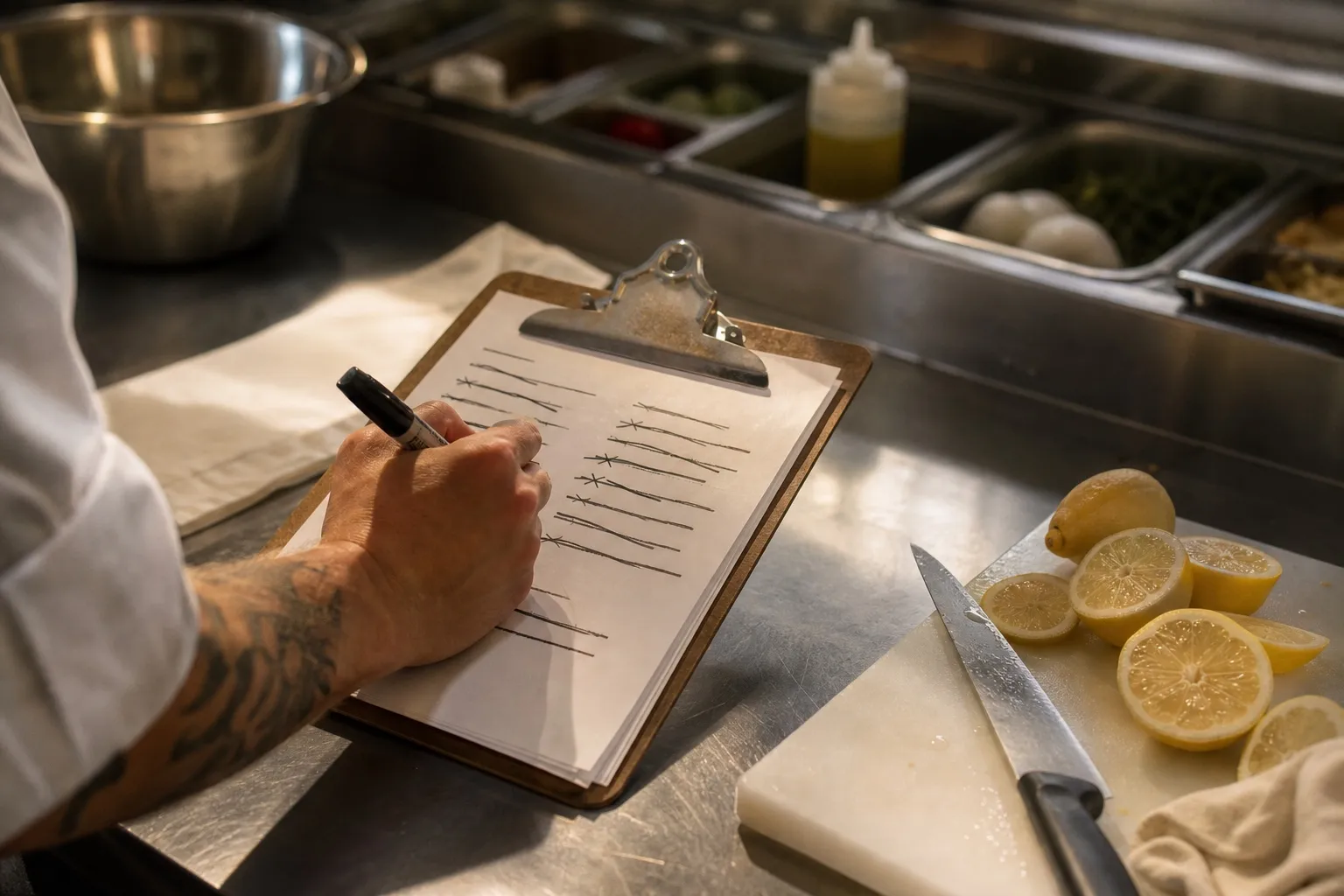
I went to the Sweetgreen on West 23rd in the last week of March, on a Wednesday a little past noon, mostly to watch the line. The store is a non-Infinite-Kitchen store — the same hand-built make-line every operator in New York has stood in front of a hundred times, four crew members shoulder-to-shoulder, ladles and tongs and the long pass-through where bowls glide left to right and pick up a base, a protein, four toppings, a dressing, a lid. I stood at the door with the back of my notebook and clocked the queue. Twenty-three people. Twelve minutes from the back of the line to a bowl in hand. The crew was fast. The store was clean. The salads were good. None of it was the point.
The point was that the brand has, as of two months ago, formally exited the business of building the robot that was supposed to make this line obsolete. The Spyce technology — the Infinite Kitchen, the make-line autonomation platform that Jonathan Neman has spent four years calling the centerpiece of the company’s productivity thesis — has been sold to Wonder for $100 million in cash and $86.4 million in Wonder Series C stock, $186.4 million total, closed at the start of 2026. Sweetgreen will buy the units back from Wonder on a cost-plus-five-percent basis going forward. The chapter is closed. The make-line at 23rd is the make-line Sweetgreen has chosen to keep.
The contrarian read I want to put on the table before we get into the print: Sweetgreen sold its single most differentiated technology asset to buy twelve to eighteen months of runway. That sentence is the whole article. The Sweet Growth Transformation Plan that Neman rolled out on the Q4 call — the G&A review, the restaurant-expense audit, the channel-mix reset, the new CFO inheriting the line items — is a real plan with a real timeline and a real set of levers. It is also the plan a company makes when it has decided that the cash and the option-value of being a non-tech-burdened restaurant operator are worth more, right now, than the seven hundred basis points of labor savings on a hundred-store rollout that the IK was supposed to anchor. The next two prints — Q1 in May, Q2 in early August — decide whether the trade was discipline or capitulation.
I want to walk through the numbers, the deal, the plan, and the cost-plus-five interpretive crux, and end on what specifically the May print has to show.
The Q4 print, read carefully
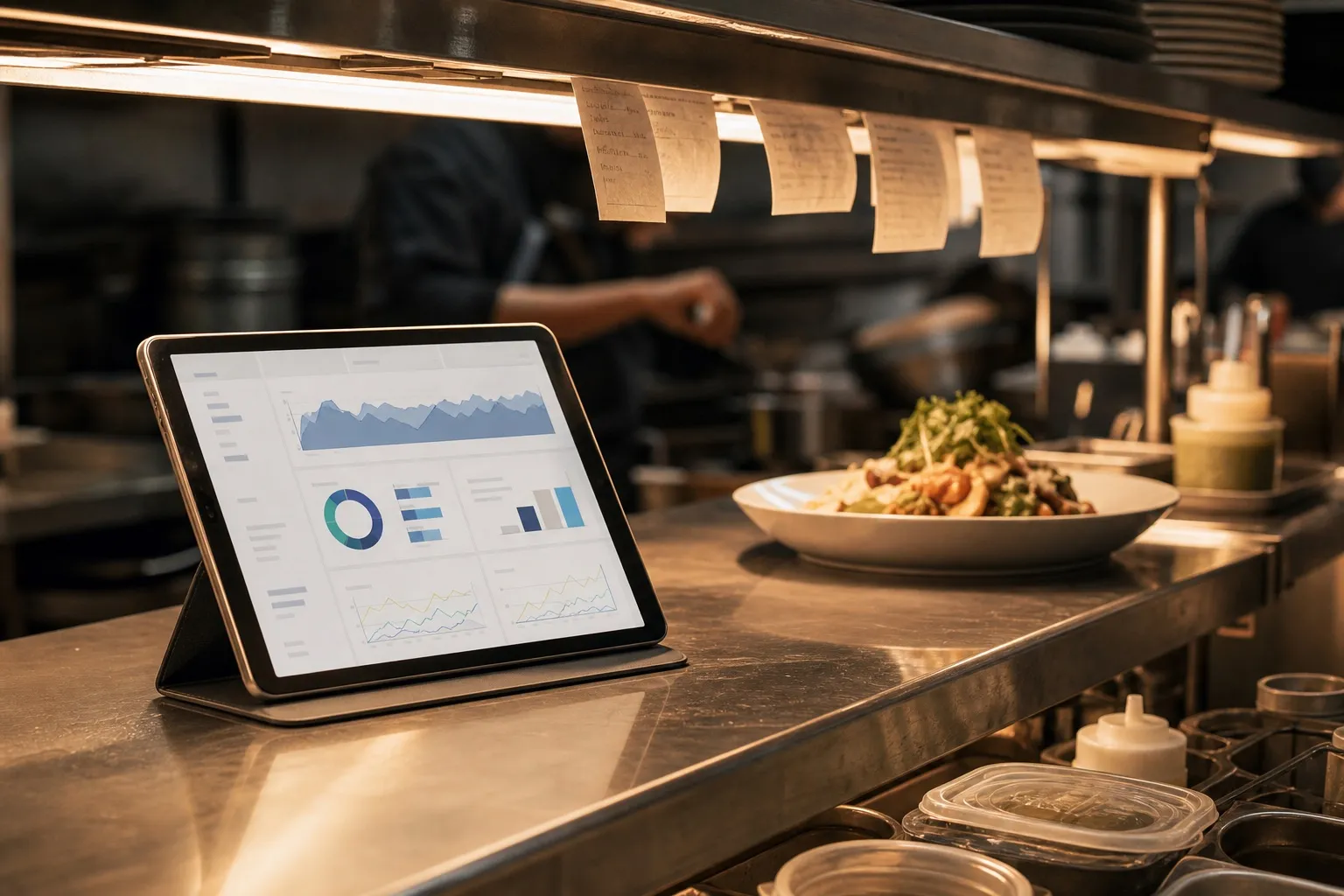
Start with the numbers, because they are the reason the plan exists. The Q4 release Sweetgreen put out on February 26 is one of the cleanest can’t-spin-this disclosures the company has filed since the IPO. Total revenue $155.2 million, down 3.5 percent year-over-year. Same-Store Sales Change negative 11.5 percent. Of that 11.5, 13.3 percent of the decline was traffic and mix — meaning the bowls that did get sold carried slightly more margin per ticket, but there were materially fewer of them. Restaurant-Level Profit Margin landed at 10.4 percent. AUV came down to $2.68 million, off the $2.9-handle the company has been printing for most of the post-IPO period.
There is no version of those four numbers that reads well. Down three and a half percent on revenue against a year-ago period that itself was not blowout. Down eleven and a half on the comp, with traffic and mix doing the work — meaning customers are visiting less often, not just trading down. Restaurant-Level Profit Margin below the 12 the company had been telegraphing as the floor for the year. AUV breaking $2.7 to the downside for the first time in three years. The release language tries to anchor the explanation in weather, macro, and a calendar shift; the math says the company is losing about one in eight visits relative to last year, and the make-line economics have not flexed enough to absorb the loss.
The read I want to mark is the one that the Q4 Pass companion piece flagged when the print first dropped: this is not a comp problem you fix with two more LTOs. The traffic and mix line item is the dominant variable. Mark it. The Sweet Growth Transformation Plan is built around that single observation, and every move in the plan should be evaluated against whether it changes the traffic and mix slope or just changes the cost base under it.
The Spyce-to-Wonder close
Now the deal, because the deal is the thing that gave the company the room to write a Q4 like that and still walk into the year with a credible narrative. Wonder closed the acquisition of Sweetgreen’s Infinite Kitchen technology business at the top of 2026 — $100 million in cash, $86.4 million in Wonder Series C stock, $186.4 million total consideration. Sweetgreen got an immediate balance sheet repair and a stake in a private company that is consolidating the front-of-house automation category. Wonder got the Spyce engineering team, the IK platform, the patent portfolio, and the option to package the technology into the Wonder operating system that already powers the company’s own food halls and the Marc Lore delivery-and-dine-in stack.
The strategic logic on Wonder’s side is the easier one. The IK is a make-line robot; Wonder is a vertically integrated culinary operator with a software backbone and an appetite for build-versus-buy capacity. Folding the IK in lets Wonder amortize the IK engineering across a much wider deployment base than Sweetgreen could ever justify alone. Fast Company’s piece on the deal traces the Spyce-to-Wonder arc back through the original 2021 acquisition — Sweetgreen bought Spyce in 2021 for a stock-and-cash mix that the company has never broken out cleanly, deployed the technology into a hundred-ish stores, and is now exiting at a headline number that, depending on how you mark the original Spyce purchase price, is somewhere between a small premium and a meaningful markdown. The Food On Demand breakdown of the post-close roadmap reads the deal as the moment the Infinite Kitchen stops being a captive Sweetgreen project and starts being a multi-brand automation platform under Wonder’s roof.
For Sweetgreen, the deal does three things at once. It moves a hundred-million dollars of cash onto the balance sheet at a moment when restaurant-level economics are softening. It removes the recurring R&D drag that the IK program represented — Spyce engineering was a real line on the P&L, even if the company didn’t break it out. And it leaves Sweetgreen with a forward purchase agreement: every future IK unit the company wants to install in a new store will be bought from Wonder at cost-plus-five percent. The IK is now a vendor product, not a captive program.
That last clause is the interpretive crux of the whole transaction, and I want to come back to it after I walk through the plan.
The Sweet Growth Transformation Plan
Neman framed the Q4 call around a labeled program — the Sweet Growth Transformation Plan — which is the kind of branded turnaround framework you reach for when a single quarter has stopped being explainable as a blip. The plan has four named workstreams, all of which the new CFO will own as line-item reviews against the 2026 forecast.
Restaurant-expense audit. The 10.4 percent RLM number is the one that triggered this stream. Sweetgreen is rebuilding the four-wall expense model from the ground up — labor, COGS, occupancy, repairs and maintenance, marketing allocation — and rebenchmarking each line against the 2023 cohort, which was the last year RLM ran clean above 19. The audit is restaurant-level granular, store-by-store, and is supposed to produce a list of specific line items where the company has drifted upward through 2024 and 2025 without producing the comp lift that would justify the spend.
G&A review. The corporate cost base is the second stream. Sweetgreen has carried a heavier G&A load than its restaurant peer group for most of its public life — the company built out a brand and tech and culinary org that looks more like a Series-C consumer company than a 250-store restaurant operator. The G&A review is the place where the new CFO will quietly take a hatchet. Expect headcount reductions, expect tooling rationalization, expect a flat or down marketing budget for the year. The G&A line is where the immediate cash savings live, and it is the line that any incoming finance chief reviews first.
Channel-mix reset. Sweetgreen’s third-party delivery mix, in-app digital mix, and in-store walk-in mix have drifted through 2025 in ways that have eroded the contribution-margin profile of the average ticket. The channel reset is a re-pricing and re-fee-structure pass against every channel — the kind of work the Four Margins post-IK refinement framework is designed to surface, and the kind of work the Four Margins framework as originally posted in January maps cleanly onto. Each channel has a different contribution margin and a different traffic elasticity; getting the mix right is a quiet two to three hundred basis points of margin if it is done well, and a quiet two to three hundred bps the other way if it is done badly.
Channel and product portfolio rationalization. The fourth stream is the LTO and menu cadence. Sweetgreen has been running a heavier seasonal-menu calendar than the brand can support. The portfolio review is supposed to cut the calendar back to a tighter set of higher-conviction launches and let the make-line crews actually master each platform before the next one drops. There is a labor-productivity story embedded in the portfolio cut that nobody on the call talked about explicitly but that operators recognize immediately: every new menu item is a training event, and a 250-store chain running too many training events at once is a chain whose RLM erodes for reasons that look like macro but are actually internal.
The plan is coherent. The plan is also entirely about the cost side. None of the four streams, as articulated on the call, has a credible answer to the traffic and mix line — the 13.3 percent traffic and mix decline is the dominant variable, and the plan is built mostly around making the company cheaper to run while traffic stabilizes on its own. That is a perfectly defensible bet to take. It is also the bet you take when you do not have a better idea.
The IK unit-economics rebuild: was it ever enough?
Before we get to the cost-plus-five clause, let me put the IK unit-economic case on the table cleanly, because the case is the reason the sale is interesting rather than obvious.
The IK stores were running, by the company’s own disclosures across 2024 and 2025, approximately 700 basis points better on labor than comparable hand-built make-line stores, and approximately 100 basis points better on COGS, for a combined ~800 bps Restaurant-Level Profit Margin pickup against an IK store’s own labor- and COGS-controlled cohort. That is a real number. Eight hundred basis points of RLM on a $2.7 million AUV box is roughly $216,000 of incremental restaurant-level profit per store per year. Across a hundred IK stores, that is north of $20 million of run-rate restaurant-level profit pickup at full deployment — a meaningful chunk of EBITDA.
So why sell? Three reasons that the company has not said aloud but that the math implies.
First: the 800 bps was against an IK store’s own cost base, but the IK CapEx burden, allocated across the unit life, ate enough of the pickup that the all-in IRR on an IK store versus a hand-built store was not 800 bps. The all-in IRR delta was almost certainly closer to 300-400 bps, once you amortize the IK hardware over a realistic five-to-seven-year refresh cycle and load in the maintenance overhead. Three to four hundred bps is still a number worth chasing, but it is not a number worth keeping a captive engineering org for.
Second: the IK rollout was running behind plan. The company had originally guided to a significantly faster deployment pace than it actually executed, and the slow pace was eroding the present value of the program. The longer the deployment takes, the lower the NPV of the captive technology — and at some point, becoming a vendor customer of someone else’s faster-deploying version of the same technology is the better trade.
Third: the cash matters now. The hundred-million dollars in cash from Wonder is sitting on the balance sheet today, against a same-store comp that printed negative eleven and a half in the most recent quarter. The IK program’s twenty-million-a-year run-rate pickup, fully deployed, three to five years out, is a different shape of asset than a hundred million in liquid cash now. The board chose the liquid cash. That is the trade.
The Spyce-era pitch deck — the one the original Sweetgreen Infinite Kitchen long-form story lays out in detail — was always premised on the IK being captive, proprietary, and rolled out fast enough that the labor savings would compound into a step-change in the company’s margin profile. None of those three premises held. The IK is no longer captive. It is no longer proprietary in any meaningful sense — Wonder will license or deploy the same platform across other brands. And the rollout pace was the thing that broke the math. The board sold the asset when the math broke.
The cost-plus-five repurchase structure
Now the clause that everything hinges on. The deal includes a forward purchase agreement: Sweetgreen will buy IK units from Wonder on a cost-plus-five-percent basis. Interpretation flag — this is the structural choice that determines whether the sale was discipline or capitulation, and the answer depends entirely on how much volume Sweetgreen actually buys against the agreement over the next twenty-four months.
Read one: cost-plus-five is a generous structural concession by Wonder. Sweetgreen is essentially getting the IK at vendor cost, with a five-point margin tacked on as Wonder’s deployment fee. If Sweetgreen wants to install IKs in another fifty stores over the next two years, the company can do so at roughly the same all-in unit cost it would have faced as a captive program, minus the engineering org overhead. Under read one, Sweetgreen kept the cake — the labor and COGS savings of the IK — and got someone else to bake it. The five-point premium is the price of getting out of the engineering business. That is a good trade if the company actually intends to deploy.
Read two: cost-plus-five is the optical concession that papers over the fact that Sweetgreen is not planning to deploy meaningfully more IK units. The clause exists so the press release reads cleanly. The actual installed base of IKs across the system, on a forward-twelve-months basis, will look a lot like the installed base today — call it a hundred stores out of a system that will be closer to two seventy by the end of the year. The IK becomes a legacy footprint, not a growing one. Under read two, Sweetgreen is now structurally a hand-built make-line company with a small IK rump, the same labor model as every other fast-casual chain in the country, and the cost-plus-five clause is a footnote in a deal that was really about getting the hundred million in cash and the eighty-six in Wonder paper.
Read three is the one I think is most likely, and it sits between the two: Sweetgreen will deploy the IK selectively, in high-volume urban stores where the labor arbitrage is largest, and let the hand-built make-line continue to be the default for everything else. Cost-plus-five gives the company the optionality to do so without rebuilding the captive engineering org, and the actual deployment cadence will be governed by the new-store-development team’s IRR hurdle, not by a top-down rollout plan. Read three is the disciplined version of the trade, and it is the read the company can sell to investors with the most credibility.
The reason this clause is the interpretive crux is that none of the three reads can be tested from the deal document alone. You have to wait for the deployment cadence. The May Q1 print will show the first store count and the first IK-versus-hand-built mix disclosure under the new structure. That is the disclosure to mark.
The case-against-the-AI-premium piece is going to read against this deal as one of the cleanest worked examples of the framework — a public restaurant company that built a captive technology premium, watched it underperform plan, and sold the asset to a private specialist at a number that the public market will revalue against in real time. The conclusion is going to be that the AI premium on public restaurant operators is contingent on captive technology that actually compounds. When the technology can be bought from a vendor at cost-plus-five, the captive premium collapses to roughly zero. Sweetgreen just demonstrated that.
The twelve-to-eighteen-month runway thesis
Let me put the runway math on the table. Sweetgreen had, going into Q4, roughly $290 million in cash and short-term investments — call it a year and a half of operating cash buffer at the burn rate the print implies. The Wonder sale adds $100 million in cash and $86 million in Series C paper. Mark the paper at zero for the runway calculation; mark the cash at face. Post-close, the company has roughly $390 million in liquidity against an operating cash need that, at the Q4 run rate, looks like roughly $150-180 million a year if RLM stays in the low double digits.
That is twelve to eighteen months of additional runway, depending on which way RLM moves under the Transformation Plan. If the plan delivers — restaurant-expense audit produces 200 bps, G&A review produces 150 bps, channel-mix reset produces 100 bps — the company is back to mid-teens RLM by Q3, and the cash buffer extends materially. If the plan underdelivers and traffic and mix stay negative into Q2 and Q3, the company burns through the Wonder cash inside eighteen months and is back at the well, either with a follow-on or with a more aggressive store-closure program.
Twelve to eighteen months is exactly the window in which a turnaround narrative either prints or fails. The Wonder cash bought the company a clean shot at the window. That is the entire commercial logic of the deal, and it is the reason I keep coming back to the framing that the company sold its most differentiated technology asset to buy time. Time is what underperforming restaurant operators run out of first, and it is what the Spyce sale put back on the balance sheet.
The bet, named
Here is what discipline looks like, in the May print. Same-store comp flat to down-mid-single-digits, with traffic and mix bottoming. RLM at 13 or 14, recovering off the 10.4 trough. AUV stabilizing above $2.65. Store count growth flat sequentially — no aggressive new-store opens until the four-wall economics are back. G&A line down sequentially, with the cuts already visible in the cost-of-sales bridge. IK store count flat — the legacy hundred holding, no new builds yet, the cost-plus-five clause held in reserve.
Here is what capitulation looks like, in the May print. Same-store comp down high-single-digits again, with traffic still falling. RLM stuck below 12. AUV under $2.6. Store closures announced. G&A flat — meaning the cuts haven’t bitten yet. IK store count flat for the wrong reason — the company doesn’t have the conviction to deploy more units even at cost-plus-five. And a refreshed Transformation Plan in August, the second one, the one that means the first one didn’t work.
The Voice Agent Maturity Curve mise from earlier this week is going to read as the AI-frontier-tech companion to this piece — a clean look at where the operator-facing AI category is actually maturing, against the backdrop of a public restaurant operator that just sold its premier captive AI asset to a private specialist. The framing across both posts is the same: captive technology is a privilege that public restaurant operators have to earn quarter by quarter, and the asset value of the captive program collapses the moment a credible vendor alternative exists. Wonder is now that alternative for the IK. The collapse, in Sweetgreen’s specific case, has happened. The question for every other public operator is which captive program is next.
I walked back out onto 23rd Street a little after one. The line at Sweetgreen had cleared. Two crew members were prepping bases for the dinner rush, the make-line was being wiped down between turns, and the floor manager was at the register going through a tablet. No IK, no robot, no automation. Just a make-line and a small team of people who know how to use it. The next two prints will tell us whether the company that just sold the robot is going to make that work. I am not going to call it yet.
The Four Margins original framing, which is the analytic spine I keep coming back to when I think about restaurant operator margin profiles, is going to do its second public stress test of 2026 against this print sequence. The first one was Toast. The second one is Sweetgreen. Both companies are running the same exam, in different categories, with different captive technology stories and different cash positions. Toast has the volume; Sweetgreen has the runway. Which one of those is the better defense, against a 13.3 percent traffic and mix slope, is the actual question of 2026.
Mark the May print. Mark the August print. The Sweet Growth Transformation Plan either works in those two windows, or it doesn’t. I lean toward thinking it will work — narrowly — because the plan is coherent, the new CFO has the right scope, the cash is on the balance sheet, and the team has been through cycles before. But narrow is the operative word, and narrow is what selling the most differentiated technology asset in your portfolio looks like when you have to give a name to it on the next call.
Discipline or capitulation. We will know by August.
— Priya covers operators for TableTransfers. Tips: [email protected].
Featured
More
Browse all 494 posts
The Voice Agent Maturity Curve
mise
·12 min read
The Four Margins of a Restaurant
mise
·14 min read
The AI Premium in Hospitality M&A: Broker Story or Real Number?
the bottom line
·9 min read
What the DoorDash/SevenRooms Deal Actually Buys
the bottom line
·11 min read