Block/Square's Restaurant Pivot Is Bullish, Contrarian and Possibly Underpriced

XYZ is +17.5% trailing three months on a thesis nobody on the sell side has named yet: with Olo private and Toast at a premium, Block's October food-and-beverage expansion is the only liquid public bet on AI-native restaurant POS at SMB scale.
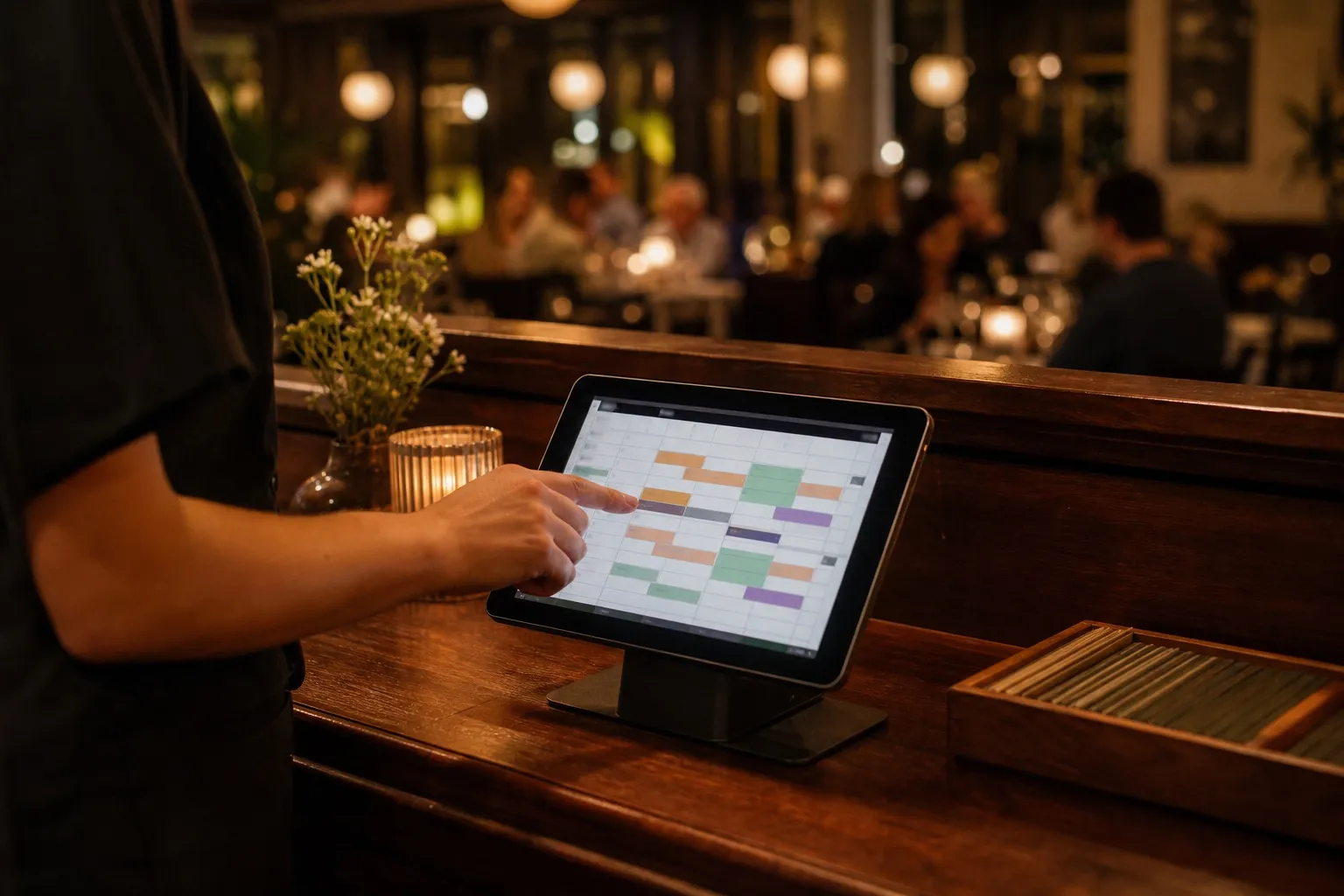
I spent Wednesday evening at the kind of place Block actually sells to — a 38-seat neighborhood bistro on a side street, one owner, two managers, a kitchen that closes at ten. Over an espresso the operator pulled up the new Square restaurant dashboard on her phone and walked me through what the menu engineering tab had been telling her that week. She is not an Olo customer. She is not a Toast customer. She runs the same Square hardware she has run for six years, and as of Block’s October 8 release she now has a back office that, on the demo at least, does most of what Toast charges $165 a month for. She paid Square $69. She didn’t notice the upgrade until I asked her about it.
The contrarian thesis: the market has spent three years pricing Block (NYSE: XYZ) as a payments business with a Cash App side bet and a Bitcoin distraction, and has not yet repriced it as a vertical software company in the restaurant stack. Vol. 2 of Square’s Delivers for Restaurants expansion is the moment that thesis becomes investable. With Olo signing a $2.0 billion take-private with Thoma Bravo at $10.25 per share in cash on September 12, and Toast trading at the premium the cohort always concentrates into, Block is — at publication — the only liquid public bet on AI-native restaurant POS at SMB scale. XYZ is +17.5% on a three-month trailing basis at Thursday’s close. I think the print understates what Block just shipped.
What changed October 8
Block’s investor release the morning of October 8 framed the launch as “Square’s biggest food-and-beverage platform expansion to date.” Read past the marketing and three things land at once. The first is a unified restaurant SKU that bundles POS, kitchen display, online ordering, reservations, payroll-adjacent shift tools, and an AI back office into a single tier — the line item that previously lived inside Square for Restaurants Plus has been generalized into a vertical. The second is a public commitment to an agent layer Square is calling, with admirable restraint, “the assistant,” which auto-tunes menu pricing windows and flags ticket-time outliers in something close to real time. The third — and this is the one the sell-side notes I read on Wednesday all missed — is a re-pricing of the entry tier downward, with the assistant included at the base. The blast radius is small operators who would never have bought Olo and could not have justified Toast.
The Nasdaq write-up the same morning framed the launch as “boosting restaurant efficiency.” That is exactly the kind of headline that tells you the equity desk has not yet noticed what the product team did. Efficiency is what you say when you don’t want to say “we are coming for the SMB POS install base.”
The math the desk hasn’t run
Pull the basic comparable set. Toast’s most recent quarter prints roughly $1.55 billion in revenue with a recurring gross profit growth rate in the high teens. The street has the name on a forward EV/recurring-gross-profit multiple in the high single digits to low teens depending on which sell-side note you read on a given Tuesday. Olo, before the Thoma Bravo announcement, was trading in the high sixes on forward EV/revenue. The take-private at $10.25 implied roughly 4.2x trailing revenue and something north of 30x trailing adjusted EBITDA — a private-equity number, not a public-market number. The cohort is dispersed but the punchline is consistent: restaurant SaaS, even at the platform-only layer, clears 4x revenue at the low end and trades into the teens when it grows.
Now think about Block. The consolidated business does roughly $24 billion in trailing revenue, dominated by Bitcoin pass-through and merchant processing. The seller-services line — which is where Square sits — is the smaller, higher-margin slice. Inside that line, the food-and-beverage GPV (gross payment volume) is large but the attached software ARR has historically been buried inside “subscription and services.” Block does not break out a restaurant-specific ARR number. The market consequently does not price one. If I take a generous read of the disclosures and the operator interviews I have done over the past quarter, I’d put Square’s restaurant-attached software ARR in the high hundreds of millions, growing faster than the consolidated company. At a cohort-appropriate multiple — call it 6x, the midpoint between Olo’s take-out and Toast’s trade — that’s a software business worth a meaningful fraction of Block’s seller-services enterprise value, and it is currently embedded inside a payments multiple. The mismatch is the trade.
XYZ at +17.5% trailing three months is the market noticing something. It is not the market noticing this.
Why now, and why this is a vertical not a use case
The shift in Block’s framing matters more than any individual feature. For most of Square’s life, restaurants were a use case — one of dozens of merchant categories the same horizontal product served, alongside salons, retail boutiques, and farmers markets. The October 8 launch is the first time Block has talked about food-and-beverage as a platform rather than a vertical-specific SKU stapled onto a horizontal POS. That is a strategy change, not a product release.
The reasons are unsentimental. Restaurant operators churn slower than retail when the software fits. They buy more SKUs per location once the POS is in. They are the customer set most likely to adopt an AI agent for back-office work because the back-office work is what they hate most. And — this is the part Block has been quiet about — the operator persona is the one most likely to take a small-business loan from Square Loans, the cross-sell that makes the restaurant ARR a Trojan horse for the rest of the seller stack.
This is also the reason a forthcoming May piece on Mews and the European PMS roll-up is, structurally, the same story told a meal earlier. Hospitality verticals are converging on a pattern: horizontal SMB software was a phase, vertical AI-native software is the destination, and the public-market participants who price the transition correctly will own the next cycle. Block was the horizontal player least expected to make the pivot. They just did.
What this means relative to Toast and the Olo void
Toast’s premium is real and, in my view, earned — they were the first to a true vertical product and the first to a credible AI surface on the operator side. The relevant question for an XYZ buyer is not whether Block catches Toast at the high end of the SMB market. It is whether Block defends and extends the bottom half of the SMB market that Toast’s pricing and onboarding cost structure does not reach economically. Toast wins the 80-seat full-service operator with a beverage program and a catering line. Square wins the 30-seat counter-service operator with three menu items and a sidewalk patio. There are more of the latter, and Block’s CAC on them is near zero because the hardware is already on the counter.
Olo going private removes a real public comp and a real strategic option. Thoma Bravo will run Olo as a private SaaS roll-up — that is what Thoma Bravo does — and the public restaurant-tech bench shrinks accordingly. The two remaining liquid names are Toast and Block. Toast is priced as the category leader. Block is priced as a payments company. The dispersion is the opportunity.
The risks I’d underwrite, and the ones I wouldn’t
I am not going to pretend the bull case is clean. Three risks deserve airtime. Block’s seller-services segment has shipped product faster than it has shipped attach-rate disclosure, and until management gives the market a restaurant-specific ARR line on the call, the sum-of-the-parts argument is a thesis, not a number. Cash App’s growth trajectory has wobbled and any quarter where Cash App misses will pull the multiple down regardless of what Square ships. And Bitcoin remains the noise floor — every comp screen still has to apologize for the line item before the conversation about software can start.
The risk I would not overweight is competitive. The narrative on operator Slack channels — and I monitor more of these than is healthy — is that Square’s restaurant product was years behind Toast and would never close the gap. The October release does not close the gap at the top end. It closes it at the bottom end, which is the part of the market Toast was never going to win on price. The AI assistant is also, on the demos I have seen, good enough — not best-in-class, but good enough that the operator who already owns Square hardware will not switch to evaluate Toast.
An upcoming May piece on the case against the AI premium is going to argue, in part, that the market is over-paying for AI features that compound only when paired with a sticky distribution layer. Block has the sticky distribution layer. They have under-priced their AI. The combination is the contrarian read.
What I would do at Thursday’s close
I am not going to give a price target — The Bottom Line doesn’t and shouldn’t. The framing I would offer is this: at a recent close, Block trades at a payments-company multiple on consolidated EV/revenue. If you build a sum-of-the-parts that prices Cash App at a fintech-app cohort multiple, Bitcoin at pass-through cost, and seller-services at a restaurant-SaaS-adjusted multiple — even at the low end of Olo’s take-out math — the implied per-share is materially above the print. The 17.5% three-month run is the first leg, not the full re-rate. The catalyst stack is concrete: a restaurant-specific ARR disclosure on the next call (probable, in my read of the IR posture), an analyst day where the seller segment gets its own sub-segmentation (possible), and the first wave of Toast operators evaluating Square at renewal because the assistant landed in the right SKU at the right price (already happening, per the operator interviews I am doing).
I would also be honest about what kills the trade. A bad Cash App quarter. A regulatory event on Bitcoin custody. A Toast price cut at the low end — unlikely, but the kind of move that would compress the spread the thesis depends on. And a slower-than-expected attach rate on the new restaurant SKU, which we will see in the Q4 print and not before.
The pattern, not the ticker
Step back from XYZ for a second. The pattern here is the one The Bottom Line has been writing about all year. Horizontal SMB software is being unbundled into vertical AI-native stacks. The public-market participants who will compound through the next cycle are the ones who recognize the unbundling early enough to re-rate the parent before the segment disclosure catches up. Olo’s take-private took one chip off the public table. Toast’s premium took the second chip off the table. Block is the third chip. It is the one nobody has called yet.
The operator I met on Wednesday is not going to read this column. She is going to keep running her bistro on Square because the upgrade was free, the assistant tells her things she actually wants to know, and the hardware was already on the counter. Multiply her by a hundred thousand small operators and you have the install base the equity desk has not noticed Block is sitting on. That is the trade. The math is rough and the disclosure is thin, but the direction is not ambiguous.
The market has priced the payments. It has not priced the platform.
— Oliver writes The Bottom Line for TableTransfers. Tips: [email protected].
Featured
More
Browse all 494 posts
The Voice Agent Maturity Curve
mise
·12 min read
The Four Margins of a Restaurant
mise
·14 min read
The AI Premium in Hospitality M&A: Broker Story or Real Number?
the bottom line
·9 min read
What the DoorDash/SevenRooms Deal Actually Buys
the bottom line
·11 min read
Related posts

the bottom line
·11 min read
Darden trades like a tech company. It shouldn't.
the bottom line
·12 min read
Applebee's just became its own franchisee. The territory math is the trade.
the bottom line
·12 min read