Casual Dining's Private-Equity Reset: From Denny's to 'Who's Next'

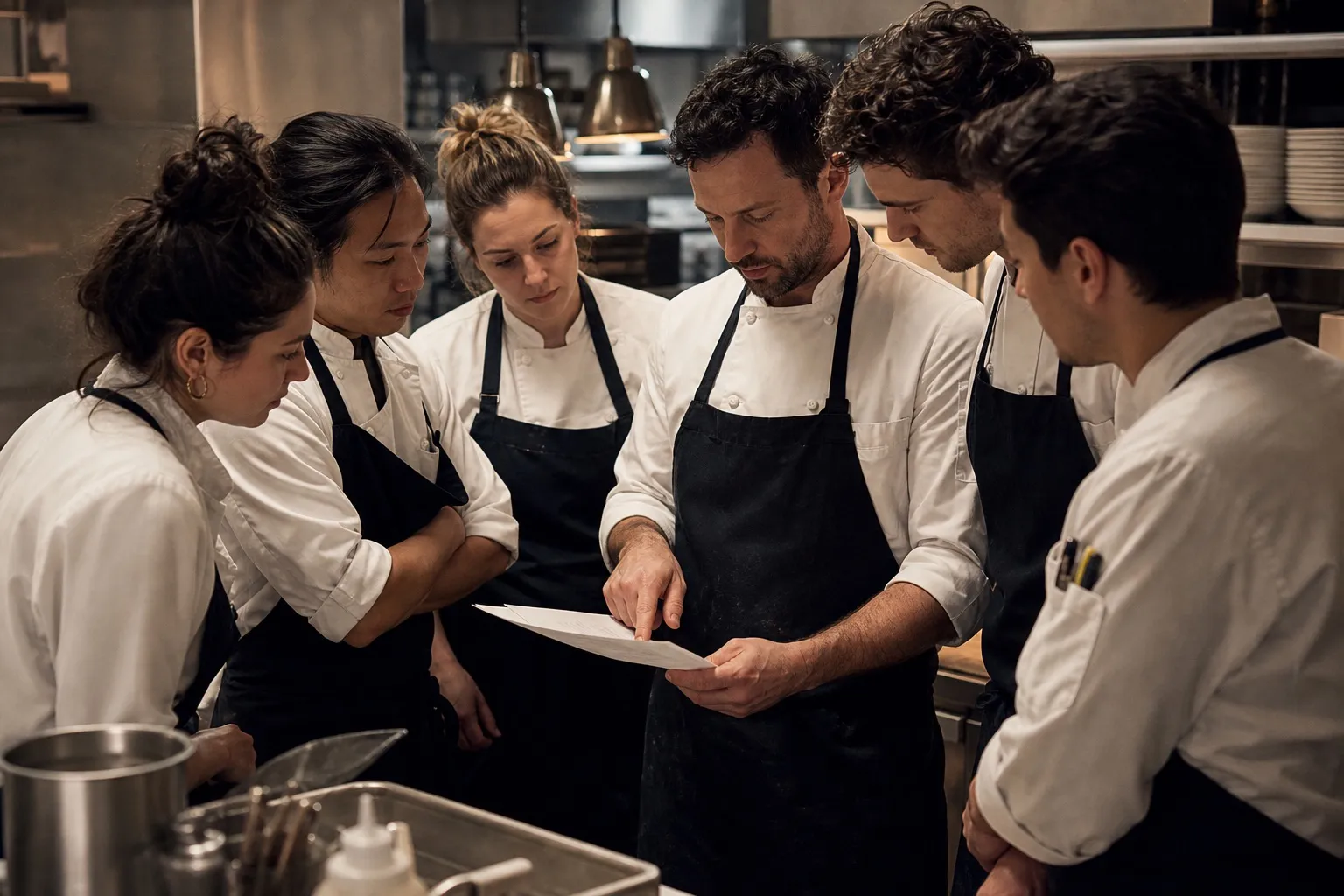
Denny's $620M take-private clusters with a year of casual-dining stress — CAVA -54% YTD, Sweetgreen SSS -9.5%, Wingstop SSS -5.6%. Marcus screens the next set of public restaurant names for the same setup.
I’m three coffees deep at a banker breakfast on Park Avenue, and the question that won’t go away is the one nobody at the table wants to answer first: who’s next? The Denny’s deal — $620 million, $6.25 a share, 52.1% premium, announced Nov 3 — isn’t a one-off. It’s the opening trade in a setup I’ve been watching build for nine months: casual dining’s private-equity reset, where the public market simply gives up on a category and the sponsors come in to fix it behind a curtain.
Here’s the contrarian piece, stated plainly: the Denny’s clusters with a year of stress that nobody is treating as a cluster. CAVA down 54% year-to-date. Sweetgreen printing -9.5% same-store sales. Wingstop — Wingstop, the unkillable wing brand — at -5.6% SSS. M&A volume in restaurants is up 45% in H1 2025 versus H1 2024, per PitchBook. The public market has stopped paying for growth in casual and fast-casual the way it did in 2021. The sponsors have noticed. And the screen for who gets taken out next has four variables: brand strength, franchisee concentration, free cash flow, and — the one that matters most — shareholder fatigue.
Let me walk you through the math.
The Denny’s setup, and why it’s a template
Denny’s traded at $4.11 the day before the deal leaked. The buyer group — TriArtisan, Treville, and Yadav Enterprises — paid $6.25. That’s a 52.1% premium on the unaffected price, which sounds rich until you remember Denny’s was a $20 stock in 2018 and a $10 stock as recently as early 2024. The shareholders who said yes to $6.25 weren’t being greedy. They were exhausted.
This is the part the sell-side reports underweight. A take-private premium isn’t really a function of forward EBITDA — it’s a function of how long the shareholder base has been bleeding. Denny’s had been a public-market punching bag for three straight years: traffic at the dine-in family-dining tier collapsed, the off-premise pivot was clumsy, and the franchisee P&L was getting compressed from both ends (labor, dairy). By the time TriArtisan showed up, the institutional holders had already written the equity down in their heads. The 52.1% premium was paid against a stock that the market had effectively given up on.
Yadav Enterprises is the tell. Yadav, the largest Denny’s franchisee, also closed the Del Taco deal — announced Oct 16, 2025 for $115 million cash — buying Del Taco out of Jack in the Box. Inside of about three weeks, the same operator-investor stack moved on two casual/family-dining names that the public market had discounted. That’s not a coincidence. That’s a thesis being executed.
The thesis: brand strength survives the public-market drawdown; the public-market drawdown creates the entry point.
The four-variable screen
For the rest of casual dining — and a chunk of fast-casual — the take-private screen I’m running has four columns. Score each name 0-2 and you get a 0-8. Anything above a 5 is a candidate. Anything at 7 or 8 is a phone call.
1. Brand strength (0-2). Can a sponsor still extract pricing power and franchisee demand from the name even if the stock chart is ugly? Denny’s scored a 2 on this — the diner format is durable, the unit economics work in the right markets, and the brand is national. CAVA, despite the YTD drawdown, scores a 2 here. Sweetgreen, despite the SSS print, scores a 2. Wingstop scores a 2. Brand strength does not equal stock performance. That’s the whole game.
2. Franchisee concentration (0-2). Is there a dominant operator — like Yadav for Denny’s, or Flynn-style platforms across the industry — who already owns enough of the system to be the natural acquirer or co-investor? This is the variable the sell-side underweights and the sponsors live for. A dominant franchisee shortens the sponsor’s diligence cycle by months: they don’t need to recapitalize the operator base post-close because the operator base is already buying the equity.
3. Free cash flow (0-2). Does the business throw off enough cash to service a take-private capital structure? Denny’s scored a 1.5 here — adequate, not generous. CAVA scores a 1, Sweetgreen a 0.5, Wingstop a 2. This is the variable that cuts. A great brand with no FCF is a venture asset, not a sponsor asset.
4. Shareholder fatigue (0-2). This is the one. How many years has the equity disappointed? How concentrated is the holder base in funds that need to print returns this cycle? Denny’s scored a 2. CAVA — only public since 2023 but down 54% YTD — is climbing fast toward a 1.5. Sweetgreen is at 2. Wingstop, despite -5.6% SSS, is only at a 0.5 because the multi-year chart is still respectable and the holder base hasn’t capitulated.
Run the screen. Sweetgreen ends up at a 5.5-6. CAVA at a 6-6.5. Wingstop at a 6 — though for different reasons (the brand and FCF score, the fatigue doesn’t, yet). Each of those is in the candidate zone. Each of those gets a sponsor team assigned to it inside the next four quarters, if it hasn’t been already.
The shareholder-fatigue math nobody publishes
Here’s the part I want to flag for interpretation, because it’s where my read diverges from the consensus.
Consensus says: casual dining is structurally challenged, AI-native concepts are eating the share, the public market is right to discount these names.
My read: the public market is over-discounting these names, and the sponsors are pricing that over-discount.
The way to see this is to compare the take-private premium to the peak-to-trough drawdown of the stock. Denny’s peaked near $20 in 2018, troughed near $4 in late 2025 — a roughly 80% drawdown. The take-private premium was 52.1%. Net of the drawdown, the buyers paid roughly 30 cents on the peak-dollar. That’s the trade. Not “buy at a premium.” Buy at 30 cents on the peak-dollar, with a 52.1% headline premium to make the public-market exit palatable.
Apply the same math to Sweetgreen. Peak around $44 in late 2023, currently in the $11-13 zone. A 50% take-private premium prints a $17-19 deal price — which is roughly 40 cents on the peak-dollar. For a brand with two stars in my screen on brand strength and one on FCF, that’s a defensible sponsor entry.
Apply it to CAVA, where the YTD is -54% but the multi-year is uglier. Peak near $170 in 2023, currently in the $50-60 zone. A 50% take-private premium prints a $75-90 deal price — roughly 50 cents on the peak-dollar. Closer to fair, less interesting, but still in the conversation if SSS keeps softening.
The thing the consensus misses is that the take-private premium is the polite number. The math the sponsor cares about is the peak-to-deal ratio, and on that math, casual dining is the bargain bin of public equities right now.
Why the Restaurant Finance crowd sees this and the equity desks don’t
The Restaurant Finance & Development Conference recap on M&A and IPO conditions for 2026 walks through exactly this dynamic from the operator side. The operator-investor conferences have been signaling a wave for two quarters: leverage is available again at reasonable spreads, franchisee balance sheets are healing, and the public-market multiple compression has opened a private-public arbitrage that hasn’t been this wide since 2016. The PitchBook data confirms it — M&A volume up 45% in H1 2025 versus H1 2024.
Why don’t the equity desks see it the same way? Because the equity desks are paid on the next two quarters, and the take-private setup pays on a three-year hold. The screen I’m running here is uncomfortable for a public-market analyst to publish, because the recommendation is implicitly “sell now, the sponsor will pay you a premium later” — and that’s not how the sell-side calendar works. The sponsors don’t care. They’re already in the data room.
I covered the broader M&A backdrop in a forthcoming May piece on the spring deal flow, and the brand-strength argument is the same one I’ll be making in an upcoming Pass piece on why the AI-premium thesis is mispriced — both of which sit downstream of the trend that the Denny’s deal made public. The casual-dining reset is the most legible version of it.
The “who’s next” shortlist
I’ll name names, with the caveat that this is screen output, not a prediction.
Sweetgreen. Screen score: ~6. The brand still works. The unit economics are the question, the SSS print is ugly, the holder base is tired. Sponsor logic: take it private, fix the four-wall economics, reposition the menu, IPO in 2028 at a multiple that has nothing to do with today.
CAVA. Screen score: ~6.5. The 54% YTD drawdown is the trigger. The brand strength is real — Mediterranean is the only fast-casual category still ticking on the menu-trend reports. The FCF is thin but improving. If the multiple compresses another 20%, the take-private math gets aggressive.
Wingstop. Screen score: ~6. The wildcard. SSS is negative for the first time in years. Brand strength is unimpeachable. FCF is the best in the screen. Holder fatigue is the only thing missing — but four more quarters of negative comps would fix that.
Family-dining tier (Cracker Barrel, IHOP-parent Dine Brands). Already trading like sponsor candidates. The Denny’s deal sets the template, and the family-dining comp now has a printed cap rate.
The post on the Denny’s deal itself — Marcus on Denny’s: the Pass, Nov 3 — covers why I passed on the equity even at $4.11. The screen here is the next trade, not that one.
The bottom line
Denny’s at $620 million is the first deal of a cycle, not the last. The casual-dining names that screen for brand strength + franchisee concentration + adequate FCF + shareholder fatigue are sitting in plain sight, marked down 50-80% from peak, with sponsors and operator-investor stacks (Yadav being the clearest example) already moving on them.
The trade isn’t to buy the equity. The trade is to read the screen — to understand which public restaurant names are now priced as sponsor entries rather than going concerns, and to position around the buyout premium that the public market is, finally, going to pay.
The clusters are real. The math is on the page. The next deal is closer than the consensus thinks.
— Marcus edits The Bottom Line for TableTransfers. Tips: [email protected].
Featured
More
Browse all 494 posts
The Voice Agent Maturity Curve
mise
·12 min read
The Four Margins of a Restaurant
mise
·14 min read
The AI Premium in Hospitality M&A: Broker Story or Real Number?
the bottom line
·9 min read
What the DoorDash/SevenRooms Deal Actually Buys
the bottom line
·11 min read
Related posts
the bottom line
·11 min read
Darden trades like a tech company. It shouldn't.
the bottom line
·12 min read
Applebee's just became its own franchisee. The territory math is the trade.

the bottom line
·12 min read