CAVA's KDS Doctrine: From 25 to 250 Screens, One Order at a Time
Inside CAVA's kitchen display rollout — 25 stores to 42 in Q1, 250 by year-end — and the loyalty rebuild that added 340 basis points. The operator's read on what order throttling actually does to throughput.
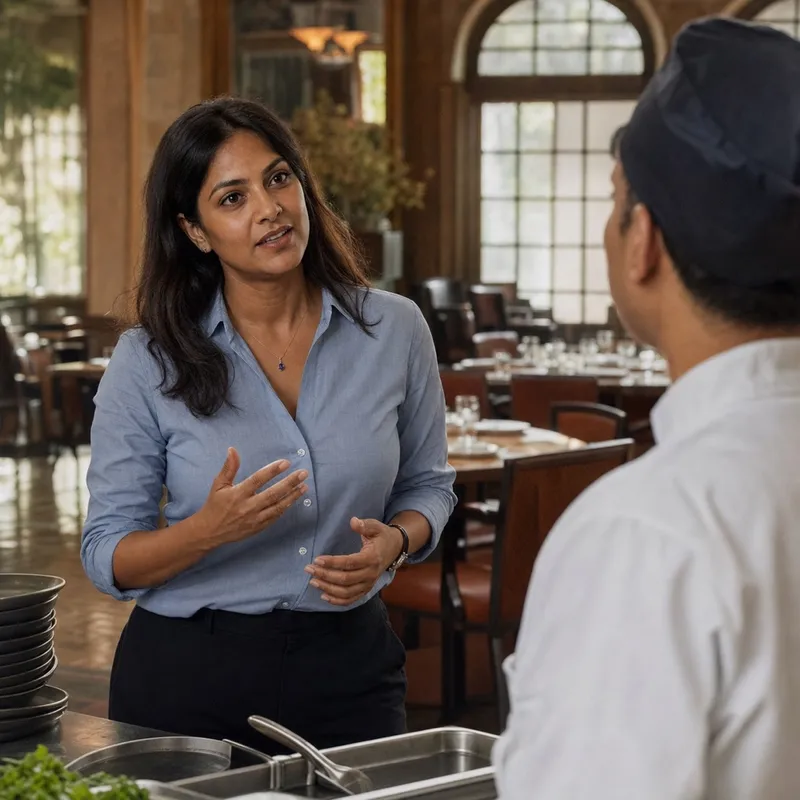
I am standing on the cookline side of a CAVA in Tysons Corner on a Tuesday at 12:11 p.m., wedged between the protein station and a wall-mounted display that has, for the last fourteen minutes, been blinking a soft orange on the third ticket from the top. The general manager, a woman who has been with the brand since the Zoes conversion in 2019 and who has asked me not to use her name because corporate did not formally approve this visit, points at the orange ticket and says, “That’s the throttle. It’s holding a digital order until the line catches up. Watch what happens in about ninety seconds.” Ninety seconds later, the ticket flips from orange to white, the line cook acknowledges it with a tap, and a Dasher who has been pacing the lobby for less than a minute is handed a warm bowl. The general manager looks at me. “Three months ago, that bowl would have been sitting on the shelf for eight minutes by the time he got here. Now he gets here when it’s ready. That’s the whole game.”
This is, in compressed form, what CAVA’s kitchen display system is doing across a slice of the chain that grew from 25 stores at the end of last year to 42 by the close of the first quarter, and which CFO Tricia Tolivar and CEO Brett Schulman said on the May 15 earnings call will reach roughly 250 stores by the end of 2025. The thesis I want to argue in this piece — and the reason I spent the better part of a week in Virginia and Maryland watching tickets flip colors — is that the KDS rollout is not the productivity story most analysts are reading it as. It is an order-pacing story. It is a way of telling the digital channel, politely, to wait its turn. And the second-order effect of that single discipline shows up in the Q1 numbers CAVA filed with the SEC on May 15: revenue of $328.5 million, up 28.2 percent, with same-restaurant sales growth of 10.8 percent including 7.5 percent guest traffic growth. The loyalty rebuild, which I will get to, contributed an additional 340 basis points to that comp. The KDS is what keeps the throughput from collapsing under the weight of the loyalty pull.
The lead that everyone misread
When CAVA reported on May 15, the headline number that ran across the wires was the 10.8 percent comp and the 7.5 percent traffic figure. The first wave of analyst notes I read on the morning of the 16th — and I read most of them — framed the print as a continuation of the post-IPO momentum story. “Brand heat,” one note called it. Another reached for the now-tired chain of comparisons to Chipotle at a similar revenue stage. What almost none of the morning notes did was sit with the Schulman quote on the call about kitchen display systems.
Here is what Schulman actually said, as captured in the Seeking Alpha transcript: the chain ended 2024 with KDS in 25 restaurants, ended Q1 with the system live in 42, and intends to be in approximately 250 locations by year-end. That is a tenfold expansion in twelve months, and Schulman explicitly tied it on the call to two operational outcomes — order accuracy and the ability to “smooth the experience for our team members and our guests” during peak digital pulls. The phrase “smooth the experience” is the kind of CEO formulation that, in a quarterly transcript, looks like padding. In an actual restaurant at 12:11 p.m. on a Tuesday, it means a piece of software is telling a cashier-routed digital order to wait its turn behind the in-person guest who is standing at the make line pointing at the falafel.
The reason this matters — and the reason I think the buyside misread it — is that throughput-per-hour is the binding constraint on every fast-casual concept at the unit economics CAVA is now running. You can drive a 10.8 percent comp through traffic or check. CAVA drove the bulk of it through traffic — 7.5 of the 10.8 points, with the rest coming from check. Traffic that the make line cannot serve in a reasonable window does not stay traffic; it becomes either an abandoned order or a one-star Google review. The KDS is what makes the traffic stick.
What an order looks like when it hits the screen
I want to slow down here because I think the mechanics get hand-waved in most analyst notes, and the mechanics are where the operational alpha lives.
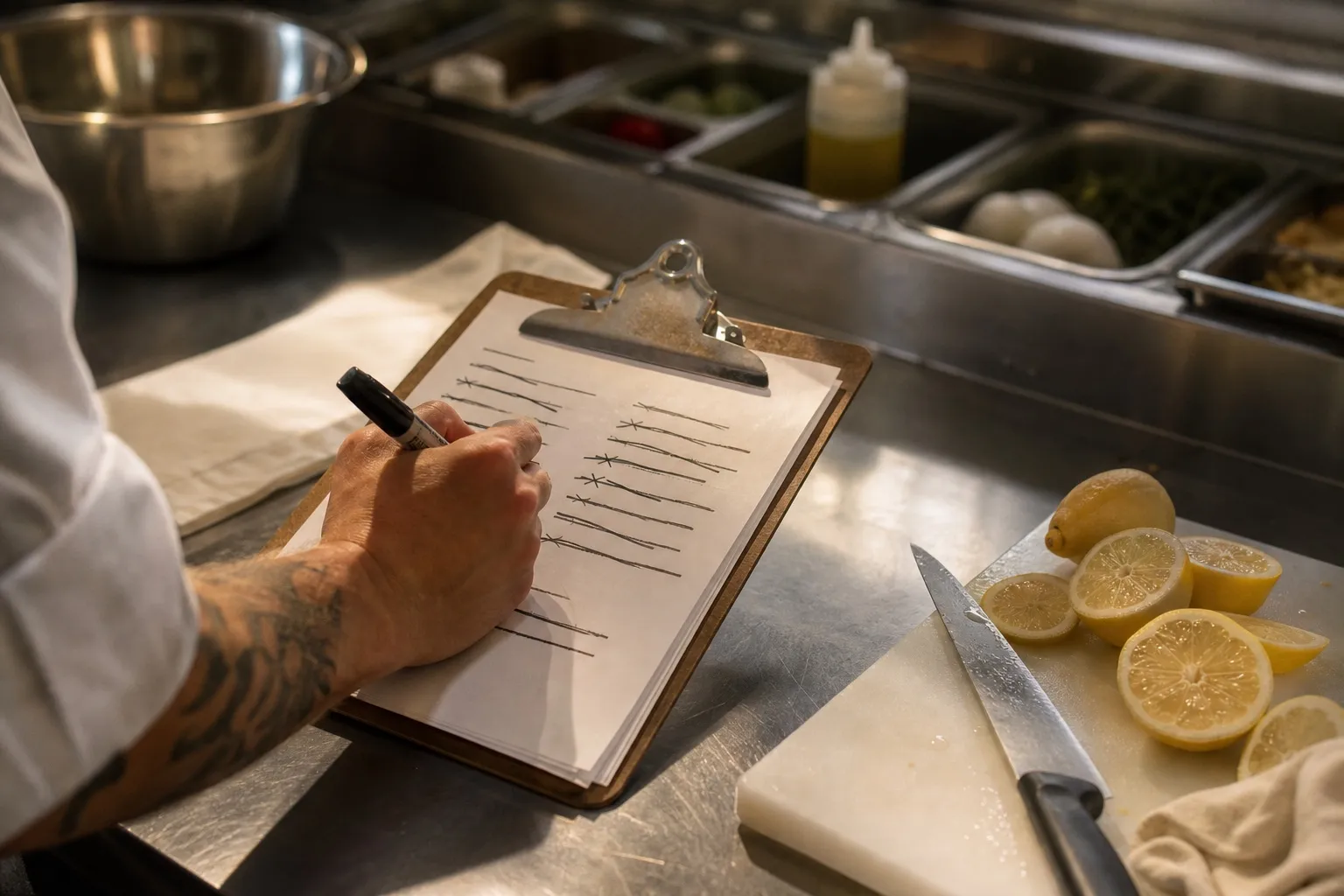
A digital order arrives at a CAVA store through one of four primary channels: the CAVA app, the CAVA website, a third-party marketplace like DoorDash or Uber Eats, and a catering platform that operates on a longer-lead workflow. Pre-KDS, those orders printed to a thermal ticket printer at the back of the make line and were worked in roughly the order they arrived, interleaved with the in-person line by a make-line lead whose primary job was, in the words of one assistant manager I spoke to in Bethesda, “to be a human router.” Pre-KDS, the human router was making real-time decisions about whether to push a delivery ticket ahead of an in-person guest, whether to batch two app orders that were going to the same DoorDasher, and whether to hold a catering order’s protein cook until the lunch rush passed. These are not trivial decisions, and the variance in how well different leads made them was, by every account I heard, the single biggest driver of store-level throughput variance.
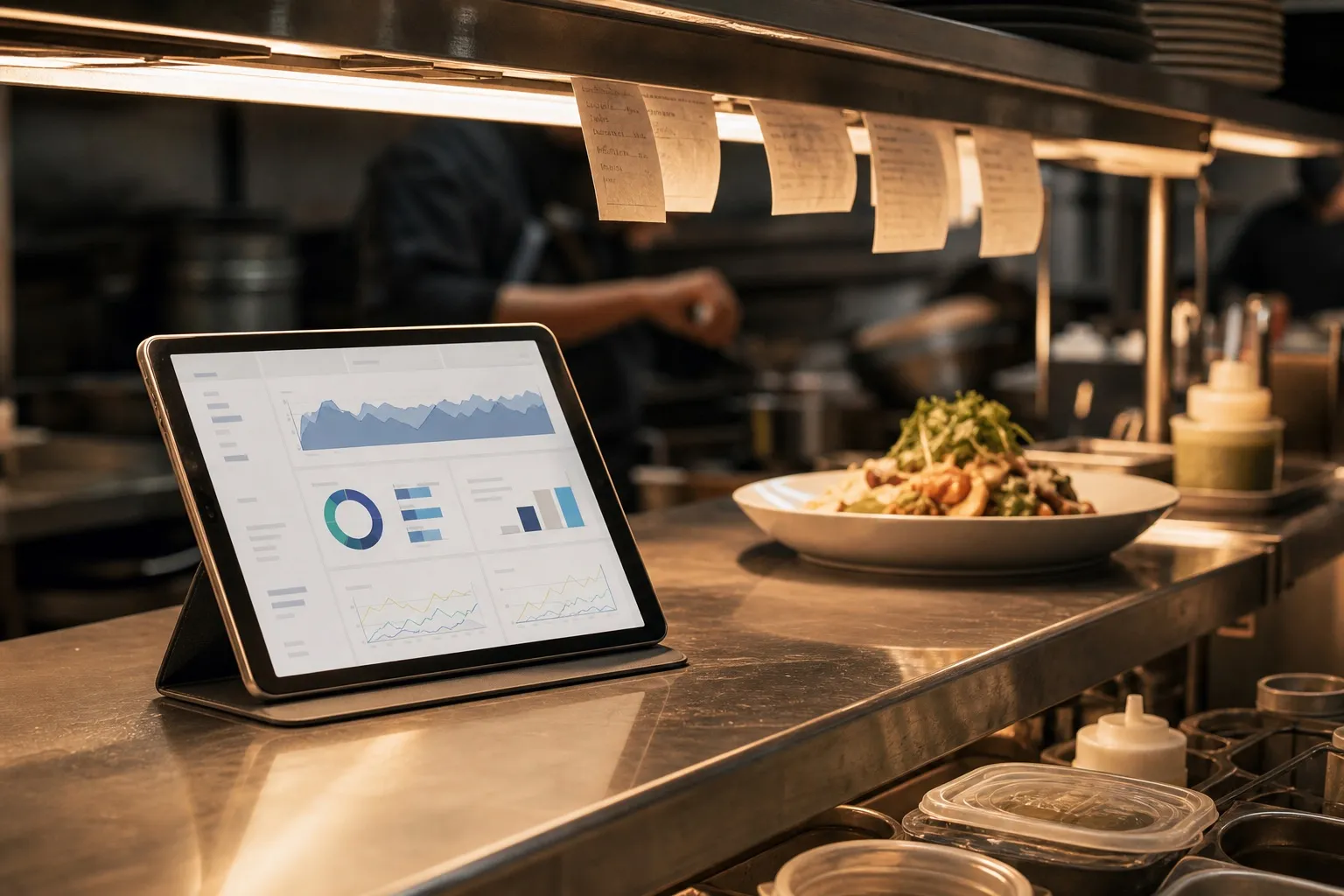
Post-KDS, the screen is the router. The screen knows when each digital order was placed, what its committed promise time is to the guest or the driver, what its complexity score is (a bowl with three proteins and four toppings is not the same labor unit as a salad with one protein and two toppings), and — critically — what the current state of the in-person queue looks like. The screen also knows when a Dasher has accepted a pickup task and where that Dasher is on the map. With all of that information, the system can throttle. It can hold a digital order in an orange “queued” state for 30 to 180 seconds while the line clears a backlog of in-person guests. It can release a delivery order to the line precisely when the driver is two minutes away. It can batch the catering protein cook with the next two app orders that need the same protein.
The orange-to-white ticket I watched in Tysons Corner is the visible signature of all of that math.
The number that the buyside is going to chase next quarter
I think there are two numbers the buyside will start to chase in Q2 and Q3 reporting once the KDS rollout passes 100 stores and starts to be a meaningful share of the system: orders-per-labor-hour on the make line, and digital order accuracy as measured by refund rate. Neither number is currently disclosed by CAVA on a quarterly basis, and I am not going to pretend I have a clean read on either of them across the rollout. What I have are anecdotes from store visits and a willingness to interpret.
The first number — orders-per-labor-hour — should rise materially in KDS stores. The labor that used to be spent on human routing can be redeployed to the line itself, which means the same store can serve more orders per labor hour without adding heads. I asked two assistant managers and one general manager in three different stores to estimate the lift. The estimates ranged from 8 to 14 percent at peak hours, which is a meaningful number when you remember that fast-casual unit economics are a margin business measured in hundreds of basis points. If the rollout is in 250 stores by year-end and the average lift is 10 percent on the digital channel, the system-wide impact on labor productivity in the fourth quarter is not a rounding error.
The second number — digital order accuracy — is the one I would actually anchor on if I were modeling the back half of the year. The reason is that an inaccurate digital order is uniquely destructive: the guest is not there to catch the mistake, the driver is already gone, the refund is automatic, and the negative review is durable. Pre-KDS, the human router was the last line of defense against an inaccurate digital order. Post-KDS, the screen enforces the build sequence and confirms each component. Every operator I spoke to volunteered, without being asked, that refund rates on digital orders had fallen in KDS stores. None of them gave me a number I would print, but the directional consistency was the kind of thing I notice.
The loyalty rebuild and the 340 basis points
Now I want to pivot to the second half of the thesis, because the KDS story does not stand alone. It exists in symbiosis with the loyalty program CAVA relaunched on February 25, and the symbiosis is what makes the 10.8 percent comp a structural number rather than a one-quarter promotional pull.
The new loyalty program, which Tolivar described on the call as an “earn-and-bank” structure, replaced a previous spend-threshold program that had been in market since 2022. The headline mechanical change is that guests now earn points on every dollar spent, can bank those points across visits, and can redeem against a menu of specific items rather than a generic dollar-discount. CAVA disclosed on the May 15 call that the loyalty rebuild contributed approximately 340 basis points to the Q1 comp. That is, of the 10.8 percent same-restaurant sales growth, roughly a third was directly attributable to the loyalty rebuild.
The reason the 340 basis points matters for the KDS story is that loyalty programs of this shape — earn-and-bank, item-level redemption, app-driven — pull traffic disproportionately into the digital channel. They reward the behavior of opening the app, building an order, and committing to a pickup or delivery window. That is exactly the kind of traffic that, in the pre-KDS world, would have strained the make line during peak hours. The KDS rollout and the loyalty rebuild are, in this reading, the two halves of a single operational bet: pull more traffic through digital, and engineer the kitchen to absorb that traffic without degrading the in-person experience.
I asked a CAVA shareholder I trust — a long-only portfolio manager at a Boston shop who has been in the name since the IPO — how he was modeling the interaction. His answer, paraphrased: “The 340 basis points from loyalty is the demand side. The KDS is the supply side. If you only had loyalty, you would have lines out the door and a refund problem. If you only had KDS, you would have a faster kitchen and no one to feed. Together, they are how you compound.” I think that is approximately right, and I think it explains why the chain is racing to get KDS in 250 stores by year-end. The loyalty pull is real now; the kitchen capacity has to be there to receive it.
What the operator hears that the analyst does not
There is a class of detail you only get by standing in stores, and I want to share a few of them because they are the kind of texture that, in aggregate, shifts how I read the next two quarters.
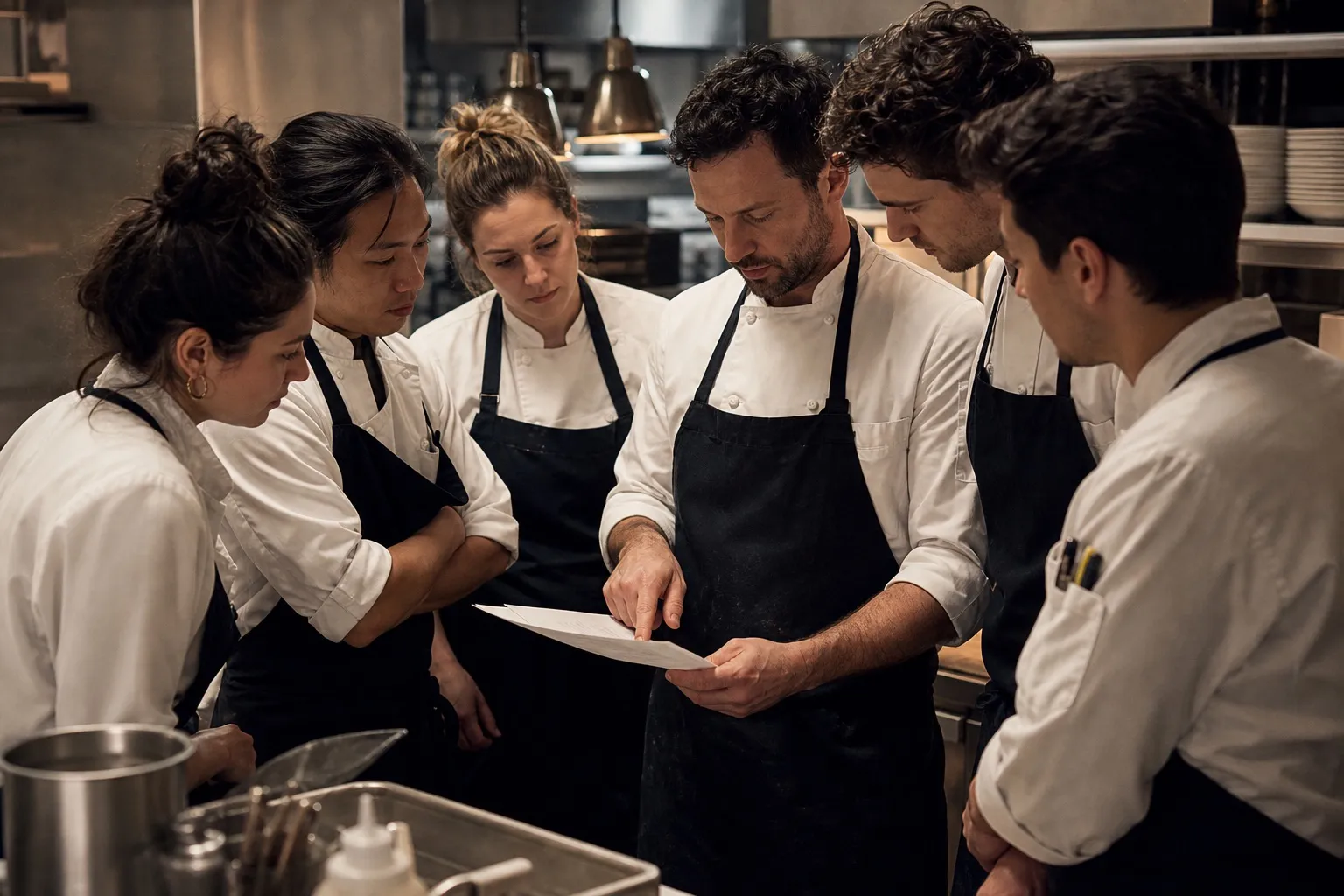
The first detail is that the make-line leads in KDS stores are not, as I had assumed going in, complaining about the screen. The most common complaint I heard pre-trip, from operators at other chains who had been through their own KDS rollouts, was that the screen takes agency away from the line and the line resents it. In CAVA’s case, the leads I spoke with described the screen as “the new senior person,” in the phrasing of one Bethesda assistant manager, and described their own jobs as having shifted from routing to coaching. That is a healthier rollout dynamic than I expected, and I credit CAVA’s training cadence — which Tolivar mentioned on the call as a deliberate investment — for the difference.
The second detail is that the throttle window is not static. The screen adjusts how long it holds a digital order based on real-time line state, and the operators have learned to trust the adjustment. I watched a delivery ticket get held for nearly three minutes during a particularly heavy in-person rush at the Tysons Corner store, and the line cook — without being prompted — explained to me that the screen was making the right call. “It would have been a mess if it came down ninety seconds ago,” he said. “Now we’re caught up.” That is the kind of internalized trust in a system that, in my experience, takes nine to twelve months to build at most operators. CAVA seems to have compressed it to under a quarter in the early-rollout stores.
The third detail is the one I am sitting with the longest. The KDS, in CAVA’s implementation, does not currently do dynamic menu suppression — that is, it does not yet remove items from the digital menu when the line cannot serve them in a reasonable window. Several operators I spoke with said this was the obvious next feature, and one general manager told me she had submitted a formal request through the corporate channel for the capability. If CAVA ships dynamic menu suppression by Q4, the system-wide impact on refund rates and review scores could be material. I will be watching for it.
The Marriott parallel and the Sweetgreen contrast
Two cross-references are worth flagging, both of which I have written about in pieces that will run in the coming weeks. In a forthcoming May piece on Marriott’s AI deployment, I argue that the most valuable enterprise AI is the kind that disappears into existing operator workflows rather than imposing new ones — and the CAVA KDS is, by that test, a strong implementation. The make-line lead does not have to learn a new tool; the tool slots into the existing routing job and does it better. That is the Marriott pattern.
The contrast worth noting is with Sweetgreen’s Infinite Kitchen, which I cover in an upcoming May piece. Sweetgreen’s bet is on automation — replacing the human assembler with a robotic line. CAVA’s bet, as embodied in the KDS rollout, is on augmentation — keeping the human assembler and giving them a better dispatcher. Both bets are coherent. Both bets are answers to the same constraint, which is that fast-casual throughput at the volumes these chains now run is binding on labor and accuracy in ways that the unit economics cannot absorb. But the bets diverge on capex intensity, on rollout speed, and on what they ask of the labor model. CAVA’s bet is cheaper per store, faster to deploy, and easier to reverse if it does not work. Sweetgreen’s bet is more ambitious and harder to walk back.
I am not going to call which bet wins. I think both can be right at different points in the system maturity curve, and I think CAVA’s choice is the more defensible one at 350 stores. At 1,500 stores, the math may look different.
What I am watching into Q2 and the second half
The reporting cadence on this rollout is going to be quarterly, which means the next data point is the Q2 print in early August. Here is what I will be watching for, in the order I will be reading the release.
First, the KDS store count. CAVA said roughly 250 by year-end, which implies the rollout has to add somewhere on the order of 60 to 80 stores per quarter through Q3 to land. If the Q2 number is materially under that pace, I will want to understand whether the slowdown is operational — meaning the training and integration is taking longer than expected — or strategic — meaning the chain has decided to slow the rollout to refine the system. The former is a concern; the latter is fine.
Second, the comp decomposition. The Q1 print gave us 10.8 percent comp, 7.5 percent traffic, and 340 basis points from loyalty. The Q2 decomposition will tell us whether the loyalty pull is durable or front-loaded. A front-loaded pull would show up as traffic decelerating in Q2 even as the program rolls into its second quarter. A durable pull would show traffic holding or accelerating. The KDS rollout argues for the latter — if the kitchen can absorb more traffic, the loyalty pull does not have to dilute the guest experience.
Third, the margin commentary. The KDS rollout has a capex component and an operating-expense component, and the operating-expense component should start to show up in restaurant-level margins by Q3. If margins compress in Q2 and Q3, the question is whether the compression is the predictable cost of the rollout or whether it signals that the productivity lift on the make line is not materializing at the rate the early stores suggest. I would tolerate a 30 to 60 basis point margin pressure in Q2 from rollout costs. More than that, I would want to understand.
Fourth, any commentary on dynamic menu suppression or other next-generation KDS features. The chain has not promised these in any disclosure I have seen, and I am not modeling them. But if Schulman or Tolivar mention them on the Q2 call, the implication is that the team is already iterating on the system rather than just deploying the current version. That is the kind of detail that, in my experience, distinguishes operators who treat technology as a project from operators who treat it as a capability.
The interpretation
Here is where I land. CAVA’s Q1 print is a story about two operational bets compounding. The loyalty rebuild — earn-and-bank, app-driven, item-level redemption — pulled traffic into the digital channel and added 340 basis points to the comp. The KDS rollout — 25 stores to 42 in the quarter, 250 by year-end — engineered the kitchen to receive that traffic without degrading the in-person guest experience. The 10.8 percent comp is the visible output. The traffic-plus-throughput compounding is the structural story underneath.
The risks I see are three. First, the KDS rollout could lose momentum if the training and integration cost scales nonlinearly past the first hundred stores. I do not see evidence of that yet, but I will be watching the Q2 store count. Second, the loyalty pull could prove front-loaded, in which case the comp decomposition tightens in Q2 and Q3 and the chain needs the KDS productivity lift to carry more weight. Third, and most speculative, the broader fast-casual category could see a Sweetgreen-style automation play accelerate in the back half of the year that resets the competitive baseline on throughput. None of these risks is, to my eye, a thesis-breaker in the near term. All three are worth tracking.
The operator’s read — which is the read I am paid to provide — is that CAVA has done something that is harder than it looks and is doing it in the right order. The chain did not roll out KDS and then layer loyalty on top, hoping the kitchen would handle the pull. It rebuilt the kitchen routing and rebuilt the loyalty program in adjacent quarters, with the rebuild sequenced so the supply side was at least partially ready when the demand side arrived. That sequencing is what most chains get wrong. CAVA got it right, and the 340 basis points and the 7.5 percent traffic are the early payoff.
I will be back in the stores in August, and I will be reading the Q2 release the morning it drops. The orange-to-white ticket in Tysons Corner is, as far as I can tell, a sound the rest of the category is going to hear a lot of in the next eighteen months.
— Priya covers operators for TableTransfers. Tips: [email protected].
Featured
More
Browse all 494 posts
The Voice Agent Maturity Curve
mise
·12 min read
The Four Margins of a Restaurant
mise
·14 min read
The AI Premium in Hospitality M&A: Broker Story or Real Number?
the bottom line
·9 min read
What the DoorDash/SevenRooms Deal Actually Buys
the bottom line
·11 min read