DoorDash Without SevenRooms: What the Commerce Platform Is Worth in January 2025

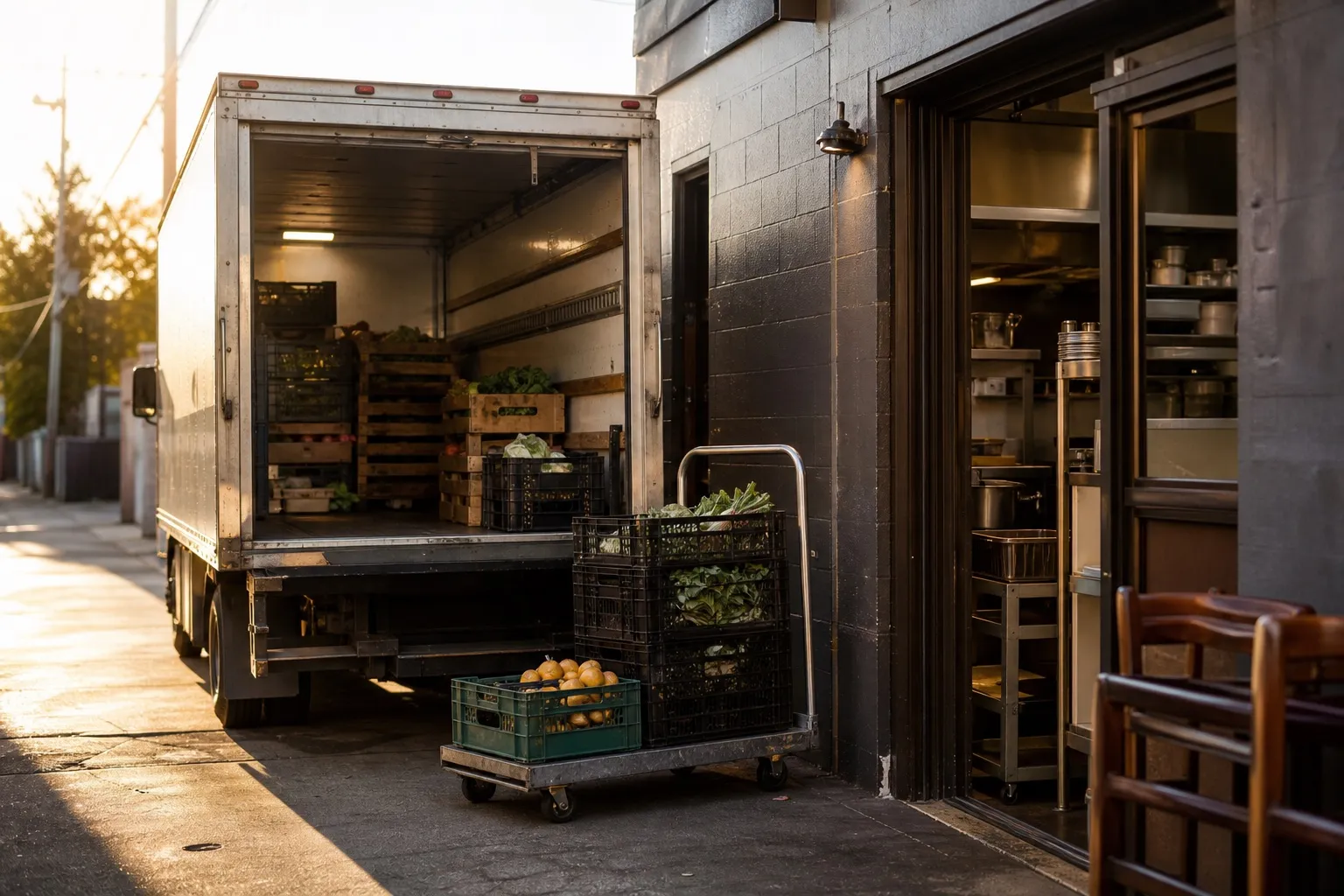
DoorDash's Commerce Platform is already the most expensive piece of restaurant infrastructure capitalized. Analyze the build-vs-buy thesis from January's vantage point — before any strategic-acquirer move.
It’s Friday afternoon, January 24, 2025. I have a spreadsheet open with three tabs: one labeled “Commerce Platform — build cost,” one labeled “host/CRM acquisition comps,” and one labeled “asymmetric — DoorDash side.” I have a cold coffee, an unread Slack thread from a banker in San Francisco, and the unfashionable opinion that the most interesting M&A question in restaurant tech right now is not whether someone buys Toast, or whether Olo gets carved up, or whether SpotOn raises again. The most interesting question is what DoorDash does next with the Commerce Platform — and whether the host/reservations layer is the obvious next strategic move from a build-vs-buy lens.
My base case: it is. The math is just asymmetric in DoorDash’s favor in a way that the market hasn’t really priced in yet.
Let me walk you through why.
What the Commerce Platform actually is
DoorDash’s Commerce Platform — and yes, I know what that URL implies, but I’m citing it for the Commerce Platform framing, not for any deal you might think is announced — is the piece of the business that almost no public-side analyst models correctly. It is not the marketplace. It is not Dasher logistics. It is the bundle of online ordering, white-label storefronts, Drive (the last-mile API), Kitchens, and the merchant-facing tooling that turns DoorDash from a courier network into something closer to a restaurant operating layer.
If you read the Q3 2024 shareholder letter carefully — and I have, several times, with a highlighter — you’ll notice the management language has shifted. “Local commerce” appears more frequently than “delivery.” The KPIs they emphasize on calls are merchant retention and platform attach, not GMV growth. The capex is going into merchant-side tooling, not driver acquisition.
That matters because it tells you where the next acquisition dollars go. They go into the merchant layer. Specifically: into anything that lets DoorDash hold the customer relationship at the restaurant — not just the delivery transaction.
And the gap in that stack, today, in January 2025, is glaring. DoorDash has order capture. It has logistics. It has POS partnerships. What it does not have, in any meaningful first-party way, is the host stand. The reservation. The CRM. The guest profile that says this couple comes in every anniversary, drinks the Sancerre, sits at table 14.
That gap is worth a lot of money. The question is whether DoorDash builds it or buys it. As our later coverage of the broader M&A landscape argues, the strategic-acquirer math in restaurant tech almost always favors buying when the target has a defensible installed base — and host/CRM is one of the few segments where installed base is genuinely defensible.
Why building host/CRM in-house is wildly expensive
Let me show you the build-side math, because this is where the analyst consensus gets it wrong.
The standard founder pitch is “we could build this in 18 months for $30M.” I’ve heard variants of that line from at least four DoorDash alumni in the last six months. It is wrong by roughly an order of magnitude, and here’s why.
A host/CRM/reservations product is not a feature. It is a system of record. The reason OpenTable still has the share it has — twenty-six years after launch — is not because the software is exceptional. It is because the installed base of restaurants, the inventory of tables, the diner network on the other side, and the integration into POS and payments creates a flywheel that takes a decade and roughly $400M of patient capital to replicate. SevenRooms took ~$71M of disclosed funding over ten years to reach its ~13,000-venue footprint, and the SevenRooms team is unusually capital-efficient by venture standards.
So when I model the build-side cost for DoorDash, here’s what I’m putting in the spreadsheet:
- Engineering: 80 engineers for 3 years, fully loaded, ~$72M.
- Sales and onboarding: a direct-sales motion to ~10,000 venues, ~$120M over the same window, because reservations is a high-touch sale and the inside-sales playbook DoorDash uses for SMB delivery doesn’t translate.
- Integration tax: every major POS (Toast, Square, Lightspeed, Revel), every payments stack, every CDP. Call it $40M in integration engineering plus partnership cost.
- Opportunity cost of not having the network effect: this is the line item people forget. A reservations product without a diner-facing network is a worse product on day one. The diner network is OpenTable’s actual moat. Building it from zero — even with the DoorDash consumer app as a starting point — is a $200M+ marketing problem stretched over five years.
My base case build cost: $430M to $500M, over four to five years, with execution risk that’s genuinely hard to underwrite. And at the end of it, you have a worse product than the incumbents in year one, parity in year three, and maybe a leadership position in year five if everything goes right.
Now compare that to the buy-side. I’ll get to specific targets in a second, but at the high end, a strategic-acquirer premium on any of the three credible host/CRM targets in the market today comes in well under the build cost. The math is just not close.
Who DoorDash would credibly buy from a strategic-acquirer position
There are exactly three targets that matter if you’re DoorDash and you’ve decided to buy the host/CRM layer. I want to be precise: I am not saying DoorDash is buying any of them. I am saying that if I’m sitting in the corp-dev seat in San Francisco and my mandate is “close the host gap in the Commerce Platform,” there are three names on the whiteboard and the rest are noise.
SevenRooms. ~13,000 venues, strong hospitality-group footprint, the cleanest data model in the category, US/UK/AU/Singapore presence. The product is genuinely loved by operators in a way that, candidly, most restaurant SaaS is not. Last disclosed round was a 2020 Series B; the cap table is not crowded; the founder-CEO is, by every account I trust, the right kind of operator for an integration. If I were modeling a strategic-acquirer premium here, I’d start at 8-10x ARR and work up depending on the bidder set. That gets you a deal somewhere in the high hundreds of millions to low billions, depending on how the auction runs. Cheaper than the build. Faster than the build. Better product than the build on day one.
Tablecheck. Tokyo-based, dominant in APAC hospitality, particularly Japan. The interesting strategic angle here is geographic — if DoorDash’s international ambitions include the Wolt footprint plus Asia, Tablecheck is the only host/CRM player with real depth in the markets where OpenTable is weak. Smaller installed base than SevenRooms, but the regional moat is real.
OpenTable. The boring answer. Largest installed base, weakest product velocity in the category, owned by Booking Holdings, which has shown no particular willingness to sell. The price would be eye-watering and the integration would be brutal — OpenTable’s tech debt is, charitably, considerable. I’d put this at the bottom of my list, but you can’t write the memo without naming it.
There’s a fourth name people will mention — Resy — but it’s inside American Express now and AmEx is not selling. So it’s not a real target, even if it would be a very interesting one.
If I’m DoorDash, the deal that closes the host gap fastest and at the cleanest price-to-value ratio is the middle one of those three. As we explore in a later piece we publish on the DoorDash commerce platform, the strategic logic for going after the host layer specifically (rather than, say, deeper POS integration or another logistics carve-out) comes back to the same point: the host stand is where the customer relationship lives, and DoorDash does not own that surface today.
I’ll note one historical anchor: DoorDash hasn’t done a software acquisition since 2022. The Caviar deal was 2019. The Wolt deal was a 2021 announcement, closed 2022, and was geographic/logistics — not software. If DoorDash moves on a host/CRM target in 2025, it would be the first material software deal in roughly three years. That’s a meaningful tell about how seriously the corp-dev team is taking the Commerce Platform thesis internally.
What I’d watch for in Q1 2025
Here’s my watchlist as we move through the next quarter.
One: the language in the Q4 2024 earnings call. DoorDash reports in mid-February. If “Commerce Platform” gets more airtime than “marketplace,” and if Tony Xu uses the phrase “merchant relationship” more than twice on the call, that’s a signal. Management has been telegraphing this shift for two quarters and earnings is the venue where the strategy gets confirmed or walked back.
Two: corp-dev hires. I track senior corp-dev moves across the top five restaurant-tech acquirers (DoorDash, Toast, Square/Block, Olo, Lightspeed) like other people track baseball stats. A senior corp-dev or strategy hire at DoorDash with a hospitality-tech background in the next 60 days would tell me a deal is in the pipeline. I’m watching three specific resumes.
Three: SevenRooms hiring patterns. This one is funny but real. When a target is in serious due diligence, you can usually see it in the hiring freeze. Engineering reqs go quiet. Sales reqs go quiet. There’s an unmistakable hum-of-no-hum that shows up in LinkedIn data three to eight weeks before a deal leaks. I check this on a Friday afternoon ritual basis. Right now: normal. That tells me nothing definitive, but it tells me a deal isn’t closing in February.
Four: the regulatory backdrop. The EU AI Act forward-applies on February 2, which has nothing directly to do with restaurant M&A, but it has everything to do with how strategic acquirers are timing data-heavy transactions in Q1. If you’re buying a CRM full of guest profiles in 2025, the regulatory diligence is materially heavier than it was in 2023. I’d expect that to slow rather than accelerate any host/CRM deal, even by a few weeks.
Five: comparable transactions. I’m watching the Bland $40M round expected to close around January 29 and ElevenLabs’ rumored $180M Series C around January 30 — neither is a restaurant-tech deal, but both anchor the broader voice/AI-for-services valuation environment that DoorDash’s bankers will be referencing when they price any host/CRM target. The voice-AI comps matter because the next wave of restaurant CRM is voice-mediated reservations, and any acquirer is paying for that optionality.
The bottom line
Strip everything else away and here’s the analyst memo in three lines.
DoorDash’s Commerce Platform has a host/CRM-shaped hole in it that costs roughly $450M and four years to fill organically. The strategic-acquirer alternative — and there are exactly three credible targets — closes the gap in twelve months at a premium that, even at the high end, runs cheaper than the build. The board math is not close.
My base case for Q1 2025: DoorDash does not announce a host/CRM acquisition in January. Probability of an announcement before end of Q2: meaningfully higher than the market is currently pricing. If you’re long DoorDash on a Commerce Platform thesis, the asymmetry on a host-layer deal is the line item that’s not in your model.
I could be wrong. I’m wrong about something every quarter, and the thing I’m most wrong about most often is timing. But the structural argument — that build-vs-buy on the host stand is the live underwriting question for DoorDash right now — I’d put my last dollar on.
We’ll know more in three weeks when the Q4 print comes out. Until then, this is just spreadsheet work and a cold coffee.
— Marcus writes The Bottom Line. Tips: [email protected].
Featured
More
Browse all 494 posts
The Voice Agent Maturity Curve
mise
·12 min read
The Four Margins of a Restaurant
mise
·14 min read
The AI Premium in Hospitality M&A: Broker Story or Real Number?
the bottom line
·9 min read
What the DoorDash/SevenRooms Deal Actually Buys
the bottom line
·11 min read
Related posts
the bottom line
·11 min read
Darden trades like a tech company. It shouldn't.
the bottom line
·12 min read
Applebee's just became its own franchisee. The territory math is the trade.
the bottom line
·12 min read