How Toast Won Applebee's: The Enterprise Playbook
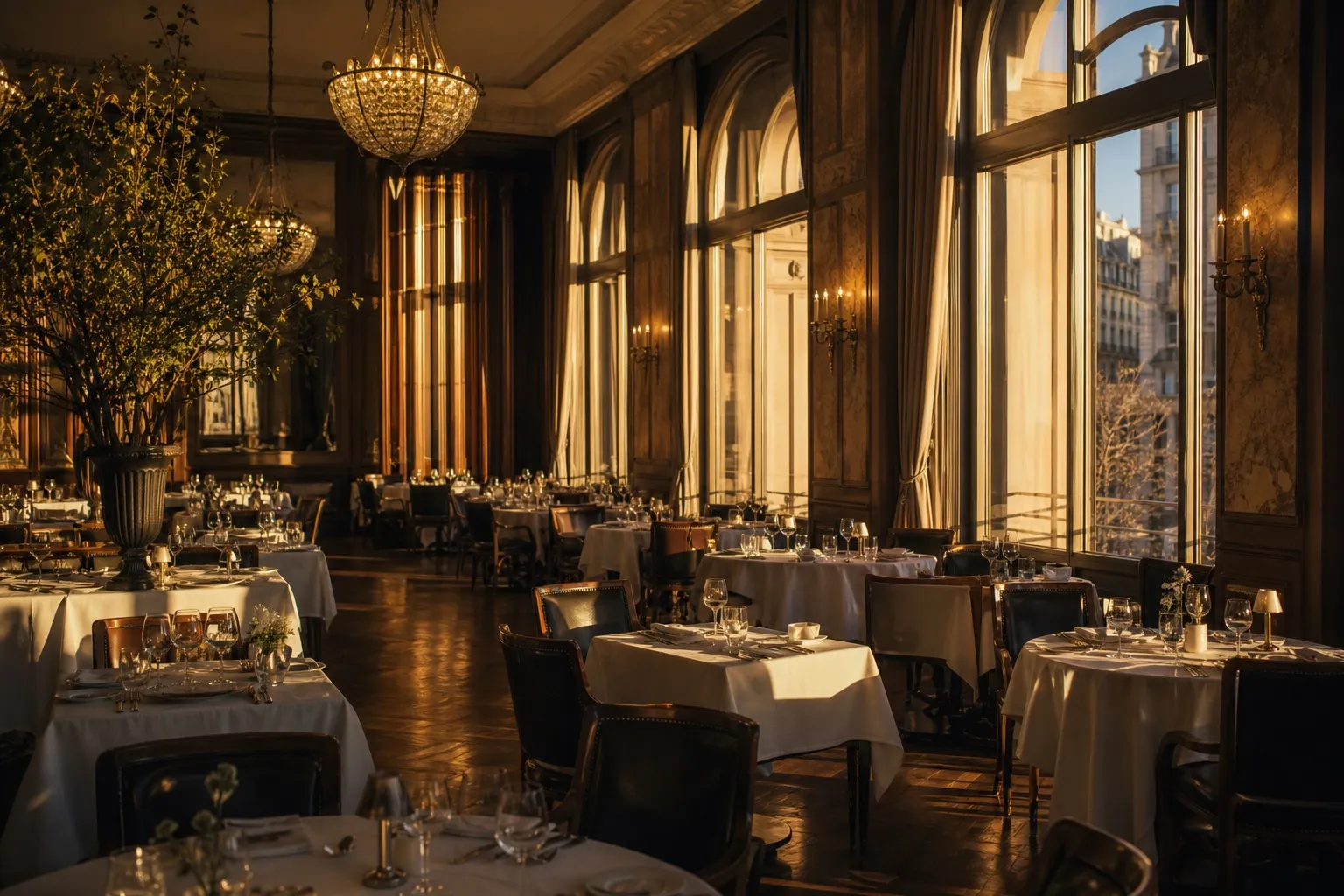
Toast's largest-deal-ever announcement is also a teardown of how to win enterprise: handheld-led demo, payments-bundle pricing, and a multi-year promise on AI. Here's the operator framework.
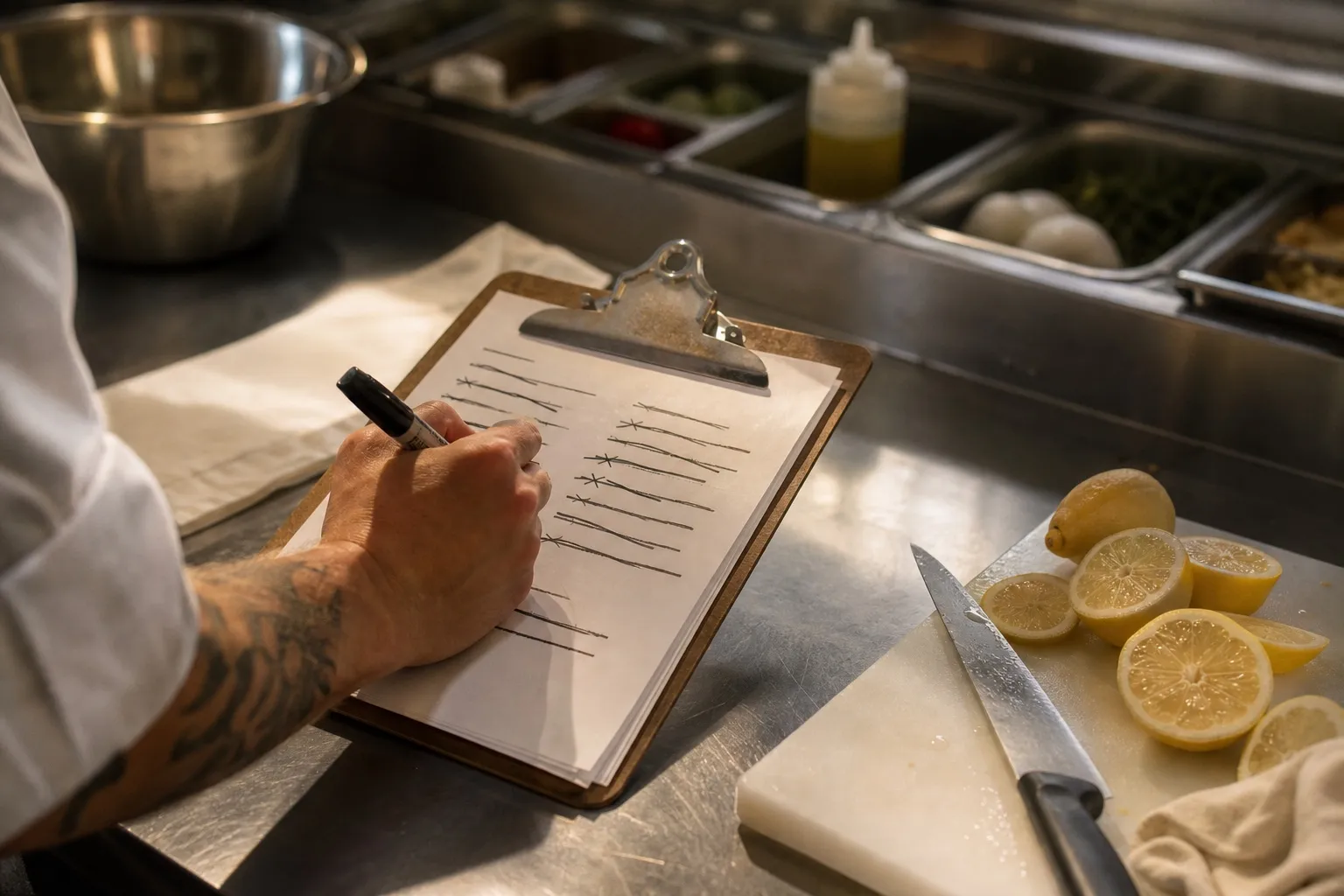
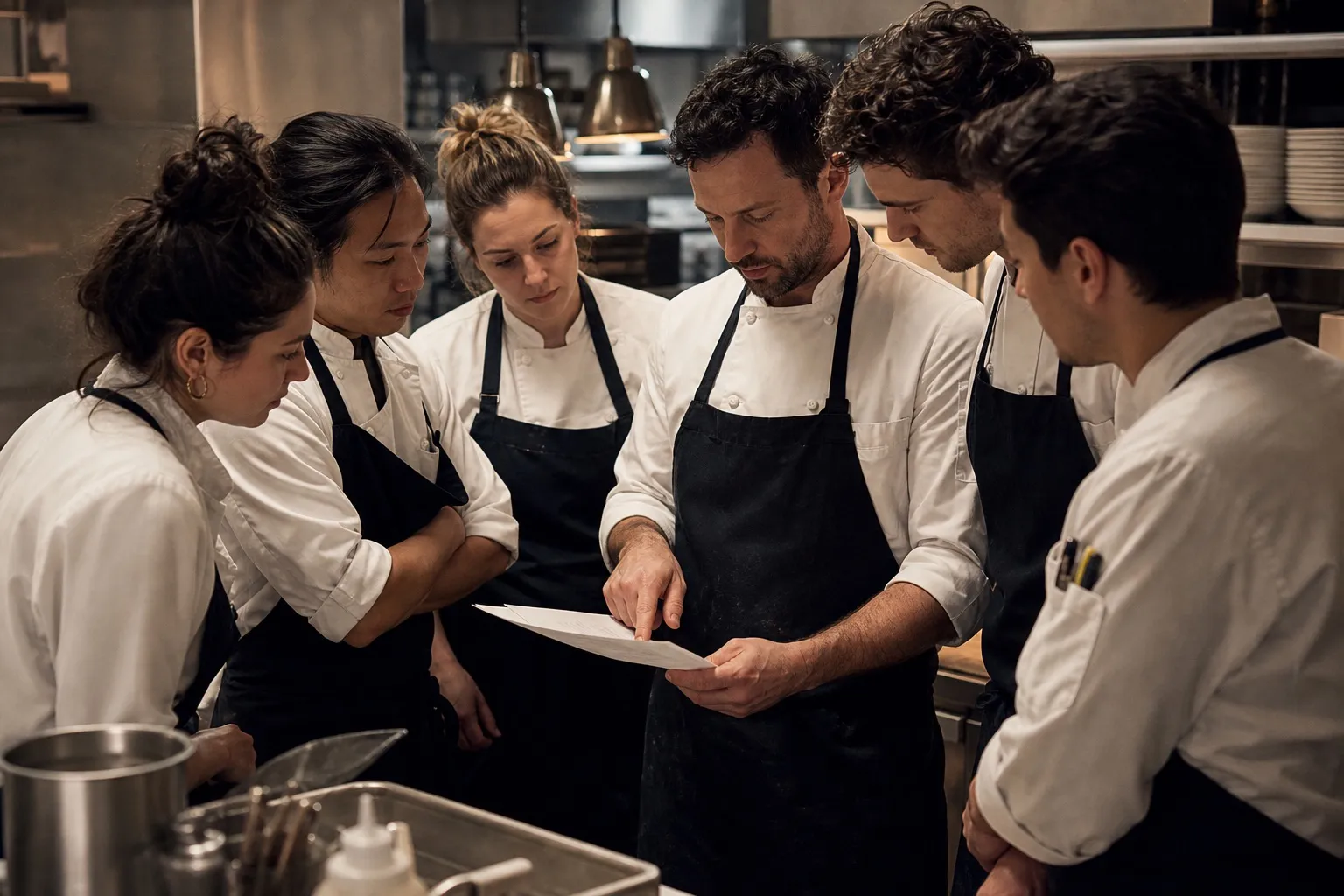
The pre-shift huddle at the Applebee’s off Route 22 started the way every casual-dining pre-shift starts: a manager named Dee with a clipboard, a tray of half-eaten boneless wings on the pass, and seven servers in mid-yawn. What was different — what I’d driven ninety minutes on a Saturday morning to see — was the small black handheld she was holding up like a relic from a future her team had not yet been issued. “This is the thing,” she said. “Not next quarter. The thing.” She turned it so the closest server, a college sophomore named Marisol who had been at this store for fourteen months, could see the screen. “You’ll punch in here, you’ll fire courses here, you’ll close checks here. You won’t walk to the POS station unless someone’s bleeding.”
The handheld was a Toast Go. Two weeks earlier, on the Toast Q1 2025 earnings call, CEO Aman Narang had named Applebee’s as the largest deal in company history and confirmed an enterprise rollout at Topgolf in the same breath. Dee’s store wasn’t live yet. The handheld in her hand was a manager’s demo unit, on loan from the regional. But Dee — who has run this Applebee’s for six years and has a binder of POS migration scars to prove it — was already practicing her pitch to staff, because she knew the next ninety days were going to be the most consequential operational change of her tenure. “Last time we changed the table tech,” she told me later, in the back office under a poster from a 2019 limited-time Margarita Madness promotion, “I lost three servers in two weeks. This one I cannot afford to lose anybody.”
I wanted to tell her she’d be fine. The honest answer is that I think she will be, and that the reason she will be is the same reason this deal landed in the first place — and it’s also why I’m writing this piece as a framework, not a news hit. Toast won Applebee’s because it ran a demo and a deal structure that any operator can copy into an RFP scoring rubric. If you are evaluating a POS in 2025 — and a startling number of you are, because the post-pandemic capex hangover is finally lifting and the enterprise contracts signed in 2018 are coming due — you should treat this case study as a checklist. Not because Toast is the right answer for every concept. Because the questions Toast was best at answering are the questions you should be asking.
This is, in other words, an operator playbook. It’s the handheld-led demo. It’s the payments-bundle pricing logic. It’s the multi-year AI promise. And it’s the Topgolf ride-along that closed the deal. Six sections. Six things to write into your scoring sheet. The contrarian read up top: the Applebee’s announcement is interesting as news, but it’s load-bearing as a framework. Every multi-unit operator running a POS RFP this year should be benchmarking against these four mechanisms.
How the handheld demo wins
The single most important thing to understand about how Toast won the Applebee’s account is that the demo was not a demo of a POS. It was a demo of a labor model.
Most POS sales motions, in the casual-dining segment specifically, still center the back-of-house workstation. You bring the buyer into a sandbox environment, you log in as a manager, you walk through menu management, you show modifier handling, you click into payments setup. You spend an hour proving the system can run the restaurant — which the buyer already assumes, because they’re not going to evaluate a POS that can’t run a restaurant. The demo is a checkbox exercise.
The Toast motion, as it has matured over the last three years, inverts this. The demo opens at the server’s hip. The first object the buyer touches is the Toast Go handheld. The first workflow they see is a four-top ordering coursed appetizers and entrees from the tableside, with the server’s hands never leaving the device. The check splits at the table. The card is dipped at the table. The receipt prints — or doesn’t, depending on the guest’s preference — at the table. The server’s next-action prompts surface on the device while she’s still standing there.
What the buyer sees is not features. What the buyer sees is the elimination of the trip to the POS station. And what the buyer immediately starts doing in his head is the math.
The math, for an Applebee’s-sized concept, is the entire pitch. A casual-dining server walks, on a moderate-volume Saturday night, between four and seven miles. A meaningful fraction of those miles are dead miles — walking to the workstation to fire an order, walking to the workstation to split a check, walking to the workstation to print a receipt. Pull those miles out and you have not just a happier server, you have a server who can carry one more table on her section, which means you have a labor ratio that bends in a direction your CFO has been begging you to bend it in for three years.
The handheld-led demo turns this from a feature conversation into a labor conversation. And labor, for any casual-dining operator in 2025, is the only conversation that matters. Wage inflation has cooled but not reversed. Tipped-credit politics are state-by-state combat. Server retention is still measured in months, not years. Anything that lets a server cover more tables without breaking her body is, definitionally, the thing the COO is willing to write the check for.
This is what Dee was rehearsing in her pre-shift. She wasn’t selling her servers on Toast. She was selling them on not walking. The handheld was the proof.
For operators writing RFPs: score the demo on whether the vendor opens at the handheld or opens at the workstation. If they open at the workstation, you are getting a 2018-vintage POS pitch dressed up in 2025 wrapping paper. The handheld-first demo is the new bar. Toast cleared it. Anyone you’re seriously evaluating needs to clear it too.
Why Ziosk’s zMini set the table for Toast
Here is the part of this story that the trade press has mostly missed: Applebee’s was not coming from a no-tech baseline. Applebee’s had a tableside payments incumbent in Ziosk, and that incumbent was actively deployed.
The Ziosk zMini — the handheld follow-on to the original Ziosk tabletop tablet — was already in service at four hundred and sixty Applebee’s locations as of early 2025. That is not a small deployment. That is roughly twenty-nine percent of the Applebee’s system, which as of Dine Brands’ Q1 2025 8-K filed May 7 included 1,594 domestic Applebee’s restaurants. The chain had run the experiment. The chain knew what tableside payments did to check times, to tip averages, to guest sentiment scores. The data was sitting on someone’s desk.
If you are reading this from the vantage of a competitive incumbent — and Ziosk is one of several pay-at-table specialists in this segment — the worst possible scenario is the one that just played out. You shipped the product. You proved the use case. You generated the data. And then a horizontal POS vendor walked in and absorbed your use case into a broader contract that you were structurally unable to match.
This is the displacement dynamic, and it is the one operators most often misread. The story is not “Toast beat Ziosk on tableside payments.” The story is “Ziosk taught Applebee’s that tableside payments work, and Toast offered to do tableside payments plus everything else Applebee’s needs from its POS, on one bill, with one support contract, and one roadmap.” The incumbent did the missionary work. The challenger collected the kingdom.
For Toast, this is repeatable. There is a category of multi-unit casual-dining and polished-casual chains that have, over the last five years, bolted on a tableside payments specialist to a legacy POS — Aloha, Micros, NCR, an in-house build. The specialist proved the case. The legacy POS is now nearing end of contract or end of life. The window is open. Toast can walk into any of those buyers and run the Applebee’s playbook again: take the use case the incumbent specialist proved, fold it into a bundle, and displace both the legacy POS and the specialist in a single move.
For operators, the read here is more uncomfortable but more useful. If you have a tableside payments specialist running alongside a legacy POS, you should assume that configuration has a half-life of one contract cycle. The economics of running two vendors against two contracts and two support queues do not survive contact with a horizontal vendor offering both functions for less than the sum of the two. The question is not whether you consolidate. The question is who you consolidate to, and whether you let the consolidation be a forcing function for negotiating leverage or a panic move at month thirty-five of your current term.
Score your RFP accordingly. The question “what tableside specialist could this vendor displace” is a leverage question, and the vendor with the most credible answer has the most credible bundle.
The payments bundle, decoded
The pricing logic that won this deal is not in any press release. Toast did not, and will not, publicly disclose the specific terms of the Applebee’s contract. I’m not going to invent numbers. But the bundle structure is observable from how Toast has structured every enterprise deal of comparable size, and from what the company has told public-market investors about its enterprise unit economics on the last three earnings calls.
The bundle is, at minimum, three layers. Layer one is the POS software subscription, priced per location per month. Layer two is the hardware — handhelds, KDS screens, kitchen printers, cash drawers — priced as a capitalized expense or, more often in enterprise deals, amortized across the contract term. Layer three, which is the layer that actually carries the deal, is payments. Toast monetizes payments processing on every card transaction that runs through the system. For a 1,594-unit system running casual-dining ticket averages, the payments take rate compounds into a number that dwarfs the software subscription line.
This matters for the deal structure because it gives Toast enormous flexibility on layers one and two. The vendor can — and in deals of this scale, regularly does — discount the software subscription aggressively and amortize hardware on terms that look painfully favorable to the buyer, because the payments line will compensate over the contract life. The buyer, looking at the line items, sees a software cost that compares favorably to the incumbent and a hardware deployment cost that looks survivable. The CFO does the present-value math on the three lines together and finds that the payments take rate is competitive with the standalone processor the chain was using anyway.
This is the bundle-decoded read: Toast is not winning enterprise on software pricing. Toast is winning enterprise on the willingness to absorb software margin in exchange for payments volume. This is structurally hard for the legacy POS vendors to match, because the legacy POS vendors have either spun off or never owned the payments processing layer. They are selling software against a vendor who treats software as a loss-leader for payments. The asymmetry is the deal.
For operators, the implication is that you should price your RFP across the full stack, not line by line. If a vendor’s software quote looks suspiciously low, the answer is in the payments take rate, and you should negotiate that line as aggressively as you negotiate the software line. The bundle is the deal. Decompose it.
This is also, parenthetically, why the Toast win is not as straightforwardly a margin win as the announcement suggests. Toast traded enterprise software margin for payments volume. The deal is a volume play with a long payback.
What Toast actually promised on AI
Every enterprise software deal signed in 2025 has an AI section in the contract. Most of those sections are decoration. The interesting question for an operator evaluating a vendor is not whether the AI section exists. It is what, specifically, the vendor has committed to deliver, and on what timeline.
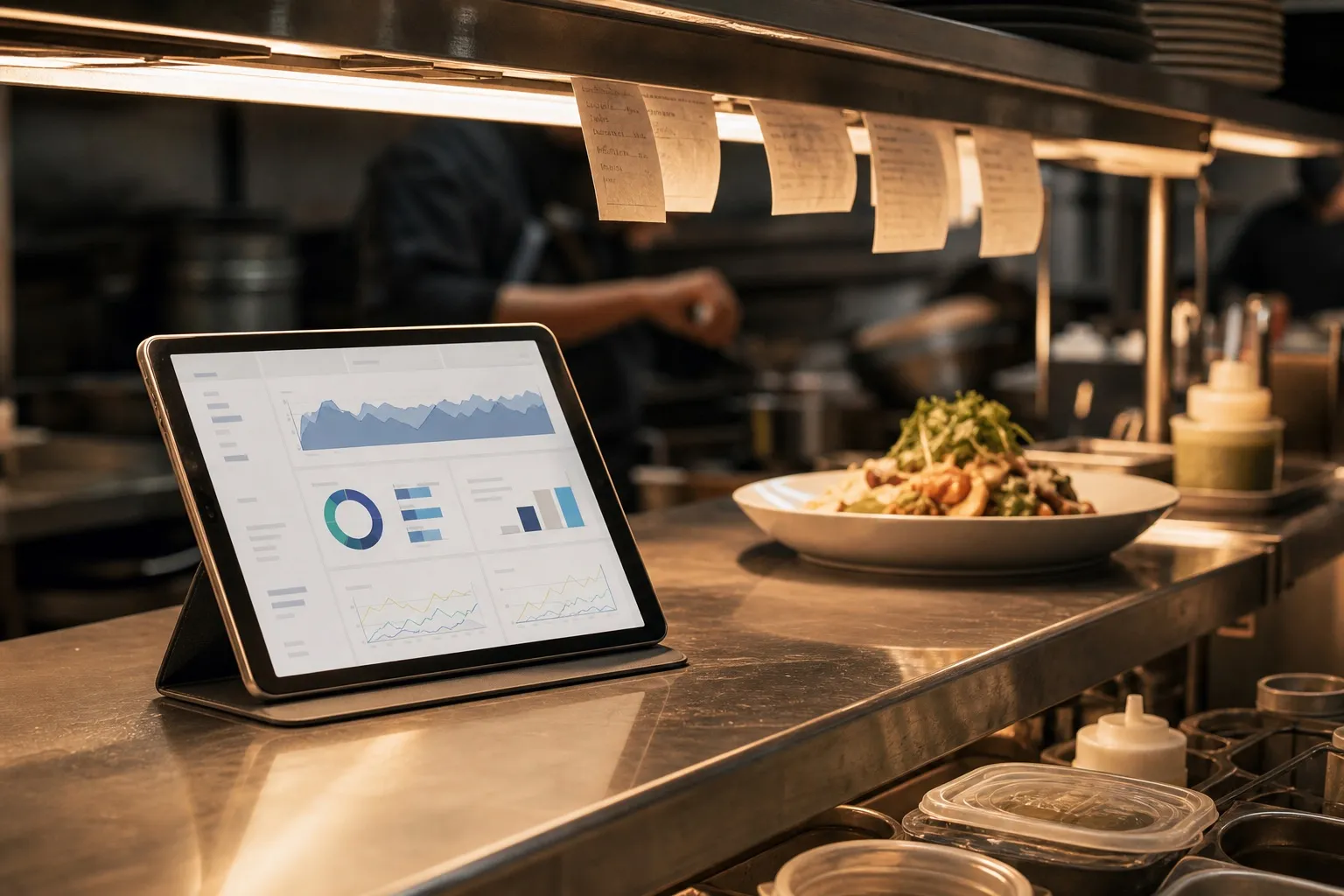
Toast’s public framing on AI, as articulated by Narang on the Q1 call and reinforced in the Restaurant Technology News recap of the week of May 4, centers on three product surfaces. The first is menu intelligence — pricing recommendations and modifier-level analysis that use the chain’s own transaction data to surface optimization opportunities. The second is labor forecasting — shift-level demand prediction that ties into the scheduling module and, in theory, reduces the gap between scheduled labor and actual demand. The third is guest insights — clustering and propensity work on the chain’s loyalty and CRM data.
What is interesting about how Toast has framed these is that the company has been careful, on the public call and in conversations I’ve had with people close to the product roadmap, to position AI as a multi-year promise rather than a near-term deliverable. The contract language reflects this. The Applebee’s deal does not, as far as I can determine, hinge on a specific AI feature being live by a specific date. It hinges on Toast committing to invest in these surfaces over the contract life, with a customer advisory cadence that gives Applebee’s input on the roadmap.
This is, from an operator-protection standpoint, the right shape. The wrong shape — the one I’ve seen in too many vendor pitches this year — is the vendor that walks in with a flashy AI demo and commits to specific feature dates in the contract. Those commitments are aspirational, the dates slip, and the operator ends up either renegotiating or absorbing the slip silently. The Toast structure — invest in the category, advise on the roadmap, no specific feature dates — is more honest about what AI development actually looks like and gives the operator a seat at the table on what gets built.
For RFP scoring, the test is straightforward: ask the vendor what they have committed to ship in AI in the next six months. If the answer is a list of specific features with specific dates, discount it. If the answer is a category-level commitment with a customer advisory mechanism, take it seriously. Toast’s answer to Applebee’s was the second kind, and that is part of why it landed.
The longer-arc read here is that the POS layer is becoming the data layer, and the data layer is what AI will be built on. The vendor that owns the transactional data has structural advantages on every AI surface a restaurant cares about, because every AI surface a restaurant cares about — demand forecasting, menu optimization, labor scheduling, guest segmentation — runs on transactional and operational data the POS is generating in real time. Toast’s AI promise to Applebee’s is, in part, a promise that the data exhaust from 1,594 stores will compound into product capability over the contract life. That is a real promise, and it is the kind of promise that is hard for any non-incumbent to match three years from now.
It is also the reason the contract is multi-year. AI compounding requires data accumulation. Data accumulation requires time. The multi-year structure is not a vendor’s preference for long lock-in. It is a feature of the AI roadmap working at all.
The Topgolf ride-along that closed the deal
Now we come to the part of the story that the announcement made elegant and that most readers will skim past, which is a mistake. Toast did not announce the Applebee’s deal alone. Toast announced the Applebee’s deal alongside a US enterprise rollout at Topgolf.
The Topgolf announcement is, on its surface, a separate deal. It is not. It is, in enterprise sales terms, the ride-along — the validating reference that turns an unprecedented deal into a defensible decision. Here is how this works mechanically.
When an enterprise buyer is sizing the largest POS migration in their company’s history, the procurement team and the board’s audit committee are both asking the same question: who else has done this. The answer “you’d be the first” is rarely acceptable. The buyer needs a reference. The reference has to be comparable in scale, comparable in complexity, and comparable in stakes. Toast had — as of the week of the announcement — exactly one casual-dining-adjacent enterprise reference of the scale Applebee’s required, and the timing of when that reference came online dictated the timing of the Applebee’s signature.
Topgolf is not Applebee’s. Topgolf is a venue concept with a different ticket structure, different labor model, and different guest flow. But Topgolf is a multi-unit US enterprise with food and beverage operations at scale, and Toast is in the process of rolling it out. That is enough. The procurement team at Applebee’s looks at Topgolf and sees a vendor that has gotten over the line on a deployment of comparable complexity. The audit committee looks at Topgolf and sees a vendor that has reduced the execution risk on the migration phase. The reference does its job.
This is why the two announcements landed in the same earnings call. They were always going to land together. The Topgolf rollout is what made the Applebee’s signature defensible at the procurement and board level. The Applebee’s signature is what makes the Topgolf rollout look like the start of an enterprise category, rather than a one-off. The two announcements are mutually load-bearing.
For operators, the read is that you should ask your vendor not just for references, but for references that look like you on the dimensions that matter for migration risk. Number of units. Geographic distribution. Complexity of menu architecture. Integration count with adjacent systems. A vendor with twelve references that all look like your concept is a vendor whose migration risk has been wrung out. A vendor with one reference that looks like you and eleven that don’t is a vendor still building the playbook on your dime. Toast had Topgolf when it needed Topgolf. That is not luck. That is enterprise sales discipline, and it is the kind of discipline you should be testing for.
The broader pattern this fits — as our later operator case study on operator-led automation argues — is that enterprise restaurant tech wins are bought in pairs. You sign the marquee account, and you announce it with the reference that made the marquee defensible. Sweetgreen’s Infinite Kitchen rollouts followed the same pattern. Chipotle’s vendor consolidation, as we’ll discuss in our subsequent piece on tech-mature chains buying not building, followed the same pattern. The marquee plus the validating ride-along is the shape.
Operator takeaways
I sat back down with Dee at the end of her Saturday lunch shift. She had spent the previous three hours fielding the same two questions from servers, in slight variations: when do we get them, and is this going to change how we tip out. The first question she could answer with a rough quarter. The second she could not, because the chain has not finished the tip-pooling policy work that any tableside-payments migration forces. She poured me a coffee and said, “The thing nobody tells you about a new POS is that the system is the easy part. The policy is the hard part.”
She is right, and that is the note this column will end on. The Toast playbook — handheld-led demo, payments-bundle pricing, multi-year AI promise, Topgolf ride-along — explains why the deal landed. It does not explain whether the rollout will work. The rollout will work or not based on a thousand decisions Dee and her peers are about to make at the store level, about training, about tip handling, about the specific moments in a server’s shift when the handheld is the right tool and the moments when the workstation is still the right tool. The vendor delivers the platform. The operator delivers the implementation.
Which is, finally, why the framework here is more important than the announcement. If you internalize the four mechanisms — the demo shape, the bundle structure, the AI commitment style, the reference pairing — you will be a better buyer regardless of which vendor you end up signing with. The Applebee’s deal is the proof point. The framework is the asset.
Operator takeaways
- Score the demo on whether the vendor opens at the handheld or at the workstation. The handheld-first demo is the new bar; anything less is a 2018-vintage pitch.
- Decompose the bundle. If software pricing looks suspiciously low, the answer is in the payments take rate — negotiate that line as aggressively as you negotiate software.
- On AI, prefer category-level commitments with a customer advisory mechanism over specific feature dates. Dated features in vendor contracts slip; advisory seats compound.
- Ask for references that look like you on migration-risk dimensions — units, geography, menu complexity, integration count. One look-alike reference is worth twelve adjacent ones.
- If you run a tableside specialist alongside a legacy POS, assume that configuration has a half-life of one contract cycle. The consolidation is coming; choose the timing.
The handheld Dee was holding at the pre-shift will be in Marisol’s apron pocket within the quarter. The Toast logo will be on the back of it. The payments will route through Toast’s processor. The AI roadmap will compound on Applebee’s data for years. Every one of those facts is a consequence of decisions that were made in a procurement room six months before any of this was announced. The decisions were good ones. The procurement team scored the framework. The vendor that won the framework won the deal.
If you are running a POS RFP this year, score the framework. The deal will follow.
— Priya files The Operator. Tips: [email protected].
Featured
More
Browse all 494 posts
The Voice Agent Maturity Curve
mise
·12 min read
The Four Margins of a Restaurant
mise
·14 min read
The AI Premium in Hospitality M&A: Broker Story or Real Number?
the bottom line
·9 min read
What the DoorDash/SevenRooms Deal Actually Buys
the bottom line
·11 min read