NRA Show 2025 Takeaways: The Operator's Field Guide to What to Deploy Next
After the noise, the actionable list is short: voice on the phone (not drive-thru), AI-powered upsell, computer vision for QA. Here's a 12-month build order — and the budget envelope to defend to your CFO.
It’s a Tuesday morning, the kind where the espresso machine is the loudest thing in the room and the operator across the table from me has been up since four. He runs eleven units across two states — a mix of fast-casual and one full-service concept his wife refuses to let him sell. His phone has buzzed three times since we sat down. Two were the GM at his airport location asking about a fryer. The third was his CFO, who has questions about a line item on next year’s budget labeled “AI.”
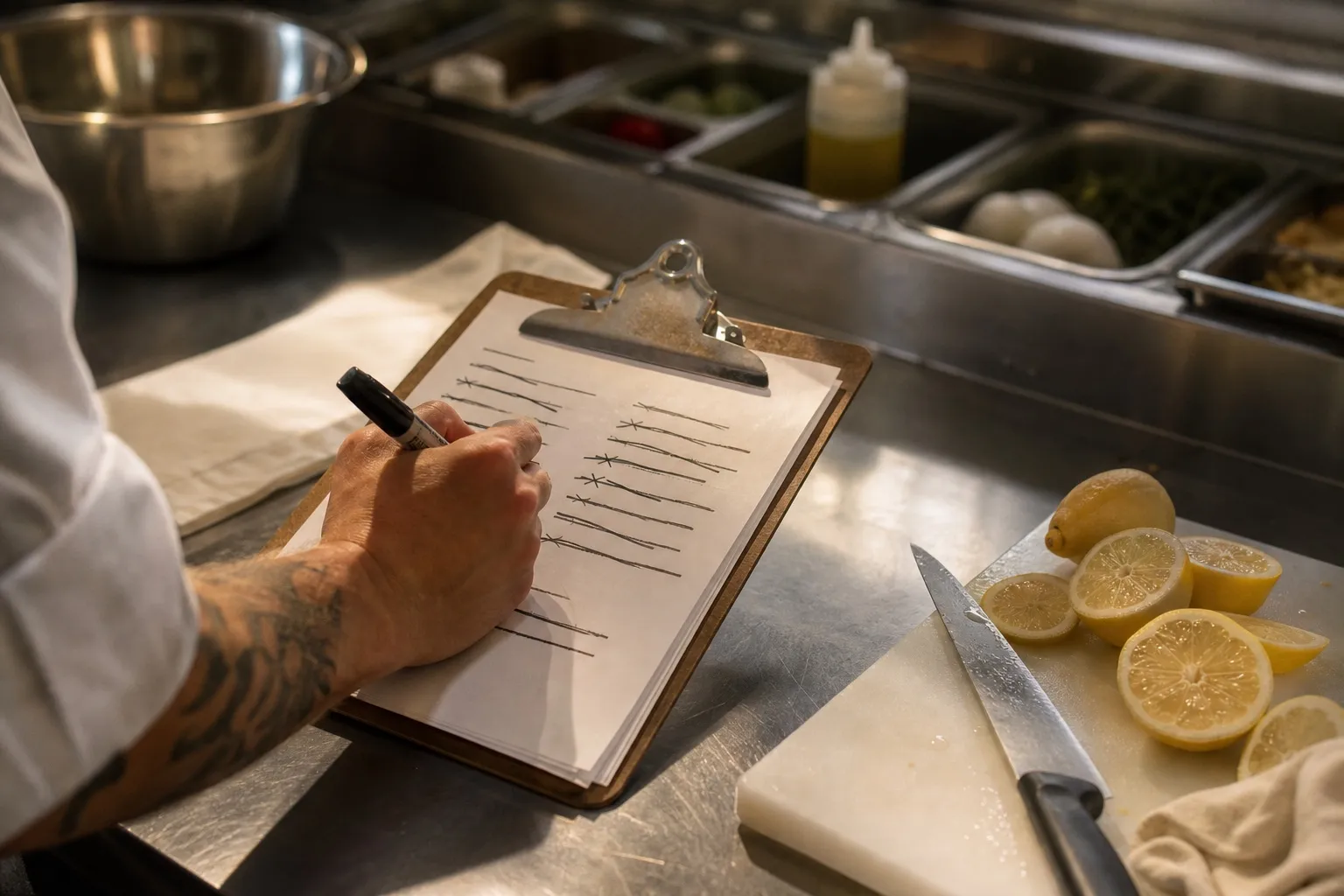
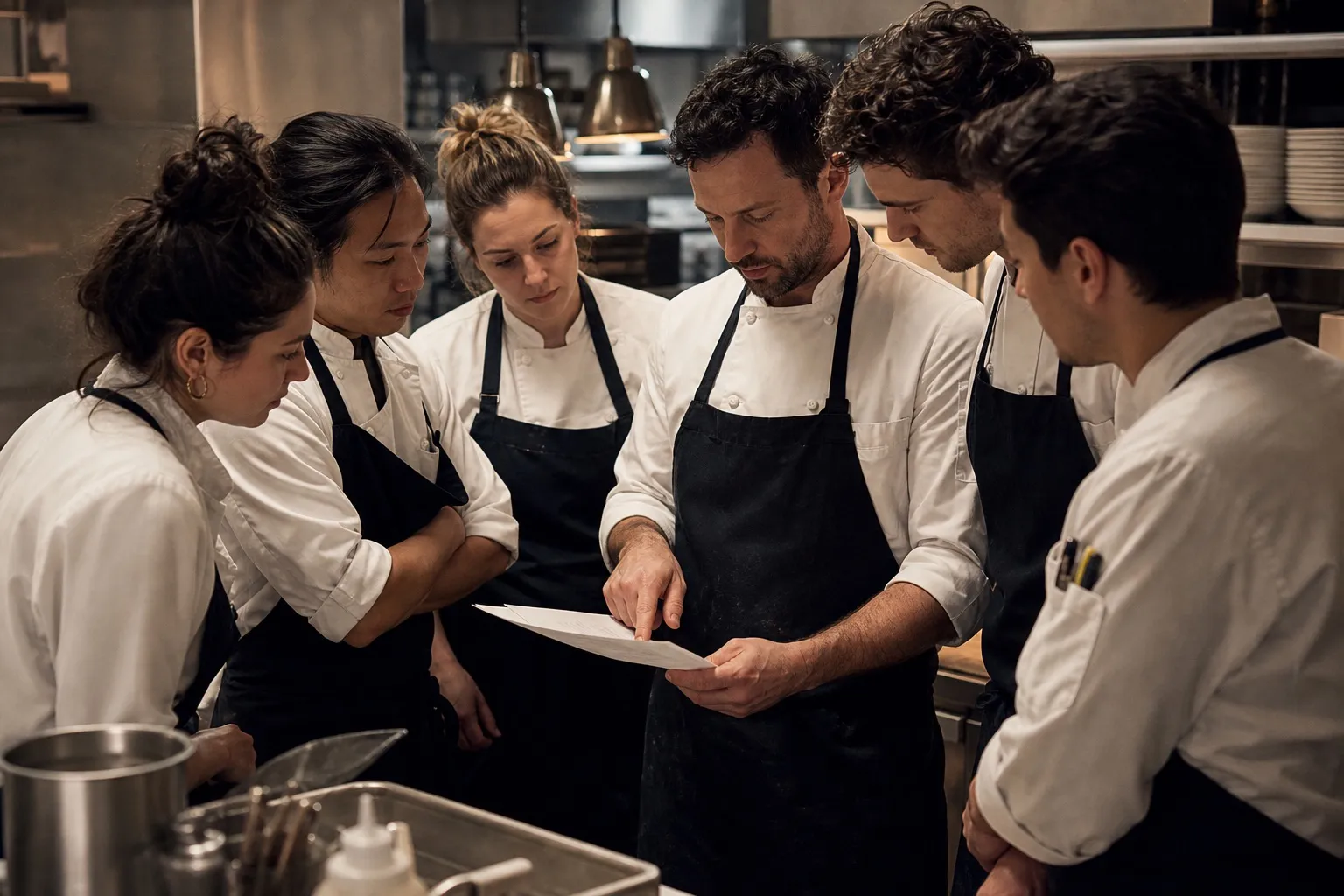
“Tell me what to do,” he says. He’s not joking. He spent four days walking the National Restaurant Association Show floor in Chicago, came home with a tote bag full of brochures, a list of 47 vendors who want a follow-up call, and a creeping suspicion that he’s about to spend a meaningful chunk of capex on something a competitor is going to deploy faster and better. The Show, by the way, drew 53,000 attendees the week before last — the biggest crowd in years. Everyone walked out with the same problem he did.
I’ve been on the road for most of the spring, recording episodes of Service and filing the occasional dispatch from whatever city the calendar hands me. NRA was the loudest week of the year. And after the noise — after the celebrity chef demos and the robot-arm gimmicks and the third pitch deck for an “AI-powered” salt shaker — the actionable operator list is short. Four things. Maybe three, if your unit economics aren’t there yet on the fourth.
So here’s the contrarian thesis I’m going to defend to this operator, and to you, over the next three thousand words: voice AI belongs on your phones first, not your drive-thru. AI-powered upsell is the highest-ROI software you can deploy in 2025 if your AOV math supports it. Computer vision is for back-of-house QA, not for replacing the line. And drive-thru voice — the thing every QSR vendor at the Show was pitching — is a deployment problem most chains aren’t ready to solve yet. Wait on it.
Twelve-month build order. Budget envelope you can defend. Let’s go.
Months 1-3: Phone voice, because that’s where the money is bleeding
If you run a restaurant that takes phone orders — pizza, wings, full-service with takeout, anything where the ringing of the landline interrupts somebody on the line — you are losing revenue in a way that is measurable to the dollar. Every call your team can’t answer is an order lost to a competitor whose phone got picked up. Every call your team answers badly is a check size that’s smaller than it should be. And every call your team answers at all is labor that could be on the floor.
The math on phone voice AI is the cleanest math in this entire industry. You can A/B it. You can measure abandoned-call rate before and after. You can compare AOV on AI-handled calls versus human-handled calls. You can count, on a Friday night, how many additional orders the bot caught while your shift lead was running food. The pilot is small, the integration is into your existing POS, and the failure mode — bot says “let me get a human” — is gracefully degradable.
I talked to an operator on the Show floor running three pizza units in the Pacific Northwest. He’d deployed phone voice eight months ago. His abandoned-call rate, which had been hovering at 18% on peak nights, was down to 2%. His AOV on AI-handled orders was slightly higher than on human-handled ones, mostly because the bot never forgets to ask about a side. The investment paid back in four months. He showed me the spreadsheet on his phone. I asked why he wasn’t talking about it on every panel he could find. “Because my competitors are still walking the floor looking at robot arms,” he said, and ordered another coffee.
That’s the play. Phone voice first. Pick a vendor whose deployment story is measured in weeks, not quarters. Insist on a POS integration that’s already live with chains in your category — don’t be the reference customer for somebody’s pilot. Budget envelope: $50 to $150 per location per month for the software, plus a one-time integration fee that should be under $5,000 for a multi-unit deployment. If a vendor quotes you six figures upfront, walk. The market has matured past that.
The thing nobody at the Show was saying out loud, and I’ll say it here: phone voice is unsexy. There’s no demo video. Nobody’s posting it to LinkedIn. It just quietly answers the phone at 7:47pm on a Saturday and saves you the order. That’s why it’s first on the list. Boring revenue is the best revenue.
Months 4-6: Computer vision for QA, not for the line
Here’s where I’m going to lose a chunk of you, because the computer-vision pitch at NRA this year was loud and it was aimed straight at the back of house. Robotic arms. Vision-guided assembly. The whole “kitchen of the future” demo loop. And there’s real engineering in some of it — QSR Web’s six-cool-things floor recap covered the headline gear well — but most of it is not what you should be deploying in months four through six of your build.
What you should be deploying is computer vision as a quality-assurance layer. Cameras over the make line that flag missing ingredients before the ticket goes out the window. Cameras at the pass that catch wrong-side errors before the runner picks up the plate. Cameras in the fryer area — Middleby’s OilSmart by OpenKitchen is the example I keep pointing at, because it’s not trying to replace your fry cook; it’s trying to tell your fry cook when the oil is degrading two hours before he’d notice it himself. That’s the right frame.
QA vision works because the cost it saves is labor cost on rework, comps, and waste — which is the highest-leverage cost in your P&L after rent and food. Every meal that goes out wrong comes back, gets remade, ties up a station, frustrates a guest, and shows up in your comp line. If a $200-per-month camera-and-software stack catches even five wrong tickets a week, the math gets very interesting very fast.
The trap operators fall into here is buying vision as a labor-replacement story. It’s not. Not yet. The robot-arm demos on the Show floor are five to eight years from being deployable economics for anybody who isn’t running a 1,500-unit footprint with capital to burn. As our subsequent operator case study on the McDonald’s playbook argues, even the biggest chain in the world has had to walk back the most ambitious automation experiments and refocus on the things that move per-store P&L. Pretend you’re them. Deploy vision where it makes your existing team faster and more accurate, and ignore the rest.
Budget envelope: $150 to $400 per location per month, all-in, for a vision-QA layer including hardware amortization. There’s also a Show-floor announcement worth flagging — Epson’s TrueOrder KDS, which leans into the same operator instinct: instrument the line, surface errors before they leave. It’s not vision per se, but it’s in the same family, and the deployment shape is similar.
Pilot one unit. Measure ticket-error rate before and after. Roll out only after you’ve got six weeks of clean data. If the vendor won’t agree to a pilot structured that way, you’ve got the wrong vendor.
Months 7-9: AI-powered upsell, but only if your AOV math works
ToastIQ Menu Upsell was one of the genuinely interesting Show-floor announcements the week of May 18, and it’s emblematic of where the upsell category is going. The pitch is straightforward: the AI looks at the cart, looks at the guest’s order history if you’ve got loyalty data, looks at what’s selling well at this daypart in this location, and suggests an add — at the point of sale, in the app, on the kiosk, wherever the order is being built.
This works. The data I’ve seen from operators running it shows an AOV lift of $0.40 to $1.20, depending on the category, with no measurable hit to conversion. The reason it works is that the AI is better than your sixteen-year-old cashier at remembering to ask, and better than your menu engineer at knowing what to suggest on a Wednesday at 2pm versus a Saturday at 7pm.
The catch — and this is the part the vendors don’t lead with — is that the ROI math only works above a certain AOV threshold. If your average ticket is $8, an AOV lift of forty cents is meaningful but the per-transaction software cost might eat it. If your average ticket is $24, the math is gorgeous. Run the calculation honestly before you commit. Most fast-casual concepts in the $12-to-$18 AOV range are squarely in the zone where this pays back. QSR with $7 average tickets, you’re going to want to negotiate hard on per-transaction fees or wait for the pricing model to mature.
The other thing — and I’ll keep saying this until it sinks in — is that upsell AI is only as good as the data you feed it. If your loyalty program is anemic, if your POS doesn’t tag items consistently, if your menu data is a mess, the AI is going to underperform. Get the data hygiene right first. As the framework piece we publish later in this column argues, mise en place applies to data too. You don’t get to deploy intelligence on top of chaos.
Budget envelope: $80 to $200 per location per month, plus a per-transaction fee in the low single-digit cents range. Insist on a structure where the vendor’s incentive is aligned with your AOV lift, not with raw transaction volume. The good vendors will do this; the bad ones will resist.
One adjacency worth watching: the Uber Eats × OpenTable partnership announced for an anticipated fall 2025 rollout is going to change how full-service operators think about the funnel between reservation and delivery. It’s not directly upsell, but if you’re running a full-service concept with a meaningful off-premise channel, file it in the same mental folder. The data flow between reservation intent and delivery preference is going to be a fertile zone for AI-driven cart suggestion. Anticipated — let’s see what actually ships in October.
Months 10-12: Drive-thru voice, but only if you qualify
Now we get to the noisiest, most over-pitched category on the NRA floor: drive-thru voice AI. Every QSR vendor had a booth. Every panel had a session. Every operator I talked to had been pitched it three times before lunch on day one.
Here’s my contrarian read: drive-thru voice is a real technology with real ROI, but it is the hardest deployment in this entire stack, and most operators should wait. Here’s why.
Drive-thru voice has to do three things simultaneously, in noisy outdoor conditions, with a clock running, in front of a guest who is going to tell their friends if it goes wrong. It has to understand the order in accented English and Spanish and whatever the local linguistic reality is. It has to handle modifiers correctly — no pickles, extra cheese, sub the bun, the whole combinatorial nightmare. And it has to integrate flawlessly with your KDS so the kitchen can produce the order in under three minutes. Any one of those three is solvable. All three at once, at scale, on a Saturday at noon, with a line of fourteen cars — that is genuinely hard engineering.
The chains that are deploying it successfully right now are doing so because they have three things: a deployment threshold (you need enough units to make the integration cost amortize), a tech team that can babysit the rollout (you need engineers, not just operators), and a tolerance for a six-to-nine-month learning period during which order accuracy is going to be lower than your humans (you need the patience to ride out the curve).
If you have all three, drive-thru voice can deliver labor savings of 15% to 25% at the order-taking station and a meaningful AOV lift because the AI never forgets to ask about the combo upsize. If you’re missing any of the three, you’re going to be the cautionary tale that vendors don’t put in their case-study decks. Most multi-unit independent operators I know are missing at least two of the three.
Wait on it. Let the chains with 500+ units take the arrows. Watch the deployment patterns. Pick a vendor with a clear track record at your category and your AOV. Deploy in months ten through twelve of your build only if your CFO is comfortable with a 12-month payback period and you’ve got someone on your team whose job description includes “AI drive-thru ops.”
Budget envelope, if you do qualify: this is the expensive one. Expect $500 to $1,500 per location per month for software plus a hardware-and-installation cost in the $8,000-to-$20,000 range per drive-thru lane, plus the loaded cost of the internal engineering you’re going to need. If a vendor quotes you less than that, ask hard questions about what’s not in the SOW.
What to skip
I promised contrarian. Here’s the skip list — things that got loud Show-floor coverage and that you should not be deploying in 2025 unless you’re running a research lab.
Skip the robot arms in the kitchen. Not because the technology is bad — some of it is genuinely impressive — but because the deployment economics don’t work below 1,000 units and don’t work well below 5,000. The maintenance cost alone will eat your margin. The most cited cautionary tale in this category is the case study we publish later on the Sweetgreen Infinite Kitchen rollout, which argues that even a well-capitalized concept with strong unit economics and a tech-forward culture had to defend the capex against a long payback curve. If they had to defend it, you have to defend it harder.
Skip the AI sommeliers and AI menu designers and AI brand consultants. The category is full of vendors trying to find a wedge by attaching “AI” to a problem you already pay a consultant to solve quarterly. The consultant is faster and better and won’t try to sell you a SaaS subscription.
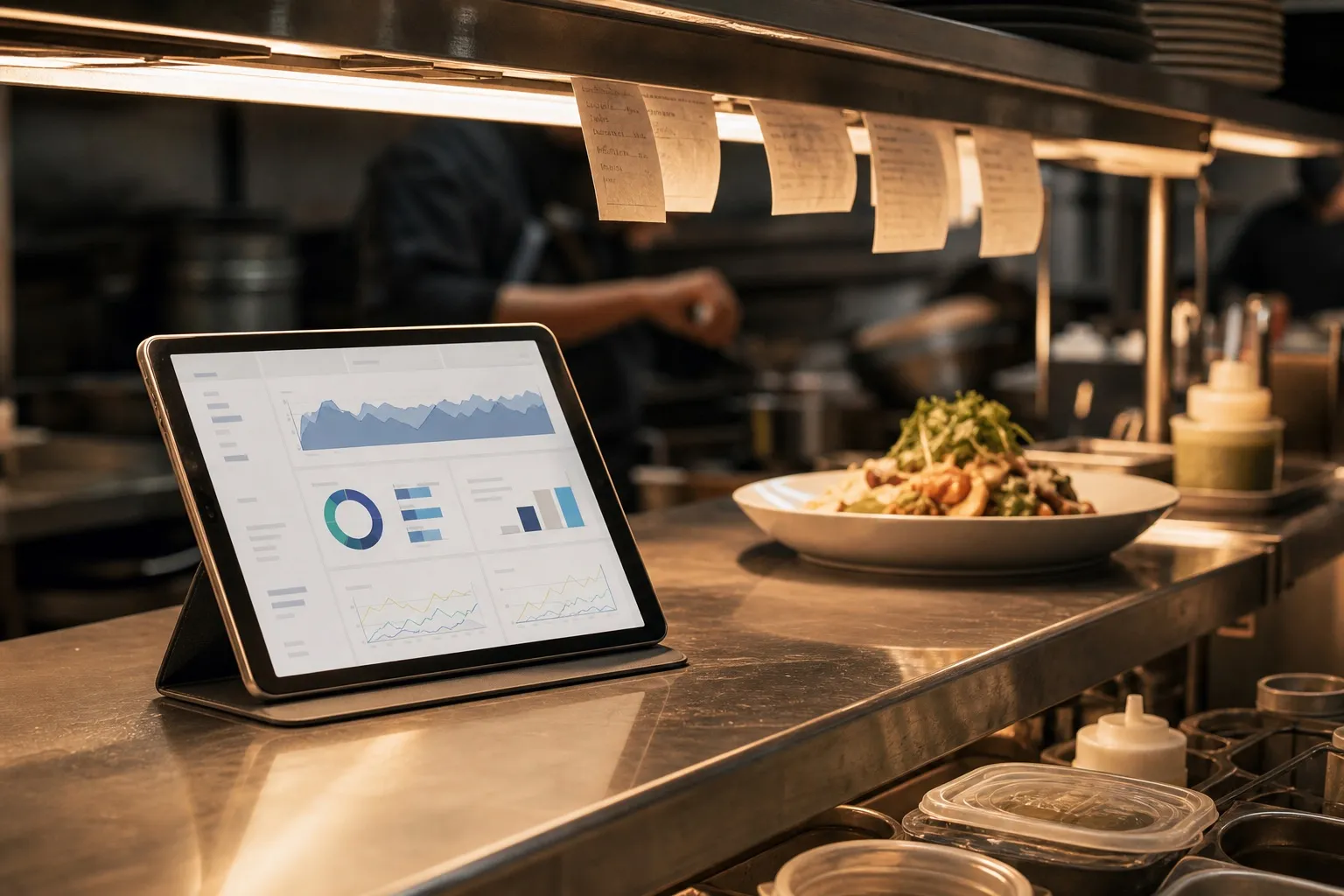
Skip the dashboard layers that promise to “unify your data.” Eight out of ten of these are middleware that adds latency and licensing cost without producing decisions you couldn’t make from your existing POS reports. The two out of ten that are actually useful are the ones built by people who used to run restaurants. You can usually tell within five minutes of a demo.
Skip — and I say this with affection for the vendors trying — the consumer-facing AI hosts and AI concierges for full-service restaurants. The technology isn’t there yet for the kind of nuanced service interaction that defines high-end FSR. Your guests will notice. Your reviews will reflect it. Wait two years.
Operator takeaways
The CFO conversation is the hard one, so here’s the envelope you can defend in the budget meeting:
- Year-one all-in budget per location for the AI stack: $5,000 to $15,000, depending on which of the four categories you deploy. Phone voice and upsell on the low end, vision and drive-thru on the high end.
- Year-one ROI expectation: 4 to 9 months payback on phone voice, 6 to 12 months on QA vision, 6 to 12 months on upsell, 12 to 18 months on drive-thru voice. Anything a vendor quotes shorter than this, get the case-study customer’s phone number and call them yourself.
- Pilot structure for every category: one or two units, six weeks of data, hard kill switch. No multi-unit rollouts before the pilot data is clean. No “enterprise agreements” that lock you in before you’ve measured.
- The single biggest miss most operators are about to make is the data-hygiene one. The AI is downstream of your POS, your KDS, your loyalty system, and your menu data. Get those clean before you bolt anything on top.
- The single biggest deploy-now opportunity is phone voice. It is the boringest, cheapest, fastest-payback AI deployment in the industry, and it is sitting on your reception line right now waiting for you to install it.
The operator across the table from me — eleven units, espresso going cold, CFO on the phone — heard most of this, nodded a lot, took a few notes, and then asked the question every honest operator asks: “What are you not telling me?”
What I’m not telling him, but will tell you, is that the real edge in 2025 isn’t the technology. The technology is going to be commoditized in eighteen months. The edge is going to be the operators who deploy this stack with discipline — the ones who pilot honestly, kill what doesn’t work, measure ruthlessly, and don’t get distracted by the next Show-floor demo reel. The chains that win the back half of this decade are going to be the ones whose ops directors can tell you, line by line, what every piece of AI in their stack is doing for their P&L. The ones who can’t are going to find themselves stuck with a tote bag full of brochures and a board asking pointed questions.
Build phone voice first. Vision next. Upsell when your AOV math says so. Drive-thru voice only when you qualify. Skip the noise. Defend the budget with the numbers above. Come back in twelve months and tell me what worked.
His phone buzzes again. The fryer at the airport location. He stands up, shakes my hand, asks me to send him the budget table I sketched on a napkin. Walks out. The espresso machine fires up again behind me, and I open a new doc and start writing this.
— Samuel hosts the Service podcast and files occasional pieces from the road. Tips: [email protected].
Featured
More
Browse all 494 posts
The Voice Agent Maturity Curve
mise
·12 min read
The Four Margins of a Restaurant
mise
·14 min read
The AI Premium in Hospitality M&A: Broker Story or Real Number?
the bottom line
·9 min read
What the DoorDash/SevenRooms Deal Actually Buys
the bottom line
·11 min read