Reading the Delaget Premium: What PAR Paid For

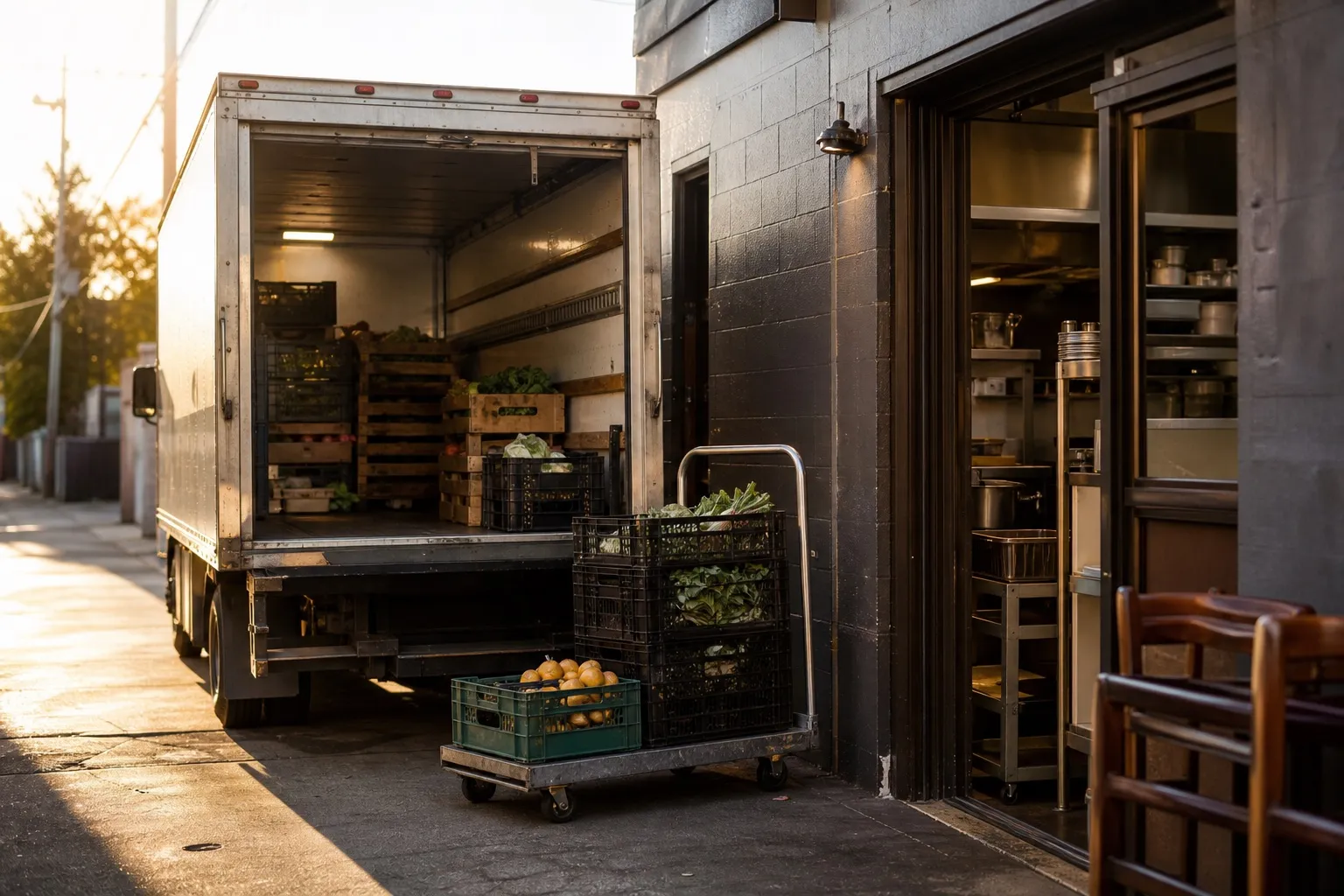
At ~$4,400 a location, PAR paid an analytics premium. The 8-K filing and the Operator Cloud integration thesis make the case that the back-office data layer is now the most defensible piece of the restaurant tech stack.
It is a quiet Friday morning, the first real working day of the year, and I am doing what I do on quiet Friday mornings: reading 8-Ks before the coffee finishes brewing. The one in front of me, filed yesterday on EDGAR by PAR Technology, is the kind of filing that buy-side analysts on the restaurant-tech beat have been waiting six quarters to see. PAR has acquired Delaget for total consideration of approximately $132 million, in a transaction the press release describes — and I quote, because the language matters — as expanding PAR’s “restaurant analytics and back-office capabilities.”
The press release is here, and the secondary coverage over at Verdict Foodservice puts the location count at 30,000+ across 125+ brands, including 40 of the top 50 North American restaurant concepts. Hold that number in your head. We are going to do some math.
I want to argue, contrary to the prevailing read that this is just another point solution being bolted onto a POS company, that PAR paid an analytics premium here, that the premium is rational, and that the deal is the clearest market signal we have had so far that the back-office data layer — not the point of sale, not the online ordering channel, not the kitchen display — is the most defensible piece of the restaurant tech stack. My base case is that Savneet Singh and the PAR board did not pay $4,400 a location because they had to. They paid it because the alternative — letting a Toast, a Square for Restaurants, or a private-equity rollup buy Delaget instead — would have cost them far more in the years ahead.
Let me walk through it.
Doing the math on per-location pricing
The headline number is $132 million in total consideration for roughly 30,000 locations. That works out to approximately $4,400 per location, and that is the figure I keep coming back to in my model. It is not a revenue multiple, because PAR has not disclosed Delaget’s revenue. It is not an EBITDA multiple, because we do not have margins either. It is a unit-economic shortcut, and shortcuts are useful when the underlying disclosures are thin.
For comparison: when I run rough per-location math on recent restaurant-tech deals I have tracked, point-of-sale acquisitions tend to clock in somewhere in the $1,500 to $2,500 per-location range, depending on the install base’s revenue per location and contract length. Online-ordering plays — the kind of thing Olo competes for — have historically transacted at a discount to that, because the switching costs are lower and the channel mix is more contested. Analytics and back-office software, when it transacts at all (which is rarely; most of these companies are small, founder-led, and quietly profitable), sits at a noticeable premium.
So $4,400 a location is rich, but it is not crazy. It is the price of locking up a data spine that touches 30,000 stores and, more importantly, 40 of the top 50 North American restaurant concepts. The enterprise concentration is doing real work in that valuation. If Delaget’s footprint were 30,000 independent diners, this deal does not happen at this price. It happens because the customer list is the customer list.
My base case on the math: PAR is paying a 30-50% premium over what a comparable point-solution rollup would have fetched, and the premium is the cost of (a) the enterprise customer list, (b) the multi-brand data normalization layer Delaget has built over a decade-plus, and (c) the lockout effect against credible rival buyers. I will come back to (c).
What the 8-K actually says about consideration mix
Here is where the filing gets interesting, and where I think the casual reader of the press release will miss the most important detail. The 8-K, available in full on EDGAR, structures the $132 million as predominantly PAR stock, with a smaller cash component. This is a stock deal dressed up as a mixed-consideration deal.
That matters for three reasons.
First, PAR is using its currency. The stock has had a strong run, and management is converting paper into a strategic asset while the conversion rate is favorable. This is textbook treasury behavior — issue equity when it is expensive, retire debt or buy assets — and it is the right call. I have no quarrel with the structure.
Second, the consideration mix tells you something about the seller’s view. When the target’s principals accept mostly stock, they are betting on the acquirer’s forward equity story. Delaget’s owners are not cashing out on this transaction. They are rolling forward into PAR’s “Operator Cloud” thesis. That is a vote of confidence I would take seriously if I were modeling PAR’s NTM revenue.
Third — and this is the buy-side analyst’s read between the lines — a stock-heavy deal at this size, with this level of customer concentration, makes a counter-bid expensive. Anyone who wanted to top PAR’s offer would have had to put up cash, and cash at $132 million for a back-office analytics company that does not file public revenue does not pencil for most strategics. The deal structure is a moat as much as the price is.
Savneet Singh’s framing in the press release — that this is about building out “Operator Cloud” — is the part the equity desks should be reading carefully. Singh has been telegraphing a vertically integrated platform thesis for the better part of two years. POS plus payments plus online ordering plus back-office plus analytics, sold as a stack, priced as a stack, defended as a stack. The Delaget acquisition is the analytics tile, and it is the most expensive tile so far. That should tell you which tile Singh thinks is the hardest to replicate.
Why analytics has fewer credible buyers
Here is the part of the analyst note I will spend the most time on, because it is the part that drives my conviction. The back-office data layer for multi-unit restaurant operators is a structurally thin market on the buy side. There are fewer credible acquirers for a Delaget than there are for almost any other category of restaurant-tech asset, and that scarcity is exactly what creates the premium.
Why? Three reasons.
First, you need scale on the acquirer side to integrate the data spine. Delaget aggregates from a heterogeneous mess of POS systems, third-party delivery platforms, labor and inventory tools, and accounting backends. The acquirer has to be able to land that integration footprint into something — a platform, a customer-facing dashboard, a billing relationship. Most PE rollups cannot do that without years of platform investment they have not yet made.
Second, the customer relationships are CFO-level relationships. Delaget is not sold to store managers. It is sold to multi-unit operators and franchise-level finance teams, the people who are reconciling P&Ls across 50 to 5,000 locations. A buyer who does not already have those relationships — and most of the obvious strategics do not, because they are sold into operations rather than finance — has to build them, and building CFO-level trust in the restaurant chain world is a five-year project minimum.
Third, the regulatory and data-handling overhead on this kind of business is non-trivial. You are touching labor data, payments data, vendor data, and sometimes guest data. The compliance footprint is real. A casual acquirer underestimates the integration cost, and a serious acquirer prices it into the deal. PAR is a serious acquirer.
The result is a market with maybe three or four credible buyers and dozens of credible targets. That asymmetry is what produces the $4,400 per location number. PAR knew it had pricing power against the seller. It paid up anyway because the seller had pricing power against PAR — the relationships and the data spine could not be replicated quickly. The premium is the equilibrium price of a structurally thin buy-side market.
As our later coverage of Olo’s market position argues, the channel layer is contested in ways the data layer is not. Olo competes with DoorDash, Uber Direct, ChowNow, and any number of white-label ordering stacks. Delaget competes with — well, that is precisely the question. It competes with internal data teams at large chains, and that is a fight Delaget has been winning for a decade by being cheaper, faster, and more multi-source than the in-house build.
What this means for Toast, Olo, and Square
I want to close on the competitive implications, because this is the part that will move research notes over the next two weeks. CES kicks off on the 7th, NRF on the 12th, ICR on the 13th. The restaurant-tech equity desks are going to be asked about this deal at every meeting on every floor.
For Toast: the read is mixed. Toast already has analytics built natively into its POS, and the Toast-loyal customer base does not overlap heavily with Delaget’s multi-POS aggregation use case. But the deal does raise the bar on what an enterprise restaurant tech platform is expected to deliver. If PAR is going to sell “Operator Cloud” as a vertically integrated stack to the top 50 chains, Toast’s mid-market and SMB strength is now flanked at the enterprise end. My base case is that Toast does not need to respond on M&A in the near term, but the strategic narrative gets harder to tell.
For Olo: the read is more interesting. Olo’s value proposition has always been channel-first, with analytics as a downstream attribute. Delaget under PAR’s ownership starts to look like the analytics equivalent of what Olo is for the channel layer — a horizontal integrator across heterogeneous backends. If Operator Cloud lands, the question for Olo’s board becomes whether to build, buy, or partner on a comparable data spine. I cover this in a forthcoming piece on restaurant-tech M&A, and the short version is: the build option is expensive, the buy option is increasingly narrow, and the partner option requires giving up margin to someone else’s data layer.
For Square (Block’s restaurant vertical): the read is the most straightforward. Square has under-invested in enterprise restaurant relationships for years, and this deal does not change the calculus on whether they will ever credibly compete for the top 50 chains. They will not. The Delaget acquisition cements PAR and Toast as the two enterprise-credible POS-and-stack players in North America. Square’s opportunity remains in the long tail.
My base case across the three: the market should reward PAR for the deal over the next two earnings cycles, penalize Olo modestly if it does not articulate a counter-strategy on the data layer by Q2, and remain neutral on Toast pending its own NRF and ICR commentary. I am long the Operator Cloud thesis on PAR, neutral on Toast pending clarification, and watching Olo for the next move.
That is the Friday-morning take. The 8-K is on EDGAR. The math is on the back of an envelope. The premium is the price of a moat. Read the filings.
— Oliver writes The Bottom Line on M&A and valuations. Tips: [email protected].
Featured
More
Browse all 494 posts
The Voice Agent Maturity Curve
mise
·12 min read
The Four Margins of a Restaurant
mise
·14 min read
The AI Premium in Hospitality M&A: Broker Story or Real Number?
the bottom line
·9 min read
What the DoorDash/SevenRooms Deal Actually Buys
the bottom line
·11 min read
Related posts

the bottom line
·11 min read
Darden trades like a tech company. It shouldn't.
the bottom line
·12 min read
Applebee's just became its own franchisee. The territory math is the trade.
the bottom line
·12 min read