Sweetgreen's Spyce Exit Is the Cleanest Sell-Side Story of 2025 — and the Most Honest One
Sweetgreen sold Spyce/Infinite Kitchen to Wonder for an implied $186.4M on Dec 29 and kept a long-term supply contract. The asset moves off the balance sheet; the operating benefit stays on the line. That is the cleanest — and most honest — sell-side story of the year.
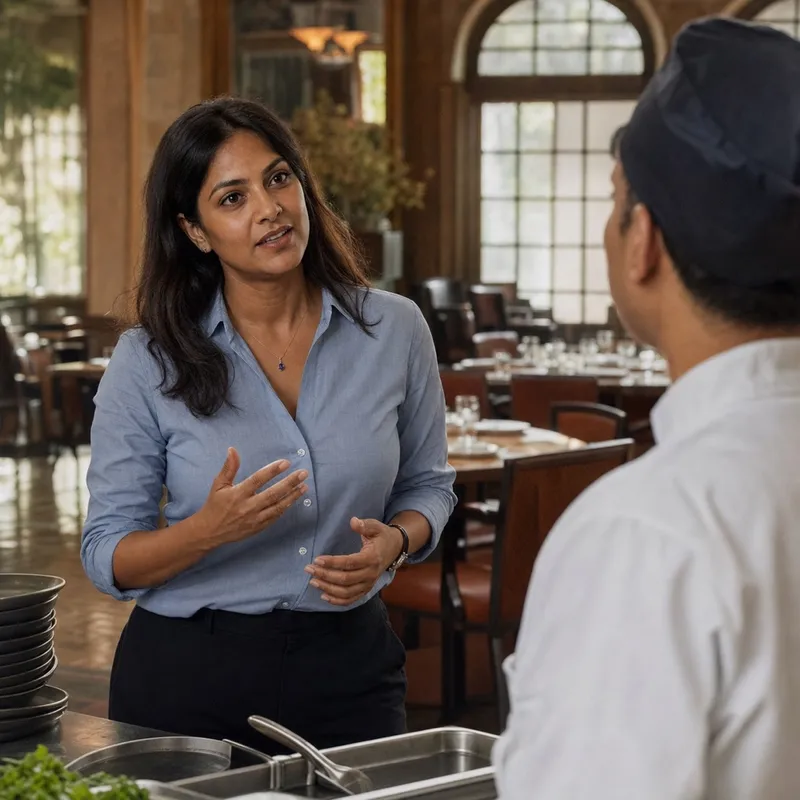
I spent the back half of Monday — closing day — in a Sweetgreen Infinite Kitchen store off a freeway interchange in the kind of suburb where the lunch rush is real and the dinner curve is a flat line. The IK makeline was running on a Monday-evening shift the way it has run for the last six quarters: two crew members on the front, the robot doing the bowl pulls and dressing pour, a manager moving between the digital makeline and the cold line where the salads that the robot does not yet build still get hand-tossed. The general manager — call her Diane, because the company asked me not to use her name on this one — had heard about the sale at the regional huddle that morning. She told me the line I am going to put in the lead of this piece, because it is the most honest thing anyone said to me this December.
“Nothing changes at my store. The robot is still our robot. They just changed who owns it.”
That is the thesis. Sweetgreen sold the Spyce business — the corporate vehicle, the IP, the engineering team, the supply chain that builds and services the Infinite Kitchen — to Wonder on Dec 26 (BusinessWire) and closed the cash mechanics on Dec 29. The price, in the deal’s own implied math, is $186.4M: $100M in cash, $86.4M in Wonder Series C Preferred. Sweetgreen retains a long-term Infinite Kitchen supply agreement that keeps the units in the stores, the engineering and service pipeline pointing at the fleet, and the underlying operating benefit — labor leverage, throughput, margin — on the line where Diane runs her shift. The asset comes off the balance sheet. The benefit stays on the income statement. That is, in the cleanest framing I have seen this year, what a contrarian-correct M&A trade looks like in fast-casual.
I want to argue something stronger: this is the most honest sell-side story of 2025, not just the cleanest. Honest because Sweetgreen is not pretending the IK is a Sweetgreen-as-platform-technology story anymore. They are pretending less than they did six quarters ago, when the Infinite Kitchen was the strategic narrative the company sold to the street on every call. The narrative has narrowed. The unit economics inside the four walls of an IK store have not.
The numbers on the page
Per the Dec 26 BusinessWire announcement, the deal closed with $100M of cash to Sweetgreen and $86.4M of Wonder Series C Preferred — implied enterprise value $186.4M. Sweetgreen acquired Spyce in 2021 for a figure the company never broke out cleanly but which the most-conservative trade reading puts at roughly $70M in stock plus rolled equity. Call it a 2.5x exit on a four-year hold, measured at headline. The cash component alone — $100M — is more than the inferred 2021 purchase price. That is the line a CFO can defend on a Tuesday call to the buyside.
The composition matters more than the headline. The $86.4M of Wonder Series C is not cash. It is paper in a privately held marketplace-and-delivery operator at a valuation Wonder itself set. It is the part of the consideration that is a bet on the buyer rather than a clean realization. The clean realization is the $100M. The bet is the $86.4M. Anyone modeling this deal at $186.4M without breaking out the two pieces is being lazy with the page.
The supply contract is the third number on the deal, and it is the one that is not in the headline. Wonder will continue to supply Infinite Kitchen units to Sweetgreen — service them, build out new ones, run the engineering roadmap. The contract length is long-term, per the release. The pricing terms are not disclosed, and they will not be, because they are commercially sensitive and because the trade press did not push for them. I will push for them in the next earnings cycle; the analyst questions in the forthcoming May case study will get into that.
The Q3 context everyone is reading sideways
The deal landed against a Sweetgreen quarter — Q3 2025 — that the market is still digesting. Same-store sales were down 9.5% in Q3 against a comp that was already softening in Q2. Traffic was the bigger driver than check; both were negative. The Infinite Kitchen rollout slowed mid-year, with the company guiding to a more measured 2026 deployment cadence than the 2024 framing implied. The trade press read the soft comp and the slower IK pace as related; I think they are correlated in time but not in mechanism. The comp is a guest-frequency problem driven by category dynamics and price ladder. The IK pace is a capital-allocation problem driven by the cost of new builds against the cost of equity in a name trading at a multiple it did not have two years ago.
Read the deal against that backdrop and the framing snaps into place. Sweetgreen is not divesting the technology because the technology is not working in the stores. Diane’s store — and the thirty-two others in the IK fleet — are operating exactly as they were on Friday. The labor leverage that the company has put on the record for six quarters (3-4 fewer crew per peak shift, faster bowl time, lower comp-driven remake rate) is not a function of who owns the Spyce corporate entity. It is a function of the robot being on the line.
What Sweetgreen is divesting is the capital structure of the technology. The R&D burn, the engineering payroll, the long-tail cost of building robotics at the unit cost a 250-store restaurant chain can support — that is what moves to Wonder. Wonder has the surface area to amortize a robotics-and-supply-chain build across a wider operating footprint and a richer balance sheet than Sweetgreen has, post-Q3. That is the real trade.
The strategic logic, in one paragraph
Here is the strategic logic in the way I would write it for an investment committee: a public-company restaurant operator owns a robotics subsidiary it acquired four years ago. The subsidiary’s product works in the stores. The subsidiary’s business — building, servicing, scaling robotics for restaurants — is not a restaurant business. It is a hardware-and-engineering business with a different unit economics curve, a different talent pool, a different capital appetite, and a different multiple than the operator’s core P&L can carry. The operator sells the subsidiary to a buyer for whom hardware-and-engineering-for-restaurants is the core business model, locks in a long-term supply agreement so the product keeps flowing into the operator’s stores, and uses the cash to clean up the balance sheet and reinvest in the things the operator actually does well — menu, brand, hospitality, store-level execution.
That paragraph could be written about any number of conglomerate divestitures in the last twenty years. The reason it works here — and the reason I am calling it the cleanest sell-side story of the year — is that Sweetgreen is being unusually honest about the framing. Six quarters ago, in the Infinite Kitchen narrative arc, the company was selling the street on Sweetgreen-as-tech-platform. The IK was a moat. The R&D was a competitive advantage. The vertical integration of robotics into operations was the story. That story is gone, formally, as of Dec 29. What replaces it is a narrower story: Sweetgreen is a restaurant brand that runs IK in some of its stores, the IK is supplied by a partner, the technology partnership is durable but the technology business is not Sweetgreen’s. Honest. Cleaner.
What the IK store actually looks like the morning after
Mark this as my read, not Diane’s: nothing operational changes inside the four walls of an IK store as a function of who owns the Spyce entity. The service tech who comes out when the dressing-pour robot misfires still wears the same uniform he wore on Friday. The replacement-parts pipeline runs through the same vendors. The makeline software pushes updates from the same cloud, on the same cadence. The crew schedule is unchanged. The labor model — and this is the number that matters most for the next four quarters of the IK fleet — is unchanged.
What I cannot tell you yet, because the company has not put it on the record and the trade press has not asked, is whether the cost of Infinite Kitchen to Sweetgreen changes under the new supply contract. There are three plausible structures. One: a flat per-unit and per-month service fee that nets to what Sweetgreen was spending on internal Spyce overhead, plus a margin to Wonder. Two: a tiered service contract that gets cheaper at scale and richer in the early ramp years. Three: a revenue-share or per-bowl pricing model that ties Wonder’s economics to the IK’s actual output in the store. The press release does not name the structure. The 10-K disclosures in March will get closer. The May earnings call — the one I will be covering in the forthcoming case study — will be the first time analysts can put the question to the CFO directly.
I will speculate, because the analytical work is to speculate where the data does not yet exist. The most-likely structure is option two: a tiered service contract with a heavy fixed component in years one and two and a per-unit-installed step-down as the fleet grows. That structure protects Wonder’s near-term economics — they paid $86.4M of their own paper plus took on the operating cost of the Spyce business, and they need the Sweetgreen contract to underwrite the engineering payroll while they scale the IK to other operators. It also gives Sweetgreen predictability on the line item, which is what a restaurant CFO actually wants. A per-bowl model would be cleaner conceptually but creates volatility on a P&L that already has too much of it.
Why this is the most honest sell-side story of 2025
I called this the most honest sell-side story of the year in the lead, and I want to be specific about what I mean. Most sell-side M&A in restaurants and adjacent categories this year has been written in language that obscures what is actually being traded. The acquisition of a casual-dining chain by a private-equity sponsor reads as a growth story; it is usually a cost-out story. The take-private of a struggling QSR reads as a turnaround story; it is usually a real-estate story. The sale of a tech subsidiary by an operating company reads as a focus story; it is usually a balance-sheet story.
Sweetgreen-Spyce-Wonder is all three at once — focus, balance sheet, real economics — and the company is not pretending it isn’t. Read the Dec 26 release closely. The framing is not we are exiting a non-core asset. The framing is not we are realizing strategic value. The framing is closer to: we acquired this to use it; we are now buying it as a service from a partner who can build it better than we can; we kept the part of the deal that matters operationally and let go of the part that does not match our capital profile. That is what an honest M&A press release reads like when the company is not trying to sell a story.
The contrarian read on this — the one I have been circulating with two buyside contacts since the deal leaked Christmas week — is that the Q3 comp miss is what made this framing possible. If Sweetgreen’s same-store had been positive 3% in Q3 instead of negative 9.5%, the company would have had more room to keep selling the Sweetgreen-as-tech-platform narrative and would not have moved on the Spyce sale this calendar year. The bad quarter forced narrative discipline. The discipline produced the honest framing. The honest framing produced the clean deal.
That is not how the trade press will write it. The trade press will write that Sweetgreen sold a non-core asset to focus on the restaurant business and unlock $100M of cash. Both of those things are true. They are also the thinnest version of the story.
What the broader market is doing with the news
Restaurant Dive’s year-end winners-and-losers piece — which dropped this morning and which I read on the way to Diane’s store — does not list Sweetgreen in either column. That is the right call. The Q3 comp is a loser-column number; the Spyce exit is a winner-column move; the net of the two, in late December, is a “watch” rather than a “verdict.” The piece names Taco Bell, Pizza Hut, Chili’s, and Jack in the Box as the year’s clearer stories. Sweetgreen is the year’s more interesting story — and the one whose trajectory through 2026 is most dependent on which sentence in the deal release turns out to matter most.
If the sentence that matters is “$100M cash,” Sweetgreen is a balance-sheet story that runs from Q4 2025 into a 2026 reinvestment cycle and reads cleanly to the equity market. If the sentence that matters is “long-term Infinite Kitchen supply agreement,” Sweetgreen is an operating-leverage story that runs through the IK fleet expansion at a different cost profile than the prior framing. If the sentence that matters is “$86.4M Wonder Series C Preferred,” Sweetgreen is a backdoor public-comp on Wonder — which is the part of the deal nobody is writing about yet and which I am going to be writing about in February once the Q4 10-K language is on the record.
Inside the broader 2026 outlook conversation — the one I covered Dec 5 in the RFDC bifurcation piece — this deal slots into the camp of operators rationalizing capital toward what they actually do well and away from what the public markets have stopped paying for. The bifurcation between operating brands and platform-technology stories is the year-end mood. Sweetgreen just picked a side, on the record, in a deal that closes cleanly.
The risks the release does not name
Three risks, plainly. First risk: the Series C paper. Wonder is privately held. The $86.4M is marked at a price Wonder set. If Wonder raises down or sells the business at a lower implied valuation in 2026 or 2027, Sweetgreen takes a mark on the holding. That mark is below-the-line for operating performance but visible on the balance sheet and disruptive to the headline narrative. The conservative read on the deal value is $100M plus optionality on the Series C; the maximalist read is the full $186.4M; the right read is somewhere between, weighted by an estimate of Wonder’s likely exit multiple. I will not put a number on that estimate in print this week.
Second risk: supply-contract execution. A long-term contract is durable on paper and brittle in operations. If Wonder under-delivers on service response times, parts availability, or roadmap velocity — any of which is a normal risk in a hardware-and-engineering business absorbing a new operating model — the IK fleet’s operating benefit erodes. The labor leverage Sweetgreen has put on the record in six quarters of earnings calls is contingent on the robots running. The robots running is contingent on the supply contract being honored at the SLA the parties have agreed to. The contract is not disclosed; the SLA is not disclosed; the risk is real and is not in the release.
Third risk: the strategic-narrative vacuum. Sweetgreen spent four years telling the street that the Infinite Kitchen was the company’s technological moat. That narrative is now formally retired. What replaces it is a quieter story about brand, menu, hospitality, and store-level execution — the things the restaurant business is, before the robotics framing arrived. That quieter story is correct. It is also harder to sell to a growth-equity buyside that was paying for the moat. The multiple compression risk in 2026 is real and is not the management team’s fault; it is the cost of telling the truth about what the company actually does.
What the operator class should take from this
If you operate, the takeaway is the one Diane said in the first paragraph: nothing changes at her store. The operating reality of running the Infinite Kitchen on a Monday evening is unchanged. The labor model is unchanged. The throughput math is unchanged. The guest experience is unchanged. The reason the deal matters is not at the store level. It matters at the capital-allocation level, the narrative level, and the multi-year roadmap level — and those are decisions operators do not make, but live with.
If you are watching this as a competitive operator — a Chipotle, a Cava, a Just Salad, a Mendocino Farms — the read is that the robotics-in-fast-casual question has now been answered, not by Sweetgreen succeeding or failing at owning the technology, but by Sweetgreen and Wonder collectively deciding that the technology is best owned by a hardware-and-service operator and best consumed by a restaurant operator. That is the architecture of the next five years of restaurant automation, written in one M&A deal on the last Monday of December. Not Sweetgreen owns the robot. Wonder builds and services the robot; Sweetgreen runs it on the line.
If you are watching this as an investor, the takeaway is that the cleanest deals are the ones where every sentence in the release maps to a number on the page and every number on the page maps to an operating reality in the four walls. The Sweetgreen-Spyce-Wonder deal does that. The $100M maps to cash on the balance sheet. The $86.4M maps to a Series C position that is real but not realized. The long-term supply agreement maps to the labor leverage that is still on Diane’s P&L tonight. Three sentences, three numbers, three places they live. That is honest.
I will be back on this name in February when the Q4 10-K language is filed and again in May when the Infinite Kitchen case study goes up. The deal closed on Monday. The story runs for the next four quarters.
— Priya covers operators for TableTransfers. Tips: [email protected].
Featured
More
Browse all 494 posts
The Voice Agent Maturity Curve
mise
·12 min read
The Four Margins of a Restaurant
mise
·14 min read
The AI Premium in Hospitality M&A: Broker Story or Real Number?
the bottom line
·9 min read
What the DoorDash/SevenRooms Deal Actually Buys
the bottom line
·11 min read