The DoorDash/SevenRooms Re-Rating Thesis Is Now an Integration Cost Story

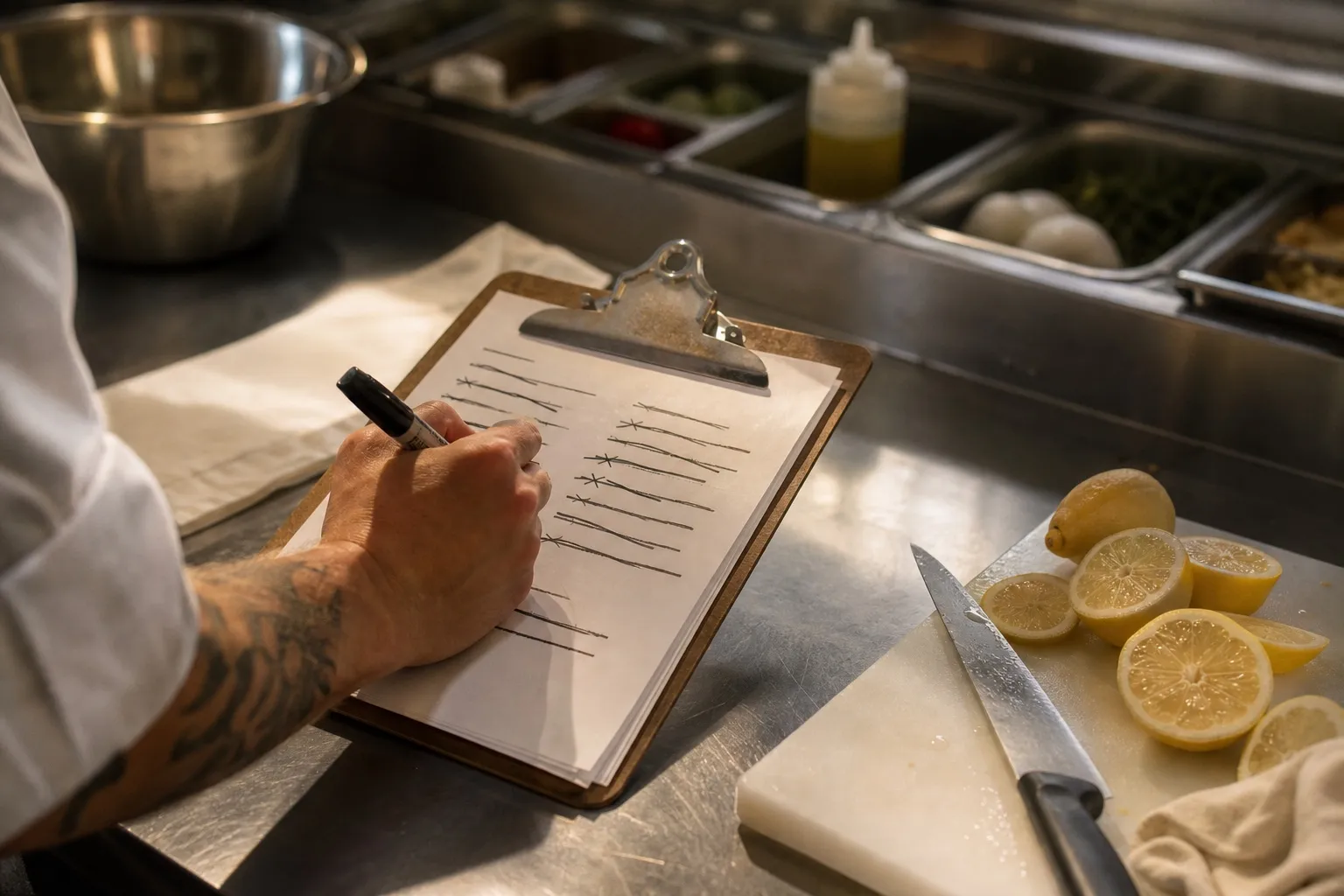
DoorDash prints Q4 Wednesday. The SevenRooms multiple looked cheap at close. After the Deliveroo deal closed in October, the question repricing the whole position isn't whether the data flywheel works — it's how much parallel-stack carry the 2026 EBITDA line absorbs before it does.
It is 6:40 a.m. on a Friday and I have three sell-side previews of DoorDash’s Q4 print open on the second monitor. One bulge bracket. One mid-cap shop. One independent. Same headline cadence on all three: GOV trajectory looks fine, marketplace order strength is intact, the question on Wednesday is integration carry. Each preview is hedging the same number — adjusted EBITDA for 2026 — with slightly different language. The uncomfortable thing none of them quite say: the SevenRooms deal, which closed in June at what looked like a clean win on price, is now part of a different equation.
The reason isn’t SevenRooms. The reason is what closed four months later.
This is a pre-earnings read. The point is to lay out what would have to be true in Wednesday’s release for the SR multiple to start expanding again, and what would have to be true for the re-rate to keep grinding.
The deal math on June 13 vs. the deal math today
When DoorDash closed the SevenRooms acquisition on June 13, 2025 for $1.152 billion in all-cash consideration (DoorDash close announcement; CNBC, May 2025), the comps math read clean. Thirteen thousand enterprise-skewed venues. A guest-data layer DoorDash didn’t otherwise have. Roughly eight-times ARR on the public reporting, which is a touch above the SaaS M&A median for the period but well inside the band for category-leading vertical software. I wrote the long version of why the deal was reasonable in May, and that argument has not aged.
What’s changed is the carry structure underneath.
On October 2, 2025, DoorDash closed the Deliveroo acquisition. £2.9 billion, ~$3.9 billion in cash on a fully diluted basis. (DoorDash IR). On the Q3 2025 call, CFO Ravi Inukonda walked through the EBITDA contribution: roughly $45M in Q4 2025, “approximately $200M” in 2026, with significant reinvestment planned. (DoorDash Q3 2025 release). Tony Xu on the same call talked about Deliveroo “gaining share in its largest markets” — the most expensive thing a recently acquired international platform can do. Share gains require local marketing, local rider economics, local merchant onboarding. Those are real-dollar P&L lines.
Add the SevenRooms platform-integration spend on top. Then add the “several hundred million dollars more” of incremental 2026 technology investment Inukonda guided on the Q3 call — the consolidation push that takes three parallel tech stacks (legacy DoorDash, Wolt, Deliveroo) and folds them into one.
That is the integration-cost story. Three buckets, all hitting the same year, all defensible individually, and collectively gravity on the 2026 EBITDA print.
Why the SR multiple is being recut without SR underperforming
The first thing every junior on the call this week wants to say is “but SevenRooms is performing.” That is correct and it is also not what matters.
Take the simplest analyst model. You bought SR at $1.152B. The sell-side range I’m seeing for incremental 2026 adjusted EBITDA from the platform — once Going Out is fully rolled and CRM cross-sell is monetized — is $80–130M. Divide $1.152B by the midpoint and the implied multiple is roughly 10–14x EBITDA forward. That is cheap for the data asset on paper.
Now flip the page. The same model has to allocate three layers of integration cost: the SR platform integration itself, the Deliveroo three-region reinvestment, and the unified tech-stack push. None of those carry items would, alone, change the SR thesis. Together, they shift the 2026 EBITDA bridge enough that the bull case — data flywheel turning on inside 12 months — gets pushed into 2027 or 2028 in most models I’m seeing. The re-rating isn’t a vote against SR. It’s a vote against the timing of when the SR contribution shows up in reported numbers.
If you bought SR thinking the cheap multiple compresses further as adjusted EBITDA catches up in 2026, that thesis is now a 2027 thesis. That’s why the multiple is moving.
What the sell-side previews are actually saying
Three previews. Different language, same observation. I’ll paraphrase the consensus because the specific notes aren’t mine to publish, but the broad shape is:
Bulge bracket. Models 2026 adjusted EBITDA margin as “modestly higher than 2025 ex-Deliveroo, materially lower including Deliveroo.” Flags integration carry as the central risk, keeps the rating, takes the 2026 EBITDA estimate down meaningfully versus November. The CFO’s “approximately $200M” Deliveroo contribution is in there but gross-of-reinvestment, and the reinvestment dollars are what’s biting.
Mid-cap shop. More cautious. Argues the three integration pushes aren’t separable and “platform consolidation” is the line to underline — parallel-stack maintenance is cost gravity that doesn’t roll off until the consolidation completes. 2026 below consensus, 2027 above. Essentially calling 2026 the trough year, with the SR-and-Deliveroo flywheels turning on in 2027.
Independent. Most aggressive. Argues the $5 billion combined cheque ($1.152B SR + $3.724B Deliveroo) has compressed the firm’s ability to absorb negative operating leverage in the new verticals — grocery, retail, ads — that were supposed to be the 2026 margin story before the M&A. Lowest 2026 EBITDA on the Street, recommending paring exposure into the print.
I don’t agree with the independent’s new-vertical math — I think grocery’s contribution to 2026 EBITDA is closer to flat than negative, based on the Q3 commentary about international unit economics — but the structural point is right. The cheque size matters. Five billion dollars in roughly six months puts cost gravity on every margin line for a fiscal year.
Where the operator-data flywheel actually creates value
The SR thesis was never about delivery economics. It was about the operator-data flywheel: 13,000 venues’ worth of in-store guest behavior, plugged into a marketplace that already knew what those same guests ate at home. When the data crosses the line — when DoorDash can target a SevenRooms-CRM diner with a delivery promotion that recognizes them as the same human — three monetization levers turn on.
Lever one. DashPass attachment. SR venues with Going Out enabled get DashPass-tied reservation perks, converting dine-in demand into DashPass subscriptions. DashPass is the highest-quality recurring line DoorDash has. Every incremental sub is high-margin LTV that does not require platform reinvestment.
Lever two. Ads cross-sell. DoorDash’s Symbiosys-and-internal ad stack monetizes restaurant impressions at a take rate. SR’s first-party guest data improves the targeting graph by an order of magnitude for SR-installed venues. Cleanest place in the model where SR data shows up as incremental revenue without incremental cost.
Lever three. Operator-side renewal pricing. SR venues seeing incremental reservations sourced through the DoorDash marketplace will renew at higher tiers. Slowest of the three because it depends on contract cycles, but most durable.
None of these three require Deliveroo to be integrated. None require the tech-stack consolidation to finish. They are SR-specific and they should be showing up in 2026 — if the integration spend allows them to be visible above the noise floor. The Q4 disclosure to watch is whether DoorDash starts breaking out Commerce Platform revenue as a distinct line. They have not done so to date. If they do Wednesday, that’s the company telling you the levers are working. If they don’t, the Street keeps aggregating SR into “other” and the multiple keeps slipping.
What I’m watching in the Q4 print
Four lines.
One. Adjusted EBITDA margin on the consolidated business. Q3 was 22.2% of revenue; Q4 will be lower mechanically because Deliveroo is in for a full quarter against an active reinvestment cycle. The question is how much lower. Inside 50 bps of Q3 ex-Deliveroo and the integration story stays intact. Wider and the bear case gets louder.
Two. 2026 guidance language on EBITDA. Inukonda used “approximately $200M” for the Deliveroo contribution on the Q3 call. He has not given a unified 2026 EBITDA range. The watch is whether Wednesday’s release introduces one — and where the midpoint sits relative to the Street consensus, which has drifted lower since November. If management gives a range below current Street, the print is a sell event regardless of Q4 results. If they decline a range and reference “approximately $200M” plus reinvestment, the print is Q4 on its own and the re-rate continues quietly into Q1.
Three. FCF conversion. Q3 FCF was $723M against $754M adjusted EBITDA — roughly 96% conversion. The 2026 platform investment is partly capex and partly opex; the split determines how much hits EBITDA vs. FCF. If conversion compresses below 80% on the forward, the platform spend is running through opex and the EBITDA bridge looks worse than operating health actually is — a re-rate-resilient setup, because multiple compression overshoots the underlying. If conversion holds in the high 80s or low 90s, the spend is being capitalized and the EBITDA hit is the real hit. Less attractive.
Four. Commerce Platform disclosure. Does DoorDash give the Street a separable revenue line for the SR-anchored merchant-software stack? Base case is no. Tail case is yes, on the grounds that the SR re-rate is loud enough in buy-side conversation that management may want to give the Street the tools to model the asset directly. If they do, the SR multiple expands on the print. If they don’t, the multiple grinds lower until the 2026 EBITDA print actually lands.
What this means for the SR thesis
I am not changing my view on SR. The $1.152B price was reasonable on June 13, it remains reasonable today, and the three monetization levers are intact. What I’m changing is the timing of when the SR contribution shows up as a re-rating catalyst.
If Wednesday’s print clears with (a) EBITDA margin within 50 bps of Q3 ex-Deliveroo, (b) a 2026 EBITDA guide whose midpoint sits at or above Street, (c) FCF conversion holding above 80%, and (d) any new Commerce Platform disclosure — the SR multiple expands back toward fair value inside 60 days and this column ages as a footnote. Two of four, the re-rate continues at current pace through Q2. One or zero, the re-rate accelerates and the SR thesis becomes a 2027 story.
Expected value sits, in my read, around two-of-four. Which means the multiple keeps grinding for another quarter, the integration cost story stays louder than the data flywheel story, and the SR contribution shows up in reported numbers in 2027 rather than 2026.
For the operator-side reader: nothing in the integration math changes the renewal calculus inside SevenRooms itself. Your guest data is your guest data. Your DashPass attachment on Going Out is real. The renewal-pricing discipline I walked through in the deal-close column holds.
For the buy-side reader thinking about pre-print positioning: deal logic is intact and timing is the variable. That’s a different trade than the AI-premium debate Oliver and I have been running — see his case against the AI premium — but the same shape. The premium accrues to the platform owner; the timing is set by integration discipline. DoorDash bought the right asset at a reasonable price. The market is asking, fairly, when the math shows up.
The pattern: every large platform aggregator in this category has paid up for distribution and data, absorbed a 12–18 month integration drag, then re-rated as the flywheel turns. DoorDash’s previous large deal — Wolt, closed June 2022 — followed that pattern, with European unit economics finally printing positively on the international segment in 2024. The SR-plus-Deliveroo cycle is on the same clock. The market is impatient. The thesis is not broken.
The Commerce Platform map from the DoorDash foundational read is still the right picture. SR is the front-of-house guest layer. Wolt and Deliveroo are the international marketplace layers. The technology consolidation is the spine. Wednesday tells us whether the spine is finishing on schedule or sliding right by a quarter or two. Either way, the answer is 2027.
For now: hold the question. Read the release. Watch the four lines. Don’t trade the SR thesis on integration noise; trade the integration noise on its own terms. Back Monday with the post-print read.
— Marcus runs The Bottom Line and gets the deal flow before the brokers. Tips: [email protected].
Featured
More
Browse all 494 posts
The Voice Agent Maturity Curve
mise
·12 min read
The Four Margins of a Restaurant
mise
·14 min read
The AI Premium in Hospitality M&A: Broker Story or Real Number?
the bottom line
·9 min read
What the DoorDash/SevenRooms Deal Actually Buys
the bottom line
·11 min read
Related posts

the bottom line
·11 min read
Darden trades like a tech company. It shouldn't.
the bottom line
·12 min read
Applebee's just became its own franchisee. The territory math is the trade.
the bottom line
·12 min read