The FreshAI 168: Wendy's Commits, McDonald's Wavers, and the Test of Who Really Has Scale

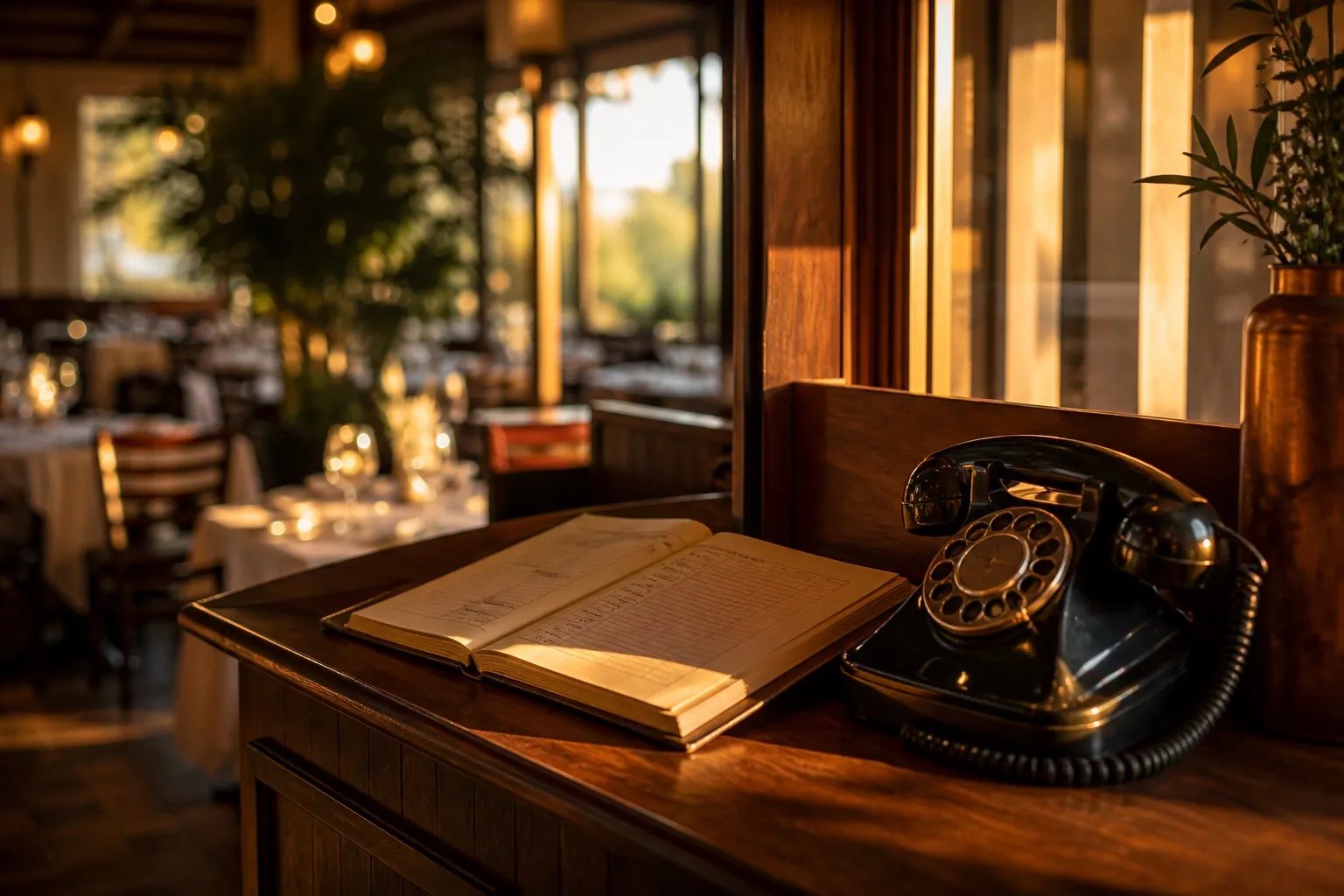
Wendy's CFO will tell analysts at end-of-month that FreshAI is in 168 locations and on track for 500+ by year-end. That's the operator-evidence case Olo and Toast lack — a top-10 QSR brand telling analysts the AI math works.
It’s Friday morning, April 11, and I’m staring at the worst kind of comp screen — the one where two names that should trade similarly do not. McDonald’s at one multiple. Wendy’s at another. Both rolling out drive-thru AI. Both partnered with hyperscalers. Both telling the same scaling story on earnings calls. Only one of them, as of this morning, still has a deployment count that an analyst can model. The other quietly walked its number back last summer and hasn’t given the Street a clean replacement.
So I’m doing what buy-side analysts do at 8:14 AM on a Friday when the TCPA opt-out rules take effect at midnight and the Restaurant Leadership Conference starts Monday in Phoenix: building the side-by-side. Locations deployed. Locations targeted. Margin lift claimed. Capex per store. The model wants numbers. The Street wants narrative. My job is to figure out which of those two things gets re-rated first, and on whose name.
Here is the part I keep coming back to. Wendy’s is on track to enter Q1 earnings on April 30 with the cleanest publicly-previewed AI deployment figure in the QSR universe. Management has already told the market the FreshAI rollout is heading toward roughly 168 locations near-term and a target of 500-plus by year-end 2025. Restaurant Dive reported the 500-restaurant target last fall (restaurantdive.com). Restaurant Business has been tracking the expansion test through the back half of 2024 (restaurantbusinessonline.com). And QSR Magazine, in its SpongeBob/Krabby Patty piece, framed the voice-AI growth as the structural story behind Wendy’s same-store comp setup (qsrmagazine.com). My base case is that Ken Cook re-confirms both numbers on the April 30 call, and that the re-confirmation does more for the AI-restaurant trade than anything any vendor announces at RLC next week.
That’s the setup. Now the math.
Why Wendy’s matters more than McDonald’s right now
I’ll say the unpopular thing first. For the AI-restaurant trade, Wendy’s is the more important name in the group this quarter, and it’s not particularly close.
McDonald’s has the bigger system, the bigger balance sheet, and obviously the bigger reflexive press cycle. None of that helps me build a model. What helps me build a model is a quarterly cadence in which a top-ten QSR brand tells analysts how many stores have a specific AI deployment, what the margin contribution looks like at those stores, and what the next twelve months of rollout will cost. Wendy’s, between the FreshAI program with Google Cloud and Kirk Tanner’s commentary on company-operated margins, is the only name in the group giving the Street that cadence today.
The 80 basis points of margin improvement Tanner has flagged at company-operated stores is the line everyone will quote. It’s also the line everyone will misread. Eighty bps on a roughly 16 percent company-operated restaurant margin is not, in isolation, a multiple-expansion event. It’s a five-percent-on-margin event, distributed unevenly across a small population of stores. The reason it matters is not the magnitude. It’s the disclosure. Wendy’s has decided to tell analysts what the AI deployment is worth at the store level. McDonald’s, by contrast, has not given a clean equivalent since the IBM partnership wound down last summer.
That asymmetry — one name disclosing operator-level AI economics, the other reverting to qualitative language — is the entire reason I think Wendy’s gets re-rated on the April 30 print and McDonald’s does not. The market does not pay an AI premium for ambition. It pays an AI premium for line items.
Decoding the 80 bps margin claim
Let me work through what 80 bps actually buys you, because the number sounds smaller than it is.
Wendy’s company-operated segment ran roughly $990 million of sales in 2024, with restaurant margin in the high-15s. Eighty bps of margin at that base is on the order of $8 million annualized — call it $7-9 million depending on how you treat mix and how heavily company-operated stores skew the AI deployment population. That number, taken at face value, is not going to move the consolidated EBITDA print. What it will do, if Cook anchors it on the call, is give the sell-side a per-store unit economic the rest of the trade can scale against.
This is the buy-side trick. You don’t need the 80 bps to be enormous. You need it to be (a) disclosed, (b) repeatable, and (c) scalable across the ~6,000-unit US system. If FreshAI is in 168 stores at quarter-end and Wendy’s confirms it’s heading to 500-plus, the modeler in my chair can now write down an explicit ramp: 500 stores at year-end ‘25, perhaps 1,500 by mid-‘26, full company-operated penetration by ‘27, with franchisee adoption following on roughly an eighteen-month lag. At even a third of the company-operated 80 bps lift, you get a system-wide margin tailwind in the 25-30 bps range by 2027. That is a number that supports a re-rating. Not a heroic one. A defensible one.
My base case is that the bears on this name argue the 80 bps figure is selection-biased — that FreshAI was deployed first at high-volume, high-margin company-operated stores, and that the lift fades as you push into the long tail. They’re not wrong to argue it. They are wrong to assume the market will price it that way before Cook discloses the comparable-store sample. The disclosure asymmetry is the trade.
What the 500-by-year-end target implies for vendor selection
Here’s where my model gets uncomfortable, in a useful way.
If Wendy’s hits 500 FreshAI locations by year-end 2025, the Google Cloud partnership becomes the single largest publicly-verified production AI deployment in QSR. That is a vendor-selection signal the Street cannot ignore. It is also the operator-evidence case that Olo and Toast — both names I cover, both names I have written about in adjacent contexts — currently lack.
Olo’s pitch on AI rests on order-aggregation infrastructure and the implied lift from more efficient channel routing. Toast’s pitch, which I expect to be the centerpiece of its own Q2 commentary and which I’ll get into more in a later piece on POS-side AI rollout, rests on the Sous Chef and ToastIQ frameworks. Both pitches are credible. Neither pitch is currently backed by a top-ten enterprise customer telling analysts, on a quarterly call, how many stores have the deployment and what the margin lift is.
This is the gap I keep underwriting. The AI-premium argument in restaurant tech is currently being made by vendors, on stage, at conferences. The operator-evidence side of that argument is being made by exactly one name: Wendy’s. And the vendor underneath Wendy’s is Google Cloud, which is not a restaurant-tech pure-play and which therefore does not benefit from the same multiple expansion that Olo or Toast would on a similar disclosure.
That mismatch — operator evidence at a hyperscaler, vendor narrative at the pure-plays — is why I think the FreshAI 500-store target is the most important number in restaurant tech this year. Not because it favors Google. Because it forces every other vendor in the stack to produce a comparable disclosure or watch its AI premium compress.
The delivery-aggregator stack faces a related version of this problem, and as our later Bottom Line coverage of the delivery-aggregator stack frames it through the DoorDash/SevenRooms lens, the same disclosure asymmetry shows up on the demand side: the names that can name specific enterprise customers and specific deployment counts will hold their multiples through 2026; the names that can’t, won’t.
Where this leaves the AI-premium debate
So what do I actually do with this between now and the April 30 print?
Three things, in order of conviction.
First, I treat Wendy’s as the carrier signal for the entire AI-restaurant trade through Q2. If Cook re-confirms the 168 and the 500, the trade is intact and the sell-side gets the disclosure cadence it needs to build a real ramp model. If Cook softens either number — and I want to be clear, my base case is that he does not — the entire QSR AI-premium narrative compresses by mid-May. That is asymmetric. The downside on a softened disclosure is larger than the upside on a confirmed one, because the confirmed case is already partly in the name. The softened case is not.
Second, I am underweighting any vendor pitch at RLC next week that does not include a named enterprise deployment count. The conference will be loud. The vendors will be confident. The data on stage will be hand-waved. I have done this trade enough times to know that the names that survive an AI cycle are the ones whose customers will tell analysts the deployment math. The names that do not survive are the ones whose CEOs tell analysts the deployment math instead. Wendy’s is in the first bucket because Tanner and Cook are talking about FreshAI as an operator data point, not as a vendor partnership. That is the right frame.
Third, I am watching McDonald’s for a competitive response, but not pricing one in. The IBM partnership unwind last summer left a hole in the disclosure timeline. The current Google Cloud relationship is real, but it has not yet produced a quarterly cadence that lets the Street model AI economics at the store level. Until it does, the comp screen reads exactly the way it reads this morning: one name with disclosure, one name without. The multiple gap should reflect that and currently does not, fully.
My base case for the rest of Q2 is straightforward. Wendy’s prints April 30 with FreshAI numbers that confirm the previewed trajectory. The Street nudges its ‘26 margin assumption up by 15-20 bps. The AI-premium debate moves out of vendor land and into operator land, which is where it should have been all along. The vendors that can produce a Wendy’s-shaped disclosure of their own — a named customer, a counted deployment, a quantified lift — hold their multiples. The vendors that cannot do not.
The bottom line, which is the only line I get paid to write, is this. The AI-restaurant trade is no longer about whether the technology works. It is about whether the operators will tell you it works on the record, with numbers attached. Right now, exactly one top-ten QSR brand is doing that. Until a second one joins it, Wendy’s is the proxy for the entire trade, and the FreshAI 168 — heading to 500 — is the number that determines whether the premium holds.
I’ll be at my comp screen on April 30 with the transcript pulled up and the model open. If the number prints, the trade prints with it.
— Oliver writes The Bottom Line on M&A and valuations. Tips: [email protected].
Featured
More
Browse all 494 posts
The Voice Agent Maturity Curve
mise
·12 min read
The Four Margins of a Restaurant
mise
·14 min read
The AI Premium in Hospitality M&A: Broker Story or Real Number?
the bottom line
·9 min read
What the DoorDash/SevenRooms Deal Actually Buys
the bottom line
·11 min read
Related posts
the bottom line
·11 min read
Darden trades like a tech company. It shouldn't.
the bottom line
·12 min read
Applebee's just became its own franchisee. The territory math is the trade.
the bottom line
·12 min read