The May 2025 Capital-Flow Recap: $5B+ Moved in Hospitality Tech

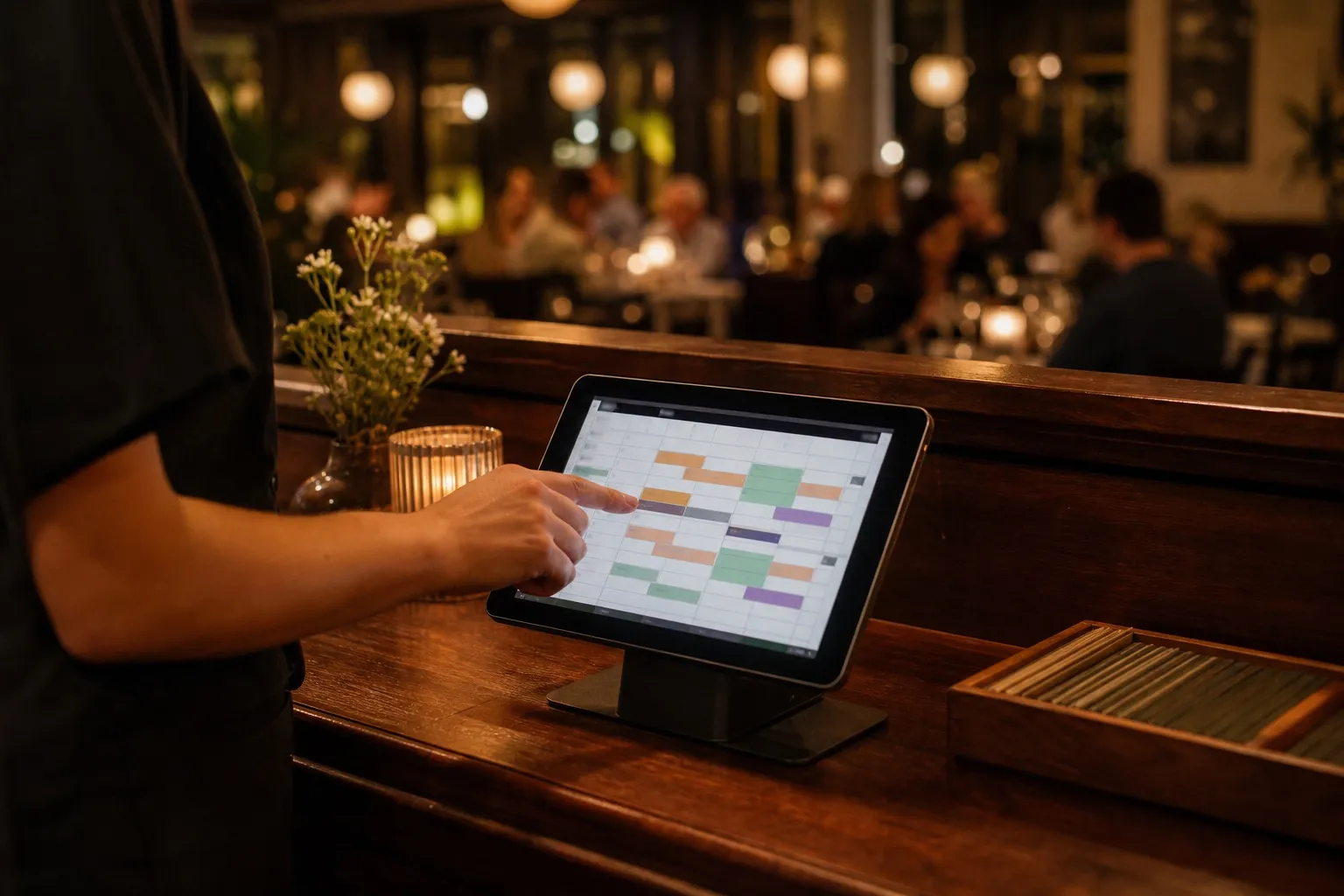
DoorDash's ~$5.1B in M&A, plus $556M of Lightspeed impairment and $1B of US Foods buybacks, reframes the sector's cost of capital — and the investor playbook for the next two quarters.
It is a Friday afternoon and my desk looks like a recycling depot for press releases. The Deliveroo deal sheet is paper-clipped to the SevenRooms announcement. A printout of Lightspeed’s FY25 Q4 earnings release is creased at the impairment footnote. The US Foods buyback authorization is highlighted in two colors because I changed my mind halfway through reading it. My coffee is cold. My month-end column is due.
I have been writing The Bottom Line long enough to know when a month wants to tell you something. May 2025 spent four weeks trying to tell me one thing, and I spent four weeks pretending it was telling me something else. The headlines this month were about deals. They were not. They were about the cost of capital.
So here is the thesis, up top, before I lose it in the reporting: May 2025 was the month restaurant tech stopped being a growth story and became a capital-allocation story. Roughly $5.1 billion of M&A from a single buyer. A half-billion-dollar impairment from a public POS incumbent. A billion dollars of buybacks from a distributor that, on paper, has nothing to do with software. Put those three data points on the same page and the sector’s discount rate moves before any of the individual companies do.
That is the column. Now let me show my work.
DoorDash bought a sector, not two companies
The two May headlines that mattered came from the same buyer on the same week. DoorDash announced an agreement to acquire Deliveroo for approximately $3.9 billion and, separately, SevenRooms for roughly $1.2 billion. Round it and call it $5.1 billion of announced spend, ex-fees, ex-retention pools, ex-everything that gets bolted on between announcement and close.
I keep seeing the two deals analyzed as if they were independent. They are not. They are the same trade run twice on different axes.
Deliveroo is geography. It is an instant pickup of meaningful European order volume, a credible UK and Middle East footprint, and a defensive moat against the next round of consolidation rumors involving Uber, Just Eat Takeaway, and the various private-equity-backed regional players that have been circling all year. SevenRooms is the merchant stack. It is a CRM, reservations, and guest-data system that sits on the dining-room side of the operation — the part of the restaurant that DoorDash’s marketplace historically did not see.
Read together, the message is unambiguous. DoorDash is no longer paying to grow the marketplace. It is paying to own the operator relationship on both sides of the door: the takeaway courier on the back end and the host-stand software on the front end. The marketplace is now a distribution channel for a much wider commercial offer, not the product itself.
That changes the comp set. SevenRooms previously competed for capital with Tock, Resy, OpenTable, and a long tail of guest-management point solutions. Going forward it competes inside a roadmap with DoorDash Drive, DoorDash for Business, and the loyalty stack. The strategic logic is fine. The capital-markets implication is that the price of every other independent guest-management platform just got reset, in both directions — up on M&A optionality, down on the probability of standalone scale.
My base case is that within two quarters we see at least one defensive response from the OpenTable/Resy axis. Either Booking Holdings articulates a clearer integrated-merchant story around OpenTable, or Amex does something visible with Resy beyond the existing card-member integrations. The alternative — sitting still while DoorDash quietly turns SevenRooms into the default operating system for mid-market full-service — is not really an alternative.
The Lightspeed impairment is the most honest number of the month
While DoorDash was writing checks, Lightspeed was writing down goodwill. The FY25 Q4 earnings release carries a $556 million non-cash impairment charge. It is the kind of line item that gets buried in the financial review section and dismissed in the analyst Q&A as a backward-looking accounting adjustment. I think that is the wrong read.
A goodwill impairment is the company telling its own auditors that the carrying value of past acquisitions can no longer be justified by expected future cash flows. It is not a guess and it is not theatrical. It is a constrained, audit-tested admission that the prices Lightspeed paid for prior platform consolidation — Ecwid, ShopKeep, Upserve, Vend, NuORDER — do not pencil at today’s discount rate and today’s growth assumptions.
Translate that out of accounting and into English. The 2020–2022 land-grab era of restaurant and retail SaaS consolidation was financed at one cost of capital, and the resulting assets are now being marked at a different one. $556 million is the visible part of that revaluation. The invisible part is sitting on the balance sheets of every other roll-up vehicle that bought growth between 2020 and 2022 and has not yet been forced to mark it.
I am not predicting a wave of similar impairments from named peers. I am saying the bar for one has dropped meaningfully. Auditors talk to each other. Once one Big Four firm signs off on a half-billion-dollar mark for a Canadian-listed POS roll-up, the conversation in every other engagement room changes. Investors should expect more conservative carrying values across the sub-sector for the next two reporting cycles, whether or not those revisions get the same headlines.
The corollary for operators is more practical. If you are running on a Lightspeed product today, nothing about the impairment changes your day. If you are evaluating one as a buyer, the impairment is a useful piece of negotiating leverage on roadmap commitments and contractual exit terms, because the company has now publicly acknowledged that the pace of platform integration did not deliver what the original deal models priced in.
US Foods bought back its own stock and told you something about the supply chain
The third number that anchors May is the easiest to underestimate. US Foods’ board authorized a $1 billion share repurchase program. The press release reads like routine capital return. It is not routine. It is a distributor — a business with thin margins, real working-capital needs, and meaningful exposure to commodity cycles — choosing to return a billion dollars to shareholders rather than redeploy it.
That is a signal about where the marginal dollar earns the best return in 2025 food-service distribution. The answer, according to the people closest to the cash, is “back to the shareholders.” Not into another regional acquisition. Not into a build-out of e-commerce or merchant-facing tech. Buybacks.
The relevant question for hospitality-tech investors is what that implies about the distributor-adjacent software stack. If US Foods sees the best risk-adjusted use of a billion dollars as compressing its own share count, then the implicit hurdle rate on any new internal software or partnership investment just went up. Vendors selling into the broadline distributor channel — order-management, invoice-capture, AP automation, menu engineering tied to procurement — should expect longer cycles, sharper price negotiations, and a higher bar on demonstrated ROI before pilots convert to deployments.
My base case is that this filters through to startup fundraising within one to two quarters. The companies that have been pitching distributor-adjacent SaaS at 8-12x forward revenue will have to either re-rate the multiple or re-rate the growth narrative. Probably both.
Where the cost of capital actually moved
Stack the three data points on one page and the picture sharpens.
A strategic buyer with a public-market currency and a credible operating story can finance $5.1 billion of acquisitions and the market accepts it. A platform incumbent that financed prior consolidation at a different cost of capital takes a $556 million write-down and the market accepts that too. A distributor with $1 billion of surplus cash chooses buybacks over reinvestment and the market rewards it.
What those three things have in common is a higher implied discount rate on future growth and a higher implied premium on already-monetized scale. Cash flows you have already proven are worth more, relative to cash flows you are still promising, than they were eighteen months ago.
That sounds abstract. It is not. It changes three concrete things for the next two quarters.
First, the M&A market splits. Strategic buyers with cash flow and a story — DoorDash, Toast, Block, Shift4, the larger payments and marketplace incumbents — can keep transacting at scale because they are deploying their own currency against assets they can credibly integrate. Pure financial sponsors and smaller roll-ups have a harder problem, because the debt component of any leveraged deal is more expensive and the equity check has to clear a higher synergy bar. Expect the deal mix to skew strategic, not sponsor-led, through the back half of 2025.
Second, the public-private valuation gap stays wide. The Lightspeed impairment is a public-market admission that 2021-vintage acquisition prices do not hold. Private hospitality-tech rounds that were marked at peak multiples in 2021–2022 are sitting on the same gravity. The question is when, not whether, those marks get revisited at the LP level. Some of that will happen in the open. Most of it will happen quietly through structured secondaries and pay-to-play extensions over the next twelve months.
Third, capital efficiency becomes the only story worth telling. The companies that compound through this cycle are the ones whose ARR growth is funded by gross margin, not by the next round. The PAR Technology Q1 print is a useful data point here: subscription ARR up 52% year over year, which is the kind of growth rate that can credibly self-fund through a tightening capital environment. That number is not in the same league as DoorDash’s $5.1 billion of M&A in absolute terms, but in rate of compounding it is the more interesting data point for a public-equity portfolio over a two-year hold.
What I am watching in June
A few things I will be tracking when the next month-end recap comes due.
Margin commentary, not revenue commentary. The growth-versus-margin tradeoff is going to be the central question on Q2 calls. Companies that lean into margin and explain it confidently get rewarded. Companies that keep talking about top-line acceleration in a tightening capital environment get punished. Watch the prepared remarks more than the headline numbers.
Defensive M&A in guest management. The post-DoorDash/SevenRooms competitive set is unstable. If a serious defensive bid does not appear from the OpenTable or Resy side within two quarters, the steady-state read is that those platforms have effectively conceded the integrated-merchant story to DoorDash. That has knock-on consequences for every smaller reservation, waitlist, and CRM vendor, because it reshapes the partner ecosystem they have been selling into.
Sponsor exits and structure. Watch for sponsors taking partial liquidity through dividend recaps, structured preferred, and minority secondaries rather than full sales or IPOs. That is the tell that they cannot get a clean clearing price in the current market and are managing duration rather than crystallizing returns. It is not a crisis signal. It is a cost-of-capital signal, and it is the same signal Lightspeed sent with the impairment, just expressed through a different instrument.
The AI premium question. I will hold this one mostly for a later piece, but the short version is that the market is starting to assign a real premium to companies that can credibly attach AI to existing recurring revenue rather than to new product surface area — as our later coverage of the AI-premium thesis argues, the durable trade is the rebrand of an existing book of business, not the greenfield product launch. May did not settle this question. June and July probably will.
What this means if you actually run a restaurant
A note for the operator audience, because The Bottom Line is read in kitchens as well as in trading rooms. None of this month’s capital-markets activity changes what you do tomorrow morning. Your POS works. Your reservation system works. Your distributor delivers.
What it changes is the strategic backdrop for any twelve-to-twenty-four-month vendor decision. If you are evaluating a guest-management platform, the DoorDash–SevenRooms deal means you should be asking explicit questions about ownership stability, roadmap independence, and data portability. If you are running on Lightspeed, the impairment means you have legitimate leverage to ask for contract-term protection on integration milestones. If you are negotiating with a broadline distributor, the US Foods buyback authorization means cash is flowing to shareholders, not into customer-facing investment, and your account team is going to be measured on margin defense more than on white-glove service.
The capital story flows downstream into operator economics with about a two-quarter lag. By the time you feel it in your unit economics, the pricing has already moved. As our subsequent operator-side piece details for a twelve-unit cafe group, the bridge from capital cycle to unit P&L is shorter than most operators model — typically one to two quarters, not three to four.
Closing the file
I started this column with a desk full of press releases and a cold coffee. Four weeks of reporting, ranked by what actually matters to a capital-allocation reader, ends up as a short list: one strategic buyer reshaping the sector through $5.1 billion of M&A, one incumbent admitting a half-billion dollars of historical pricing was too high, and one distributor telling its shareholders that buying back its own stock beats every other use of a billion dollars.
That is a capital-allocation story, not a growth story. The companies that internalize that shift first — at the board level, at the cap-table level, at the unit-economics level — are the ones that compound through 2025 and 2026. The ones that keep selling the 2021 narrative are the ones whose marks come down next.
My base case for June: more strategic M&A, more conservative carrying values across public POS and reservations names, and the beginning of a real conversation about which private hospitality-tech books need to be remarked. None of that is a crash call. It is a re-rating call. The two are very different, and the operators and investors who can tell them apart are the ones I write this column for.
— Marcus writes The Bottom Line. Tips: [email protected].
Featured
More
Browse all 494 posts
The Voice Agent Maturity Curve
mise
·12 min read
The Four Margins of a Restaurant
mise
·14 min read
The AI Premium in Hospitality M&A: Broker Story or Real Number?
the bottom line
·9 min read
What the DoorDash/SevenRooms Deal Actually Buys
the bottom line
·11 min read
Related posts

the bottom line
·11 min read
Darden trades like a tech company. It shouldn't.
the bottom line
·12 min read
Applebee's just became its own franchisee. The territory math is the trade.
the bottom line
·12 min read