The Tape: Why TOST Got Punished and DASH Got Rewarded the Same Week

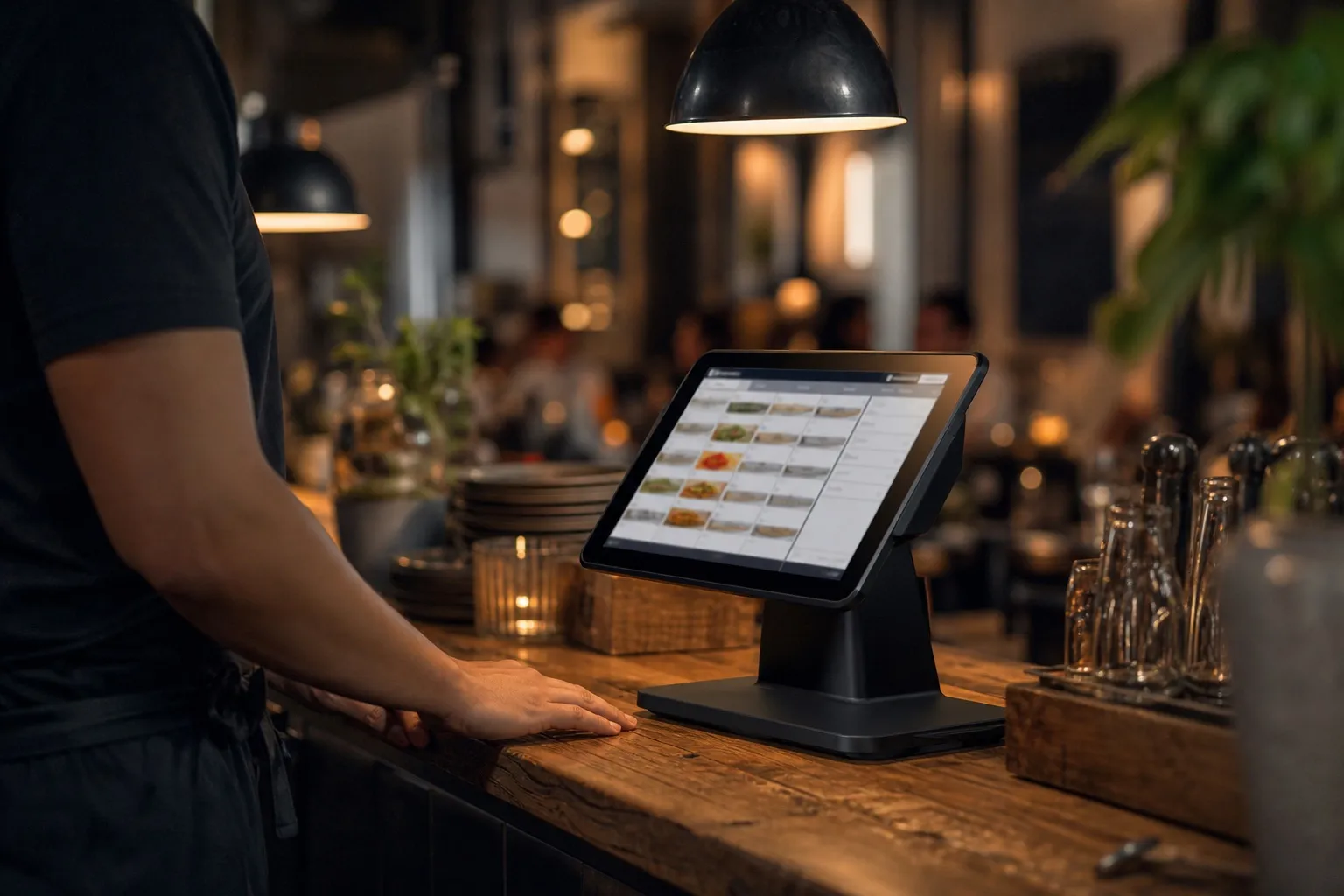
Inside 48 hours, Toast beat revenue and missed EPS, Block missed EPS, DoorDash beat. Same hospitality-tech tape, three judgments. Wall Street is rewarding ad-engine economics and punishing payment-mix dilution — and the gap is the column.
I had three earnings releases open on the same screen this week — Toast on Tuesday afternoon, DoorDash on Wednesday morning, Block on Thursday afternoon — and the spread between how the tape rewarded each one is the column. Toast beat revenue and missed EPS. Block missed EPS outright. DoorDash beat. Within forty-eight hours, two of those three sold off and one rallied, and the cleanest read of which one rallied tells you exactly what the buy-side is paying for in hospitality-tech right now.
The thesis, plainly. Wall Street is now rewarding ad-engine economics and punishing payment-mix dilution. The same revenue dollar is being valued at one multiple if it flows through an attributable ad surface and a meaningfully lower multiple if it flows through interchange. That’s the trade behind the tape this week, and it has consequences for how every payments-first hospitality-tech name has to talk about its second-act businesses for the rest of the cycle.
What the tape actually said
Sequence matters here, so let me lay it out.
Toast reported Q3 2025 after the close on Tuesday, November 4. The headline numbers were good on the top line and soft on the bottom. Revenue was $1.7 billion, up 25% year-over-year. Adjusted EBITDA was $176 million. GAAP net income was $90 million. The miss was on diluted EPS, which came in below consensus on the print — and the stock traded down roughly 2.4% in the aftermarket on the back of it (Toast Q3 2025 release, BusinessWire).
DoorDash reported Q3 2025 on Wednesday, November 5. The print was clean. GAAP net income was up 51% year-over-year. Orders, revenue, and Marketplace GOV all came in above the high end of company guidance. The investor framing on the call leaned hard into the ad business — Tony Xu told analysts the DoorDash advertising business is “the fastest commerce media business in history to get to $1 billion of annualized revenues” (DoorDash Q3 2025 release, SEC filing). The stock rallied on the open and held the gain through the week.
Block reported Q3 2025 after the close on Thursday, November 6. The print missed on EPS. Gross profit was $2.66 billion, up 18% year-over-year, which is the line most of the bull case rests on. But Square gross profit growth decelerated to 9% — down from 11% the prior quarter — and Cash App’s GPV growth was characterized by analysts as soft relative to the buy-side bar. The stock opened down sharply on Friday, November 7, and is now down roughly 24% year-to-date (CNBC, Block earnings, Nov 7 2025).
Three prints. Two punishments. One rally. The interesting question isn’t which company beat — it’s why the market sorted them the way it did.
Why DoorDash got the multiple
The cleanest read of the Tony Xu “fastest in history” line is that DoorDash is no longer being valued as a delivery business. It’s being valued as a commerce-media business with a delivery distribution moat. That reframe is what’s getting paid for.
The math behind the framing is worth the column inch. DoorDash’s marketplace generates roughly a billion orders per quarter at this point, and each of those orders is an opportunity to surface a sponsored placement — a featured restaurant on the home tab, a recommended item at checkout, a brand-funded promotion inside the carousel. The take rate on an ad impression is meaningfully higher than the take rate on a delivery commission, and the ad impression doesn’t carry the variable cost of a dasher payment. So you have a business growing into the structural margin profile of Meta, not the structural margin profile of GrubHub.
Once that becomes the buy-side frame, every incremental quarter of order growth gets capitalized at a different multiple, because each order is also an ad inventory unit. That’s the trade. The ad business at $1B annualized is not large in absolute terms — DoorDash’s trailing Marketplace GOV is in the $80B-plus range — but it’s the fastest line on the deck, and it’s the line that justifies the re-rating.
I want to flag something the company didn’t say on the call, because it matters for the rest of this column. DoorDash’s ad surface is also the integration target for the SevenRooms reservations book it closed earlier this year — every reservation on SevenRooms is, eventually, an attributable transaction inside the same ad-engine that’s now monetizing the delivery marketplace. I drew the through-line in a forthcoming May piece on the SevenRooms deal, and the Q3 print is the first public confirmation that the strategy is loading the gun on margin, not just on geography.
Why Toast got punished despite the revenue beat
Toast’s print is the one that confused buy-side desks I talked to most of Wednesday. Twenty-five percent revenue growth in Q3 is at the high end of what the SaaS comp set can deliver at this scale. $176M of Adjusted EBITDA is real. The location count is still expanding. The Toast IQ adoption story is intact. And yet the stock sold off on the print, and it sold off on a soft EPS line rather than on the top-line beat.
The honest read here is mix.
A meaningful share of Toast’s revenue is payment processing — interchange that flows through the platform on every credit-card swipe a Toast location runs. That revenue line carries interchange-passthrough as cost of revenue, which compresses gross margin and, downstream, compresses operating leverage relative to a pure-software comp. The market knows this. What the market is now signaling — and the EPS-miss reaction is the signal — is that it’s no longer willing to ignore the mix when the company prints.
Phrase it the way the buy-side does. A dollar of subscription revenue at Toast trades at one multiple. A dollar of payment revenue trades at a lower one. A dollar of ad revenue, if Toast had a meaningful one, would trade at the DoorDash multiple. Toast has been working to build the ad surface — the Coca-Cola partnership inside ToastIQ that surfaced in October is the cleanest public example — but the ad line isn’t yet a material contributor. So the print this week was, in mix terms, a payments-heavy print on a soft EPS line, and the market gave it a payments-heavy reaction.
That’s the contrarian thesis I want you to sit with. The Toast print wasn’t bad. The Toast print was correctly priced for what it was, which is a payments-mix print at a moment when Wall Street is no longer willing to pay the software multiple for the payments dollar. The penalty wasn’t for missing — the penalty was for missing in the wrong line, the line that exposes the mix.
Why Block’s miss landed harder than Toast’s
Block’s situation is structurally adjacent to Toast’s, but the print landed worse for two reasons.
First, the gross profit line is healthier than the headlines suggest — $2.66 billion, up 18% — but the deceleration inside Square is the leading indicator the market cares about. Square gross profit growth slowed from 11% in Q2 to 9% in Q3. That’s a two-hundred-basis-point sequential deceleration inside the segment that’s supposed to be the operating leverage engine. The Cash App segment was soft enough on the print that the bull case there got harder to underwrite, too.
Second, Block doesn’t have the ad story to fall back on. DoorDash has it. Toast has the beginning of one. Block has Cash App Pay, Afterpay, and the bitcoin treasury position, and none of those translate cleanly into the ad-engine framing that’s getting paid for this week. So when the EPS miss hit the tape, the buy-side had no second-act narrative to bridge to. The stock printed down sharply on Friday and the year-to-date line is now at -24%.
The cleanest way to read the Block tape: in a quarter where the market is punishing payment-mix dilution and rewarding ad-surface optionality, Block delivered the dilution without the optionality, and the multiple compressed accordingly. Same revenue dollar, different multiple, exactly the trade I opened with.
The interpretation — and where this goes next
Three printable conclusions from this week.
One. The hospitality-tech category has bifurcated along a single axis: do you have an ad surface, and is it material? DoorDash does. Toast is building one. Block doesn’t, in any way that matters for the next four quarters of operating leverage. The bifurcation will widen — Wall Street has now publicly priced the trade, and that pricing tends to be sticky for at least a cycle.
Two. The Toast print is the more interesting one to underwrite from here, precisely because the punishment was for mix rather than for execution. The path from where Toast is today — payments-heavy revenue mix with an emergent ad surface inside ToastIQ — to a DoorDash-style multiple runs through making the ad line material. That’s a 2026 story, not a 2025 one, but the buy-side framing is now clear enough that Toast knows what it has to deliver.
Three. The contrarian read on the week is that Block at -24% YTD is now closer to an underwriteable entry than the consensus narrative suggests — if you believe the Cash App ad surface can become material in the same way DoorDash’s did. That’s a real if. But the multiple is now compressed enough that the risk-reward profile starts to favor the long side for a buyer willing to underwrite the second-act narrative the company hasn’t yet been able to sell to the street.
I want to flag one cross-current to all of this. The mid-market M&A read — what happens to private hospitality groups whose decks lead with embedded AI tooling — runs the opposite direction from the public tape. The public tape is rewarding ad-engine moats and punishing mix; the private mid-market is, separately, over-pricing AI tooling on the headline. Oliver makes the case more forcefully than I would in an upcoming Pass piece on the AI premium, but the through-line worth holding is that the public market and the private market are now solving different problems. The public market is asking “what’s the structural margin?” The private market is still asking “what’s the feature set?” Those two questions get to very different prices.
The bottom line
Same week. Same category. Same earnings calendar. Three different verdicts.
The Toast verdict is “we will no longer pay you the software multiple for the payments dollar.” The DoorDash verdict is “we will pay you the commerce-media multiple as long as the ad-engine line keeps compounding.” The Block verdict is “we will not bridge the EPS miss with a second-act narrative we cannot underwrite.”
Each of those verdicts is, in isolation, a reasonable read of one print. Together, they’re a category-level repricing. The buy-side has now publicly committed to a framework — ad-engine economics over payment-mix dilution — and the hospitality-tech names that can credibly tell that story over the next four quarters will trade through the names that can’t.
The trade for the rest of the cycle is to figure out, name by name, which side of the line each company sits on. Toast has the data to cross the line and the partnerships — the Coca-Cola signal in particular — that suggest management knows it. DoorDash is already on the right side. Block, on this week’s tape, is on the wrong side, and the path back across runs through the Cash App surface, which the company has yet to sell convincingly.
That’s the tape. Watch the ad lines. Watch the mix. Pay attention to which prints get the multiple and which prints don’t, because the gap is no longer about whether the number beat — it’s about which kind of dollar the number was made of.
— Marcus edits The Bottom Line for TableTransfers. Tips: [email protected].
Featured
More
Browse all 494 posts
The Voice Agent Maturity Curve
mise
·12 min read
The Four Margins of a Restaurant
mise
·14 min read
The AI Premium in Hospitality M&A: Broker Story or Real Number?
the bottom line
·9 min read
What the DoorDash/SevenRooms Deal Actually Buys
the bottom line
·11 min read
Related posts

the bottom line
·11 min read
Darden trades like a tech company. It shouldn't.
the bottom line
·12 min read
Applebee's just became its own franchisee. The territory math is the trade.

the bottom line
·12 min read