The Yum Brands–Byte by Yum Afterimage: How a February Launch Is Shaping April's AI Conversations

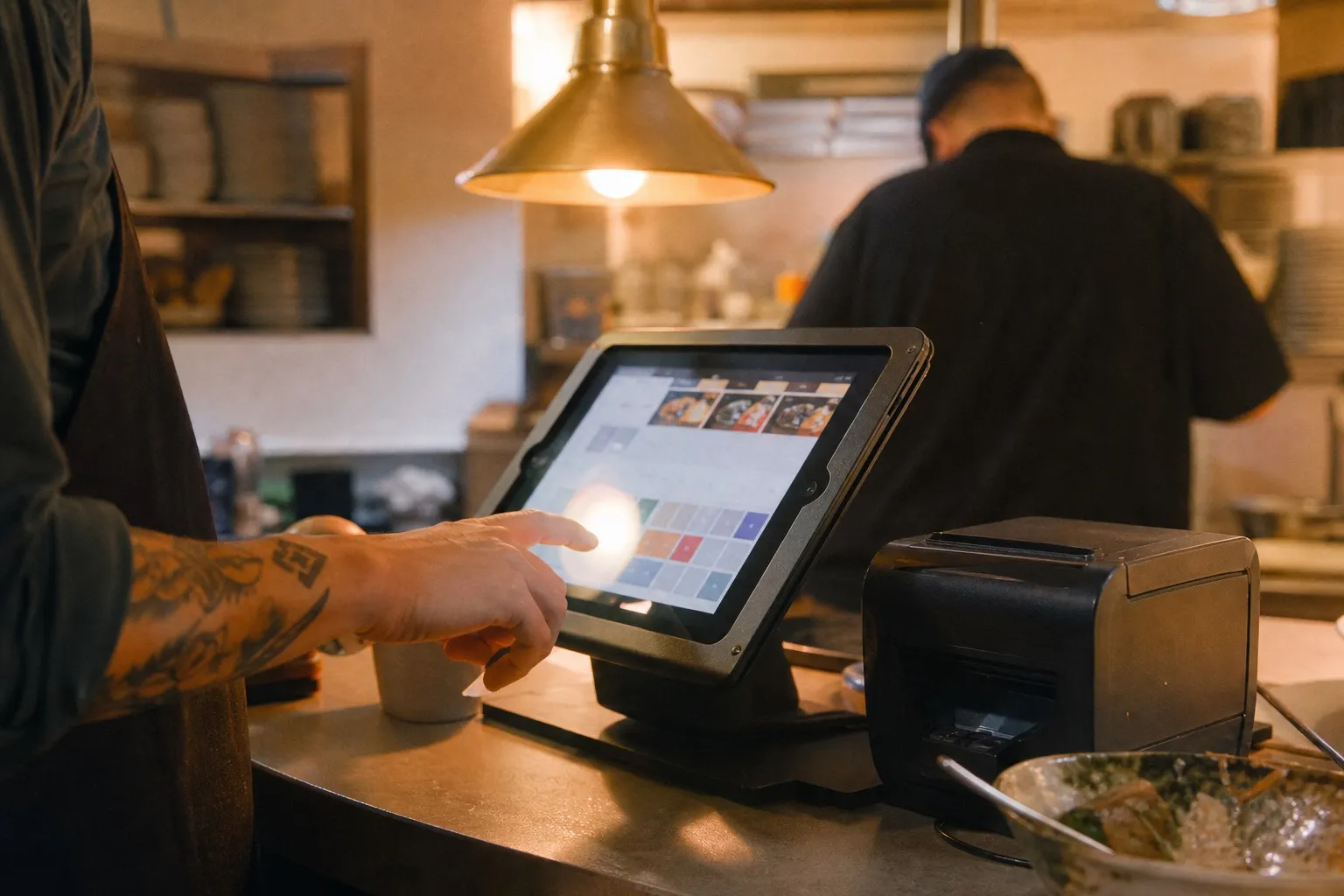
Byte by Yum, launched at Yum's Q4 2024 print in early February, was the unspoken framing device at RLC and the April industry events. Yum is the only QSR with a unified, in-house AI/data platform across Taco Bell, KFC, and Pizza Hut.
I spent Thursday night reviewing my Restaurant Leadership Conference notes from earlier this month, and the same pattern kept jumping off the page. Operators on stage in Phoenix talked about “platform strategy,” “unified data,” “AI-ready stacks,” and “owning the customer record.” Three different CFOs invoked the phrase “single technology platform” in panels I sat through. Nobody — and I mean nobody on those panels — said the words “Byte by Yum” out loud. But that was the shape of the conversation. Every QSR competitor in April 2025 is reacting to a thing Yum Brands shipped on February 6, and most of them haven’t admitted it yet.
That’s the afterimage. A flash of light hits the retina, you blink, and the silhouette stays burned in for a beat longer than the source. Byte by Yum is the flash. The April industry circuit is the silhouette. And as a Bottom Line reader, the question you should be asking is whether the public-market AI premium in QSR is about to start accruing asymmetrically — to the one operator that owns the data layer end-to-end across three global brands.
My base case: it already is, and the Street hasn’t fully repriced for it.
What Byte by Yum actually is
Let’s get the facts on the table before the take. On February 6, 2025, alongside Yum’s Q4 2024 print, the company announced Byte by Yum — a unified, AI-powered, proprietary technology platform that consolidates the operational and digital stacks across Taco Bell, KFC, Pizza Hut, and Habit Burger & Grill. Joe Park, who’d been Yum’s chief digital and technology officer, was named president of the Byte business. The platform spans, per PYMNTS in March, roughly 25,000 international locations on its commerce and operations modules — which is a number that should make any restaurant-tech investor put their coffee down.
You can read the contemporaneous reporting at Restaurant Dive, Nation’s Restaurant News, and Restaurant Technology News. All three pieces landed within a 48-hour window of the print. Read them together and a specific picture emerges: Yum is not buying an AI overlay from a vendor. Yum is not federating a patchwork of acquired point solutions. Yum is positioning itself as the operator-platform, where the platform is in-house, the data is theirs, and the AI is being trained on a proprietary corpus of transactional, operational, and customer signal that no peer can match at scale.
Inside that platform, the most talked-about deployment is Taco Bell’s voice AI drive-thru, which by early 2025 was running in approximately 500 U.S. locations per RetailWire’s coverage. CFO Chris Turner has signaled an expansion path; the next Yum print on the calendar is going to be where that figure gets refreshed, and I’d encourage you not to anchor on the 500-location floor for long. The trajectory matters more than the snapshot.
Three things you need to internalize before the next section:
- The launch is past. February 6 is in the rear-view.
- The competitive reaction is present. April is the afterimage month.
- The next data point is forward — Yum’s Q1 print is upcoming, and that’s when the Street gets its first post-launch read on adoption velocity inside the franchisee base.
Why competitors are reacting, not announcing
Here’s what struck me about RLC and the broader April industry conversation. McDonald’s reports Q1 on May 1. Wendy’s reports Q1 on April 30. Both will be asked about AI strategy. Both will give answers. Neither answer will be “we have built a proprietary, in-house, multi-brand, AI-native operating platform that we are now monetizing across 25,000 international locations.” Because neither one has.
McDonald’s notably wound down its IBM voice AI pilot in mid-2024 and has been publicly more cautious about voice-at-the-board since then. Their digital strategy is real and ambitious, but it is platform-by-platform, not platform-as-product. Wendy’s FreshAI is genuinely innovative work and the company deserves credit for early voice deployments — but FreshAI is a feature inside Wendy’s, not a platform Wendy’s is positioning to sell to anyone else. (Yum has been notably coy about whether Byte will eventually be licensed externally, but the way Park has framed his role makes it impossible to rule out, and that optionality is itself a valuation input.)
The April industry events — RLC, the smaller adjacent conferences, the analyst-day style fireside chats — were all conversations around Byte without ever naming it. When a Wendy’s panelist talks about needing “an integrated data fabric,” that is a Byte-shaped sentence. When a Restaurant Brands International strategist talks about “consolidating our digital surfaces,” that is a Byte-shaped sentence. The category has been given a vocabulary. The vocabulary belongs to Yum.
This is the pattern as our later coverage of distributor/QSR M&A frames it (/blog/posts/how-id-price-a-12-unit-cafe-group-this-week-step-by-step): a category leader doesn’t need to be loud at industry events to set the agenda — they just need to ship the artifact that the agenda is now organized around. Byte is that artifact for QSR-AI in 2025.
The valuation implication every analyst should run
This is the part of the column where I tell you what I think the Street is missing. The conventional AI premium in restaurant equities right now is being applied roughly evenly — every QSR with a voice AI pilot, every casual-dining operator with a personalization engine, every loyalty program with a recommender model is getting a modest multiple bump on the AI narrative. That premium is being distributed too flat.
My base case is that within 12-24 months the AI premium in QSR will bifurcate, and it will bifurcate along a single axis: do you own the data layer, or are you renting it? Operators renting AI from third-party vendors — even excellent third-party vendors — are buying the same commodity their peers can buy. The margin of advantage erodes as the vendor catalog matures. Operators that own the data layer get compounding returns. Every transaction, every drive-thru order, every loyalty interaction, every supply-chain ping makes their model better and their competitors’ models relatively worse.
Yum is the only QSR at scale today that owns the data layer across three global brands. That’s not a marketing claim — that is, structurally, what Byte is. The Taco Bell drive-thru voice corpus, the Pizza Hut delivery-ops dataset, the KFC international back-of-house signal: one platform, one schema, one model substrate. That is a moat of a kind QSR has not previously had.
What does that mean for the multiple? My back-of-envelope: a 1.5-2.5x turn of EBITDA premium on the data-platform line of the SOTP is defensible today, and that premium widens if Byte develops external commercial optionality. The risk to the call is execution — franchisee adoption velocity, integration cost overruns, and the genuine difficulty of running a B2B-style platform business inside a public-market QSR holdco. None of these risks are trivial. But the directional thesis — that the AI premium accrues to data-layer owners, not AI-feature deployers — feels increasingly load-bearing.
This is the same dynamic worth watching in adjacent verticals, which is why I’ll flag in a later piece on enterprise platform-AI deployment (/blog/posts/inside-marriotts-ai-stack-a-case-study-in-how-the-largest-hotel-chain-is-actually-deployin) that the hospitality and lodging stack is now staring at the same fork in the road.
What to watch on Yum’s Q1 print (forward)
So what should you be marking your calendar for? Three numbers and one disclosure posture.
Number one: Taco Bell voice AI location count. The known floor from early-2025 reporting is approximately 500 U.S. locations. Chris Turner has telegraphed expansion. The Q1 print is the first opportunity to refresh that figure publicly, and I anticipate a figure closer to 600 by the time Yum reports its Q2 print this summer — call that the directional ceiling for the near term. If Q1 lands materially above 500, that’s confirmation of the velocity thesis. If it lands at or near 500, it doesn’t break the thesis but does push the rerating window out a quarter.
Number two: Byte-attributed digital sales mix. Yum has been increasingly explicit about digital sales as a share of system-wide sales. Watch for any breakout, footnote, or supplemental disclosure that ties digital sales explicitly to Byte. The day Yum starts reporting Byte-attributed revenue or operating contribution is the day the platform graduates from internal-tool to disclosed segment, and the multiple will follow.
Number three: international license/adoption signal. Byte spans 25,000 international locations per the March PYMNTS reporting. The Q1 commentary on international adoption is where I’d look for the leading indicator on whether Park’s mandate is purely internal or whether Yum is laying the foundation to externalize the platform.
Disclosure posture: how much does Yum say about Byte unprompted? Watch the prepared remarks. A confident category leader name-drops its platform early and often. A cautious one buries it. The prepared-remarks treatment of Byte on the Q1 call will tell you how aggressively Yum’s leadership thinks the asset is being valued by the Street today.
My base case into the print: Yum prints in line, refreshes the voice AI footprint modestly, and gives one or two new datapoints on Byte that move the consensus model meaningfully. That’s enough to keep the rerating intact through summer, when the Q2 figures — including, I anticipate, a 600-location voice AI footprint — will provide the next leg.
The afterimage is real. February shipped the artifact. April absorbed it. The forward calendar — McDonald’s May 1, Wendy’s April 30, Yum’s own Q1 print — is when the market gets to start pricing what it actually saw.
— Marcus writes The Bottom Line. Tips: [email protected].
Featured
More
Browse all 494 posts
The Voice Agent Maturity Curve
mise
·12 min read
The Four Margins of a Restaurant
mise
·14 min read
The AI Premium in Hospitality M&A: Broker Story or Real Number?
the bottom line
·9 min read
What the DoorDash/SevenRooms Deal Actually Buys
the bottom line
·11 min read
Related posts

the bottom line
·11 min read
Darden trades like a tech company. It shouldn't.
the bottom line
·12 min read
Applebee's just became its own franchisee. The territory math is the trade.
the bottom line
·12 min read