UK Operators Face £1.4B Labor Bill: A Pre-Budget Playbook
On the eve of Wednesday's Autumn Budget, UK hospitality is staring down NLW £12.71, sub-sector rateable-value jumps of 14–76%, and roughly £1.4bn of new sector cost. The contrarian read: the operators who model the hit on Tuesday afternoon, not Thursday morning, set the menu and the rota before their competition reads the Caterer.
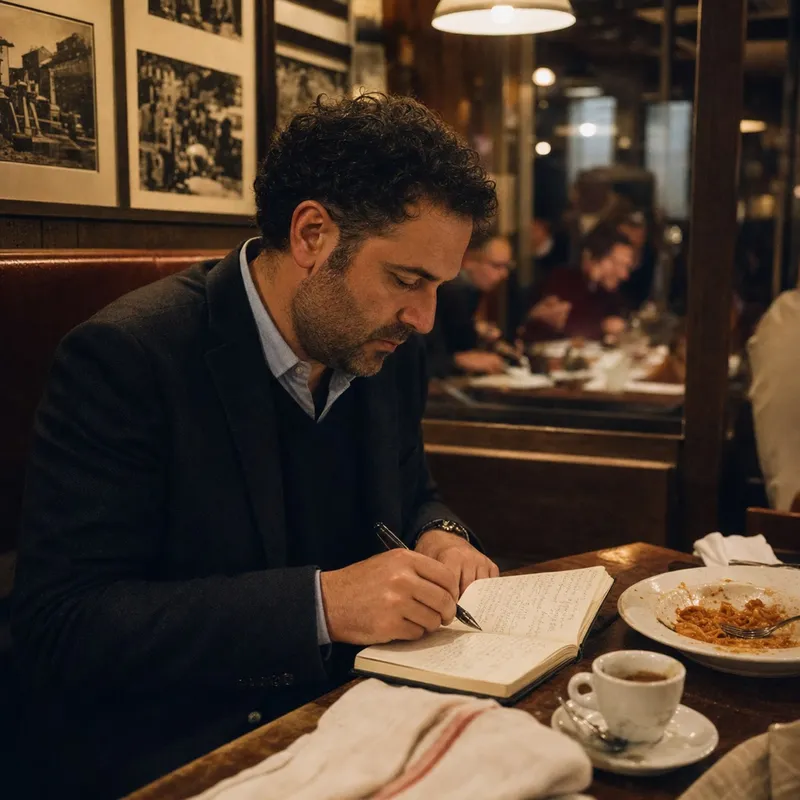
I was in a Soho prep kitchen yesterday afternoon with a chef-patron who was trying to do two impossible things at once: cost a January menu against an NLW number he did not yet have, and decide whether to lock in a fixed-price beef contract before Wednesday’s Budget moved his rateable value. He had the UKHospitality pre-Budget submission open on his phone, a rota in front of him, and a printed P&L with a yellow highlighter ring around line 4 — wages — that had not moved in three weeks because he refused to print a new one until the Chancellor stopped being a hypothesis.
“The problem isn’t what she announces,” he told me, stirring a chicken stock that did not need stirring. “The problem is the week I lose between announcement and reaction. Every operator in Soho is going to spend Thursday reading the Caterer. I want my Thursday to be boring.”
That is the contrarian thesis for this column, on the Tuesday before the Autumn Budget. The operators who win the Budget week are the ones who price the anticipated hit on Tuesday and execute against it before the policy is law. The numbers in the pre-Budget submissions are public. The likely shape of the announcement has been telegraphed for a fortnight. The variable is not the policy — it is operator latency. Most independents will react on Thursday or Friday. Most groups will react the following Monday. The week in between is where the menu, the rota, and the supplier conversation get decided, and almost nobody is using it.
I will model three businesses below — a 20-cover restaurant, a 60-room hotel, and a four-pub group — against the anticipated numbers, mark every interpretation, and lay out the cost actions that can credibly be taken in the next forty-eight hours. Everything in this piece is what an operator should be doing before the Chancellor stands up. The reactive version of this column gets written on Thursday by somebody else.
What we know on Tuesday afternoon
Start with what is on the record. UKHospitality’s pre-Budget intervention is the most useful document in the room. The trade body’s public call on the Chancellor, reported in Restaurant Online on November 11, lays out the sector’s modelled cost stack: anticipated rateable-value increases of 76% for accommodation, 30% for pubs, and 14% for restaurants and cafés under the 2026 revaluation, on top of an anticipated National Living Wage rise to £12.71 (+4.1%) and an 18–20 band moving to £10.85 (+8.5%). The number the trade body keeps repeating in private — and in the public submission — is roughly £1.4bn of additional sector cost arriving in 2026 if the package lands as modelled.
The Lords Library briefing on the sector’s policy exposure is the second document worth opening before Wednesday. It is dry, but it is the most honest summary of where the 2024 Budget cost stack actually landed: 3.5 million jobs across hospitality and retail, £140bn of output, and a £3.4bn additional-cost figure attributed to the prior package — NICs threshold and rate change, business-rates relief taper, NLW step-up. The 84,000 net jobs lost figure that UKHospitality has been citing since July — drawn from ONS data, representing roughly 45% of all UK net job losses across the post-2024-Budget period — is in the policy memory of every MP who will be sitting behind the Chancellor on Wednesday. That is part of why the pre-Budget noise has been louder than usual.
A caveat I owe the reader. The 76% / 30% / 14% RV figures are UKHospitality’s pre-revaluation modelling, not the Valuation Office Agency’s official statement. They are the trade body’s interpretation of how the 2026 list will shake out by sub-sector based on the 2021 antecedent valuation date and the rental movements since. Operators should treat these as the upper bound of what the trade body wants the Chancellor to address, not as VOA numbers. The directional shape — accommodation most exposed, pubs second, restaurants least — is consistent with everything I have heard from rating surveyors in the last six weeks. The magnitudes are debatable.
The NLW number is the cleaner of the two. The Low Pay Commission’s recommendations to government are typically telegraphed in advance of the Budget, and £12.71 has been the working assumption in the operator press for three weeks. If the Chancellor announces a higher number on Wednesday, every model below gets worse; if she announces a lower one, the playbook still holds because the operator actions are robust to the direction of surprise. The point is to be modelling.
The 20-cover restaurant
Take a 20-cover independent, two services a day, six days a week, average cover £42, 70% wet/dry blended, a kitchen of three and a front-of-house of three. Annual revenue in the £950,000–£1.05m band depending on capture rate. Labor at roughly 38% of revenue — call it £380,000 against a £1m top line. That is the operator I spoke to in Soho, and it is the operator the Chancellor’s number will hit hardest in proportional terms.
The mechanical NLW impact is the easy part. If the wage roll is broadly at or near the floor on the FOH side — which, for an independent at this scale, it usually is for one or two of the six FOH heads — the 4.1% NLW step-up adds roughly £6,000–£8,000 to the annual wage bill before the National Insurance interaction. Add the 18–20 band step-up at 8.5%, which catches one or two part-time positions in most independent restaurants, and you are at £8,000–£10,000. Then the employer NIC interaction: at the threshold and rate landing the 2024 Budget set, every £1 of additional gross wage costs roughly £1.15 to the employer once NICs, pension auto-enrolment, and holiday pay accrual are layered in. Call it £10,000–£12,000 of incremental annual labor cost from the wage change alone.
The rateable value is the heavier line. A 20-cover Soho independent typically carries a rateable value in the £55,000–£75,000 band, which puts it above the small-business rate-relief threshold and inside the multiplier regime. A 14% RV uplift on a £65,000 base, at the standard multiplier landing where the prior Budget set it, is roughly £6,000–£7,500 of additional annual rates before any new relief is announced. Combine the two lines and the independent is staring at £16,000–£19,500 of additional annual fixed cost — roughly 1.6%–2% of revenue, off a net margin that for the operators I cover is rarely above 6%.
The Tuesday-afternoon action: the menu repricing has to be modeled now, not on Thursday. The lazy answer is to put 3–4% on every dish. The right answer is to rebuild the menu mix against the new cost stack. For a forthcoming May piece I have been working on with a 12-unit café group on exactly this question — the group has been re-engineering their pricing in advance of their own Q1 review — the operator instinct is the same: do not raise the headline. Raise the high-attach side items, the second drink, the dessert capture. The 20-cover restaurant has roughly £4 of pricing power in dessert and digestif before the guest notices, and roughly £1 in mains before the guest looks at the next venue’s board. The wage-cost recovery comes out of attach, not anchor.
The 60-room hotel
The hotel is the position UKHospitality is most worried about, and it is the position where the modelled RV uplift — 76% for accommodation — does the most damage. Take a regional 60-room independent or small-group property, occupancy 72%, ADR £125, room revenue £1.97m, F&B revenue £550,000, total revenue in the £2.5m band. Labor at 32–34% of revenue — £825,000 on the wage roll. The hotel has more shape in the rota than the restaurant does: housekeeping, night audit, breakfast cover, F&B, front desk. More heads, more flex, more places to absorb a wage rise without breaking the guest experience — and also more heads at or near the NLW floor on the housekeeping line.
The mechanical wage hit is heavier in absolute terms and lighter in proportional terms. 4.1% on a £825,000 wage roll, with NIC and accrual interaction, is roughly £45,000–£55,000 of incremental annual cost on the wage line alone. The 18–20 band step-up catches more heads in the breakfast and F&B rota than it does at the restaurant, so add £4,000–£6,000. Call the wage impact £50,000–£60,000.
The rateable value is where the hotel diverges from the restaurant. A 60-room regional independent typically carries a rateable value of £180,000–£260,000 depending on market and condition. The 76% RV uplift modeled by UKHospitality on a £220,000 base, at the standard multiplier, is roughly £85,000–£100,000 of additional annual rates. That is the line that, in private, is making hoteliers redraft their 2026 capex plans this week. Combine the wage and rates change: £135,000–£160,000 of incremental annual fixed cost on a £2.5m top line. That is 5.4%–6.4% of revenue, against a hospitality EBITDA margin that, for the independent 60-room property, sits at 12%–18% in a normal year and is on the lower end of that band today.
The Tuesday-afternoon action for the hotel is different from the restaurant’s. The room rate has more elasticity than a restaurant cover does because the guest is buying a bundle, not a transaction. A £4 ADR move on £125 — a 3.2% rate increase — recovers roughly £60,000 of the gap before any F&B or ancillary action. The harder conversation is the rota. AI-driven scheduling — the Harri platform that runs labor for McDonald’s UK and Mitchells & Butlers among others is the canonical example, and Harri has been reporting client labor up to 45% of OpEx on the high end of casual dining — is now table stakes for a 60-room property that wants to recover 100 to 150 hours a week without cutting cover. Most independents I cover have not yet bought the tooling. The pre-Budget week is the right week to write the procurement memo and the wrong week to wait on a Q1 review.
The piece I will mark hardest as interpretation: the rate increase and the rota tightening are not substitutes. The hotel that recovers the £135,000–£160,000 gap by rate alone burns its occupancy. The hotel that recovers it by rota alone burns its service scores. The credible plan is a 50/30/20 split — half from rate and ancillary, 30% from rota efficiency, 20% from F&B repricing. That is the conversation I would be having with my GM on Tuesday afternoon.
The four-pub group
The pub group is the position with the most operational levers and the smallest revenue base per unit, which makes the maths sharper and the room for error narrower. Take four wet-led-with-food community pubs, average per-unit revenue £750,000, group revenue £3m, labor at 28% — £840,000 across four sites and a central function. The pub model has lower labor density per pound of revenue than the restaurant but tighter gross margins on the wet side, so the wage hit is real and the recovery path is narrower.
The mechanical wage impact: 4.1% on £840,000, with the 18–20 band step-up that catches more heads in a wet-led pub than in either of the prior models because pub staffing skews younger, plus the NIC and accrual interaction. Call it £48,000–£58,000 of incremental annual wage cost across the group. The RV uplift on pubs is the 30% middle case, and the four-pub group typically sits at £45,000–£65,000 of rateable value per unit. A 30% uplift on a £55,000 average base, multiplied across four units, is roughly £55,000–£72,000 of additional annual rates. Combined hit: £103,000–£130,000 across a £3m top line. 3.4%–4.3% of revenue. Against a pub-group EBITDA margin that for the operators I cover sits at 8%–14%, that is the line that closes the underperforming site in 2026.
The Tuesday-afternoon action for the pub group is the supplier renegotiation, and the operator who has not opened that conversation by close of business Tuesday is going to lose it. The wet-side margin is where the recovery lives. A 2% improvement on draught beer cost of goods, secured on a 36-month deal signed before the Budget shifts the wholesale negotiating posture, is worth roughly £18,000–£24,000 across the group on a wet split of 55% of revenue. A spirit-list re-engineering — moving from a price-led house pour to a contract-led house pour with a single supplier — adds another £10,000–£15,000 of margin recovery without touching the guest-facing price. The food side has less room: a kitchen-cut menu rebuild that takes plate cost from 32% to 29% on the top six SKUs, executed in January, recovers another £20,000–£28,000.
The interpretation I want to mark clearly: I do not think the pub group can fully recover the £103,000–£130,000 gap from cost actions alone. The arithmetic gets you to £55,000–£70,000 of recoverable margin from suppliers and menu engineering in the model above, which is roughly half. The other half has to come from a combination of modest price (£0.10–£0.15 on a pint, £0.50 on a mid-menu plate), AI-driven rota tightening on the lowest-attendance shifts (Sunday lunch carry-over staff is the canonical waste line), and — for the weakest of the four sites — a structural conversation about format. The 2025 cycle is going to take 200–300 community pubs out of the system. The pub group that has not asked itself which of its four sites is on the wrong side of that line by January is going to find out the hard way in Q2.
What the operator should actually do on Tuesday afternoon
The playbook below is the short version. None of it requires the Budget speech to have been delivered; all of it is robust to a directional surprise.
First, model the hit at unit level by close of business Tuesday. A one-page-per-site spreadsheet with the anticipated NLW step-up, the modelled RV uplift, and the NIC interaction is forty-five minutes of work per unit. The operator who has the spreadsheet at 5 p.m. Tuesday is making decisions on Wednesday afternoon while everyone else is reading the BBC live blog. The operator who waits until Friday is making the same decisions in the same week as every competitor in the same postcode, and price moves taken in the same week do not stick.
Second, stage the menu repricing for January 6, not January 2. The instinct is to print the new menu for the new year. The reality is that the first week of January is the week the press writes about hospitality price rises, and the third or fourth operator to be quoted in that piece is the one who gets named. Quietly repricing in the second week — after the news cycle has moved on — preserves the headline without changing the timing of the cash recovery. This is interpretation, not policy.
Third, open the supplier conversation on Wednesday morning, not Friday afternoon. The wholesale side knows the Budget number is coming. The negotiation is more honest before the policy lands than after, because both sides are pricing a band of outcomes and the seller has more reason to lock in volume than to wait for clarity. The 36-month contract signed on the morning of Budget day, against the upper-band cost assumption, is the deal that holds. The 24-month contract signed two weeks later, against the lower-band assumption, is the deal that gets re-opened.
Fourth, write the AI-scheduling procurement memo this week, not next quarter. The credible savings from a Harri or a Fourth or a Bizimply deployment, against a 60-room hotel rota or a four-pub group, are in the £40,000–£75,000 band on the year-one read — enough to recover roughly a third of the modelled cost increase in the worst-positioned of the three businesses above. The deployment timeline from procurement to live rota is six to ten weeks. The operator who signs in December is on platform by February. The operator who signs in March is on platform in May, and the platform is solving for Q2, not Q1.
Fifth, decide the format conversation in Q1, not Q3. For the pub group, that is which of the four sites does not survive the new cost stack. For the hotel, it is whether the F&B operation runs at break-even or comes out of the building. For the restaurant, it is whether the second service on the slowest two days of the week is worth its rota. These are the conversations that get postponed in good years and forced in bad ones. 2026 is going to be the second category.
What I will be watching on Wednesday
Three lines in the speech that matter more than the headline NLW number.
The first is the business-rates package. UKHospitality has been pushing hard for a permanent hospitality-specific multiplier — a structural fix, not another year of taper. If the Chancellor announces a multiplier reform that lands the effective rate-bill increase below the modelled 14% / 30% / 76%, the restaurant case above gets meaningfully better and the hotel case gets transformatively better. If the package is another year of taper relief at the small end and nothing for the larger units, the hotel modelling above is the right one.
The second is the employer NIC line. The 2024 Budget moved the threshold and the rate, and the £3.4bn additional-cost figure cited in the Lords Library briefing is mostly that line. Any further movement on either parameter would be the dominant cost story of Wednesday — bigger than the NLW number, bigger than the rates package. Most operator pre-Budget noise I am hearing assumes no further NIC change. If that assumption is wrong, every model above needs to be redrawn on Thursday.
The third is the sector-specific employment line. The 84,000 net jobs lost figure — 45% of all UK net job losses, per the ONS data UKHospitality has been citing — is the political problem on the Chancellor’s desk. If the speech contains a hospitality-specific apprenticeship or training-levy concession, that is a tell that the Treasury is hearing the trade body. If it does not, it is a tell that the £1.4bn additional cost lands as modelled and the recovery is entirely the operator’s job.
The chef-patron I spoke with in Soho yesterday told me, as I was leaving, that he had decided to print the new menu on January 5 — the second week, not the first. He had not yet decided what the prices were going to say. But he had decided the date, and that was the part of the decision he could make on Tuesday afternoon, before the Chancellor stood up. The rest, he said, was arithmetic. The operators who do that arithmetic before Wednesday are the ones whose Thursday is boring.
Boring is the goal.
— Luca covers restaurants for TableTransfers. Tips: [email protected].
Featured
More
Browse all 494 posts
The Voice Agent Maturity Curve
mise
·12 min read
The Four Margins of a Restaurant
mise
·14 min read
The AI Premium in Hospitality M&A: Broker Story or Real Number?
the bottom line
·9 min read
What the DoorDash/SevenRooms Deal Actually Buys
the bottom line
·11 min read