Burger King's 'Patty' — OpenAI in 500 Headsets, 'Friendliness' Coaching, and the Surveillance Debate

RBI used Investor Day to unveil BK Assistant and Patty — an OpenAI-powered voice AI live in cloud-connected headsets across 500 US restaurants, with a year-end national rollout. The pitch is coaching. The architecture is surveillance. Both are true.
Thursday morning the RBI Investor Day deck dropped before the New York buy-side calls, and by the time I’d refilled coffee the trade press lines were half-written: Burger King is putting an AI assistant called Patty into its headsets, OpenAI is the base model, the pilot is at 500 US restaurants, the national rollout is targeted by year-end 2026. (NRN)
Two weeks ago, covering RBI’s Q4 print, I argued the EPS miss was the wrong story and that Patrick Doyle was using it to reposition Burger King around AI ops at the February 26 Investor Day. This is that Investor Day. Patty is the thing Doyle was staging. And what I want to do here is separate the two stories that landed at the same time, because they are not the same story.
Story one: the operator pitch
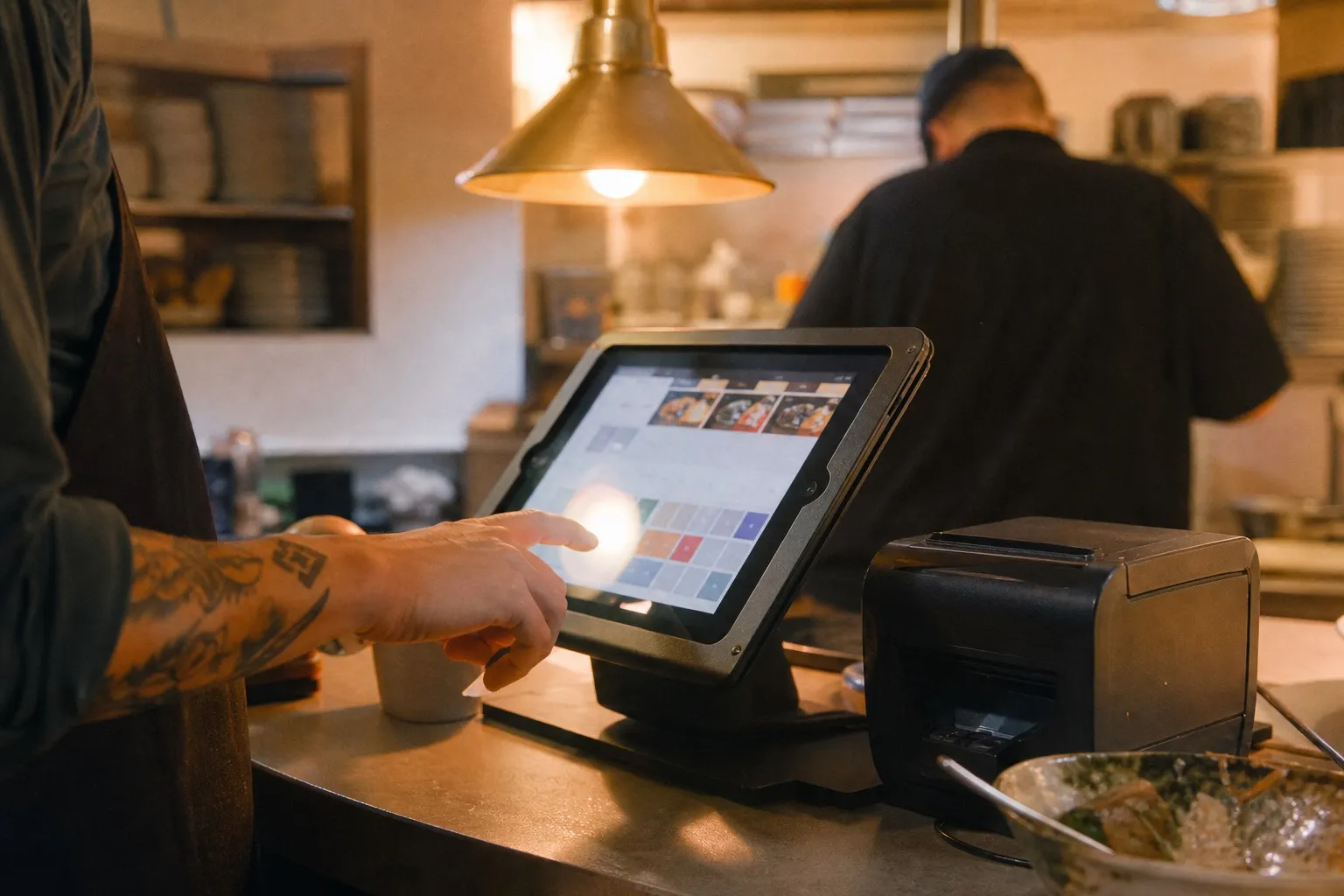
Patty — inside the wider “BK Assistant” platform — is a voice AI living in cloud-connected headsets that ties together the things every QSR operator has been trying to tie together for a decade: point-of-sale, kitchen display, inventory state, digital ordering. (NRN)
The model is an OpenAI base layer wrapped in what BK is calling its proprietary in-house architecture — a foundation model with chain-restaurant data plumbing bolted on top, the pattern every serious chain rollout has converged on this cycle. Pilot footprint: 500 US restaurants. Target: full US system by end of 2026.
The operator-facing capabilities, per RBI:
- Inventory automation. When a SKU goes 86, Patty pulls it from the menu — POS, kiosks, drive-thru, app. No more managers chasing six terminals when the chicken sandwich runs out.
- Crew coaching in flow. New hire doesn’t know how a Whopper Jr. is built? Patty tells them, in the headset, while they’re building it. Spec details, prep guidance, on-demand.
- Drive-thru audio analysis. Patty listens to the lane and gives the team feedback on order accuracy and service language.
Tom Curtis, BK US president, framed it for the analyst audience: when managers and team members stop spending the shift on repetitive tasks, “growth follows.” (NRN) Patrick Doyle, per the trade press wires, called Patty a “game changer.” Read into it what you want.
The pitch, in one line: BK is taking the manager’s twenty most-repetitive tasks and giving them to a model so the manager can run the floor. It is a sensible pitch. It is also not the only thing the headset is doing.
Story two: the surveillance critique
The third bullet above — drive-thru audio analysis — is where the day’s coverage forked.
Trade press led on operations. Consumer press led on the part where BK’s AI is listening to staff and analyzing whether they said “welcome,” “please,” and “thank you.” That is the same product, described two ways depending on which side of the headset you are standing on.
This is not a paranoid read. The system is, by design, ingesting drive-thru audio, transcribing it, and scoring service language. Whether you call that “coaching” or “scoring” is a framing question. Whether the audio is being analyzed is not.
RBI’s CDO Thibault Roux got handed the framing question on stage. His line — relayed across consumer-facing write-ups — is that Patty is “really a coaching tool — to help you as an employee become more hospitable,” not a scoring tool. I take Roux at his word about the product intent. I also note that the same audio stream can power both, and which it powers is a configuration decision, not a hardware one.
A few things worth saying clearly:
The “friendliness keywords” framing is narrow. “Welcome,” “please,” “thank you” are the demo keywords, not the surveillance ceiling. Once you have a transcription pipeline running on every shift’s drive-thru audio, the keyword set is a slider, not a fence.
The hardware is cloud-connected. Not on-device inference. Audio is leaving the restaurant. Where it goes, how long it’s retained, who at corporate or at the franchisee can pull a clip — those are the operator questions the deck did not answer today.
Franchisee dynamics are unresolved. BK’s US system is overwhelmingly franchised. A national rollout by year-end means franchisees signing on to put cloud-connected, AI-transcribed headsets on hourly workers. Trade press has not yet surfaced specific franchisee pushback on Patty, and I’m not going to invent any. But the labor-side conversation has not started in earnest, and it will.
Why this is the right week for it
Two reasons Patty lands now and not last quarter.
One: the McDonald’s voice-AI arc — Apprente, IBM, the public failure, the Google pivot, the 2026 restart — gave every other QSR CIO permission to move. McDonald’s spent five years and a lot of brand equity learning what doesn’t work in QSR voice. Burger King is shipping a more constrained product — in-headset coaching, not customer-facing ordering — into a more mature model stack.
Two: the voice-agent category itself has matured. David Lee’s Voice Agent Maturity Curve put a five-stage frame on what operators are actually buying. Patty is not stage-five autonomous-agent voice; it is an internal-coaching deployment with structured outputs back to a manager dashboard. That is a stage operators can deliver on in 2026, and it conveniently sidesteps the customer-facing failure modes that ate McDonald’s.
What is novel here is not the technical ambition. It’s the surface area. 500 restaurants today, the full US system by December, headsets on every shift. That is a lot of audio.
The two questions I’m holding open
One: what does the coaching feedback loop look like for the crew member? If Patty is a coaching tool, the crew has to see the coaching. Is it a nudge in the headset? A weekly summary? A manager conversation? The deck did not get into it. The difference between “coaching tool” and “scoring tool” lives almost entirely in that answer.
Two: what is the retention policy on drive-thru audio? Cloud-connected, OpenAI-backed, transcription-enabled. Either RBI has a clean answer on retention and access — in which case they should publish it before the year-end rollout — or they don’t, in which case the surveillance critique writes the story by default.
Patty is a genuinely interesting operator product. The Investor Day framing — managers freed up, crew coached, inventory automated — will land with analysts, and it should. The “friendliness keywords” framing will land with everyone else, and on the structural facts of the system, that read isn’t wrong either. Both stories were true at 9 a.m. They’ll both still be true at year-end. The question is which one RBI builds the policy stack around between now and the national rollout.
Thibault Roux says coaching tool, not scoring tool. The audio still leaves the restaurant either way.
— Luca covers chains and operators for The Pass. Tips: [email protected].
Featured
More
Browse all 494 posts
The Voice Agent Maturity Curve
mise
·12 min read
The Four Margins of a Restaurant
mise
·14 min read
The AI Premium in Hospitality M&A: Broker Story or Real Number?
the bottom line
·9 min read
What the DoorDash/SevenRooms Deal Actually Buys
the bottom line
·11 min read