Toast Quietly Renamed Sous Chef. The Pilot Was the Point.

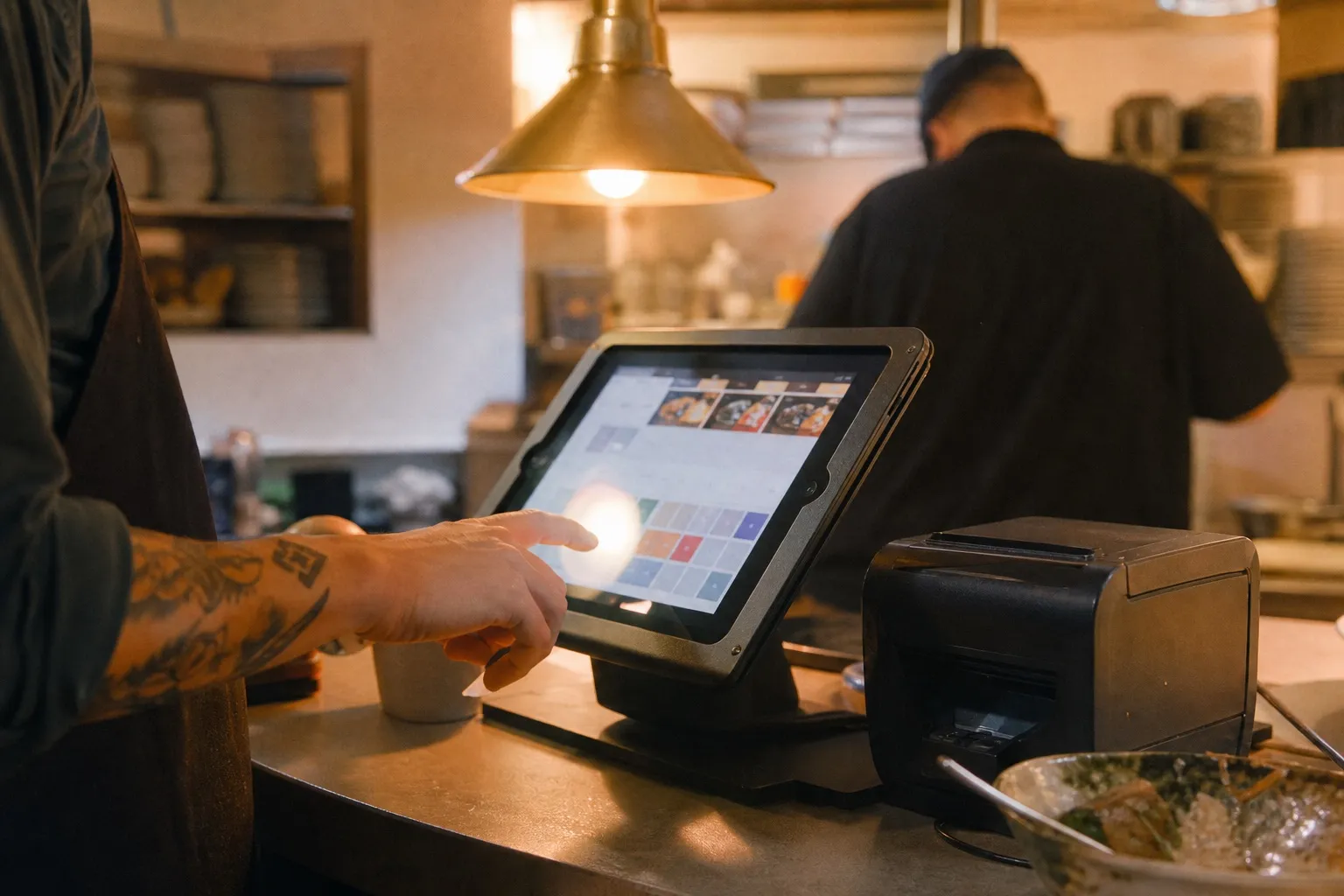
Toast's conversational AI started life in 2024 as Sous Chef — a chat box that nudged operators about pricing and menu mix. It now ships as ToastIQ to 164,000 locations. The rebrand is less interesting than what the pilot taught Toast about what restaurant AI actually has to be.
I went looking for Sous Chef on Toast’s website Monday night and couldn’t find it. The product isn’t gone. Somewhere between the July 2024 Semafor interview where Aman Narang walked a reporter through the chat assistant — “easy insights on three, four or five things they should consider” — and the product page live today, Toast retired the codename. What was Sous Chef in 2024 is now part of ToastIQ, the conversational AI assistant Toast made generally available to U.S. customers on October 29, 2025.
The trade press covered the launch as a launch. The more useful story is what the eighteen-month Sous Chef pilot told Toast about what restaurant AI has to be — and how that reshaped the thing they shipped.
What Sous Chef actually was
Strip away the marketing and Sous Chef was a chat box bolted onto the Toast back office. Narang’s 2024 description was specific and small: it would suggest menu items popular in your zip code, surface pricing observations given local inflation trends, and answer questions about your operation. It was an insight product. It did not take actions. It did not have a “for you” feed. It did not change your menu.
What moved the needle in the pilot year wasn’t the chat. It was the boring sibling: Toast’s AI-powered menu upsell tool, which one pilot restaurant credited with a 6% lift in average order volume on the Q1 2025 earnings call. That feature isn’t conversational AI. It’s a prompt that appears at order entry. The contrast was instructive.
The lesson Toast drew — and you can read it directly off the ToastIQ product surface — is that operators don’t want a chat box that tells them things. They want one that does things. The October 2025 launch is built around exactly that swap.
What’s different about ToastIQ
ToastIQ keeps the conversational interface and the data layer Sous Chef was built on. Then it adds the two pieces Sous Chef was missing:
- Action execution. You can tell ToastIQ to update a menu, edit a shift, or 86 a dish — “86 all items with avocado” is the example Toast walked reporters through — and the change propagates across the platform. Sous Chef would have told you that you were out of avocado. ToastIQ takes the items down.
- A push surface. The “For you” feed delivers proactive recommendations rather than waiting for you to ask. This is the Sous Chef insight engine, reversed: you don’t open the chat; the chat opens you.
If you’re new to agentic as a term: it’s the industry’s shorthand for AI that does the next step instead of describing it. The trick in hospitality is that the next step usually involves money — changing a price, killing a shift, pushing an ad — so the bar for trust is real.
Buried in the launch is a Coca-Cola partnership that uses the engine to surface beverage-mix recommendations. Read that twice. It’s the first time I can remember a POS vendor and a beverage giant co-developing an AI feature pointed at the operator’s menu — and it tells you something about who pays for the agentic layer in the long run. We sketched the through-line in last month’s Bottom Line on POS-as-distribution.
How operators are responding
Toast’s adoption number is the loudest data point. On the Q4 2025 earnings call, Narang said more than half of Toast’s 164,000 locations had used ToastIQ within four months of GA, generating over 8 million queries. That’s real in a market where most AI features get tried once and forgotten. The caveat: “used” is a low bar. Toast hasn’t published weekly active users, queries-per-location, or — more importantly — the share of action-taking suggestions the operator actually approved.
The on-the-record operator testimony is, predictably, glowing. Romain Bernus of Le Petit Four Bakery in Wellesley told Total Food Service that “complex reports take five seconds.” I’d weight the eight million queries more.
The skeptics’ case is the one I keep hearing on operator Slack calls: Toast’s data layer is exactly the moat that makes ToastIQ feel sharper than a generic chatbot, but the recommendations still optimize for the variables the platform sees. Anything concept-led — the dish that exists for the room, the price that exists for the regulars — falls outside the model. We made this point in the Mise piece on the four margins, and it lands harder once an AI is the one nudging you to change the price.
What this means for the vendor race
Toast’s competitive position on AI is the strongest of the major restaurant POS vendors right now — not because the technology is more advanced, but because the install base is. With Toast powering roughly 20% of U.S. SMB and mid-market restaurants and 30,000 net locations added in 2025, the moat is the data. Square, Clover, SpotOn, and Lightspeed all have conversational AI on the roadmap or in market; none has 164,000 locations of historical transaction data to ground the recommendations.
Toast’s 2026 guidance — 20-22% recurring gross profit growth and $775M-$795M in adjusted EBITDA — does not lean on ToastIQ as a discrete revenue line. Narang’s framing on the call was that AI deepens the existing moat rather than opening a new SKU. For now, ToastIQ is a retention play, not an upsell. Remember that the next time someone tries to put an ARR multiple on the assistant specifically. As we argued in our Desk Review of POS AI roadmaps, the operator choosing a POS in 2026 is choosing the data layer their next five years of AI features will be built on.
What to do this week
If you’re on Toast:
- Use the action-taking features, not just the chat. The upside is in approving a price change, killing a slow shift, or pushing the menu update from inside ToastIQ. The chat-only queries are nice; they’re not where the margin lives.
- Audit the “For you” feed weekly, not daily. Same logic we applied to last year’s menu engineering tools: high-frequency nudging erodes the judgement layer that distinguishes your concept.
- Ask your rep for your location’s ToastIQ usage data. If “more than half” of Toast locations have used it, the more interesting question is whether yours has, and how often.
If you’re not on Toast: the question to ask your own POS vendor is no longer “do you have AI?” It’s “what does your AI do that mine can’t approve?” The action layer is the new line.
What to watch
Whether Toast publishes ToastIQ engagement metrics on the Q2 2026 call beyond cumulative queries — specifically, the approval rate on action-taking suggestions. That number, more than any adoption stat, will tell us whether operators are using the agent or just talking to it. Toast research puts operator AI willingness at over 81%; willingness is the floor. Trust is the ceiling.
The rename from Sous Chef to ToastIQ was a marketing decision. The shift from insight to action was the product one. The first doesn’t matter much. The second is the only thing that does.
— Hana files The Pass every weekday morning. Tips: [email protected].
Featured
More
Browse all 494 posts
The Voice Agent Maturity Curve
mise
·12 min read
The Four Margins of a Restaurant
mise
·14 min read
The AI Premium in Hospitality M&A: Broker Story or Real Number?
the bottom line
·9 min read
What the DoorDash/SevenRooms Deal Actually Buys
the bottom line
·11 min read