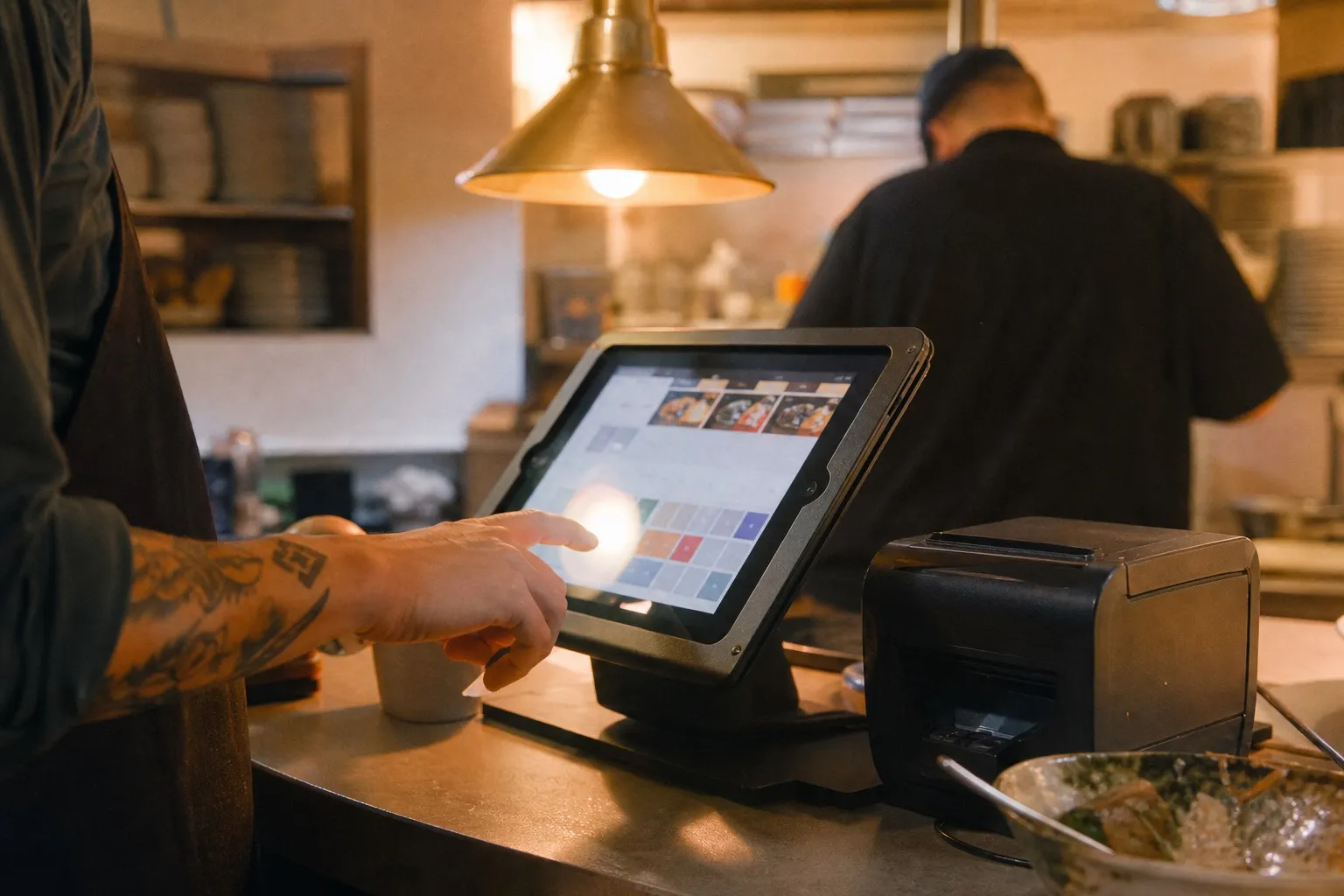
CES 2025 Opens. The Food-Tech Floor Is Bigger Than Last Year.

CES has historically been a side stage for foodservice. In 2025, voice ordering and connected kitchens take the main stage, with FoodGPT and a Restaurants and Food Services AI panel anchoring the schedule.
I am writing this from seat 14C on a 6:40 AM flight to Vegas, with a lukewarm coffee balanced on the tray and the CES 2025 session catalog open on my laptop. The man next to me is watching a muted episode of a cooking competition show, which feels like the right omen. I’ve been to CES four times. In each of those years, foodservice technology had a corner of the South Hall, a couple of smart-fridge demos at LG, and a polite scattering of “smart kitchen” startups that mostly wanted to sell you a $400 sous-vide stick. This year is different. I have been highlighting sessions for forty minutes and I am running out of yellow.
CES runs January 7 through January 10 at the Las Vegas Convention Center, and the agenda this year has done something I did not expect: it has put restaurant operations onto the main schedule. Not as a curiosity. As a category.
Foodservice finally has its own panels, not just a sidebar
The two sessions I keep circling back to are both on the official CES schedule. The first is FoodGPT: How To Build An AI-Powered Food Company, which is exactly what it sounds like — a working session on what a generative-AI-native food business looks like, from menu design through ordering through ops. The second is Transforming the Restaurant and Food Services Industry with AI, which, based on the abstract, will spend its hour on the parts of the stack operators actually care about: drive-thru voice, kitchen vision, demand forecasting, and labor scheduling.
I have been covering this beat long enough to remember when “AI at CES” meant a robot that poured a single beer in 90 seconds while a crowd of analysts politely clapped. The fact that there is now a panel titled, plainly, “Transforming the Restaurant and Food Services Industry with AI” — on the official schedule, not a side stage at the Venetian — is the story. CES is a signal show. It tells you which categories the consumer electronics industry has decided are real. Restaurants are now on that list.
My read: this is the first CES where a restaurant CIO can credibly justify the flight.
The exhibitor list reads like a 2025 buyer’s guide
The schedule is half the story. The other half is who is actually on the floor. The Spoon’s exhibitor preview and Electronics360’s rundown of what’s cooking name the companies I am most curious about, and the list is not the usual suspects.
Chef AI is here pitching generative recipe and menu development for foodservice operators, which sits squarely on the seam between R&D and ops. Spicerr is showing personalized seasoning hardware that is more interesting to me as a data-capture device than as a gadget — every dial turn is a flavor preference logged. Daedong, the Korean ag-tech group, is bringing an AI Indoor Garden that I expect will get written up as a smart-home story but is, on the operator side, an early read on what hyperlocal produce sourcing looks like when the growing unit is the size of a wine fridge.
There will, of course, be the usual procession of robot-arm coffee demos and robotic pizza vending machines. I plan to walk past most of them. The center of gravity has moved. The interesting demos this year are software-first, with hardware as a delivery mechanism, and the panels reflect that.
My read: if you only have one day, skip the kitchen-robot photo ops and spend it in the AI sessions and on the connected-ops side of the floor. The robots make better video. The software is where the budgets actually go in 2025.
What I am watching for, on the floor and in the hallways
A few things I am going to be specifically pressure-testing this week.
One: voice ordering claims. Every booth that mentions a drive-thru AI will get the same question from me, which is the order-accuracy rate on combo modifications, not on the canonical “one large Coke” demo. As our later framework piece on the voice-agent maturity curve argues, the gap between demo-grade and lane-grade voice is wider than the demo videos suggest, and I want to know which of these vendors have actually closed it.
Two: the QSR partnerships. I expect at least two major chain announcements over the four days, and I am especially interested in which ones name a specific production footprint versus which ones name a pilot. The difference matters. In a later piece we publish on QSR-side AI scaling, we get into why the pilot-to-production cliff is the real story in this category — CES is where that cliff gets either confirmed or, occasionally, crossed.
Three: the connected-kitchen ecosystem. Last year, “connected kitchen” mostly meant a single OEM trying to own the whole stack. This year, I want to see whether any of the exhibitors are publishing open APIs or being honest about integration partners. That tells you whether this is a category or a collection of demos.
And one thing I am not going to do: I am not going to write a “CES 2025 is the year of the restaurant” headline on Tuesday morning. I want to see the floor first. CES rewards skepticism. The schedule looks promising. The schedule is not the show.
I land in Vegas in forty minutes. Coffee number two is in my future, and so, probably, is a long walk through the South Hall. I will be filing all week.
— Hana edits The Pass. Tips: [email protected].
Featured
More
Browse all 494 posts
The Voice Agent Maturity Curve
mise
·12 min read
The Four Margins of a Restaurant
mise
·14 min read
The AI Premium in Hospitality M&A: Broker Story or Real Number?
the bottom line
·9 min read
What the DoorDash/SevenRooms Deal Actually Buys
the bottom line
·11 min read