Chipotle's Vision System, Brisket, and the Worst Comp Since 2020
A 4% comp drop in the same quarter Chipotle unveiled an augmented makeline and a produce-checking vision system is the cleanest tell yet that AI capex in QSR is a slow labor bet — not a turnaround lever you can pull this quarter.
I read Chipotle’s Q2 transcript twice this afternoon — once for the numbers, once for the language — and the second pass is the one that stuck. There is a moment, somewhere between the brisket relaunch and the bit about a “restaurant innovation space” in Southern California, where you can feel Scott Boatwright trying to hold two narratives in the same sentence. Comps are down 4%. Transactions are down 4.9%. And the company is opening a lab to test an augmented digital makeline, a produce-prep vision system, and a dual-sided plancha that the team has been describing with the kind of reverence usually reserved for espresso machines.
Here is the contrarian read, and I’ll say it cleanly so we can argue about it: AI capex in QSR right now is a long bet on labor, not a turnaround lever. Chipotle is not going to fix a 4% comp drop with computer vision in 2025. It probably won’t fix it with computer vision in 2026 either. What the vision system and the makeline are buying — quietly, in a quarter where the headline is bad — is structural margin protection for the back half of the decade, when the wage curve and the throughput ceiling will both matter more than they do today. That is a real bet. It is just not the bet investors keep trying to price into the stock.
The quarter, in plain English
The print itself is a study in mixed signals. EPS came in at $0.33 against a $0.32 consensus, which is the kind of beat you take but don’t celebrate. Revenue was $3.1 billion, up 3% year-over-year — entirely a function of new units, because comps were negative four. Transactions fell 4.9%; check grew slightly on mix and a tiny price contribution. Restaurant-level operating margin was 27.4%, down about 150 basis points from a year ago, with the company calling out wage inflation, the brisket launch costs, and de-leverage on the soft sales line.
Then there is the digital number, which is the one Wall Street keeps circling: digital sales were 35.5% of total in the quarter, per the Investing.com recap of the call. That is roughly flat to slightly up, which is interesting in its own right — the digital business is no longer the growth engine it was in 2021, but it is also stubbornly not shrinking, even as in-store traffic softens. The stock moved up modestly after the print, which I read as a relief rally on the EPS beat rather than any actual conviction about the comp trajectory.
The number that should worry you is transactions. A 4.9% transaction decline is the worst quarter Chipotle has posted since the early COVID quarters of 2020, and the company’s own explanation — that lower-income consumers are pulling back, that the value perception eroded, that they need to lean into brisket and the summer LTO — is honest but doesn’t quite add up to a fix. This is a demand problem, and demand problems do not get solved by a vision system in Newport Beach.
What’s actually in the innovation space
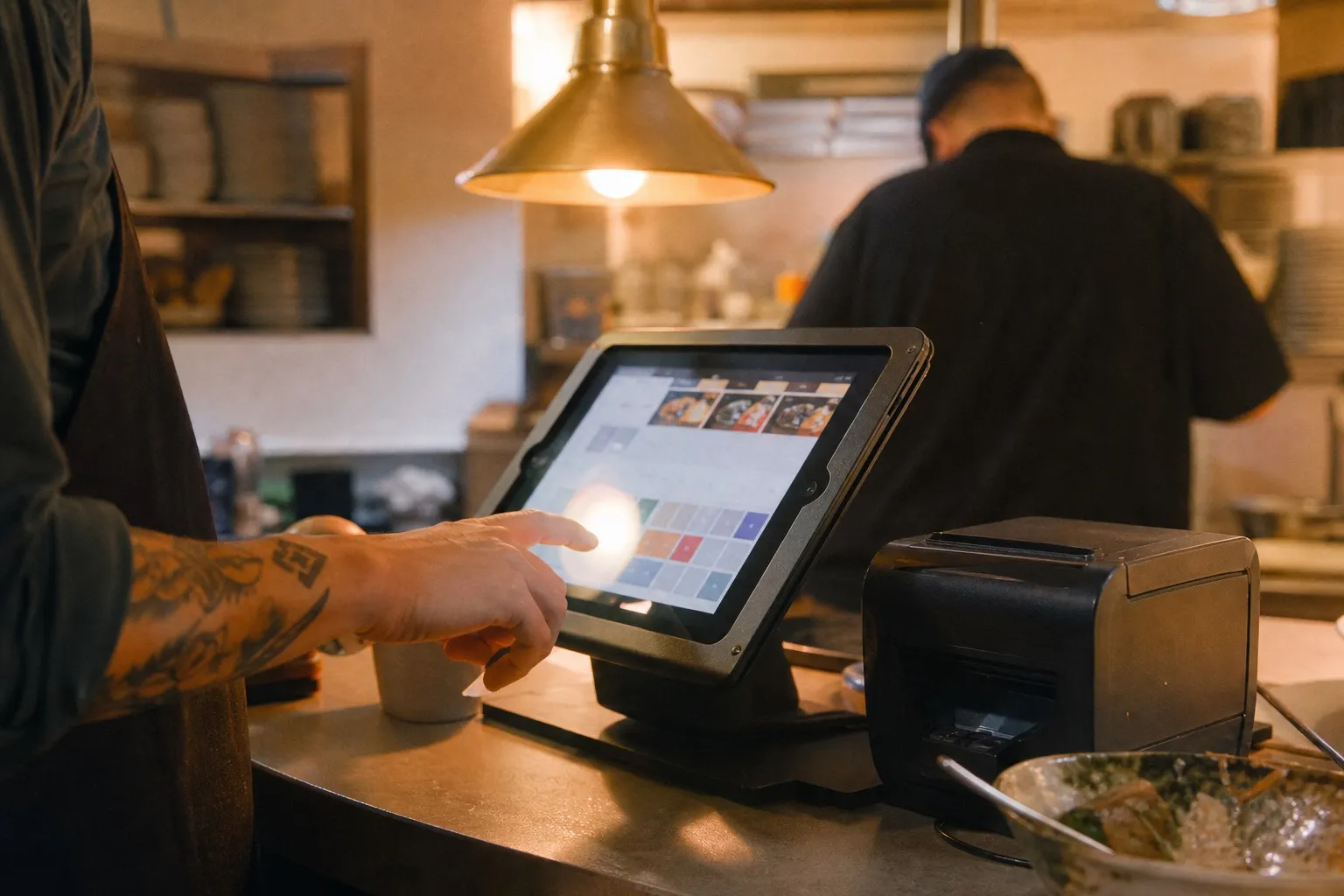
Which brings us to the bit I find genuinely interesting. Boatwright spent real time on the call describing the new innovation site, and Yahoo’s wrap of the prepared remarks is the cleanest summary I’ve seen of what’s in it. There is an “augmented digital makeline” — order tickets projected onto the line so assemblers can see, in real time, what each bowl needs without looking up at a screen. There is a vision system that checks produce prep quality (the avocado, predictably, is the hard problem). There is a dual-sided plancha for protein. And there is a redesigned back-of-house flow that the company says is meant to free labor for the front line during peak.
None of this is a moonshot. The interesting part is that every major QSR is now building roughly the same lab. Sweetgreen has been running its Infinite Kitchen rollout for two years — I’ll get into the throughput math on that in a forthcoming May piece — and the architecture is very similar in spirit: take the assembly decision off the human, give them prep and hospitality, let the machine handle the repeatable motion. Chipotle’s version is more conservative (the assembler still assembles), but the direction of travel is identical.
The reason I keep calling it a labor bet rather than a throughput bet is that the math only works if you assume wages keep going up faster than menu price. In California, where Chipotle operates a meaningful share of company stores, the fast-food minimum is already $20. The Newport Beach lab is, in effect, a $20-wage-floor stress test built three years early. If you can shave 30 seconds off the makeline and redeploy that labor to the front of house — or to a second portal during the lunch rush — you have just moved a real piece of margin from variable cost into capex amortization.
What this means for the platform layer
For anyone building software into restaurants — and this is the upcoming May piece on DoorDash and SevenRooms I keep promising — the Chipotle quarter is a useful calibration. The platform thesis assumes operators have budget for AI tooling even in a soft demand quarter. Chipotle’s behavior says they do, but with a caveat: the budget goes to capex projects with multi-year paybacks, not to per-seat SaaS that has to be justified on next quarter’s P&L. Vision systems get built. Per-store AI subscriptions get scrutinized.
The other thing the print quietly confirms — and this is the part I think gets underweighted — is that the digital channel is now a fixed feature of the QSR landscape, not a swing factor. At 35.5% of sales, Chipotle’s digital business is large enough that any AI initiative touching the order flow has to be evaluated against an installed base, not a greenfield. That favors the incumbents with data, and it favors integration over novelty.
So: bad comp, decent EPS, real capex, slow payoff. The market gave the print a modest pass today. The harder question is whether anyone is patient enough to wait for the lab to matter.
— Luca covers restaurants for TableTransfers. Tips: [email protected].
Featured
More
Browse all 494 posts
The Voice Agent Maturity Curve
mise
·12 min read
The Four Margins of a Restaurant
mise
·14 min read
The AI Premium in Hospitality M&A: Broker Story or Real Number?
the bottom line
·9 min read
What the DoorDash/SevenRooms Deal Actually Buys
the bottom line
·11 min read