ConverseNow × Deliverect: voice AI gets wired into the order-management plumbing

ConverseNow's voice-AI ordering now lives inside Deliverect's order-management layer across 95,000+ locations. The real story isn't the AI — it's that voice finally got demoted to a normal channel sitting on shared menu config.
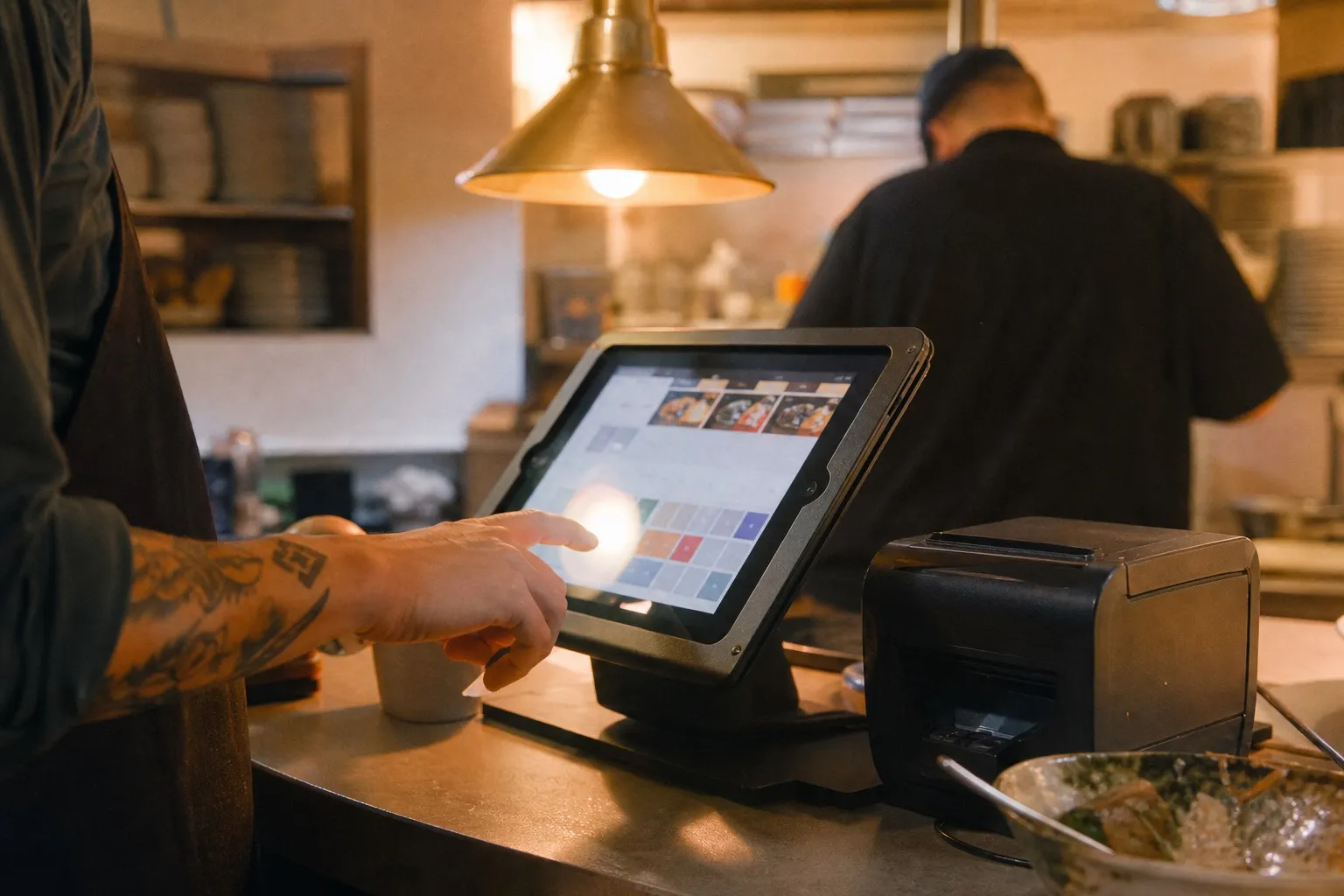
The first thing I heard on the call wasn’t a person. It was a voice agent reading back a $14.27 combo to a customer in Texas while, two windows over on the operator’s screen, the same order ticket auto-populated a Deliverect feed alongside a DoorDash dupe and a kiosk receipt. The drive-thru AI and the aggregator dashboard, finally talking to each other without a human translator in between. The operator shrugged at me like it was nothing. That shrug is the story.
Here’s the contrarian read on today’s ConverseNow and Deliverect partnership announcement: the headline is voice AI, but the actual news is that voice AI just got demoted. For two years, voice agents have been sold as a category — a thing you buy, a vendor you evaluate, a separate pilot with its own steering committee. As of today, for the 95,000-plus locations on Deliverect’s order-management layer, voice becomes what it should have been all along: another lane on the same highway as delivery, kiosk, and POS. Same menu config, same modifier tree, same 86 list, same end-of-day reconciliation.
That’s not a feature. That’s a re-org.
The “first-class channel” framing isn’t marketing
ConverseNow CEO Vinay Shukla used the phrase “voice as a first-class channel” in the release, and I want to take that seriously because it’s the part operators will feel. Until now, even at chains running voice-AI in production, the voice stack lived in a parallel universe. Menu changes had to be pushed twice — once to the POS/aggregator pipeline, once to whatever vendor was handling drive-thru or phone. Modifier mismatches were a daily standup item at every multi-unit operator I’ve talked to. One regional chicken concept told me last quarter their voice-AI menu was 11 days behind their delivery menu on average. Eleven days. That’s a guest ordering a sandwich the kitchen stopped making last week.
Justin Falciola, Deliverect’s Americas President, hit the same nail from the other side: menu-config consistency. Deliverect’s whole pitch since 2020 has been “one menu, every channel.” Voice was the conspicuous hole in that pitch. Today they closed it.
If you want the macro context on why this matters now and not eighteen months ago, the Voice Agent Maturity Curve framework I’ll be publishing in the next column lays out the four stages — and “channel-native, shared-config” is exactly the stage operators have been waiting on before they’ll commit beyond pilot. We’re there. Today.
Why this is bigger than ConverseNow
Read the Slang AI $36M Series B from late February next to today’s news and a pattern jumps out. Slang is in 2,000-plus restaurants with the company claiming 95%-plus guest satisfaction. ConverseNow just plugged itself into a 95,000-location distribution layer. Both moves point at the same conclusion: the voice-AI category is consolidating not by acquisition but by integration depth. The winners are going to be the agents that disappear into the existing operations stack, not the ones with the cleanest standalone demo.
I covered this consolidation dynamic on March 9, when three voice-AI pure-plays announced partnerships with order-management or POS layers in the same week. At the time I called it a roll-up by handshake. Today is the same move at a much bigger scale — Deliverect’s 1,000-plus certified integrations means ConverseNow inherits a distribution graph that would have taken years to build BD’d one chain at a time.
The thing nobody on the call said out loud: this is also a moat for Deliverect. If voice is a channel inside their platform, the gravitational pull on every other voice vendor to integrate the same way just got a lot stronger. Coming weeks will tell us whether SoundHound, Slang, and the in-house drive-thru stacks at the big QSRs follow.
Mark interpretation
The thing I’d watch over the next ninety days isn’t voice-AI adoption numbers. It’s menu-update latency at multi-channel operators running Deliverect. If the partnership delivers what Falciola is promising, the gap between “we changed the menu” and “every channel reflects it” should compress from days to minutes. That’s the measurable claim. That’s what I’m going to be asking operators about on the next round of calls.
The secondary effect is more interesting and harder to measure: when voice stops being a special project, it gets budgeted differently. It moves from innovation line item to operations line item. That’s where adoption curves bend.
Two-channel operators won’t notice this announcement. Five-channel operators just got a Tuesday made easier. The McDonald’s-scale chains running their own drive-thru AI stack will keep doing their own thing. But the long tail of regional multi-unit brands — the ones who’d love voice but can’t afford a second menu-management workflow — those operators got a green light today. And the Toast IQ adjacent debate about whether AI features belong inside the POS or beside it just got a new data point: beside it, sharing config, won today.
That shrug from the Texas operator? Expect more of them.
— Maya covers restaurant tech for TableTransfers. Tips: [email protected].
Featured
More
Browse all 494 posts
The Voice Agent Maturity Curve
mise
·12 min read
The Four Margins of a Restaurant
mise
·14 min read
The AI Premium in Hospitality M&A: Broker Story or Real Number?
the bottom line
·9 min read
What the DoorDash/SevenRooms Deal Actually Buys
the bottom line
·11 min read