Desk Review: SevenRooms vs Tablecheck post-DoorDash — who actually owns the guest data now?

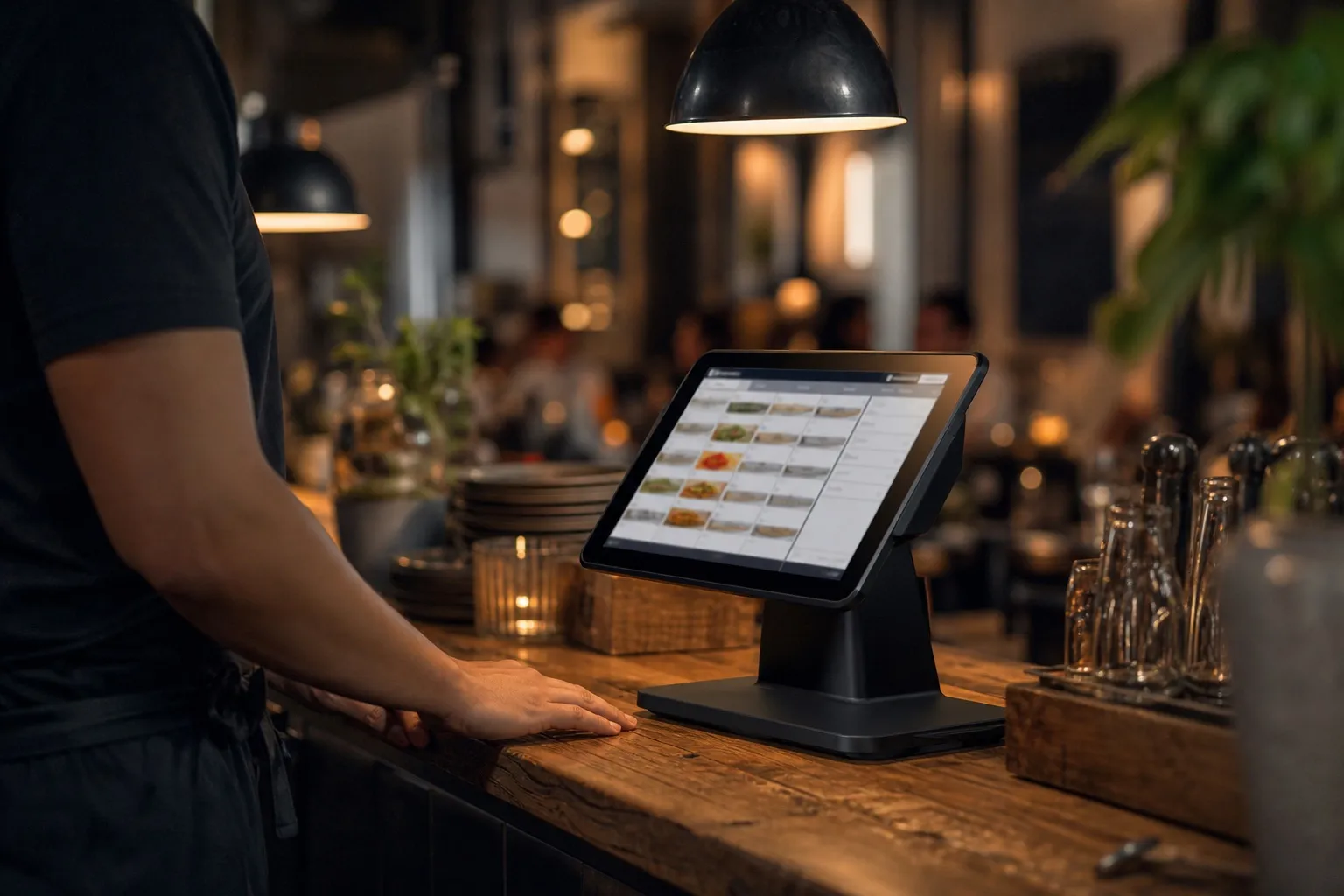
SevenRooms has been a DoorDash subsidiary for eight months. Tablecheck is still Tokyo-headquartered and operator-controlled. If you're an independent ops team, which platform actually lets you keep your guest data — and who gets the upside when you use it?
I have a draft of the Desk Review I published four weeks ago — SevenRooms After Six Months Inside DoorDash — sitting open in a second window as I write. It ended on three things I said I’d be watching: a SevenRooms-specific KPI on the Q4 2025 DASH call, any Going Out commentary that touched the “unified guest record,” and any reference to the SevenRooms enterprise base. DoorDash reported Q4 last week. None landed cleanly. That, in itself, is information.
So here we are at month eight of the DoorDash–SevenRooms integration. The category around it is moving fast: there is persistent trade-press chatter — through the back half of 2025 and into early 2026 — that American Express is preparing to consolidate Tock into Resy under one brand, and that the combined entity would lean on a deepened Toast POS integration to push card-side guest data onto the floor. None of that has been formally announced as I write. I’ll treat the AmEx consolidation as the move the industry is broadly expecting rather than the move that has happened. If it lands during the next four weeks the way most suspect, I’ll re-anchor.
The question on the table today is one I owed readers from a January email: now that SevenRooms is inside DoorDash and the US reservation map is reshaping, where does an independent ops team go for guest-data ownership? The honest answer requires putting SevenRooms-as-it-is-today next to the obvious independent comparable — Tablecheck. So that’s what this Desk Review does, scored on the four things an operator should actually price into a vendor decision in 2026: integrations, AI features, data portability, and operator economics.
Methodology, openly
This is a Desk Review of public materials. No operator panel. The Vibe Check format normally puts four to six operators on a vendor for thirty days; we haven’t done that here, partly because the two install bases barely overlap and partly because the post-DoorDash SevenRooms reality is still moving fast enough that a snapshot panel in February would be obsolete by April. I have read the public materials carefully, I am marking confidence on every claim, and where I make a judgment call I flag it.
Two date-stamps. I am writing on February 18, 2026. The DoorDash–SevenRooms deal closed on June 13, 2025 at a disclosed $1.152 billion all-cash, so we are eight months and five days into the new corporate context. The AmEx-side consolidation is not yet a confirmed announcement; I’ll treat it as forward-looking throughout.
What’s changed since the January piece
SevenRooms is still operating as a continuing product inside DoorDash. The booking-flow integration with DoorDash Reservations is still working in launch markets. The AI feature set (AI Responses, AI Feedback Summary, AI Note Polish, all launched March 2025) is still the operator-facing AI surface; nothing meaningfully new has been added since the January piece. The enterprise install base — Marriott, MGM, Mandarin Oriental, Wynn, Nobu — is intact at pre-close attach rates as best I can read from outside. DoorDash didn’t disclose enterprise retention on the Q4 call, which is itself a soft signal: if the number were a problem you’d expect it to get answered preemptively.
What has changed since January is tone. In June 2025, DoorDash framed the integration as an “open, partner-friendly ecosystem” where the SevenRooms team would “join DoorDash to maintain product development.” Eight months on, the framing has hardened. The Going Out commerce-platform language is more central; the SevenRooms product surface is now consistently described as the CRM-and-marketing layer underneath Going Out rather than as a stand-alone reservations product. That’s a subtle shift, but the right shift to read if you’re predicting what the platform looks like in 18 months. Confidence: medium-high that this is a real directional move, not a marketing-copy update.
The unified-guest-record question — the entire premise of the deal — is where it was in January. There is no IR communication, product page update, or trade-press confirmation that an operator on SevenRooms can see the full DoorDash delivery history of a guest who walks in for a reservation. Confidence: high that the unified view is not live in operator-facing tooling today. Medium that it is being worked on toward a back-half-of-2026 ship. Low on whether it actually lands on that timeline.
SevenRooms’ feature surface inside DoorDash
The core product is the same product. Reservations, waitlist, table management, host workflow, CRM with custom and auto-tagging, marketing automation, the SevenRooms Direct booking widget. The shipped AI feature set is the same March 2025 trio plus auto-seating and dynamic revenue optimisation. The press materials at the time cited a 27% decrease in operator response time to guest feedback from AI Responses; I haven’t seen a meaningful operator-cohort update since.
What’s new is primarily the DoorDash Reservations channel. SevenRooms operators in launch markets (US and Australia) can opt in to receiving reservations sourced from the DoorDash consumer app at zero cover fee. They land in the SevenRooms back-end and the host-stand workflow proceeds as normal. Operators I’ve spoken to off the record describe this as functional and uneventful — the right outcome at this stage.
What is not new — the load-bearing point — is any cross-channel guest record. The operator who opts in to DoorDash Reservations sees the DoorDash-sourced diner walk in as a first-time guest. No SevenRooms history, no notes, no preferences, no DoorDash delivery history surfaced into the host-stand view. The two data graphs remain parallel rather than joined. Confidence: high on this gap.
One thing visible at eight months that wasn’t at six: DoorDash’s commerce-platform strategy is fundamentally about marketplace activation — making the DoorDash consumer app the front end for ordering, pickup, and now reservations. SevenRooms’ historic centre of gravity was the opposite — own-your-guest, no marketplace cover fees, direct relationship with the operator. The “marketing as a service” language Tony Xu used on the Q1 2025 call describes the resolution: SevenRooms’ CRM becomes the loyalty layer underneath DoorDash’s marketplace front end. Coherent strategy. Also one in which the operator-side promise of “you own your guest data” has to be re-litigated. Confidence: medium-high that the re-litigation is happening internally; low that it has produced operator-facing contractual change yet.
Tablecheck as the independent alternative
Tablecheck was founded in 2011 by Yu Taniguchi and John Shields, headquartered in Ginza, Tokyo. Privately held, no IPO on the public record. The investor base is Japan-domestic-tilted, and Tablecheck has been consistent in framing itself as operator-controlled rather than strategic-acquirer-controlled. The most recent disclosure puts the company at 13,000+ restaurants across 38 countries, monthly reservations above 3 million, near-perfect customer retention. Notable customers across the materials: Aman, InterContinental, Hilton, Hyatt, Tim Ho Wan, Lawry’s, Nobu, Hard Rock Cafe.
The headline customer overlap with SevenRooms — both list Nobu, both list major hotel groups — is worth pausing on. The trade-press shorthand of “Tablecheck is SevenRooms for APAC” understates the product overlap. Tablecheck’s CRM is real. The reservations and table-management modules are real. The integration ecosystem on the inbound side — Reserve with Google, Tripadvisor, American Express, Michelin Guide — is well-developed for APAC inbound tourism.
The differences are at the architecture and channel level. Tablecheck’s operations layer is tuned for high-throughput floor service, in part because the centre-of-gravity customer profile is a Japanese restaurant doing 70%-international guest mix on a Friday night where peak demand exceeds host capacity. The IVR phone-booking system is more prominent in the product narrative than SevenRooms’ voice surface because phone bookings are still meaningful in Japan. The CRM is present but downstream of operations-and-channel-capture; SevenRooms inverts that and leads with the CRM.
For an independent US operator asking where do I go now, the honest answer about Tablecheck is that the fit is asymmetric. Tablecheck is a real alternative on product. The corporate-incentive alignment is cleaner. But the install-base centre of gravity and the integration ecosystem are not US-domestic. Confidence: high that Tablecheck is the cleanest independent alternative on corporate-incentive grounds. Medium that the product fit is right for a US-domestic operator without an APAC footprint.
Score: integrations
SevenRooms maintains the integration ecosystem it built pre-close. The platform docs cite 100+ integrations and an open API. Major POS integrations are intact. The new integration of note — DoorDash Reservations as an inbound channel — is the obvious one. The thing to watch over the next eighteen months is whether the DoorDash-side integrations crowd out the open-ecosystem ones. A vendor inside a commerce platform tends to prioritise its parent’s ecosystem first.
A note on Toast. SevenRooms is a Toast integration partner today, the integration is functional, no public signal that it is being deprecated. The trade-press chatter about Toast deepening a separate integration with Resy on the AmEx side — a Toast-handheld-shows-Resy-guestbook-data flow — is the move that, if it lands, would directionally pull Toast operators toward Resy and away from SevenRooms over a multi-year horizon. Forward-looking, not announced as of February 18. Confidence: medium-high that AmEx is broadly moving in this direction; low on the specific shape and timeline.
Tablecheck’s integration ecosystem is structurally different. Strength on the inbound demand side — Reserve with Google, Tripadvisor, American Express, Michelin. Weakness for a US operator on US POS coverage and US-domestic marketing-stack adjacencies. Confidence: high that this asymmetry is real.
Score: SevenRooms wins on US-domestic breadth today; Tablecheck wins on APAC inbound-tourism specificity.
Score: AI features
Less close than the marketing copy suggests.
SevenRooms has three named AI products on the operator surface plus auto-seating and dynamic revenue optimisation. The named products sit on top of the CRM: AI Responses drafts guest replies across email, SMS, reviews; AI Feedback Summary produces weekly thematic digests; AI Note Polish cleans up unstructured CRM notes. Concrete, shipped, recognisable jobs. The caveat is that none are differentiated in a way that’s hard to replicate — LLM wrappers on existing data, the right kind of AI feature to ship first but not a moat.
Tablecheck’s named-AI surface is less granular. The most recent shareholder-update materials list “AI-powered search capabilities and restaurant technology services” among expansion priorities, but product pages do not yet name AI products in the way SevenRooms does. Confidence: high that SevenRooms is further along the shipped-AI-product curve. Medium that it matters for daily work; a Tablecheck operator can replicate the AI Responses workflow with a third-party tool plus a Zapier-style integration.
The forward-looking question is what the DoorDash-side AI integration ends up looking like on the SevenRooms surface. If a unified guest profile that includes DoorDash delivery history ships in 2026, the AI-on-top-of-CRM story changes shape. If it slips into 2027, SevenRooms is sitting on the same named-AI surface it had in March 2025, by then twenty-four months old.
Score: SevenRooms wins today on shipped operator-facing AI. Lead is real but moat is thin.
Score: data portability
The part that matters most to the question on the table, and where the public record is thinnest.
SevenRooms historically had a strong portability story. Operator-controlled, guest record was the operator’s, export workflows available. The DoorDash acquisition does not, on the public record, change that contractually. Existing agreements remain in force; new agreements written post-close use updated contract language that continues to emphasise operator ownership in the public-facing sales materials. Confidence: medium-high that the existing contractual frame is intact. Low on specifics of any new clauses around data-sharing with the DoorDash side.
What I can say with high confidence is that the strategic incentive structure has changed. A SevenRooms inside DoorDash has a corporate-parent incentive to use the SevenRooms guest record to enrich the DoorDash consumer profile — the “marketing as a service” arc. Even if operator-side contracts continue to say the operator owns the guest data, the practical question of what happens to the joined version of that data once it enriches the DoorDash consumer profile is one operators should be asking account reps to put in writing. The right question is not “do I still own my guest data?” It is “if my SevenRooms guest record enriches the DoorDash consumer profile of one of my diners, what flows back to me, what flows to DoorDash, and what rights do each of us have to use the enriched record?”
Tablecheck’s story is structurally simpler because the corporate context is simpler. Operator-controlled, no delivery-platform owner, no marketplace-side incentive to enrich a consumer profile from operator-side data. Confidence: medium-high on the structural simplicity.
Score: Tablecheck wins on corporate-incentive cleanliness. SevenRooms is contractually fine on the existing record but is operating under a strategic incentive structure that should be priced into a 36-month forward decision. Negotiate the data-flow specifics up front, not after.
Score: operator economics
Pricing pages do not tell the full story; negotiated rates vary by venue type and volume.
SevenRooms pricing has historically been tiered by venue size and feature scope, with the enterprise tier carrying the heaviest pricing and the strongest discounts on volume commits. Post-DoorDash, the public pricing surface hasn’t moved noticeably. The new economic surface is DoorDash Reservations, routing inbound reservations at zero cover fee in launch markets. Real benefit, but on the demand-acquisition side, not on the SevenRooms platform-fee side. Whether DoorDash continues to subsidise zero-cover-fee acquisition once Going Out is more mature is the obvious question; I’d model on the assumption that the cover-fee structure normalises within 24 months. Confidence: medium-high the zero-fee window will not persist indefinitely.
Tablecheck pricing is structured around subscription tiers plus per-cover fees on the consumer-marketplace side. For an APAC hotel F&B operator the economics work cleanly. For a US single-unit indie they’re harder to compare without a quote in hand.
Score: Wash on the platform fee side; tilts toward SevenRooms on combined economics for an operator who can use the DoorDash Reservations channel in a launch market. If you cannot, the comparison reverts to platform-fee parity and the tiebreaker is data portability.
HIGH / MEDIUM / LOW confidence read
- High confidence: SevenRooms continues to ship the product it was shipping pre-close plus DoorDash Reservations as an inbound channel. The named-AI feature surface has not regressed. The unified-with-DoorDash guest view is not live in operator-facing tooling today.
- High confidence: Tablecheck is the structurally cleanest independent alternative on corporate-incentive grounds. The product is real. The US-domestic integration ecosystem is thinner than SevenRooms’.
- Medium confidence: The strategic intent to build a unified diner record on the DoorDash–SevenRooms side is genuine. A 2026 ship is plausible; a 2027 ship is also plausible.
- Medium confidence: The AmEx-side consolidation of Tock into Resy, with a deepened Toast integration, is broadly expected by the trade. The specific shape, timing, and product specifics are not knowable as I write.
- Low confidence — open questions: Whether the operator-side data-portability contractual frame on new SevenRooms agreements has changed materially post-close. Whether DoorDash-side data enrichment of the consumer profile from operator-side records is subject to operator consent at the granularity an operator would want. Whether the Tablecheck US-domestic integration ecosystem will deepen meaningfully on the 18-month horizon.
If the AmEx consolidation is announced, the question on this Desk Review changes shape. The independent-alternative landscape would no longer be just Tablecheck and smaller players; it would include a re-energised AmEx-side platform with a deepened Toast flow. The directional read here — SevenRooms is most product-mature, Tablecheck is cleanest independent on corporate incentives, data portability is the question to be hardest on — would not change. The specifics would.
Reach For It
Reach for SevenRooms if:
- You are in a DoorDash Reservations launch market and the incremental inbound channel at zero cover fee is meaningful for the next 18 months. Model the demand-acquisition value separately from the platform-fee question.
- You run hotel F&B or a CRM-heavy hospitality concept where the SevenRooms product centre of gravity matches your operations problem. The enterprise install base is intact and the product hasn’t visibly regressed.
- You want the most concretely-shipped operator-facing AI feature set in this category today.
- You are explicit-eyed about the data-portability question and will negotiate the data-flow specifics into your agreement up front.
Reach for Tablecheck if:
- You operate in APAC or have a meaningfully inbound-tourism-weighted demand mix.
- The corporate-incentive question is load-bearing for you. You want a privately-held, operator-controlled vendor without a delivery-platform parent.
- Your operations problem is throughput and channel capture rather than deep guest-CRM profiling.
- You’re comfortable with a US-side integration ecosystem that is thinner than SevenRooms’ and willing to absorb the work of stitching in US-domestic marketing-stack adjacencies.
Hold Off
Hold off on SevenRooms if:
- You chose your current reservations vendor specifically because it did not put you on a third-party marketplace, the DoorDash ownership represents a directional shift you’re not comfortable with, and you are not prepared to negotiate the data-portability question hard.
- You are a tasting-menu or fine-dining concept where the guest record is the entire moat, and you are not willing to wait for the DoorDash data fusion to arrive. Revisit when the unified view ships.
- Your operations problem is host throughput and channel capture rather than CRM depth.
Hold off on Tablecheck if:
- Your operation is primarily US-domestic and your peer set is on SevenRooms, OpenTable, or Resy. The US integration-partner ecosystem is thinner and you’ll be doing more integration work yourself.
- You explicitly want a CRM-first product narrative with a named AI feature set on the operator surface.
Don’t sign anything for 24 months on either platform if:
- You’re early in a multi-homing reservations setup, the AmEx-side consolidation has not yet announced, and you want to see how the post-announcement landscape settles before locking in. There’s a real argument for staying on month-to-month or single-year terms through the end of 2026 if your operations can tolerate the optionality cost. The contract structures the consolidating parties write in the next 12 months will tell you more than any feature page does.
What I’m watching in the next eight weeks
Any formal AmEx announcement on Tock-into-Resy. The chatter has been consistent enough that I’d be surprised if Q1 closes without a formal statement. Read for the venue-count number on the combined platform, the Toast integration specifics, and any cardholder-side benefit language that touches operator-side product.
Any specific SevenRooms KPI in DoorDash’s Q1 2026 commentary. DASH did not give one on Q4. Q1 reports in late April. The KPIs to watch: SevenRooms-sourced reservation volume routed through DoorDash, attach rate of SevenRooms operators opting in to DoorDash Reservations, any operator-cohort retention figure. Retention is the cleanest signal of integration-induced churn.
Any update on the SevenRooms operator-facing unified guest view. The one I’d most like to see ship. It’s the thing the deal was for.
Closing
Read this Desk Review as a map of where the question of who owns the guest data sits right now. SevenRooms is the more product-mature option, the more US-integrated option, the option with the most concretely shipped operator-facing AI — and the option whose corporate-incentive structure has materially changed in eight months and whose long-run data-flow story has not yet been fully written. Tablecheck is the cleanest independent alternative on corporate-incentive grounds, the operator-controlled option, the option that has nothing to gain from enriching a delivery-platform consumer profile from your guest record — and the option with a thinner US-domestic integration ecosystem and a less central named-AI surface today.
For an independent ops team making a vendor decision in February 2026: I would not let the corporate-context shift on the SevenRooms side push you to sign with a vendor whose product doesn’t fit your operation. The product comparison still matters. But I would absolutely negotiate the data-portability and data-flow clauses harder on a new SevenRooms agreement than you would have eighteen months ago. Get the enriched-record rights in writing. Get the data-export specifics in writing. Get the integration-roadmap commitments in writing. The category is consolidating. The contract language is the leading indicator of how the consolidating parties intend to treat the data you’ve spent years building.
The strategic-context piece on Resy’s broader AmEx play is in Hana’s column, and the parallel read on OpenTable as a Booking Holdings AI lab is in Luca’s piece — both worth reading alongside this if you’re thinking about the category as a four-bloc map rather than a single vendor decision.
— Sofia leads vendor reviews for TableTransfers. Tips: [email protected].
Featured
More
Browse all 494 posts
The Voice Agent Maturity Curve
mise
·12 min read
The Four Margins of a Restaurant
mise
·14 min read
The AI Premium in Hospitality M&A: Broker Story or Real Number?
the bottom line
·9 min read
What the DoorDash/SevenRooms Deal Actually Buys
the bottom line
·11 min read
Related posts
vibe check
·16 min read
Desk Review: Lightspeed Restaurant, the Quiet Half of the Duopoly
vibe check
·18 min read
Desk Review: OpenTable's 'System of Record' — what restaurants are actually agreeing to on April 16
vibe check
·18 min read