Desk Review: SevenRooms vs Tablecheck, Two Reservations Platforms Built on Opposite Bets

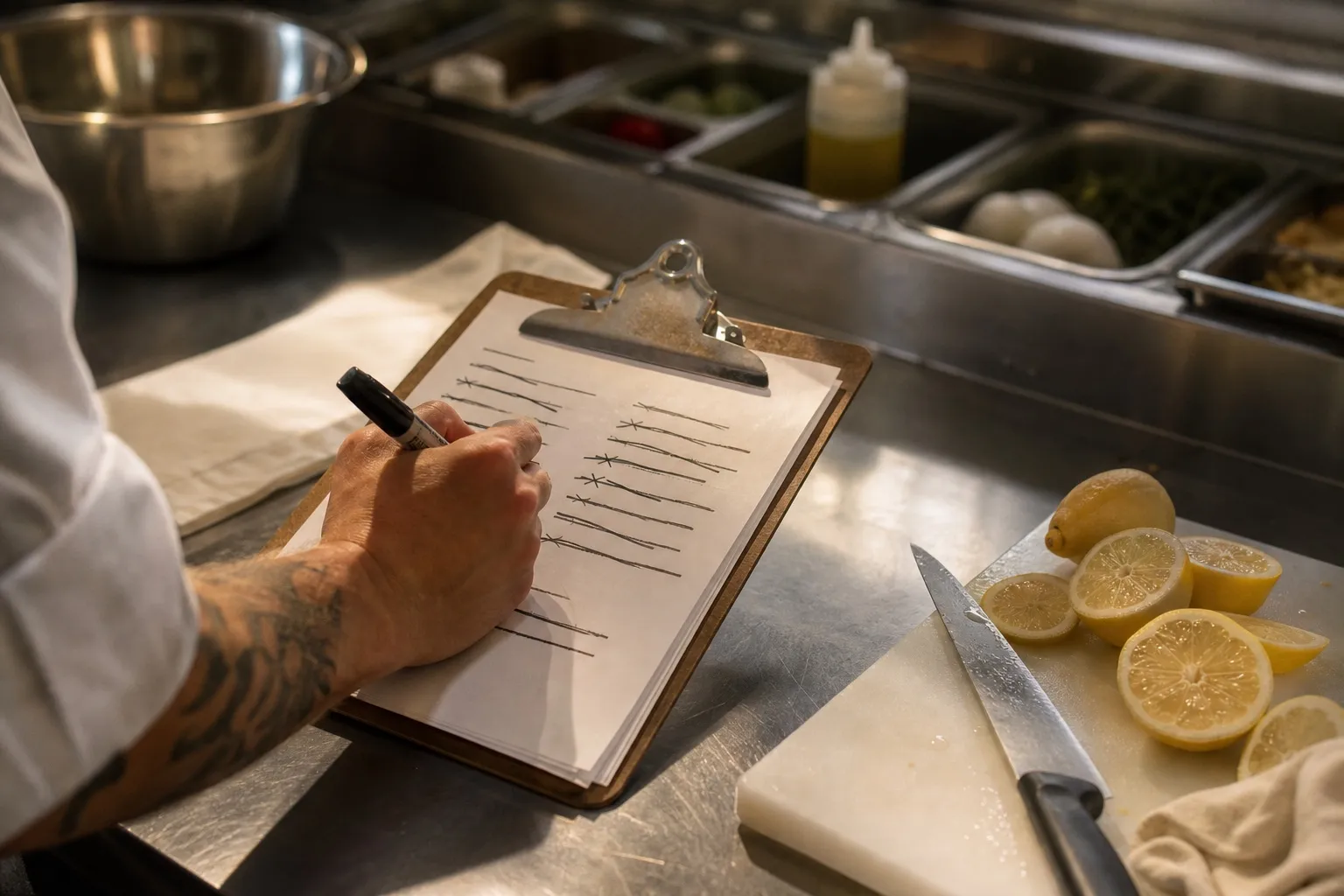
SevenRooms is now a DoorDash subsidiary. Tablecheck is a Tokyo-headquartered independent with ~13,000 venues across 38 countries. Both call themselves AI-first. The architectures, ownership, and target markets are not the same product.
The first time I tried to compare SevenRooms and Tablecheck in a spreadsheet, I gave up after about an hour. The two platforms sit in the same product category on every analyst chart — restaurant reservations and guest CRM — but the more public documentation I read, the less it felt like I was comparing two competitors and the more it felt like I was comparing two different theories of what a reservations platform is supposed to do. One is owned by the largest U.S. delivery company. The other is privately held in Tokyo. One is anchored on guest data depth. The other is anchored on operations and inbound-tourism plumbing in Asia. They both make AI claims that read identically in marketing copy and that diverge sharply the moment you look at what each company actually ships.
This piece is a desk review of how the two platforms compare on the public record in May 2026 — twelve months after DoorDash announced its $1.2 billion all-cash acquisition of SevenRooms and roughly two years after Tablecheck crossed 10,000 restaurant clients globally. The two platforms are now, for the first time, on durably different financial trajectories. That’s worth a careful read.
Methodology, openly
This Desk Review is based on public product documentation, recent investor materials, press coverage, and operator commentary in publicly accessible forums — not a multi-operator panel test. Our usual Vibe Check format runs a panel at three to five restaurants for thirty days and reports what we saw. We haven’t done that here. The reason is logistical: the SevenRooms install base skews heavily enterprise (Marriott, MGM, Mandarin Oriental) and the Tablecheck install base skews heavily APAC, and the small-indie U.S. operators we typically panel-test with don’t run both platforms in parallel. A useful head-to-head would require operator partners in two regions and at least one hotel F&B group, which we don’t currently have lined up.
So the comparison below is a desk exercise, sourced and cited. Where I make a judgment call, I flag it as a judgment call. Where there’s a load-bearing number, there’s a link.
The bet each platform is making
I want to spend a few paragraphs on what the platforms are actually doing differently before we get into the feature comparison.
SevenRooms is betting that the guest record is the moat. The product orients around CRM depth: every guest gets a profile that travels with them across visits, automatic and custom tagging surfaces preference patterns (the product page explicitly cites tags like “steak lover” and “big spenders”), and the AI features ship as a layer on top of accumulated guest history. The company calls this “SuperHuman Hospitality” and launched three AI features in March 2025 — AI Responses, AI Feedback Summary, and AI Note Polish — that all assume the operator has, or will accumulate, meaningful guest history to act on.
Tablecheck is betting that the operations layer and the inbound channel are the moat. The Tokyo-based platform pushes hard on table turn optimisation, IVR phone-reservation capture (a real differentiator in Japan, where a meaningful share of bookings still come by phone), multi-language guest-facing surfaces, and integrations with channels like Reserve with Google, Tripadvisor, American Express, and Michelin Guide that route international diners to Japanese and APAC restaurants. The CRM is present but is less the centre of gravity than the booking-channel and operations layer.
Neither bet is wrong. They serve different operations. The SevenRooms bet pays off at concepts where guest data has time to deepen — tasting menus, hotel F&B, repeat-heavy hospitality. The Tablecheck bet pays off at concepts that need to capture demand across channels with high reliability and run a tight floor — high-volume hotel restaurants in Tokyo handling a 70%-international guest mix on a Friday night, for example.
What each company actually is
A reservations platform is a piece of software. It is also a corporate entity with owners, an install base, and a trajectory. The corporate context matters for buying decisions because the platform you sign with today is, in a meaningful sense, the platform’s strategic priorities five years from now.
SevenRooms — now a DoorDash subsidiary
SevenRooms was founded in 2011 by Joel Montaniel, Allison Page, and Kinesh Patel (DoorDash press release). For most of its history it was a venture-backed independent (with PSG, Amazon, Comcast Ventures, and Highgate Ventures on the cap table). In May 2025, DoorDash announced a $1.2 billion all-cash agreement to acquire the company, and the deal closed in June 2025. DoorDash CEO Tony Xu framed the rationale to analysts as a progression from “logistics as a service” through “online ordering as a service” toward “marketing as a service” (Food On Demand). I covered the strategic logic of that arc in our piece on DoorDash’s commerce-platform pivot.
The customer base at acquisition was described as 13,000+ venues globally including Marriott International, MGM Resorts, Mandarin Oriental Hotel Group, Wynn Resorts, Wolfgang Puck, Nobu, and Union Square Hospitality (DoorDash IR). The Marriott relationship is particularly load-bearing — SevenRooms is a preferred restaurant technology provider across W Hotels, The Ritz-Carlton, St. Regis, Sheraton, JW Marriott, and others — and it explains why the SevenRooms product is shaped the way it is. This is not a tool that grew up serving 28-seat tasting menus. It grew up serving hotel F&B groups that needed a CRM-first operating system.
Tablecheck — Tokyo HQ, privately held, APAC-anchored
Tablecheck was founded on March 11, 2011 by Yu Taniguchi and John Shields. Taniguchi took the company’s first angel cheque from former Sony CEO Nobuyuki Idei when Taniguchi was 26 years old. The company is privately held; its investor base includes DNX Ventures, SMBC Venture Capital, Mizuho Capital, and Mercari CEO Shintaro Yamada, and in April 2026 added Kepple Liquidity II, JFR MIRAI CREATORS, and TOHO GAS Shin-Infra Fund as new shareholders via secondary, with no change in management control. There is no IPO on the public record at time of writing.
Headquarters is in Ginza, Tokyo; offices are in Osaka, Shanghai (two), South Korea, Singapore, Indonesia, Thailand, India, and the UAE. The latest disclosure puts the platform at 13,000+ restaurants across 38 countries with a 99.6% client retention rate, monthly reservations above 3 million, and 1 billion diners seated cumulatively as of the 10,000-client milestone in May 2024. Notable customers across the marketing materials include Aman, InterContinental, Hilton, Hyatt, Tim Ho Wan, Lawry’s, Nobu, and Hard Rock Cafe (Tablecheck platform page).
The two companies have one striking similarity in the public numbers: both report roughly the same total venue count today, in the low-13,000s. The difference is the geographic and segment mix. SevenRooms’ enterprise list is hotel- and U.S.-heavy. Tablecheck’s is APAC-heavy with a strong tourism-and-hotel slant.
Feature comparison, on the public record
I want to be careful here. Marketing pages overstate. Every reservations platform now claims AI somewhere on its home page. What I’m comparing below is what each company has publicly committed to as a named, shipped product — not roadmap items, and not claims that only appear in sales decks.
CRM and guest data
SevenRooms’ product page leads with the CRM. The platform builds guest profiles automatically, supports unlimited custom tags and auto-tags, and pulls in enrichment from 100+ integrations and an open API. The AI Note Polish feature, launched March 2025, exists specifically to clean up the unstructured note inputs hosts and servers add to guest profiles during service.
Tablecheck has a CRM as well. The platform tracks guest preferences, special-occasion data, and reservation history, and ties marketing automation (EDM campaigns, post-visit surveys) to that database. The CRM is present and capable; it isn’t the front-and-center product narrative the way it is for SevenRooms.
Judgment call: if the operator’s primary question is “how do I know my returning guest better than I do today,” SevenRooms is the more honest answer. The product is built for that question first. Tablecheck’s CRM is a competent feature inside a broader operations product.
Reservations, table management, host workflow
Both platforms ship reservations, waitlist, table management, and host workflow modules. Both have automated/intelligent seating: SevenRooms describes an AI-powered auto-seating algorithm that uses historical demand patterns to optimise turns; Tablecheck describes its operations layer as designed around table-turn efficiency and integrated host-stand workflow. On the public record, these capabilities look roughly comparable.
Where they diverge is the inbound channel layer. Tablecheck makes a serious feature out of its 24/7 IVR phone-booking system — a customer phones in, the IVR captures the booking, the reservation lands in the same system as the digital bookings. That’s a deliberate design choice tuned for Japan, where phone bookings remain meaningful and where peak demand often exceeds host capacity. SevenRooms ships voice agents through its broader AI suite, but the IVR-as-product framing is much more central at Tablecheck. Our piece on the voice-agent adoption curve covers the wider context.
AI features
Both platforms market AI prominently. The specific shipped features are different.
SevenRooms’ named AI products as of March 2025: AI Responses (drafts guest replies across email, SMS, and reviews), AI Feedback Summary (weekly thematic summaries of guest feedback), and AI Note Polish (cleans up CRM notes). The company also markets AI-driven auto-seating and dynamic revenue optimisation within the broader product. The press release cites a 27% decrease in response time to guest feedback among users.
Tablecheck’s public AI commitments are less granular and more framed around platform integrations and analytics. The most recent shareholder announcement explicitly lists “AI-powered search capabilities and restaurant technology services” among the company’s expansion priorities, but the product pages do not yet name specific AI products in the way SevenRooms does.
Judgment call: SevenRooms is currently further along the shipped-AI-product curve than Tablecheck, on the public record. Whether that matters depends on whether the AI features ship are actually load-bearing for an operator’s daily work. The named SevenRooms AI features are all guest-comms or CRM-flavoured; if your operations problem is host throughput on a Friday night, those features may not be the differentiator.
Marketing, channels, and the discovery question
This is the sharpest structural difference and the one I think is most often missed. Both platforms are reservations-and-CRM systems. Only one is now also a consumer marketplace.
SevenRooms historically was not a consumer marketplace — that was, and is, one of its main differentiators from OpenTable and Resy. The pitch was: own your guest, no marketplace cover fees, no third-party app pulling your diner away. The DoorDash acquisition complicates this. DoorDash VP Parisa Sadrzadeh, asked about integration plans in May 2025, said the company was “really early days” but flagged potential features including reservations within the DoorDash ecosystem. One year on, the operator-side concern is unchanged: SevenRooms restaurants who chose the platform specifically because it did not put them on a marketplace are now owned by a company that runs a marketplace with millions of consumers in its app. What that means for data ownership and guest channel control is the open question. CNBC, in a February 2026 piece on the reservations market, framed DoorDash’s entry as part of a broader reservation-wars dynamic with Resy and OpenTable.
Tablecheck, by contrast, runs both a B2B reservations product and a consumer-facing booking portal in Japan, and explicitly markets the TableCheck FastPass inbound-tourism product. The marketplace dynamic exists on the Tablecheck side too — it’s just been there from the beginning, and the operator-side trade-offs are well understood.
Ownership context, plainly
I covered the DoorDash acquisition strategic logic in post 4 and post 15 explored the bottom-line read on whether the deal was a good one for hospitality operators. The short version, sourced rather than asserted:
- The deal was announced May 6, 2025 at $1.2 billion all-cash and closed June 13, 2025.
- DoorDash positioned it as the latest step in becoming a “commerce platform” alongside the simultaneous $3.9B Deliveroo acquisition.
- The first concrete integration the DoorDash leadership flagged in interviews was reservations inside the DoorDash consumer app — the exact integration that long-time SevenRooms operators have been most cautious about.
- DoorDash’s stated rationale: “marketing as a service” for restaurants — using SevenRooms’ CRM to power retention loops that delivery-only data couldn’t (Food On Demand).
Tablecheck has no equivalent strategic-owner story. The latest shareholder change (April 2026 secondary) explicitly noted no change in management control. The company is operator-controlled and Japan-headquartered. That has implications for how product priorities get set: the customer-base centre of gravity is APAC hotel F&B and upscale dining, not U.S. delivery integration.
For operators who care about the long-run alignment of their reservations vendor’s strategic incentives with their own, this is the most important paragraph in the comparison.
Reach and hold — who should look at which platform
This is the part of the desk review where I’d normally summarise panel quotes. Without a panel, I’ll do the next best thing: name the operator profile each platform is structurally built for, based on the install base on the public record.
Look hard at SevenRooms if:
- You run hotel F&B or are part of a hospitality group where guest data already exists and has volume. The Marriott, MGM, Mandarin Oriental, Wynn customer list is not an accident — the product is shaped around enterprise hospitality.
- Your retention rate is high and your guest history is a strategic asset you’d like to compound. The CRM-first architecture is the right fit.
- You’re indifferent to or actively interested in being on the DoorDash marketplace.
- You want the most concretely shipped AI feature set (AI Responses, AI Feedback Summary, AI Note Polish) on a hospitality CRM today.
Hold off on SevenRooms if:
- You’re a small independent without a meaningful guest CRM today. The platform’s strengths don’t get to show up.
- You chose your current reservations vendor specifically because it didn’t put you on a third-party marketplace, and the DoorDash ownership represents a directional shift you’re not comfortable with.
Look hard at Tablecheck if:
- You operate in APAC or your demand mix is heavily inbound-tourism. The localisation, IVR coverage, and channel integrations (Tripadvisor, Reserve with Google, American Express, Michelin) are real differentiators here.
- Your operations problem is throughput and channel capture, not deep guest profiling.
- You want a privately-held independent vendor without a delivery-platform owner.
- You run hotel F&B in a Japanese, Chinese, Korean, or Southeast Asian market.
Hold off on Tablecheck if:
- Your operation is primarily U.S.-domestic and your peers are on SevenRooms or OpenTable or Resy. The integration-partner ecosystem is thinner here.
- You explicitly want a CRM-first product narrative. Tablecheck has a CRM; it isn’t the front-and-centre product story.
A wider read
There’s a meta-pattern here that’s worth saying out loud. The reservations category in May 2026 looks more like the POS category in May 2023 than it did two years ago. Big strategic acquirers (DoorDash buying SevenRooms, Uber’s OpenTable partnership) are pulling reservations into broader commerce platforms. The independent operators in the category — Tablecheck, Tock, Resy (before its acquisition by American Express) — sit in an increasingly contrarian position. They’re not part of a delivery-or-ride-hailing flywheel. That can be a feature or a bug depending on what kind of operator you are.
If you’ve been reading this series, you’ll have seen the same shape elsewhere. The Toast Desk Review covered Toast’s drift from a focused POS into a multi-product hospitality OS. The Four Margins piece argued that the structural margin pool in hospitality software is shifting toward marketplace-and-data platforms and away from pure SaaS. The DoorDash–SevenRooms deal is precisely the move that analysis would predict.
The desk reviews I’m publishing next week on post 9 and post 10 cover the next two categories with the same structural lens. The closing read for this one: the SevenRooms vs Tablecheck decision is not, in practice, “which AI feature set is better.” It’s a decision about which corporate-incentive structure you want your reservations vendor to operate under, and which operator profile your concept is.
Closing
A desk review can tell you what the platforms are, who owns them, what they ship today, and what shape their incentive structures are. It can’t tell you what running them in your actual restaurant feels like. The Vibe Check format exists for that, and we’ll come back to this category when we can put operators on each platform side by side for thirty days. If you operate on SevenRooms or Tablecheck today and are willing to be part of a future panel — particularly if you’re a U.S. operator on Tablecheck or an APAC operator on SevenRooms — I’d like to hear from you.
In the meantime: if you sign with either of these platforms in 2026, pick the one whose corporate-strategic direction matches your own. The feature comparison is closer than the marketing suggests. The structural fit is not.
— Sofia leads Vibe Check. Tips: [email protected].
Featured
More
Browse all 494 posts
The Voice Agent Maturity Curve
mise
·12 min read
The Four Margins of a Restaurant
mise
·14 min read
The AI Premium in Hospitality M&A: Broker Story or Real Number?
the bottom line
·9 min read
What the DoorDash/SevenRooms Deal Actually Buys
the bottom line
·11 min read
Related posts
vibe check
·16 min read
Desk Review: Lightspeed Restaurant, the Quiet Half of the Duopoly
vibe check
·18 min read
Desk Review: OpenTable's 'System of Record' — what restaurants are actually agreeing to on April 16
vibe check
·18 min read