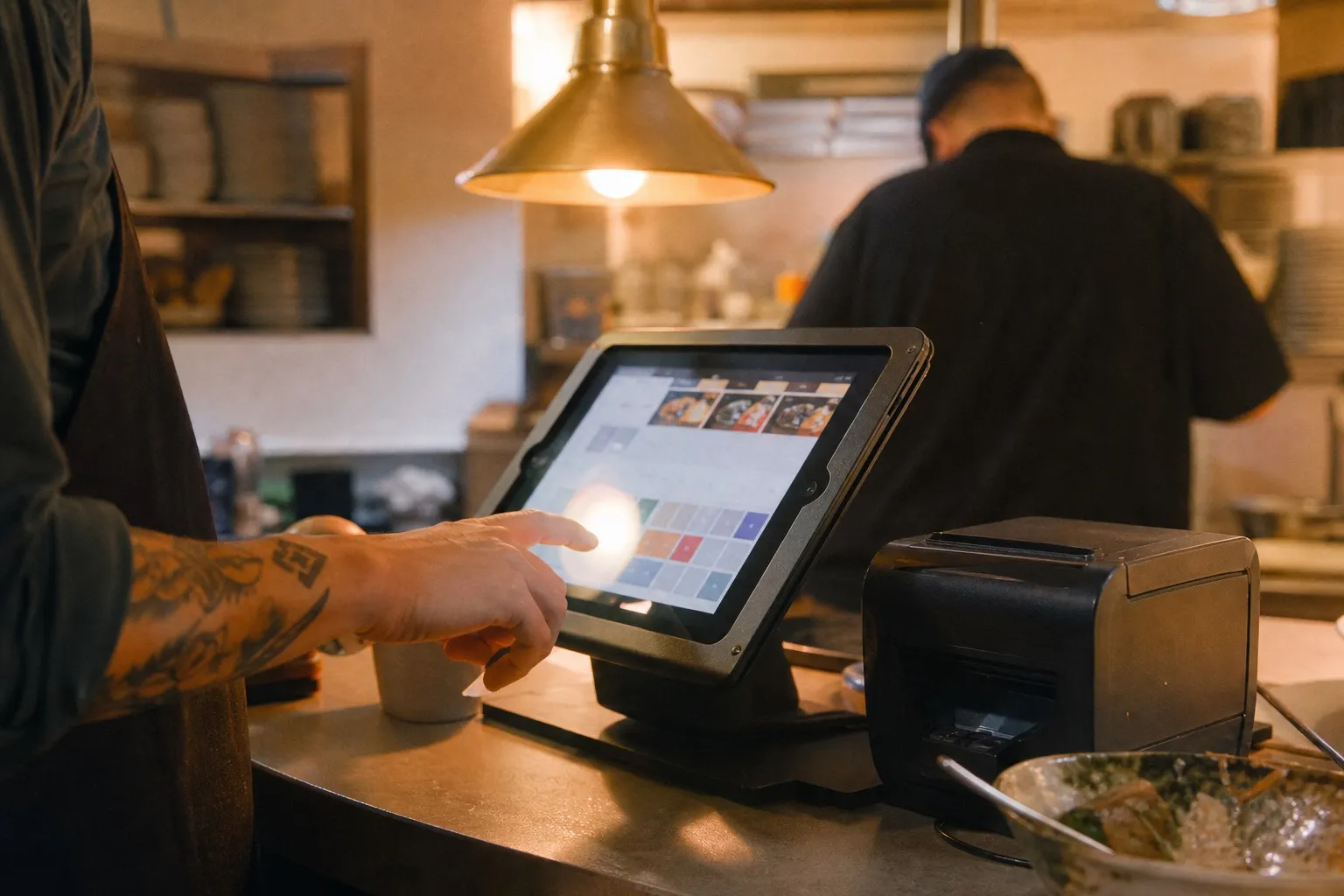
Domino's Prints Its DoorDash Thesis

Domino's missed Q2 EPS by 3.3% but printed a 3.4% US comp on top of a finished national DoorDash rollout. The aggregator-as-acquisition-channel playbook works, even when the bottom line wobbles — and that's the read worth holding onto.
I read the Domino’s Q2 release Monday morning before my second espresso and the thing I kept circling back to wasn’t the EPS miss. It was the order of operations. Domino’s reported $3.81 in diluted EPS against a $3.94 consensus — a 3.3% bottom-line whiff — and the stock did what stocks do on a headline miss. Then the second paragraph: US same-store sales up 3.4%, global retail sales up 5.6% ex-FX, and the DoorDash national rollout completed during the quarter. That’s not a miss. That’s a thesis printing.
The contrarian take is the one I’ll defend through the rest of the year: aggregator-as-acquisition-channel is a real playbook, and Domino’s just gave us the cleanest proof of it in the QSR tape. The EPS line is noise around the demand signal. The demand signal is the story.
The aggregator math nobody wants to do
For a decade the orthodoxy at Domino’s HQ in Ann Arbor was that aggregators were a tax. You give up 20–30% of the ticket, you lose the customer relationship, and you train your guests to shop on a marketplace where your brand is one of nine logos. The math was defensible in 2018 when Domino’s had a structural digital advantage and the aggregators were burning venture money to acquire orders.
By 2024 the math had inverted, and Russell Weiner — who took over as CEO in 2022 — was the first big-pizza operator to admit it. DoorDash isn’t a tax anymore. It’s a customer acquisition channel where the unit economics are a known quantity and the incremental order is, in many trade areas, genuinely incremental. The Q2 print is what that admission looks like in numbers.
Read the comp this way. US SSS at 3.4% in a quarter where weather was unremarkable, the value wars were ongoing, and Pizza Hut’s parent was still struggling to lap its own promotional cycle. The Yahoo Finance recap notes that management called out DoorDash as a meaningful contributor to the US comp without quantifying it on the print itself — the quantification will come on the call. But you don’t finish a national rollout in Q2 and post a 3.4% domestic comp the same quarter by accident. The transcript will be worth pulling on Fool once it’s up; the lift attribution is going to be the question every sell-side analyst tries to triangulate.
Mark this as interpretation: I think the real DoorDash contribution to the comp is in the 150–200 bps range, which means absent the rollout this is a low-single-digit US comp and the print is much less interesting. Management won’t say that out loud. They’ll talk about loyalty and the rewards relaunch, and the rewards relaunch is real — but the rewards relaunch is doing two jobs. It’s deepening engagement with existing digital customers and it’s giving the aggregator-acquired customer a reason to come direct on order two or three. That’s the playbook.
What 85% digital actually buys you
The other number in the release that deserves more attention than it’ll get: 85%+ of US sales are now digital. That’s not a flex about app downloads. That’s the precondition for everything else working. When 85% of your orders carry a customer identifier, an aggregator-acquired order isn’t a black box — it’s a row in your CDP with a known acquisition cost and a forecastable LTV.
This is the same architectural argument I’ll be making about DoorDash’s broader commerce push in an upcoming May piece on what the aggregator becomes when it stops being a marketplace and starts being infrastructure. The Domino’s print is the operator-side mirror of that thesis. You can’t run aggregator-as-acquisition-channel if you don’t already own the post-acquisition relationship. Domino’s owns it. Most independents and most regional chains don’t, which is why the same playbook breaks in their hands.
It’s also the argument that runs through a forthcoming May piece on Toast’s quiet pivot from chat-box AI to action-AI: the operators winning right now are the ones with enough first-party data depth to make the next layer of tooling actually work. And it’s the through-line on a forthcoming May Bottom Line about the DoorDash/SevenRooms wedge into full-service — same playbook, different vertical, same precondition.
The EPS miss will get the headline today. Cost pressure on food basket and the franchisee margin handoff are real and worth their own column. But strip the noise and what Domino’s printed Monday is a clean validation: when the digital plumbing is in place, aggregators are an acquisition channel, not a tax. Everyone in QSR with a working app should be doing this math by Friday. Most won’t. That’s the trade.
— Luca covers restaurants for TableTransfers. Tips: [email protected].
Featured
More
Browse all 494 posts
The Voice Agent Maturity Curve
mise
·12 min read
The Four Margins of a Restaurant
mise
·14 min read
The AI Premium in Hospitality M&A: Broker Story or Real Number?
the bottom line
·9 min read
What the DoorDash/SevenRooms Deal Actually Buys
the bottom line
·11 min read