DoorDash's Ad Business Just Crossed $1B in ARR — and the Restaurant Category Reaccelerated
DoorDash printed a Q3 with marketplace GOV up 25%, orders up 21%, and adjusted EBITDA up 41%. Tony Xu told analysts the ads business is the fastest in history to hit $1B in annualized revenue. That changes DASH's economics — and its bargaining power with restaurants.
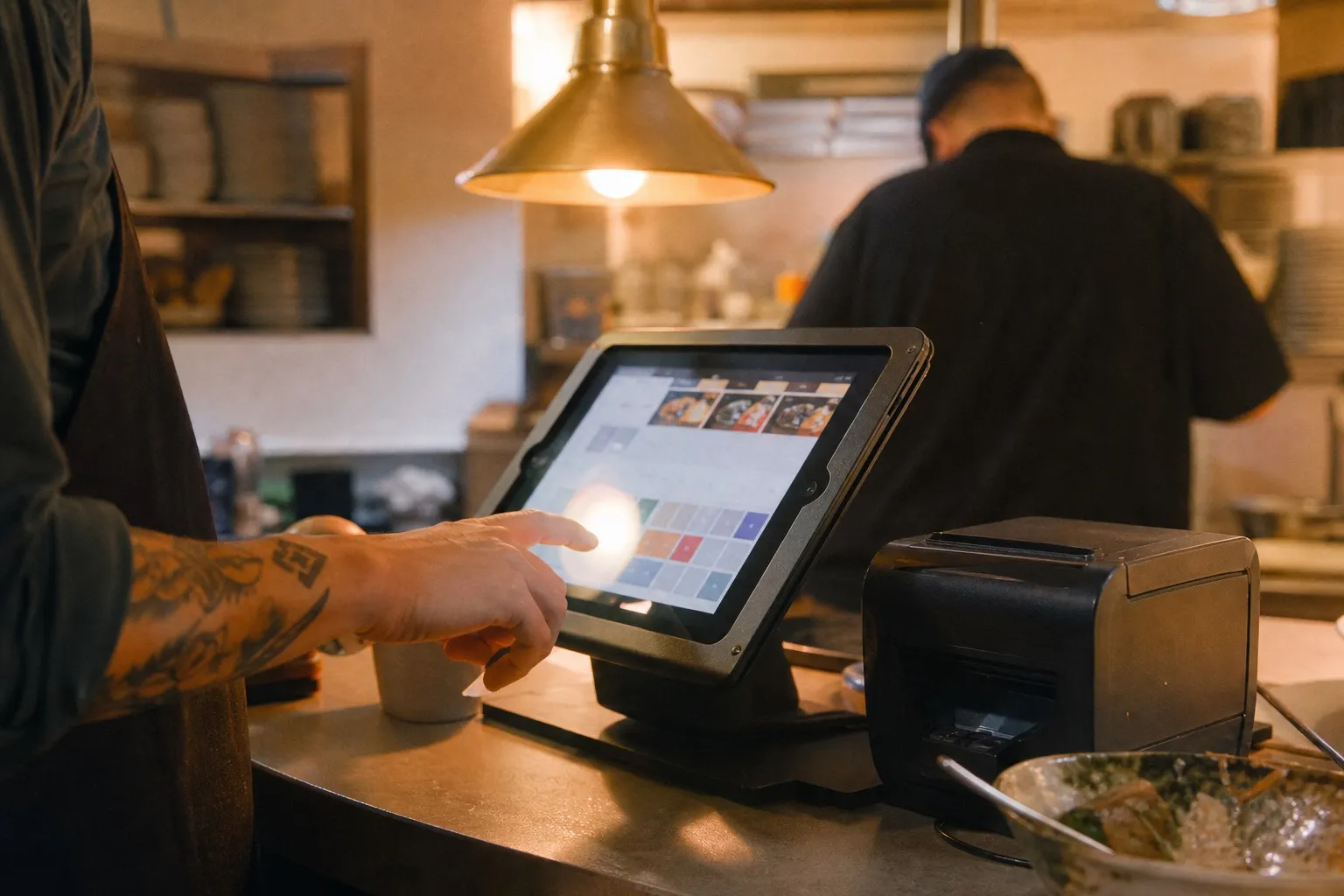
I was standing at a host stand on Wednesday morning when the manager flipped a DoorDash daily print over and slid it across to me. The line he wanted me to read wasn’t the cover number. It was a one-line note from the rep about a new ad placement his concept had been opted into. “They used to call us to sell this,” he said. “Now they tell us.” That was three hours before DoorDash reported Q3, and after I read the release I went back and stared at the print again, because the manager had the story before the analysts did.
Here is the contrarian read, stated plainly: DoorDash’s advertising business crossing $1B in annualized revenue is not a side note inside a strong quarter. It is a structural change in DASH’s unit economics, and it changes the negotiation every restaurant operator is going to have with the platform over the next year. The marketplace growth is the headline. The ad business is the lede.
The print
The same-day numbers, from the Q3 press release filed with the SEC and the investor materials posted to IR this morning:
- Marketplace GOV of $25.0B, up 25% year over year.
- Total orders of 776 million, up 21%.
- Revenue of $3.4B, up 27%.
- Adjusted EBITDA of $754M, up 41%.
- Deliveroo, freshly inside the consolidated print, contributed roughly $200M of adjusted EBITDA.
CNBC’s same-day write-up pulled the right thread: the beats are not just topline. EBITDA growing roughly 1.6x faster than GOV is the line that tells you the take-rate mix is moving. Something inside this business is meaningfully more profitable than the food it delivers. That something is the ad unit.
On the call this afternoon, CEO Tony Xu told analysts the ads operation was “the fastest business, ads business in history to get to $1 billion of annualized revenues.” It is the kind of line a CEO drops once and lets the analyst community repeat for him. He’s not wrong to. A standalone $1B annualized digital ad business compounding inside a marketplace is a different animal than a fee line.
Why the ad business changes the table
Mark interpretation. A delivery order in the U.S. carries a contribution margin that has bounced between thin and tolerable for a decade. An ad impression sold against that same order carries the contribution margin of digital advertising — call it 70-80% gross — and it does not require a courier, a bag, or a wait. Every incremental ad dollar is a dollar that does not need to be split with a Dasher or a packaging line.
That has two consequences operators should price in this quarter:
- DoorDash’s willingness to absorb take-rate pressure on the core delivery fee just went up. When a chunk of your contribution comes from ad inventory you sell against the order, you can give back basis points on the commission to keep the GMV flowing through the funnel. The next merchant renegotiation will feel different.
- The “tell us, not sell us” dynamic the manager described isn’t anecdotal. When ad inventory becomes the high-margin product, the platform’s incentive shifts from selling each placement to making participation the default and tiering visibility based on spend. The shelf moves under your feet.
I’ll write about the first of those at length in a forthcoming May piece on DoorDash commerce. For today, sit with what the second one means: the home page of an app that ships 776 million orders a quarter is now an ad surface first and a delivery surface second.
The reacceleration nobody is mentioning
The other detail worth pulling out of the release is buried under the cover line. U.S. restaurant GOV growth in the quarter was the highest in three-plus years. That matters because the bear case on DASH for most of 2024 was that the U.S. restaurant cohort had saturated and growth had to come from grocery, retail, and international. The Q3 print pushes back on that directly: the legacy category reaccelerated while the new categories grew faster. That’s a category that has more room than the consensus model gave it.
Two reasons it’s running, neither of them flattering for the operator side: the ad-driven promo loops are doing exactly what they’re designed to do, and the loyalty/Wallet stack is locking frequency at the high end of the order distribution. The restaurant participating in DashPass-funded promos is buying frequency from the platform at a cost the platform now substantially recoups through ads sold against the same orders. That’s a beautiful flywheel if you own the platform. It’s a treadmill if you’re the brand.
What to watch into Q4
Three things, in order of how much they’d move my model:
- Ad load and merchant spend mix. Xu told analysts the $1B annualized figure was about scale, not yield. The yield conversation — what share of GOV is now ad-influenced, and what the average merchant ad spend is — is the one I want on the Q4 call.
- Take-rate vs. commission posture. If Q4 shows core delivery take rate flat or slightly down while EBITDA margin keeps expanding, the ad-mix shift is confirmed and the renegotiation thesis lands.
- Deliveroo integration math. $200M of EBITDA in the first full quarter consolidated is the floor, not the ceiling. The cross-listing of ad inventory across the combined footprint is the bull case nobody has modeled yet.
And, separately, watch the front-of-house software side of DASH’s stack. The thesis I’m going to spend more time on in an upcoming Bottom Line on DoorDash and SevenRooms is that the $1B ad business and the $1.2B SevenRooms acquisition are the same bet from two angles: own the surface where the guest decides, and sell the visibility on top of it.
The operator move
If you run restaurants on DoorDash this week, the action is unglamorous: pull your last 60 days of platform invoices and re-cut them by line. Separate the commission, the marketing/ads, and the promo-funded discount. Stack-rank by ROAS. If your ad line has crept above 15% of platform GOV and your blended take-rate is now in the high thirties, you are no longer a restaurant on a marketplace. You are a media buyer who happens to make food. Price accordingly when the rep calls.
The print today told you the platform already has.
— Samuel hosts the Service podcast for TableTransfers. Tips: [email protected].
Featured
More
Browse all 494 posts
The Voice Agent Maturity Curve
mise
·12 min read
The Four Margins of a Restaurant
mise
·14 min read
The AI Premium in Hospitality M&A: Broker Story or Real Number?
the bottom line
·9 min read
What the DoorDash/SevenRooms Deal Actually Buys
the bottom line
·11 min read