DoorDash's AI Merchant Tools: Item Description Generators and the Slow Merger of Marketplace and POS

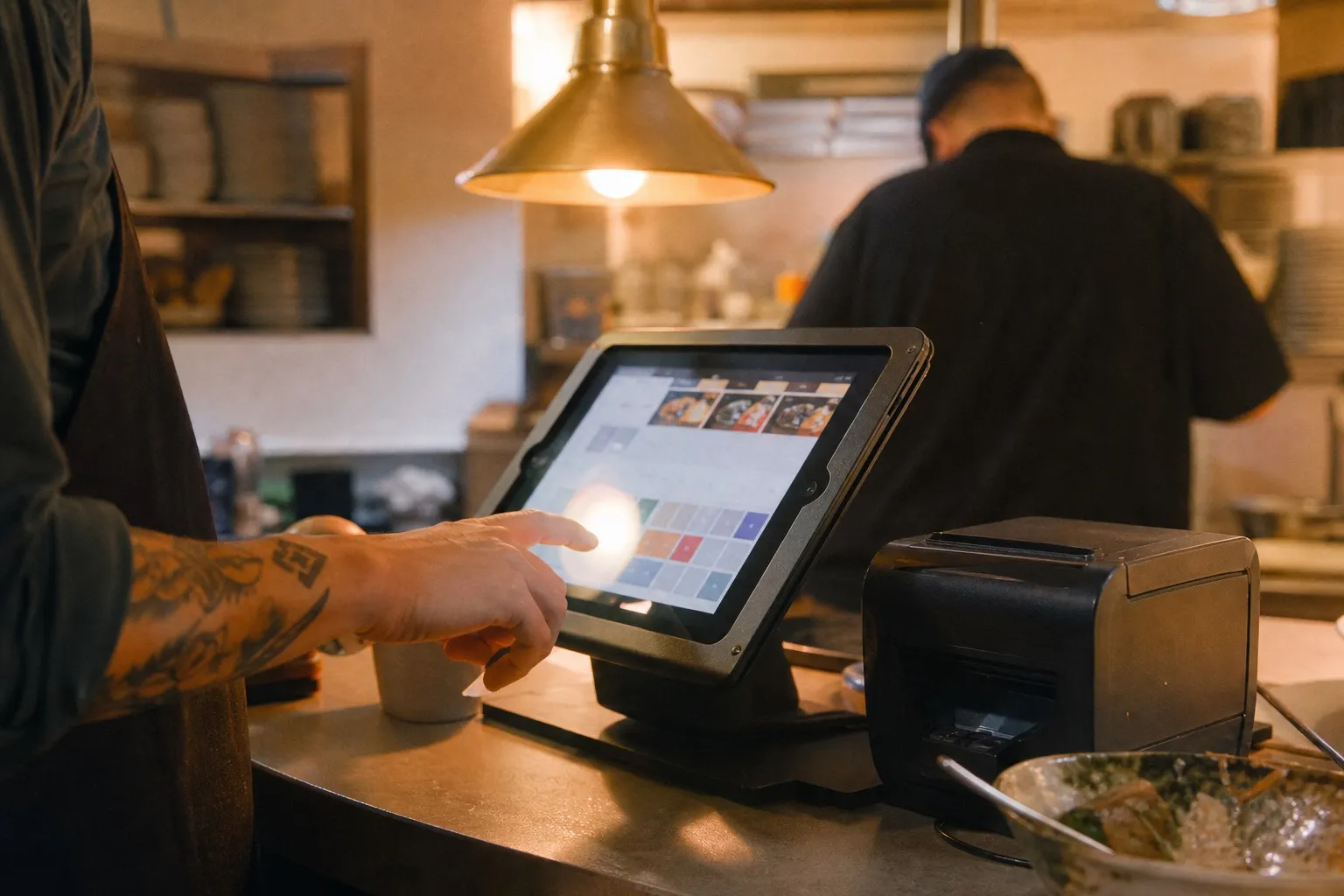
DoorDash's April 9 launch of AI-generated item descriptions and photo tools is a marketplace operator finally admitting it's becoming a SaaS vendor — putting it on a collision course with Toast and Square earlier than DoorDash's IR team would prefer.
I was mid-sentence on a call with a 14-unit fast-casual operator in the Mid-Atlantic — he was complaining, as operators do, about photo refreshes being the thing that always slips off the bottom of his marketing calendar — when the DoorDash press release rolled across my feed. AI-generated item descriptions. AI-assisted photo tools. Shipping now. I told him to check his merchant portal in the morning. He laughed and said something I’ve been thinking about all afternoon: “So they’re a software company now?”
Yes. They are. The DoorDash investor relations team is not going to phrase it that way on the next earnings call, and the press release certainly doesn’t, but that is what shipped today. And my read is that the second-order effect of this launch is more interesting than the launch itself: DoorDash just put itself on a collision course with Toast and Square’s merchant-tools surface earlier than anyone on its IR roster would prefer.
What DoorDash shipped today
The April 9 announcement, as covered by Today and The Spoon, boils down to two merchant-facing features: an AI item-description generator that drafts menu copy from a name and a couple of inputs, and a set of photo tools that help operators produce passable hero shots without a food photographer. Uber Eats is shipping adjacent stuff. Yelp is expected to roll its own Spring Release at the end of the month, and from what I’m hearing the scope there will be broader than what DoorDash put out today — Yelp is going after the discovery surface more aggressively, while DoorDash is going after the operator’s content-production tax.
That distinction matters. Yelp is trying to fix consumer search. DoorDash is trying to fix the merchant’s onboarding-and-maintenance workflow. Those are not the same product, and they don’t compete with the same incumbents.
The honest framing of what DoorDash did today: they shipped a feature that, until very recently, you would have expected to see in a Toast Marketing release note or a Square for Restaurants update — not in a marketplace operator’s merchant portal.
Why this is a Toast problem, not an Uber Eats problem
The instinct is to read AI merchant tooling from DoorDash as a competitive move against Uber Eats. It isn’t, really. Uber Eats and DoorDash have been running parallel feature roadmaps for years; whatever DoorDash ships, Uber will ship a version of it inside a quarter, and vice versa. That’s noise.
The interesting collision is on the other side of the merchant’s screen. Toast’s pitch to a multi-unit operator has been, for two years now: we are your operating system. POS, payroll, marketing, online ordering, photos, menu management — one login, one contract, one vendor of record. Square for Restaurants is making a similar but lighter-weight pitch to the SMB end of the market. Both companies sell merchant-facing AI-assisted content tools today. Both companies charge for them, either via subscription tier or attach.
DoorDash just gave a version of those tools away inside the merchant portal that operators already log into every single day to manage their marketplace presence. My read: the operator I was on the phone with — and a few hundred thousand operators like him — now has a non-zero reason to ask his Toast rep why he’s paying for Marketing when his DoorDash portal generates the same copy for free. He probably won’t churn off Toast over it. But the pricing-power conversation shifts.
This is the part the IR team isn’t ready to narrate yet. DoorDash’s multiple is a marketplace multiple. The minute the narrative shifts to “merchant SaaS with a marketplace attached,” the comp set changes, the gross-margin expectations change, and the question of how much of the take rate is actually paying for software versus delivery logistics gets a lot more uncomfortable. Marketplaces don’t want to be SaaS companies on the income statement. But the product surface is drifting that direction whether the deck says so or not.
This is the same direction-of-travel argument I made in a later piece we publish on the discovery layer, where OpenTable’s AI-and-rebrand sequence reads as a reservations marketplace edging into merchant-marketing territory from the other side. Different starting point, same destination.
What to watch by Q3
A few markers to hold against this thesis as the rest of the year unfolds:
First, watch the Yelp Spring Release at the end of April. If Yelp ships discovery-side AI that meaningfully changes how diners find restaurants, the competitive frame for DoorDash’s merchant tooling shifts again — DoorDash will need to either match on discovery or double down on the operator-workflow side of the house. The rumored SevenRooms acquisition, anticipated by some in the back half of the year, would tell you a lot about which way they’re leaning; SevenRooms is operator-workflow software, not consumer discovery.
Second, watch Toast’s next product release notes. If Toast quietly bundles its AI content tools into a lower tier or makes them table-stakes inside the base subscription, that’s the tell that they’re feeling the pressure from below.
Third, and this is the one I’d circle on the calendar: watch DoorDash’s Q3 earnings call for any language drift around “merchant solutions” or “merchant software” as a reportable line. The Pass call: by year-end, the DoorDash merchant-tools surface will look more like Toast Marketing-plus-Photos than like a delivery aggregator’s back office. They won’t say it on the call. But the screenshots will.
The operator I was on the phone with this afternoon will, in six months, be using AI-drafted item descriptions written by three different vendors across his stack and won’t remember which one wrote which. That’s the world we’re in now. The marketplaces are becoming software vendors. The software vendors are becoming marketplaces. And somewhere in the middle, the operator finally gets his photo refresh done.
— Maya covers restaurant tech. Tips: [email protected].
Featured
More
Browse all 494 posts
The Voice Agent Maturity Curve
mise
·12 min read
The Four Margins of a Restaurant
mise
·14 min read
The AI Premium in Hospitality M&A: Broker Story or Real Number?
the bottom line
·9 min read
What the DoorDash/SevenRooms Deal Actually Buys
the bottom line
·11 min read