Dutch Bros Is the Only Growth Story Wall Street Still Believes

29% revenue growth and 4.7% system comps cement Dutch Bros as the rare consumer name with both unit growth and traffic — and its mobile-order rollout is starting to matter.
I pulled into a Dutch Bros off the 60 on Wednesday morning, sun hot on the windshield, and ordered a medium Rebel — the energy-drink concoction that is, depending on whom you ask, either the company’s gateway drug or its actual flagship. Four cars ahead of me at 9:14 a.m. The barista — they call them “broistas” and I will not apologize for that — knew the car in front of mine by name. Ninety-second transaction. I drove off thinking about the Q1 release Dutch Bros put out the night before.
Here is the take: every QSR brand spent the last earnings cycle talking about “throughput” and “traffic recovery.” Dutch Bros just posted the numbers everyone else is still describing as a goal. Revenue up 29%. System same-shop sales up 4.7%. Company-operated same-shop sales up 6.9%. Positive transaction growth — not just ticket — for another quarter. In a tape where Starbucks is rebuilding the back bar, McDonald’s is begging the low-income consumer to come back, and the fast-casual cohort treats flat traffic as a win, this is the only consumer growth story Wall Street still believes.
The comp-and-traffic combo nobody else has
The most important line in the print is buried in the language: positive transaction growth. Most QSR comps this season are price-driven. Raise prices 3-5%, give back a point on mix, call the resulting flat-to-slightly-positive comp a victory. Dutch Bros’s 4.7% system comp is not that. The company called out positive transactions on top of modest pricing — the rare animal in 2025 consumer.
My read: comp without traffic is a price hike with a press release. Traffic without comp is a discount with a press release. Both at once, on top of 29% revenue growth from new units, is the operating profile every public restaurant CEO sketched on their Q4 call. Christine Barone’s team is the one that actually drew it.
A wrinkle worth being honest about: Dutch Bros is still in the part of its curve where new shops are additive to revenue without meaningfully cannibalizing existing ones. That math gets harder. But the 6.9% company comp — the cleaner read on the mature base — says the existing shops aren’t being starved. Yet.
Mobile order is finally a story, not a slide
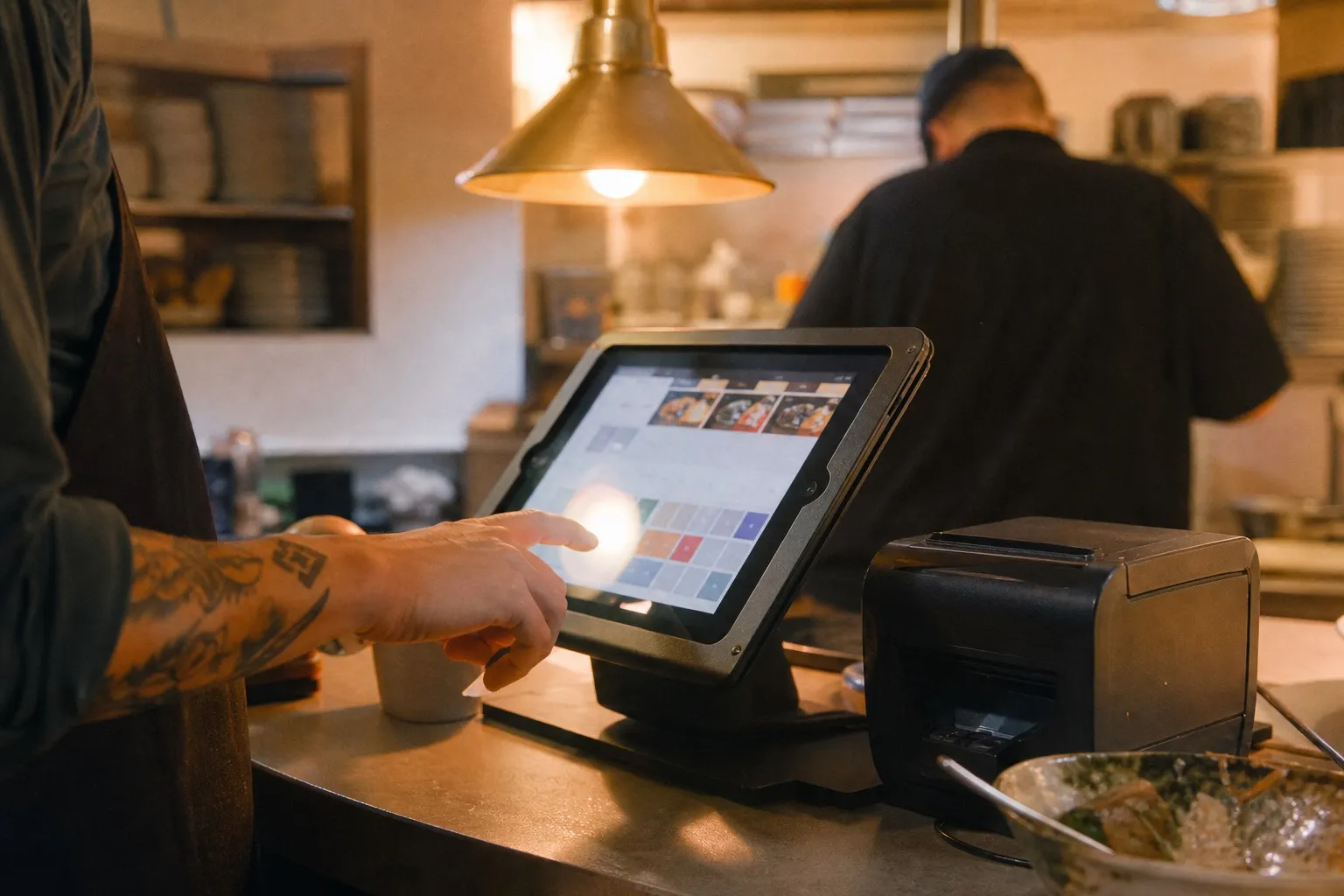
For two years, Dutch Bros’s pitch included a line about mobile order being “in pilot.” That line has graduated. The Q1 commentary treats mobile order as a contributor to the comp, not a forward-looking initiative. The reason this matters is specific to Dutch Bros: the defining asset is the broista interaction at the window, and there was a real question about whether an app would dilute it.
The early read says it doesn’t. What mobile order does is recapture the trips Dutch Bros was losing to a four-car line at 9 a.m. — trips where the broista chat is the cost, not the value. Customers who want the relationship still pull up to the window. Customers who want the Rebel in three minutes flat have a new lane.
My read: the operational unlock is throughput per shift, not labor savings. Dutch Bros is not trying to cut broistas. It is trying to serve the customer who would have given up and gone to a Starbucks down the street. Pair that with the discovery-layer thesis our later coverage of the rebrand cycle argues and mobile order is not a feature — it is a second front door, opened without losing the first one.
What Wall Street is buying — and what it should still worry about
The bull case writes itself off the print: a coffee chain growing units at a double-digit clip, with positive traffic, a working digital channel, and the cleanest operator quarter in the cohort. Christine Barone — True Food Kitchen, before that a long Starbucks run — has put a more disciplined unit-economics filter on the new-build pipeline than the founder-led era could.
The bear case has not gone away. The brand is regionally concentrated, the Rebel-led mix is energy-drink-heavy in a category where regulatory noise periodically flares, and the move east is unproven at the density Dutch Bros is targeting. 7 Brew and Scooter’s run similar drive-thru-only playbooks with cheaper unit costs, and will eventually arrive in the same trade areas.
My read: none of those risks bite this quarter. They bite later, when the unit count is higher and the comp lap gets brutal. For the rest of this earnings cycle — Toast, Olo, Sweetgreen, and US Foods Thursday, Cava on the 15th, every NRA Show conversation about who is actually growing — Dutch Bros is the answer to “name one consumer growth story that isn’t a story.”
The Rebel was fine. Peach Rings flavor. Do not recommend before noon.
— Luca covers restaurant operators. Tips: [email protected].
Featured
More
Browse all 494 posts
The Voice Agent Maturity Curve
mise
·12 min read
The Four Margins of a Restaurant
mise
·14 min read
The AI Premium in Hospitality M&A: Broker Story or Real Number?
the bottom line
·9 min read
What the DoorDash/SevenRooms Deal Actually Buys
the bottom line
·11 min read