Elo Joins Zebra, Re-Enters Foodservice At NRF With Wallaby SCO

Elo's first NRF as a Zebra Technologies division puts a hardware behemoth inside the QSR self-checkout aisle. The kit is real — Wallaby SCO, the Z30 tap-to-pay terminal, the Intel-powered Backpack — and the structural read is that Toast's hardware margin just got a tougher neighbour.
I walked Javits on Monday morning and the booth I wanted to see first was 5803 — Elo’s first NRF as a Zebra Technologies division. The signage gives the game away. The Elo logo is still there, the Knoxville address is still on the back wall, but the booth-level pitch is now Zebra’s: modular hardware from the backroom to the checkout, sold by the rep who also sells you your warehouse scanners. The Pit Stop activation across the floor in the Foodservice Innovation Zone completes the thought — Wallaby self-checkout in a working QSR loop, Vox AI taking the order, Qu running the POS, Adyen settling the card.
The contrarian read first. (Interpretation flag: this framing is mine; Zebra is not selling it this way.) The structural threat to Toast’s hardware margin from Zebra-Elo is not a competing terminal — it is a competing cost structure. Toast has spent six years building a premium-priced restaurant terminal business with a recurring software attach. Zebra has spent thirty years building the world’s largest enterprise hardware book at scale-trained margins. Putting Elo’s foodservice and retail surface inside that book gives QSR buyers a hardware vendor whose terminal economics are not subsidising a SaaS roadmap. Toast’s hardware margin is structurally exposed in that comparison.
What Zebra-Elo actually showed
Strip out the show-floor theatre and four things landed on Monday, per The Shelby Report’s walk-through of the booth:
Wallaby SCO — a modular self-checkout platform pitched as “lightweight” and “enterprise-grade” for high-volume retail, with real-time interaction capability. This is the headline. Self-checkout is the surface where Zebra’s distribution book and Elo’s foodservice install base actually compound.
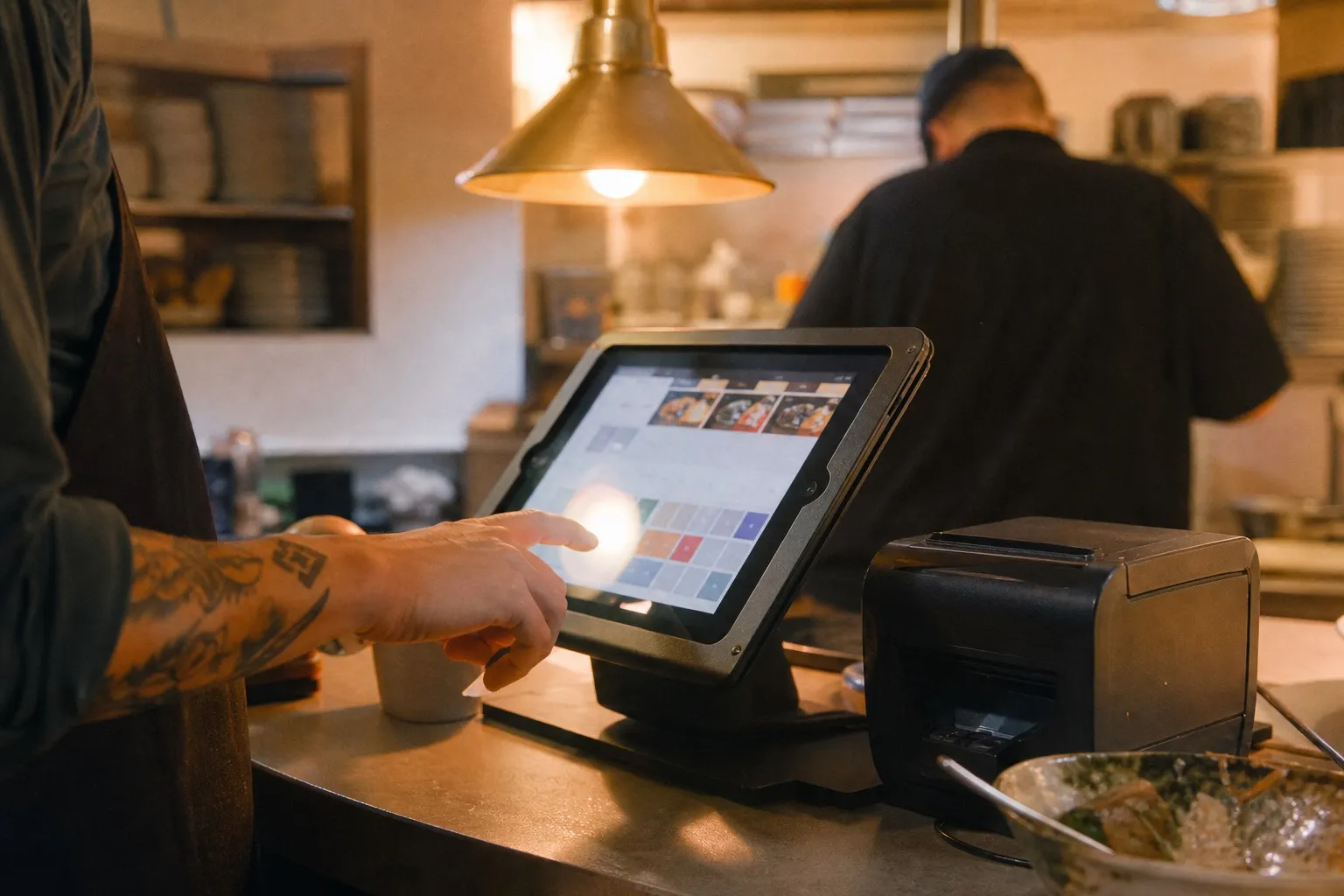
Elo Pay Z30 — an Android tap-to-pay terminal with a 15.6-inch merchant display, a 10.1-inch customer-facing screen and a Qualcomm 6490 inside. Contactless payment is built in. This is a counter-station POS, not a handheld, and it lands in the same physical footprint as a Toast or Square countertop unit.
Elo Backpack with Intel — a compute module that turns any Elo touchscreen between 7 and 65 inches into a kiosk, signage, POS or KDS endpoint. The play is hardware reuse; you do not buy a different device for each surface.
Elo Edge Connect 10-key keypad — the boring one that matters operationally. Produce lookup and price entry on a touchscreen has always been the moment the floor curses the hardware. A physical 10-key fixes it.
CEO Craig Witsoe’s framing — modular solutions, every touchpoint, “performance, flexibility and simplicity” — is rep-talk. The substance is the product list above.
The Pit Stop reads as a Toast-shaped lineup
Across the floor in the Foodservice Innovation Zone, the Pit Stop activation walks an end-to-end QSR loop with named partners: Qu as the core POS, Vox AI for drive-thru voice ordering, The Howard Company for digital menu boards, Adyen for digital payments, MicroTouch for guest kiosks, Esper for device infrastructure. That stack, end-to-end, is the configuration a Toast customer also buys — except no single vendor owns the bundle. The Pit Stop makes the visual case that an open hardware backbone is interchangeable with a vertically-integrated competitor’s box.
AWS’s NRF 2026 preview names roughly 40,000 attendees, 19,000 companies, and a thematic focus on supply-chain AI, frictionless checkout and personalisation. POS hardware is not the keynote story this year. That is exactly why the Zebra-Elo booth matters — it is the move that happens off the AWS stage and inside the operator’s purchase order.
What operators should actually take from this
Three things, in operator-impact order.
One: your next hardware refresh has a new vendor on the shortlist. If you are a multi-unit QSR or a c-store operator, Zebra-Elo is now a single-PO option for terminals, self-checkout, signage and the back office. That changes the negotiation with whoever sold you your current fleet.
Two: self-checkout is the wedge. Wallaby is the product where Zebra’s enterprise muscle most obviously compounds. Watch which QSR brands pilot it first; the announcement of a top-twenty chain on Wallaby SCO will reprice the category.
Three: the bundled-vendor question matters more than the spec sheet. Our Toast Desk Review and the Lightspeed read both circled the same point — POS hardware sold by the SaaS vendor and POS hardware sold by a hardware vendor are different commercial animals. NRF 2026 is the show where that distinction stopped being academic.
The booth photos will run all week. The hardware order forms are the part that moves the P&L.
— Hana edits The Pass. Tips: [email protected].
Featured
More
Browse all 494 posts
The Voice Agent Maturity Curve
mise
·12 min read
The Four Margins of a Restaurant
mise
·14 min read
The AI Premium in Hospitality M&A: Broker Story or Real Number?
the bottom line
·9 min read
What the DoorDash/SevenRooms Deal Actually Buys
the bottom line
·11 min read