FSTEC Opens With One Question: Who Survives the Voice-AI Bake-Off?

Operators arrive in Kissimmee with shortlists, not interest. FSTEC's defining test isn't the keynotes — it's which voice-AI booth still has signed LOIs by Wednesday afternoon. Three days at Gaylord Palms will sort the pretenders from the production-ready.
I caught a regional VP of ops from a 400-unit casual-dining chain in the lobby of the Gaylord Palms on Sunday afternoon, an hour before the marketplace opened. He was holding a printed list. Four vendor names, three columns: integrations claimed, integrations verified, last-mile cost per call. “I’m not here to learn,” he said. “I’m here to cross names off.”
That’s the lead I keep coming back to as FSTEC 2025 gets underway in Kissimmee. Operators didn’t arrive curious. They arrived with shortlists. The keynotes will get the trade-press writeups, but the defining test of this show — the one that determines who’s still standing at the next NRA — is which voice-AI booths still have signed LOIs by Wednesday afternoon. Three days, Sept 14-16, to sort the pretenders from the production-ready.
The bake-off nobody wants to admit is a bake-off
Walk the floor and the voice-AI vendors will tell you they’re not competing with each other. They’re “expanding the category.” This is what you say when you don’t yet know whether your contract pipeline will close. The honest version, which I’ve heard in hotel-bar conversations every quarter for two years now, is that the category is consolidating fast and operators are doing the consolidating for them.
The structural reason is simple. A multi-unit chain can’t run three voice vendors across its footprint and learn anything useful from any of them. The integration debt — POS, drive-thru timer, loyalty, payment tokenization — is too expensive to pay twice. So the procurement teams arriving this week are running what they politely call “final-round evaluations” and what everyone else would call a bake-off. Two finalists, sometimes three. By Wednesday, one of them gets a pilot expansion and the others get a polite note.
NRN’s Tech Tracker preview framed the show around AI broadly, but the booths telling me their pre-show meeting calendars were full are all running the same playbook: bring a steel-and-glass demo cart, pipe in a real drive-thru audio loop, and let the prospect’s ops director try to break it. The ones who can survive forty minutes of edge-case attacks — accents, background noise, half-finished orders, mid-call menu changes — leave Kissimmee with paper. The ones who can’t, leave with leads.
What the hardware floor is quietly telling us
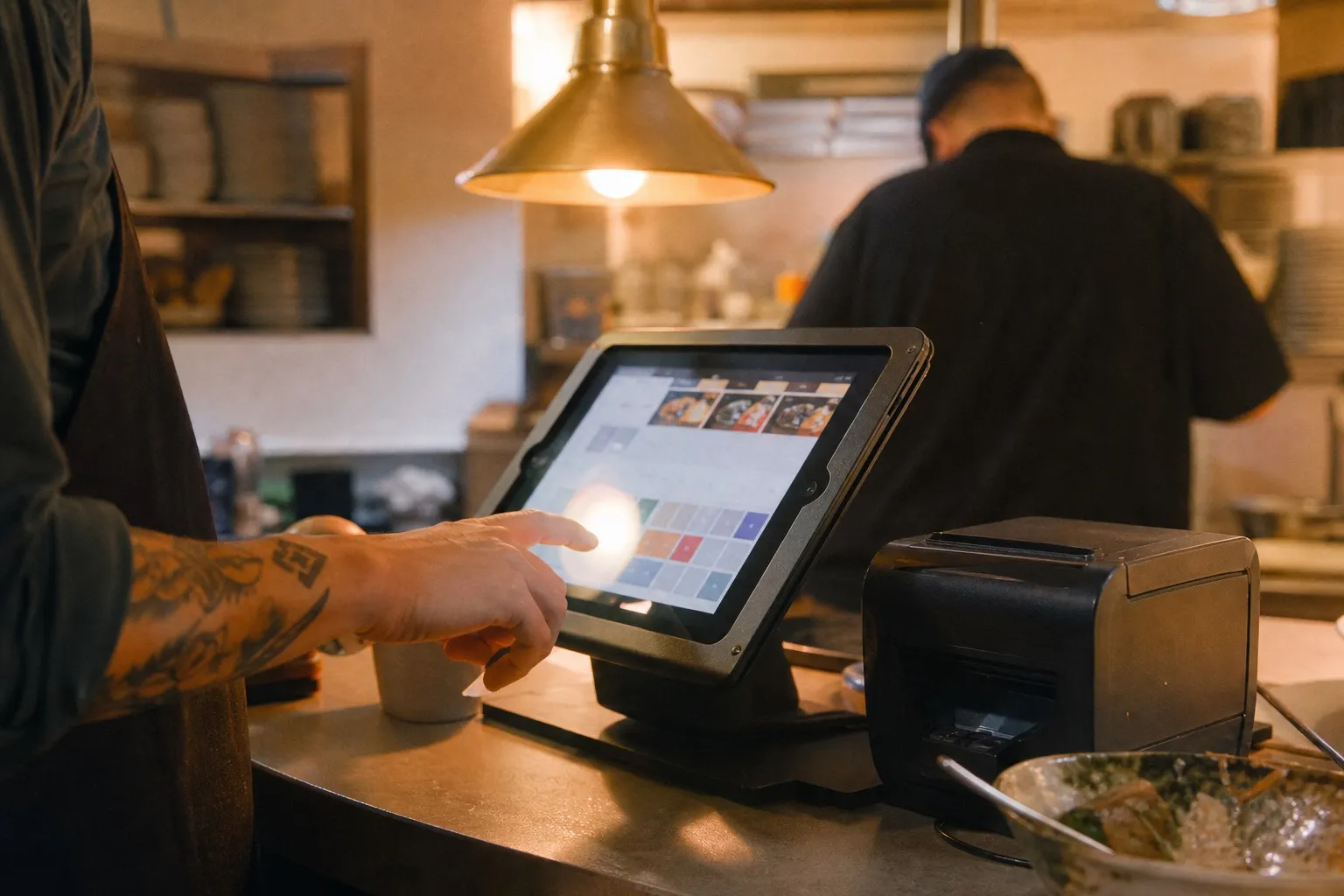
The voice story dominates the conversations, but the hardware booths are running a parallel test. OpenEye is here showing cloud-managed video built for the audit case rather than the loss-prevention case, which is the tell — operators are buying cameras now to verify AI workflows, not just to catch shrink. Epson’s POS terminal lineup is leaning into the same theme, with the booth positioned around integration partners rather than spec sheets. LS Retail, Toshiba, and March Networks round out the floor with their own variations on the same pitch: we don’t replace your stack, we instrument it.
Mark that as the second-order story of the week. The voice vendors are the headline. The hardware-plus-AI plays are the quieter compounding bet. Operators buying cameras and printers this fall aren’t doing it because they need cameras and printers. They’re doing it because the AI vendors they want to deploy in 2026 need ground-truth data, and the only way to get clean ground-truth at the unit level is to refresh the silicon.
The marketplace clock
The deal-making windows are narrow and the show organizers know it. The marketplace floor is open Sunday 4:45-7:15pm, Monday 7-9:30am, and Monday 12:45-3:45pm — about seven and a half hours of real selling time across three days. Everything that happens before Sunday evening is positioning. Everything that happens after Monday afternoon is follow-up. The Tuesday morning sessions will be well-attended, but the contracts get signed in the corridor between the marketplace and the breakout rooms on Monday afternoon, and anyone who tells you otherwise has never sat through one of these.
The procurement directors I talked to before flying down were specific about what they were looking for. Not “AI capability.” Not “innovation.” They wanted reference accounts at their unit count, integration paperwork they could hand to their CIO without a six-month security review, and a per-call cost that didn’t require a venture round to sustain. The vendors who walked into the marketplace with all three are the ones who’ll be on the next earnings-call name-drop. The vendors who came with two of three will get politely benched until 2026.
I’ll have more from the floor as the week unfolds. For a longer framework on how operator economics shape these decisions — labor minutes saved, integration debt, contract terms, and the hidden cost of vendor switching — see a forthcoming May framework piece that lays out the four-margin model I keep coming back to in these vendor postmortems. The bake-off this week is, in the end, an argument about which of those four margins is the binding constraint. By Wednesday afternoon, the operators will have voted.
— Luca covers restaurants for TableTransfers. Tips: [email protected].
Featured
More
Browse all 494 posts
The Voice Agent Maturity Curve
mise
·12 min read
The Four Margins of a Restaurant
mise
·14 min read
The AI Premium in Hospitality M&A: Broker Story or Real Number?
the bottom line
·9 min read
What the DoorDash/SevenRooms Deal Actually Buys
the bottom line
·11 min read