Inside Slang AI's Series B: how 2,000 restaurants and $68M in funding define hospitality voice's product-market fit
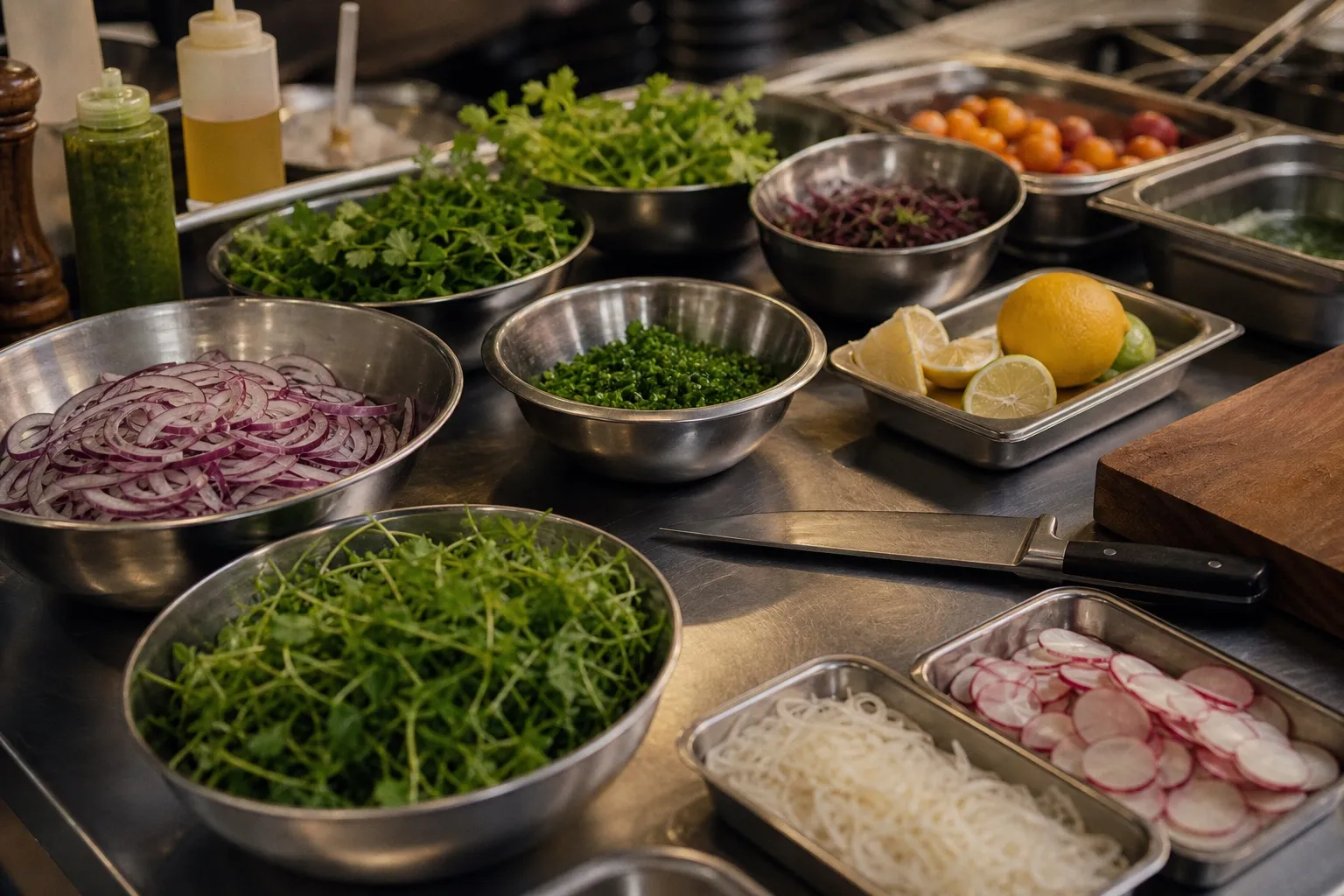
Slang AI just closed a $36M Series B at 2,000+ live restaurant locations. The DineAmic Hospitality testimonial — $600K in incremental reservation revenue, 13x ROI, $2K/month in host labour saved — is the cleanest claim yet that hospitality-specific voice has separated from horizontal voice. Operator-led case study with the caveats called out.
The PRNewswire alert hit at 7:01 a.m. Tuesday, the kind of headline you skim once before the espresso and then read again with a pen: Slang AI Raises $36M Series B to Scale AI for Guest Communications Across Every Restaurant. I cover operators for The Operator. The thing I want to know on a funding day is not the round size. The round size is a vanity stat. The thing I want to know is whether the operator math has separated from the vendor math — whether a buyer of this product, twelve months after deployment, will look at the P&L and recognise the number the vendor pitched them.
Slang published one number that lets us run that test. A multi-location operator named DineAmic Hospitality is on the record claiming roughly $600,000 in additional reservation revenue, 13x ROI on reservations, and $2,000 a month in host labour saved across eleven months of using Slang. That number is the lens for this entire piece.
Methodology, openly
This is a desk case study, not a multi-operator panel test. I have not interviewed an operator at DineAmic Hospitality. The DineAmic figures in this piece come from a testimonial Slang AI published as part of its Series B announcement, attributed to Alexios Milioulis, VP of Marketing at DineAmic Hospitality. I have not independently verified the dollar figures with DineAmic’s accounting team, and I have not seen the underlying reservation report. The figures should be treated the way you’d treat any vendor-supplied testimonial — directionally interesting, not a P&L receipt.
The funding details come from the company’s own PRNewswire release, which was rerun verbatim by Yahoo Finance and covered by Verdict Foodservice with no incremental reporting. Slang’s positioning claims against PolyAI come from a comparison page on slang.ai — a vendor-marketing page, not a third-party analyst document, and cited that way throughout. Where I am offering judgment rather than reported fact, I say so. Where the public record is thin, I flag the thinness.
That throat-clearing matters because the second half of this piece argues that Slang’s Series B looks like a real product-market-fit signal in hospitality voice. If the underlying receipt is a vendor testimonial and a vendor comparison page, you, the reader, deserve to know exactly what weight to put on the argument. The weight I’m putting on it: enough to take Slang seriously as the category’s hospitality-specific leader in February 2026; not enough to wave away the four-vendor head-to-head an actual buying decision requires.
What Slang is and what it ships
Slang AI was founded in 2019 by Alex Sambvani and Gabe Duncan. The product is a voice agent purpose-built for full-service restaurant phone lines, branded “Superhost.” The core job: answer the phone, 24/7, in a voice indistinguishable enough from a human host that guests will book a table, ask about private dining, get an answer to the directions question, or hand off cleanly to a live person when the request needs one.
The system integrates with the reservations infrastructure operators already run — OpenTable, SevenRooms, Tripleseat for private events, Yelp for review-driven traffic. Slang reports SOC II Type 2 compliance, which matters less for the dinner-rush use case and more for the procurement conversation at any group with a CIO. The training claim, per the company: 25 million customer calls from roughly 10 million unique guests, and a 95%+ guest satisfaction rate self-reported through the platform’s own CSAT collection.
The business problem the product targets is the one every multi-unit operator on my call list has been describing for two years. Restaurants lose, by Slang’s own framing, up to 50% of inbound opportunities — calls missed during peak, voicemails that never get returned, after-hours inquiries that go to a recording. Roughly 20% of restaurant phone traffic arrives outside operating hours. Another 10-20% of in-hours calls drop during handoff, when the host puts a caller on hold to check the book and the caller hangs up. Those are vendor numbers; they’re consistent with what GMs tell me in unprompted conversation.
The pitch, distilled: take the call you were going to miss, capture the booking your host was too slammed to take, route the high-value private-event inquiry to the human who handles those, and recognise the regular by name when she calls.
The DineAmic case study, with the caveats called out
Here is the testimonial Slang published, attributed to Alexios Milioulis, VP of Marketing at DineAmic Hospitality: “We made over six hundred grand in additional reservation revenue since installing Slang over 11 months. We have 13x ROI on reservations alone… And we were also able to save $2,000 a month on host labour.”
Three numbers. Let me take each one separately.
$600,000 in incremental reservation revenue over eleven months. This is the headline. It is, on its face, a credible number for a multi-location operator if Slang is capturing meaningfully more reservations than the prior call-handling baseline. The math you’d want to see — and that the testimonial doesn’t provide — is the bridge: how many additional reservations, at what average cover spend, with what attribution methodology against the prior baseline. The biggest single risk in any voice-agent ROI claim is the counterfactual. If 30% of those reservations would have called back and rebooked anyway, the incremental revenue is closer to $420,000. If 60% would have rebooked, it’s $240,000. Without a documented A/B or pre-period baseline, the headline number is the optimistic end of the range.
That isn’t a knock on DineAmic. It’s a knock on every voice-AI ROI testimonial in market today. None of them — Slang’s, PolyAI’s Forrester study, Vapi’s case write-ups — publishes the counterfactual rigorously. The number is directionally believable; it is not P&L-grade.
13x ROI on reservations alone. A 13x ROI line item is the kind of number a CFO either loves or doesn’t believe at all. Working backwards: if the $600,000 is the numerator and the 13x is gross, the spend on Slang at DineAmic over eleven months is roughly $46,000 — a touch over $4,000 a month. Slang’s published starting price on its comparison page is $399/month, which would imply DineAmic is running roughly ten locations on the platform with some private-event or volume premium layered on. That’s plausible for a multi-unit Chicago group. It’s also internally consistent with the testimonial, which is more than can be said for some of the ROI claims in this category.
$2,000 a month in host labour saved. This is the number that interests me most, because it is the cleanest one to verify on a real operator P&L. $2,000/month is roughly 100-130 hours of host time at typical urban wage rates — call it one to one-and-a-half FTEs of front-desk capacity shifted off phone duty and onto in-restaurant guest work. That maps cleanly to the use case Slang is built for: stop having your host put callers on hold during the dinner rush. If you’re a multi-unit operator and you can verify, on your own time clocks, that you trimmed an FTE of host coverage per X locations, the savings number is the one that doesn’t require trusting anyone’s attribution model.
The takeaway from the DineAmic case is not “13x ROI is real.” The takeaway is that one named operator, on the record, at a real multi-location group, is willing to attach his name to a number that is consistent with the product working as advertised. That is rarer in this category than it should be. Most voice-AI testimonials in 2024 and 2025 were vendor-curated anonymous quotes. Named operators with named numbers — even vendor-supplied ones — are the marginal evidence that moves the buyer-conversation needle.
The funding round and what the investors are signalling
The headline funding details, per the company’s release: $36 million Series B, structured as $28 million in equity and $8 million in debt, led by US Venture Partners. Co-investors include Thayer Investment Partners and Claire Hughes Johnson — Stripe’s former COO and one of the most-cited operator-investors in the late-stage software market. The existing-investor list participating in the round runs through Homebrew, Stage 2 Capital, Active Capital, Wing VC, Collide Capital, and Underscore VC. Total funding to date sits at $68 million.
The investor signal worth pulling out is Claire Hughes Johnson. The Series B isn’t large for an AI infrastructure round in early 2026 — for comparison, PolyAI raised $86 million in its Series D in December, eight weeks before its Gordon Ramsay campaign, and that round pushed PolyAI past $200 million in total funding. Slang’s $68 million cumulative against PolyAI’s $200M+ is a deliberate scale gap. They are funded for different products at different price points against different buyer profiles.
Hughes Johnson’s participation is the part of the announcement I’d circle if I were doing diligence on the company. Stripe’s playbook was sales-and-distribution discipline applied to a developer-facing product that operators ended up depending on. Hospitality voice has the same shape: a deeply technical product whose buyer is decidedly non-technical, where the sales motion has to be repeatable across thousands of independent and small-chain operators with no procurement department. The $8 million debt component is also worth noting. Debt at Series B usually signals that the company has predictable enough revenue — recurring contracted MRR with healthy gross retention — that a lender is willing to underwrite against it. That’s the kind of small detail buyers should pay more attention to than they do.
The use-of-funds language in the release is the boilerplate every Series B announcement runs: enhance the AI, build multi-modal experiences beyond voice, hire engineering and product, expand the partner ecosystem. CEO Alex Sambvani’s quote — the platform will become “even more personal, more proactive, and more intelligent” — is investor-deck prose. What it gestures at, between the lines, is the move from a phone-answering point solution to a guest-relationship layer that sits across channels. Whether Slang executes that move is the eighteen-month question.
The hospitality-specific vs horizontal voice-AI thesis
This is the part of the piece where Slang’s positioning either clarifies the category or confuses it. The company’s published comparison page, slang.ai/slang-ai-vs-polyai, draws a hard line: Slang is a “purpose-built voice AI platform exclusively for full-service restaurants,” PolyAI is a “multi-industry generalist” enterprise platform. The page is vendor-marketing. The frame, though, is worth taking seriously, because it maps onto how the entire voice-AI category will probably differentiate in 2026.
Hospitality voice in 2026 sits between two product strategies. On one side, Slang-style hospitality-specific platforms: full-stack voice agent, ready to deploy, integrated with the reservations and ticketing systems an operator already runs, sold at restaurant-friendly pricing — Slang’s published starting point is $399/month with no per-call overage. On the other side, the horizontal voice-AI layer: PolyAI at the enterprise end, where the buyer is a Fortune 500 hospitality brand with 14-language support requirements and an enterprise procurement budget; and developer-platform players like Vapi, Retell, and Bland at the other end, where the product is a set of APIs and SDKs for building your own agent on top of a horizontal voice infrastructure.
The argument the hospitality-specific platforms make against the horizontal players is straightforward: the training data, the integrations, the guest-recognition logic, the failure-mode handling, and the deployment workflow are all restaurant-shaped out of the box. The argument the horizontal players make back is that voice infrastructure is improving fast enough that the vertical layer will commoditise — that the integrations and the guest-recognition logic are application-level work an operator’s developer-of-record can do on top of a stronger general platform.
I think both arguments are partly right and the answer depends on the operator’s profile. A small independent or a 5-15 location group has no developer-of-record. They will buy hospitality-specific or they will buy nothing. A 100+ location enterprise with a CIO has a developer team, an existing telephony stack, an integration backlog, and a procurement department; they may buy hospitality-specific if the pitch is tight or they may build on a horizontal platform if their internal team can. The most populous segment in U.S. casual and full-service — multi-unit groups in the 15-75 location range — is the segment Slang’s 2,000-location number is built on.
For a fuller treatment of where each kind of voice-AI product sits on the adoption arc, David Lee’s Voice Agent Maturity Curve lays out the five stages and which operator decisions live at each one. Slang sits at the operator-friendly end of Stage 3 in that framing — production-ready for the specific phone-reservation use case at full-service restaurants, with a credible upgrade path to broader guest-comms territory.
I want to be precise about what I’m not claiming. I am not claiming Slang outperforms PolyAI, Vapi, Retell, or Bland on any specific accuracy or quality benchmark. There is no public head-to-head test I trust. I am not claiming the hospitality-specific approach will win the broader voice-AI market — that’s a five-year question, and the answer probably involves both approaches surviving in different segments. I am claiming that, on the evidence available in February 2026, Slang has the most credible operator-side commercial traction of any hospitality-voice-specific vendor in the U.S. market.
2,000 locations is the number that matters
Here is the line in the Series B announcement that should anchor an operator’s read of the company: “more than 2,000 restaurant locations” live on Slang.
Product-market fit in hospitality has a different shape than product-market fit in horizontal software. In a horizontal market, one Fortune 500 logo and a $5M ACV is a category-defining win. In hospitality, where the median customer might be an 8-location group paying $4,000 a month, product-market fit looks like distribution. It looks like a four-digit logo count across geographically distributed independents and small chains. It looks like an operator in Cincinnati hearing about a product from an operator in Charleston who heard about it from an operator in Chicago, because they all use the same OpenTable and they all complained about phone coverage at the same regional GM dinner.
2,000 locations, at Slang’s likely pricing, is somewhere in the neighbourhood of $30-50 million in run-rate revenue if you assume an average monthly contract of $1,500-2,000 per location. That’s a reasonable Series B revenue scale for a vertical SaaS company, and it’s structurally durable in a way one or two giant enterprise contracts wouldn’t be. Logo concentration risk is low; expansion within accounts is the obvious next motion; the sales playbook is already running. Compare to PolyAI’s reported 2,000 deployments across roughly 100 enterprise customers — same headline number, opposite shape. Slang’s 2,000 is fragmented across thousands of operator relationships; PolyAI’s 2,000 is concentrated across a hundred big logos. Both shapes are real businesses. They are not the same business.
For an operator buyer, the 2,000-location number is doing two pieces of work. First, it’s reference-customer scale — at 2,000 logos you can almost certainly find a published or referenceable customer in your segment, your region, and your operating model. Second, it’s training-data validation: 25 million calls across 10 million unique guests is a hospitality-specific dataset no horizontal voice platform is going to assemble from scratch on a competitive timeline. The competitive moat, if there is one, is in that data, not in the model architecture.
What an operator should actually look for in a voice-AI vendor
I’d be a bad columnist if I left this piece without giving operators on my call list a checklist. Three things to verify with any voice-AI vendor — Slang, PolyAI, or anyone else — before you sign.
One. The published case study has to name a real operator who would take your call. Vendor-curated anonymous testimonials are nearly worthless. A named operator, even one the vendor sourced, is a referenceable artifact you can call cold and ask three questions: did the integration work first time, what did you do when the agent got something wrong in front of a guest, and what would you do differently. Slang has DineAmic on the record, with a specific name and a specific revenue number. That’s not a guarantee — the operator might be a paid reference, or a customer with non-representative results — but it’s a starting point. Any vendor that won’t put you on a call with a real customer at your operating profile should be deferred until they will.
Two. The deployment timeline you can verify. Voice-AI deployments in the 2023-2025 window were notorious for slipping. The vendor pitches go-live in two weeks; the actual go-live is three months later, after the menu-knowledge layer is rebuilt twice. Ask, in writing, for the average time from contract signature to first paying call answered on the platform, across the last 100 deployments. If the vendor won’t give you a number, that is itself the answer. Slang’s 2,000-location count suggests a deployment engine that scales; verify on a per-customer basis.
Three. The failure-mode runbook. Every voice-AI deployment will, in its first 90 days, embarrass the operator in front of a guest. The question is not whether it will happen. The question is what the vendor’s runbook is when it does. Ask what the escalation path looks like, what the human-handoff threshold is, what the CSAT-based override is, and how the vendor handles regulatory or accessibility edge cases. The McDonald’s IBM rollout, as I covered here in May, failed in front of customers in viral, instructive ways. Every hospitality voice deployment is implicitly betting its failure modes are smaller than McDonald’s were. Verify the bet.
For operators running SevenRooms or Tablecheck on the reservations side, the voice-agent question stacks on top of an existing platform bet. Jordan Wells’ desk review of those two platforms is the load-bearing primer for the integration conversation: Slang reports SevenRooms integration; the value of that integration depends on whether your SevenRooms-side guest data is in shape for the voice agent to act on. A clean guest record is a precondition for a smart voice agent. A messy guest record is a voice-agent project that will underperform regardless of the model quality.
A falsifiable prediction
Here is the bet, sized to the public information available today, that I’ll check against the public record in twelve months.
By December 31, 2026, Slang AI will publicly report a live-location count of 4,500 or more — roughly doubling its current 2,000+ base. The bet is that the Series B capital and the existing sales motion are well-matched, that the OpenTable, SevenRooms, and Tripleseat integration moats are real, and that the hospitality-specific vs horizontal-voice debate resolves in 2026 in favour of “both win, in different segments” with Slang collecting the multi-unit independent-and-small-chain segment.
The downside scenario, which would falsify the prediction: a horizontal voice platform — most likely PolyAI moving down-market on the back of its $200M+ war chest, or a developer-platform player partnering with a major reservations system — captures meaningful share of the 15-75 location segment, and Slang’s growth slows to 30-50% rather than doubling. That would be visible in either a press silence by Q4 (no updated location count, which is its own signal) or a public count in the 2,800-3,200 range, suggesting linear rather than compounding growth.
I’m going to write this prediction into my calendar for January 2027. The honest version of doing operator coverage is that the only way to keep your scorecard credible is to grade yourself in public.
The Series B is a credible signal. The DineAmic number is a credible signal with vendor-supplied caveats. The 2,000-location base is the real signal. If Slang doubles it in 2026, the hospitality-specific voice thesis is the right read of the market. If it doesn’t, the horizontal voice players collected the rest of the segment and the operators who waited have a different decision in front of them by next February.
Either way, it’s a Tuesday-morning round worth circling. I’ll be back on this in twelve months.
— Priya covers operators for The Operator. Tips: [email protected].
Featured
More
Browse all 494 posts
The Voice Agent Maturity Curve
mise
·12 min read
The Four Margins of a Restaurant
mise
·14 min read
The AI Premium in Hospitality M&A: Broker Story or Real Number?
the bottom line
·9 min read
What the DoorDash/SevenRooms Deal Actually Buys
the bottom line
·11 min read