Inside Toast's IQ Ecosystem Play — and What 148,000 Locations Actually Buys You
Toast's 2025 strategy isn't AI features — it's a data moat. A deep dive into how 148,000 locations turn transaction history into a recommendation flywheel, and what operators should demand from any vendor claiming to copy it.
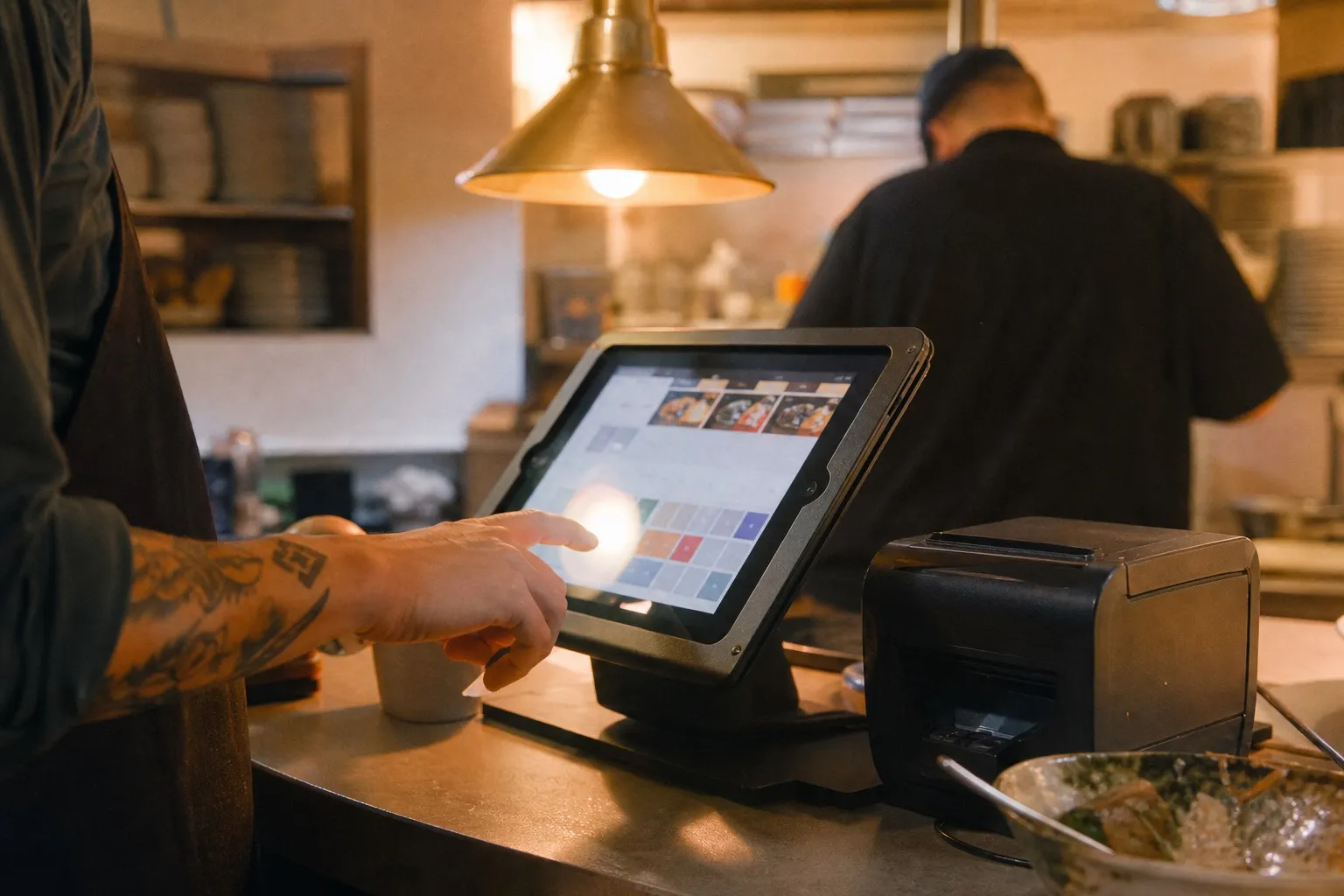
I am standing behind the host stand at a 140-seat neighborhood Italian spot in Brooklyn, watching a Toast handheld auto-fire a Tuesday-night cocktail recommendation at a four-top before the captain has even introduced herself. The “For you” tile on the manager’s tablet has already pre-loaded three operational nudges — a labor variance flag, a soft 86 prediction on the branzino, and a quiet little prompt that says, in plain English: Your Tuesday cover count is tracking 11% below the trailing four-week average. Want to push the wine-pairing comp on the second-seating reservation set?
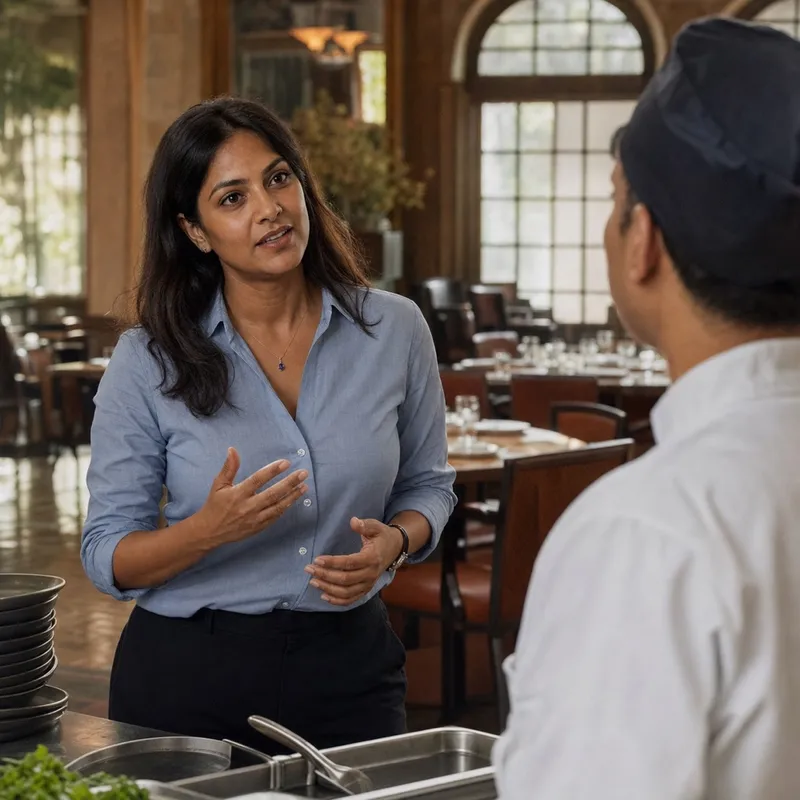
The general manager, Sara, glances at it. Doesn’t tap. Pours her own coffee. Then taps.
This is what Toast IQ actually looks like in the wild on a slow Tuesday in July. Not a chatbot. Not a glossy keynote demo. A small, suggestive UI tile in the corner of a screen that an operator is already looking at forty times a shift. Toast didn’t sell Sara on artificial intelligence. Toast sold Sara a point-of-sale system in 2021, and now — four years and a few hundred thousand transactions later — that POS is quietly using her own data to whisper back at her.
I want to make a contrarian argument that I have been sharpening for months and that I now believe is the only useful frame for understanding what Toast is doing in 2025: Toast’s strategy isn’t AI features. It’s a data moat. The IQ launch, the conversational assistant, the Coca-Cola menu collab, the “For you” feed, the plain-language Q&A — those are all surface features. The thing being built underneath is something much harder for any competitor to replicate, and most operators I talk to are evaluating Toast the wrong way because they keep grading the features instead of the underlying asset.
This deep dive maps the asset. It walks through how the 2025 build-out of Toast IQ turns four years of transaction history into a recommendation flywheel; what 148,000 locations actually buys a vendor in terms of training signal; why the survey data Toast just published is more strategically revealing than the IQ announcement itself; and — most importantly for operators reading this — what you should now be demanding from any other vendor who tells you they can do the same thing. Spoiler: most can’t, and the gap is widening faster than the marketing pages suggest.
The lead that the press releases buried
When Toast expanded Toast IQ with a conversational AI assistant earlier this spring, the framing in the company’s own announcement leaned heavily on the assistant: ask Toast a plain-English question, get an answer grounded in your data. QSR Web ran a clean recap of the same launch and emphasized roughly the same beat — natural-language interface, “For you” recommendations, smart prompts inside the existing manager view. Coca-Cola got a paragraph as a beverage-optimization design partner.
Read those two articles back-to-back and you walk away thinking Toast shipped a feature. A nice one. A modern one. But still: a feature. Something a sufficiently motivated competitor could clone in a quarter or two if they had the right LLM partnership in place.
That framing is, I think, almost entirely wrong — and Toast is happy to let it stand, because the wrong framing benefits them. The right framing is one paragraph deeper into both pieces, and it’s the number that I cannot stop thinking about: 148,000 customer locations. That’s the active install base. That’s also, not coincidentally, the training corpus.
Every recommendation, every “For you” tile, every plain-language answer the conversational assistant gives Sara on a Tuesday night is grounded in a data substrate that no other restaurant-tech vendor in North America currently has at meaningful scale. The features are the bait. The moat is the corpus. And the corpus compounds every shift of every day across every one of those locations.
What a data moat actually is in restaurant tech
I want to be careful here, because “data moat” gets thrown around in vendor decks the way “AI-powered” got thrown around in 2023, and most of the time it means nothing. Let me try to define it precisely as it applies to this category.
A genuine data moat in restaurant operations has three components, and you need all three to actually defend it:
One: proprietary, longitudinal transaction data at scale. Not survey responses. Not aggregated card-network data sold by a third party. Item-level, modifier-level, timestamp-level, server-level, table-level, weather-overlaid, day-part-tagged transaction history that the vendor owns and controls. Toast has this for 148,000 locations going back, in many cases, four-plus years. Square has a comparable corpus but skewed heavily toward retail and non-restaurant SMB. Lightspeed has scale in hospitality but a smaller and more fragmented restaurant footprint. Most of the AI-first entrants — the ones who came to market in 2024 and 2025 with a slick assistant on top of someone else’s POS — do not have this corpus at all. They have an integration.
Two: a closed loop between recommendation and outcome. It is not enough to surface a suggestion. The platform has to see whether the suggestion was acted on, and then see what happened next. Did the GM push the wine pairing? Did revenue lift? Did the next reservation tick up the average check? Toast has this loop because the recommendation surface and the transaction system are the same product. A bolt-on assistant from a third party does not have this loop — it can suggest, but it cannot see the result with full fidelity, which means it cannot improve from the result either.
Three: enough operator engagement that the loop runs at high enough volume to compound. This is the one most analysts miss. A moat is not just data; it is data turning into more data faster than competitors can catch up. Toast’s IQ surface is embedded inside screens managers already use. That embedding is the engagement engine. Sara isn’t logging into a new dashboard to talk to an AI assistant — she’s seeing a tile on the screen where she already closes shifts. The volume of “shown, acted-on, outcome-observed” cycles per location per week is what makes the moat compound.
I have read every assistant-pitch deck that crossed my desk in the last six months. Most have one of these three legs. A few have two. Toast has all three, and the gap between Toast and second place on all three dimensions simultaneously is the actual story of 2025.
What 148,000 locations actually buys you
Let me try to put a finer point on the scale claim, because round numbers are easy to hand-wave at.
If you assume even a conservative 80 covers a day across that install base, you are talking about something in the neighborhood of 11.8 million covers per day flowing into the corpus. Item-level. Modifier-level. With time stamps, server IDs, and check-level context. Multiply that by 365 and you have roughly 4.3 billion cover-events per year, before you even count the bar transactions, the catering tickets, the takeout, the third-party delivery integrations, and the labor-event data running in parallel.
That number is bigger than the entire annual transaction volume of most national chains. It is bigger, in terms of restaurant-specific event count, than what most card networks would surface for the same vertical. And — this is the part that matters for AI — it is structured the way a model wants to consume it, because the structure is enforced by the POS schema itself. There is no messy ETL between the recommendation engine and the underlying event data. They live in the same warehouse.
Now layer the survey work on top of that. Toast just published the 2025 Voice of the Restaurant Industry Survey, built from 712 operator responses fielded April 18 through May 13. The widely-cited topline — 81% of operators plan to use more AI in the next 12 months — is the part the trade press grabbed. But the survey was strategically interesting for a different reason: it tells Toast, with quantitative precision, where to point the next year of IQ feature development. Pricing optimization. Inventory waste. Labor scheduling. Menu engineering. The survey is not a marketing document; it is a product roadmap, validated against a representative slice of the very operator base whose transaction data is already feeding the models.
Survey insight plus transaction substrate plus engagement surface equals a flywheel. The survey tells Toast what operators say they want. The transaction data tells Toast what operators actually do. The engagement surface lets Toast test the resulting recommendations in production. That is a textbook three-corner data flywheel, and it is now spinning across 148,000 locations.
Mark interpretation: I think this is the most important under-discussed sentence in restaurant tech right now. The IQ launch is not a feature ship. It is the moment Toast turned its install base into a training set in a publicly defensible way. Everything else flows from that reframing.
The Coca-Cola collab is a feature; the partnership pattern is the strategy
The Coca-Cola announcement read, to most operators I talked to, like a fun beverage menu optimization demo. Smart pour suggestions, syrup-mix recommendations, day-part beverage attach analysis. Toast describes the partnership briefly in its own blog overview of AI in restaurants, framing it as a co-development effort on menu and beverage optimization, with Coca-Cola contributing category expertise and Toast contributing the transaction substrate.
That is, on its face, a perfectly reasonable read. But the pattern underneath it is more interesting than the partnership itself.
Toast is going to do this again. And again. And again. With a protein supplier. With a coffee roaster network. With a wine distributor. With a paper-goods supplier. Each partnership is a new vertical lens on the same underlying corpus, and each partnership produces a new IQ feature that no competitor can replicate without (a) the corpus and (b) the partner. The Coca-Cola collab is not interesting because of what it does for beverage attach. It is interesting because it establishes the template for how Toast will productize its corpus partnership by partnership for the next three years.
If I were running corporate development at a beverage major, a CPG supplier, or even a large food-service distributor right now, I would be calling Toast this week to talk about an exclusive vertical IQ tile in my category. The supply of these slots is finite. The demand will be substantial. And every locked-in partnership widens the moat.
What the conversational assistant is actually for
Let’s talk about the headline feature, because I want to be honest about what it is and what it isn’t.
The conversational assistant — the plain-language Q&A inside IQ — is, in my hands-on time with it over the last several weeks, a genuinely useful but not yet revolutionary piece of software. It answers questions like “what was my labor cost percentage last Friday compared to the previous four Fridays” or “which servers are over-pouring against modifier ring” or “what’s the highest-margin item I’ve under-promoted in the last 30 days.” It does this in seconds. It does it inside the screen Sara is already looking at. It does it without making her write a SQL query or even click into a report.
That is a real productivity unlock. It is not, however, a moat by itself. The LLM doing the natural-language parsing is, broadly, a commodity. Several competitors could license a similar LLM tomorrow and bolt it onto their own dashboards. The reason Toast’s version is meaningfully better is not the model — it is the grounding. The assistant is grounded in your store’s actual data, joined against the rest of the corpus for benchmark context, joined against the partner-vertical signal where relevant, and surfaced inside the workflow you already do.
This is the right way to read it: the assistant is the demonstration surface for the moat. It is the part of the iceberg above the waterline. Operators will rave about the assistant; they should. But the strategic asset is everything underneath it.
I covered the IQ launch itself in a forthcoming May piece where I walked through the announcement in more detail, and I have an upcoming desk review coming after the next earnings call that will look at how the company is now describing IQ to investors. Both worth reading alongside this one if you want the full arc.
What operators should actually demand from any other vendor pitching the same thing
This is the section that matters most, and it is the reason I wrote this piece. If you are an operator evaluating a non-Toast AI assistant — and many of you are, because Toast is not the only POS on the market and not the right POS for every concept — you need a much better set of diligence questions than “show me the demo.”
Here is the diligence list I would use today, in priority order:
One: What is the size and shape of the training corpus, and do you own it? Ask for location count. Ask whether the data is theirs or licensed. Ask how many years of history they have. Ask whether it is item-level and modifier-level or aggregated. If the vendor cannot give you a clean answer with numbers, the moat is not real and the assistant is a thin LLM wrapper. Walk.
Two: Is the recommendation surface inside a tool I already use forty times a shift, or is it a separate dashboard? Engagement is the multiplier on every other claim. If the vendor’s assistant lives in a tab my GM has to remember to open, the recommendations will not get acted on, the outcomes will not be observed, and the flywheel will not spin. This sounds obvious; most operators do not weight it heavily enough during eval.
Three: Can the platform see whether the recommendation was acted on and what happened next? This is the closed-loop question. A bolt-on assistant that sits on top of someone else’s POS via API can suggest things; it usually cannot see, with full fidelity, what happened to the check after the suggestion. That blind spot means the assistant cannot meaningfully learn from your own restaurant’s outcomes — only from the broad corpus that may not look like you.
Four: What is the partner strategy? Toast’s Coca-Cola collab signals a partnership-driven feature roadmap. If a competing vendor cannot name a vertical partner of comparable category weight, ask why not. The honest answer is usually scale — partners go where the corpus is — but the question forces a useful conversation about the next 18 months of the product, not just the current demo.
Five: What is the migration cost if I want to leave? This is the question every operator forgets to ask about AI tooling, and it is the one I would put on every diligence checklist going forward. If the assistant’s recommendations are trained on your data, who owns the resulting model improvements? Can you export your historical data in a usable format? If the answer is no or “we don’t have a documented process for that,” the vendor is preserving optionality at your expense.
Six: Operator engagement metrics. Ask the vendor to share, on a no-name basis, what percentage of their install base has acted on an AI recommendation in the last 30 days. If they will not share the number, infer the worst. If they share it and it is below something like 25%, the surface isn’t sticky, and the moat — even if the corpus exists — isn’t compounding.
If I were sitting in a vendor evaluation today, I would not buy any AI-assistant product that could not give me clean answers to those six questions in writing. Most cannot. Toast can.
What the survey number really tells us
Back to the survey for a moment, because I want to push on the 81% of operators plan to use more AI topline and what it actually means.
The naive reading is that operators are bullish on AI. That is true, but it is also boring — that number has been climbing every year and will continue to climb. The more interesting reading is hidden in the survey’s methodology disclosure. The 712 operators surveyed were fielded between April 18 and May 13. That is a specific moment in the post-spring labor crunch, post-Easter, mid-shoulder-season-cash-flow window. Operators answering “yes, I plan to use more AI” in that window are not making a hypothetical statement about future technology adoption. They are signaling that they are looking for relief — specifically labor-cost relief, inventory-waste relief, and revenue-density relief — and they are willing to buy software that promises any of those.
Toast knows this. The next eighteen months of IQ feature shipping will be calibrated against exactly that operator pain map. Expect the next tile to be labor-related. Expect the one after that to be inventory-related. Expect a margin-optimization feature within four quarters that ties directly to the partner strategy I described above.
Read that way, the survey isn’t a press release. It is a public commitment device. Toast has now told the market what 712 of its customers are asking for, and the company is positioned — uniquely, because of the corpus — to ship against that list faster than any competitor.
The contrarian risk to the moat
I would not be doing my job if I did not name the bear case, because there are at least two real ones.
The first is regulatory. As state-level AI legislation moves through the U.S. — California, New York, Illinois have all had bills percolating through 2025 — the question of whether a POS vendor can train models on operator data, and on what terms, becomes a live legal question. Toast’s terms of service have been the subject of operator complaint before. A regulatory move that forced opt-in-by-default training would not destroy the moat, but it would slow the rate at which it compounds. Operators should read their contracts closely and should not assume the data-use terms they signed in 2021 are the terms they would sign today.
The second is a partner-side risk. If Toast over-monetizes the partnership template I described — if it starts charging Coca-Cola-style partners high enough fees that the partners start funding alternative POS players to build competing corpora — the moat could erode from the supply side. This is a multi-year risk, not a near-term one, but it is real. Every dollar Toast takes from a category partner is a dollar that partner has an incentive to redirect into building, or backing, a competitor.
Neither of these risks is going to play out in 2025. Both are worth watching in 2026 and 2027.
How this fits into the broader operator-AI landscape
Toast is one of three or four 2025 stories I keep coming back to when I try to make sense of where operator-side AI is actually going. The Sweetgreen Infinite Kitchen build-out — which I cover at length in a forthcoming May piece — is the unit-economics-from-robotics version of the same thesis: own the data layer of your own stores, even if you have to build the stores yourself to do it. Marriott’s AI deployment work, which I get into in an upcoming May piece, is the enterprise-hospitality version: own the guest data, and the AI follows. Toast is the SMB-aggregator version: pool 148,000 small-shop corpora into one moat that no individual operator could build alone.
The common thread across all three is that the AI feature is downstream of the data ownership decision, and the operators who win the next decade are the ones who got the data ownership question right in 2021–2024, before they ever had to think about an LLM. Toast got it right by being the POS instead of the assistant. Sweetgreen got it right by being the store instead of the third-party delivery surface. Marriott got it right by owning the loyalty graph. The AI strategy was, in each case, downstream of a quiet structural decision made years earlier.
That is the lesson I would offer to any operator reading this who is currently shopping for an AI assistant: stop shopping for the assistant. Start shopping for the data layer underneath it. The assistant is going to be a commodity within 24 months. The data layer is not.
What I will be watching for the rest of 2025
Three things, specifically:
One: the next IQ tile. Whatever Toast ships next inside the “For you” surface will tell us which line of the 712-operator survey they are prioritizing. My bet is labor; the magnitude of the post-pandemic labor crunch makes that the highest-margin pain point to address first.
Two: the second partnership. Coca-Cola was the announcement. The second partner — protein, coffee, wine, or paper goods are my guesses, in that order — will reveal whether the partnership template is reproducible or whether the beverage major was a one-off.
Three: the competitive response. Square has the scale to attempt a counter; Lightspeed has the hospitality positioning. Neither has, as of today, articulated a public corpus strategy that comes close to the Toast one. If either does in the back half of 2025, the moat thesis gets more interesting fast. If neither does, the gap widens for another full year.
I will be filing on all three as they develop. Sara, the GM in Brooklyn, will probably still be tapping that tile on slow Tuesdays. The tile will probably get better. The corpus will definitely get bigger. And the operators evaluating Toast in 2026 will, I suspect, be evaluating something that no longer has any meaningful competitor at all.
That, in the end, is what 148,000 locations actually buys you.
— Priya covers operators for TableTransfers. Tips: [email protected].
Featured
More
Browse all 494 posts
The Voice Agent Maturity Curve
mise
·12 min read
The Four Margins of a Restaurant
mise
·14 min read
The AI Premium in Hospitality M&A: Broker Story or Real Number?
the bottom line
·9 min read
What the DoorDash/SevenRooms Deal Actually Buys
the bottom line
·11 min read