M&A Roundup: Wonder Hits Seven, Resy/Tock Chatter, and What's Actually Being Bought Is Guest Data

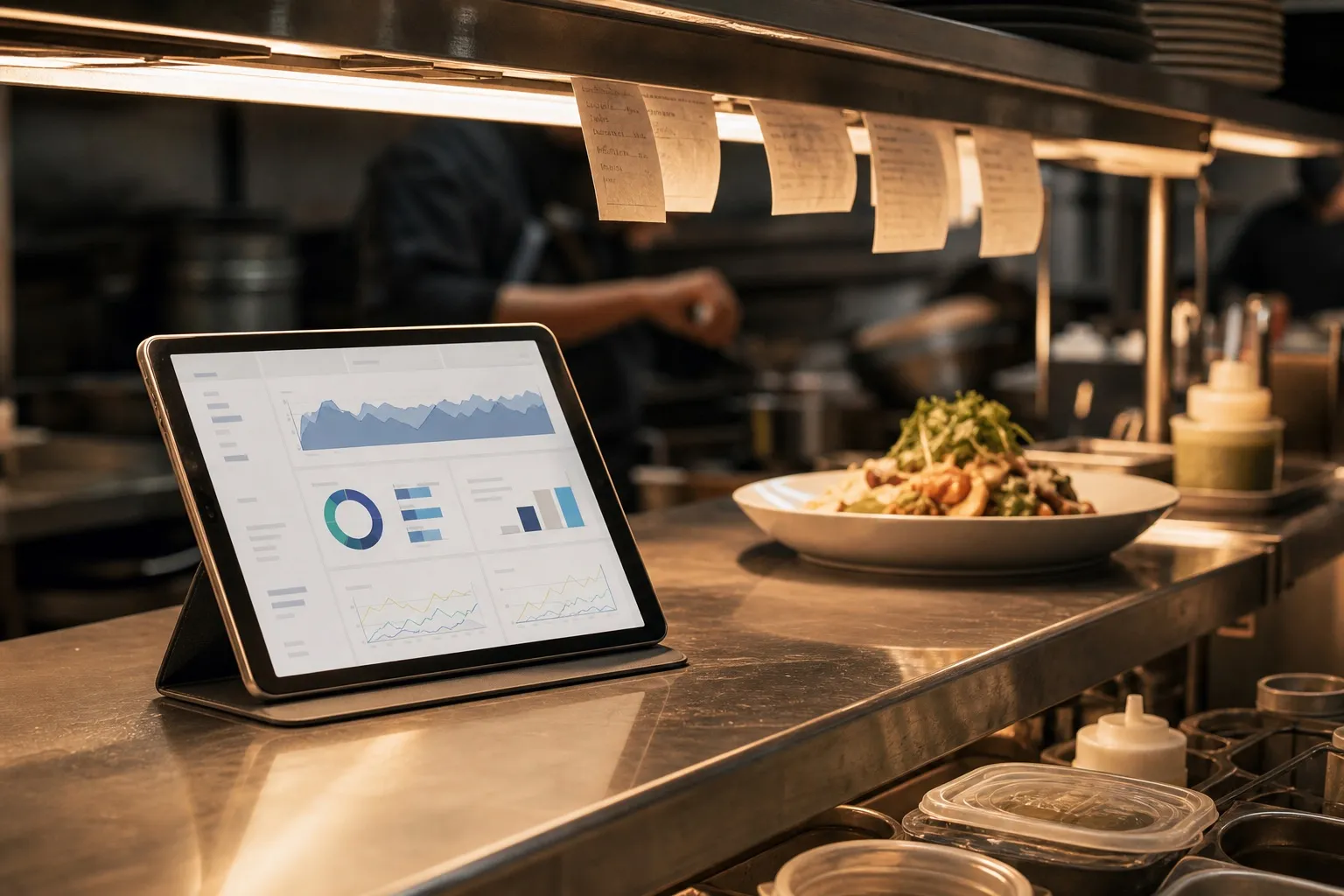
Two confirmed February moves and one widely-discussed merger share a thread with the SevenRooms close — the asset being bought is concentrated guest and operator data. Marking each to comp multiples, here's what a restaurant guest record is worth in 2026.
Friday morning, 5:50 a.m., two screens open. Left screen: the Wonder/Blue Ribbon Fried Chicken press release from ten days ago. Right screen: a term sheet a sponsor friend forwarded me last night with the words “your industry” in the subject line. The model values a regional fine-dining group at a number that only makes sense if you believe the operator’s guest list is, on its own, an asset.
That is the question for this Bottom Line. Three different deals in three different parts of the stack are pricing the same thing right now and the brokers I’m hearing from this week are pricing it wrong. The asset being bought across this cluster is concentrated guest and operator data. Not models. Not real estate. Not even brand, except as a wrapper. The price is going to the data.
The deals on the desk
Three transactions sit on my reading pile this week, two confirmed and one being talked about openly enough that I’d be doing you a disservice not to mark it.
Confirmed: Wonder acquires Blue Ribbon Fried Chicken (Feb 10, 2026). Per the PR Newswire release on the announcement, Wonder picked up the Blue Ribbon Fried Chicken brand, the East Village location, and the employees there. Terms undisclosed. Marc Lore’s quote on the deal — “With an incredibly loyal following already in place, we can now scale this iconic brand across the Wonder platform to reach far more people” — is the part operators should circle. The loyalty layer is the asset, not the kitchen. Co-founder Bruce Bromberg’s response is the standard founder line about “the next chapter,” which tells you the consideration was acceptable to a chef-led seller who likely had other offers. Restaurant Dive characterised the deal as the seventh Wonder acquisition since 2023, and the second of 2026 alone — after the Claim restaurant rewards app deal in January, which is the part that should be making you pay attention.
Confirmed (the existing comparable): DoorDash/SevenRooms close (Jun 13, 2025). I’ve written this one to death — my detailed read is here — so the short version: $1.2 billion all cash, ~13,000 venues, roughly $92,000 per venue, asset purchase that any honest read frames as a guest-CRM acquisition with a reservations feature on top. The PSG exit at close confirms the financial buyer treated it the same way. The comparable is settled fact and the per-venue number is what the rest of this column rests on.
Widely discussed: a Resy/Tock consolidation expected within weeks. Trade chatter on this is loud enough that I’d be writing a misleading column if I ignored it, but the announcement hasn’t landed as of this Friday. The setup is on the record: Amex bought Resy in 2019, bought Tock for $400 million and closed in October 2024, and has been signalling a unified booking platform for months. The combined inventory the trade press is modelling is in the 25,000-venue range — roughly half of OpenTable’s ~60,000 but with a more curated cardholder book. Treat it as a deal that’s being widely discussed, not a deal that’s been priced. The mark I do on it below is contingent.
Three deals, three different parts of the stack — operator brand, reservations platform, card-network booking layer. One pricing question underneath all of them.
What a guest record is worth in 2026
Take the SevenRooms math first because it’s the cleanest. $1.2 billion of all-cash consideration, roughly 13,000 venues, average per-venue value of about $92,000. The disclosed reference accounts (Marriott, MGM Resorts, Mandarin Oriental, Union Square Hospitality Group, Nobu) skew toward enterprise hotel F&B and multi-unit fine dining, which means the average venue’s guest book is larger than you’d see at a typical Resy restaurant.
The honest number on a per-guest-record basis is impossible to publish without inventing a denominator. I’m not going to do that. What I will do is mark the per-venue number to the comp set:
- Amex/Tock at close (Oct 2024): $400M / ~7,000 venues = ~$57,000 per venue.
- DoorDash/SevenRooms at close (Jun 2025): $1.2B / ~13,000 venues = ~$92,000 per venue.
That’s a 60% per-venue premium DoorDash paid over Amex/Tock in eight months. The Amex premium was for the cardholder funnel and the fine-dining mix. The DoorDash premium on top of that was for the CRM depth and the enterprise hotel layer. Same underlying asset, two different pricings.
Now overlay the Wonder/Blue Ribbon deal. Wonder did not buy a reservations platform; they bought a brand with what their CEO explicitly called “an incredibly loyal following already in place.” That’s the same asset class. Price undisclosed, but Blue Ribbon Fried Chicken is one restaurant and a brand, not 13,000 venues. What matters is that Wonder, a vertically integrated multi-brand platform with a delivery and dine-in stack, is pricing customer loyalty as a discrete acquisition target.
Run the seven Wonder deals back: Blue Apron (2023, $100M+) brought a meal-kit customer file. Grubhub (late 2024, $650M) brought the largest non-DoorDash restaurant demand graph in the US. Spyce (fall 2025, $100M cash plus $86M equity) brought robotics IP. Claim (January 2026, undisclosed) brought a restaurant rewards app — a customer-loyalty CRM. And now Blue Ribbon brings a brand with a loyal book.
The through-line is unambiguous: Wonder is assembling a customer-data graph with food on top, not a food-and-beverage company with software underneath. The Claim acquisition is the giveaway. A rewards app is not a strategic asset unless you’re building toward unified guest records across multiple owned concepts. Which is exactly what Wonder is doing.
The Resy/Tock mark (contingent)
If the Resy/Tock consolidation lands in the next few weeks at the venue counts the trade is modelling, the comparable arithmetic on the merged book is going to be uncomfortable for sellers who think their guest list is worth what SevenRooms got per venue.
Here’s why. The Amex purchase price on Tock was $400M for ~7,000 venues. Resy was bought in 2019 at a price Amex never disclosed — informed estimates have always sat north of $200M but south of half a billion. Take the midpoint of plausible Resy consideration plus Tock and you get a combined cost basis in the $600-700M range for an asset that would, post-consolidation, list 25,000 venues. That’s an effective per-venue cost basis to Amex of roughly $24-28K — meaningfully below either Tock standalone or the SevenRooms per-venue number.
Two readings. Either Amex’s basis is below the true 2026 market price (it won’t transact — Amex isn’t selling), or the per-venue numbers compress as venue counts get larger and the guest mix gets shallower. I think it’s the second. SevenRooms got a 60% premium per venue over Tock because the SevenRooms venues are enterprise hotel F&B with deep CRM history. The mid-market Resy book and the broader Tock book are shallower per venue on average. The aggregated number won’t, and shouldn’t, mark to SevenRooms.
If you’re selling a reservations or guest-CRM property in 2026 and your venue book skews shallow, the right comp is Tock-at-close, not SevenRooms-at-close. The trade press will pitch you the SevenRooms number. Discount it accordingly.
The 45% number and what it actually says
Jason Myler, citing PitchBook data, told RTN in January that restaurant-tech M&A volume rose 45% in H1 2025 versus H1 2024. That number is making the rounds in every banker pitch deck I’ve seen this quarter and it deserves to be read carefully.
The 45% is a count of transactions, not a measure of aggregate value. The mix matters. The category was unusually active in H1 2025 because DoorDash announced SevenRooms in May and Deliveroo in the same window, and a cluster of smaller deals (POS roll-ups, loyalty CRM tucks, kitchen-management tooling) followed the lead bid. The pattern in those tuck-ins is the same one I’m describing here: the strategic logic is data, not technology.
A 45% rise in deal count is not, on its own, evidence the category is overheating. It is evidence the consolidation thesis is being executed by multiple buyers in parallel. The platform buyers (DoorDash, Wonder, Amex, Toast, PAR) are accumulating customer-data and brand-relationship assets. The mid-market buyers are following the lead bid. The narrative the brokers built on top of all this — an AI premium driving the multiples — is the wrong story. Full deep-dive on that in a later column. For this Friday, take the data thesis as the operating frame.
What an operator does with this read
Three specific actions if you’re an operator carrying a guest list and reading this column with one eye on a future exit.
One. Export and own your guest data this quarter. Whatever vendor you sit on top of — SevenRooms, Resy, Tock, OpenTable, Toast, a custom CRM — get a full export and store it on your own systems. The exit logic of the platform-buyer wave assumes the guest data follows the operator. In practice the contractual terms vary, and the operators I’ve seen take seven-figure write-downs in diligence are the ones who couldn’t produce a clean 12-month export.
Two. Mark your guest list to a real comparable, not a broker’s. If your CIM puts a value on the customer file, anchor it to the Tock-at-close number ($57K/venue) for a fine-dining or mid-market book, not the SevenRooms number ($92K/venue). The SevenRooms multiple is what enterprise hotel F&B with multi-property CRM history clears. If you’re not that, don’t price as if you are.
Three. Watch the Wonder pattern, not just the platform deals. What Wonder is doing — buying brands with loyal customer files and assembling them under a unified data layer — is the operator-side version of what DoorDash is doing at the platform level. If you operate a brand with a durable customer following inside a geography, the strategic-buyer interest is there. Quietly. Wonder’s deals don’t make as much trade-press noise but they’re more interesting at the operator level because the comparables are accessible.
The platform-level reservations consolidation — DoorDash, Amex, OpenTable defending the incumbent moat — is the story everyone’s writing about, including my own piece on the Resy/Tock dining-OS thesis and our recent read on OpenTable’s AI strategy. The Wonder pattern is the under-told story underneath, and operators who read it right will price their own books better than the brokers will.
The pattern, plain
Three deals, one thesis: the asset being bought across this cluster is concentrated guest and operator data. SevenRooms gave you the platform-level benchmark at $92K per venue. Tock gave you the cardholder-funnel benchmark at $57K per venue. Wonder is now giving you the operator-brand benchmark, undisclosed but inferable from the rollup pattern. Whatever Resy/Tock consolidation lands in coming weeks will price somewhere in the middle, with a cardholder-funnel premium already in Amex’s basis.
The brokers reading my column this morning will keep pitching AI multiples. The buyers writing the cheques are pricing customer files. Read the deal docs, not the deck.
Back next week with the casual-dining roll-up rumours — three names, two I think land in 2026. The Resy/Tock chatter will probably resolve before then; if it does, I’ll mark it Monday. Tips — [email protected].
Foundational read for new readers: the M&A roundup post and the DoorDash/SevenRooms close write-up.
— Marcus runs The Bottom Line and gets the deal flow before the brokers. Tips: [email protected].
Featured
More
Browse all 494 posts
The Voice Agent Maturity Curve
mise
·12 min read
The Four Margins of a Restaurant
mise
·14 min read
The AI Premium in Hospitality M&A: Broker Story or Real Number?
the bottom line
·9 min read
What the DoorDash/SevenRooms Deal Actually Buys
the bottom line
·11 min read
Related posts
the bottom line
·11 min read
Darden trades like a tech company. It shouldn't.
the bottom line
·12 min read
Applebee's just became its own franchisee. The territory math is the trade.
the bottom line
·12 min read