NRA Show 2025 Field Report: ToastIQ, Vision AI, and the Year Voice Stopped Being a Demo

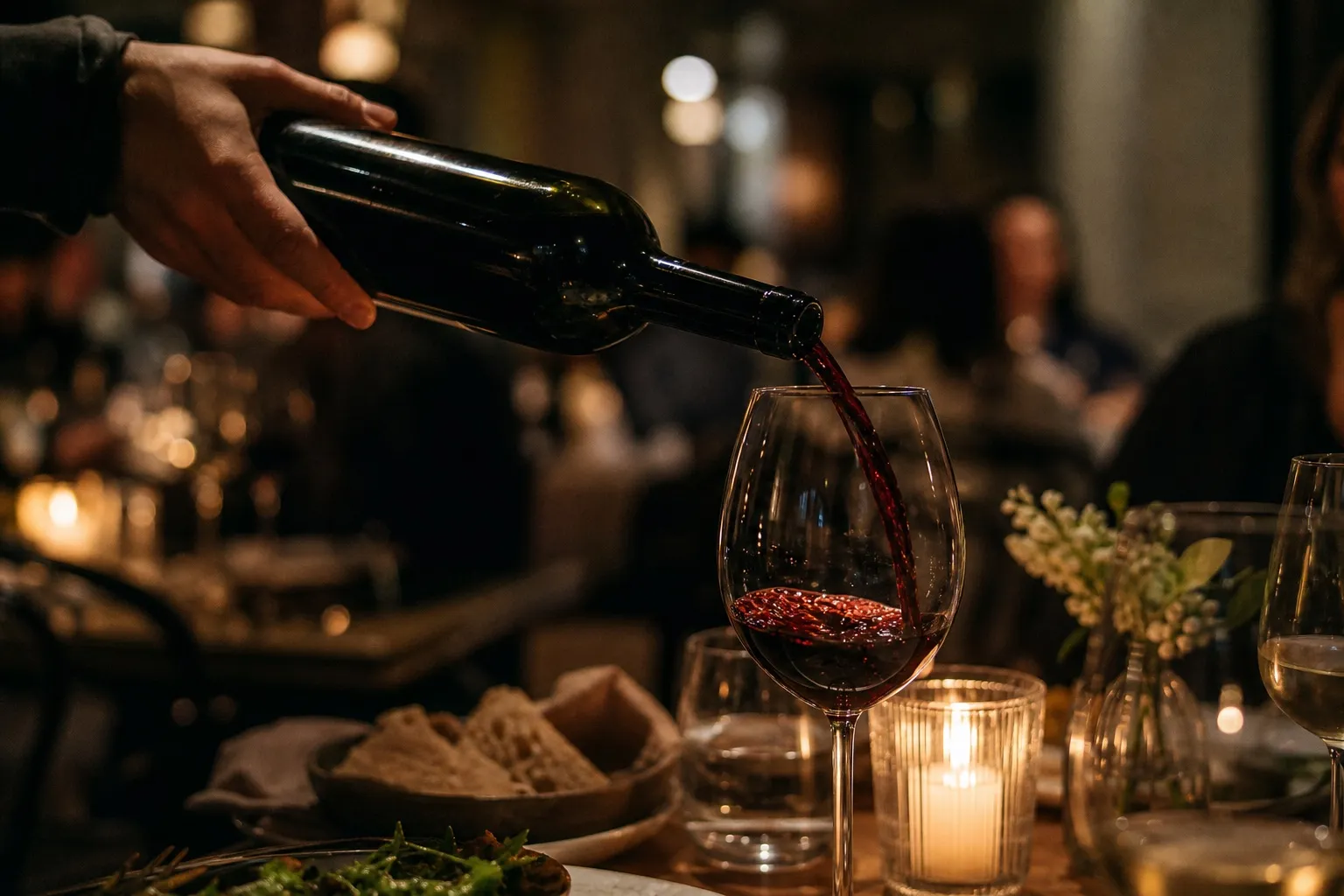
The 2025 NRA Show wasn't dominated by robots — it was dominated by a small group of vendors quietly turning AI features into priced SKUs. Here's what to buy, what to wait on, and what to walk away from.
I walked the South Hall of McCormick Place at 8:47 a.m. on the last morning of NRA Show 2025 with a paper cup of black coffee, a badge still clipped to my lanyard from day one, and a notebook half-full of pricing scribbles. The aisles were quieter than they’d been on Sunday. A robot was being wheeled back into its crate. A SoundHound demo rep was running the same drive-thru script for the fourth time in twenty minutes to a man in a logoed polo who kept asking, very politely, “but what’s the licensing model.” That was the whole show in one tableau. The robots were leaving. The licensing-model questions were staying.
This is a Vibe Check field report, not a full panel. The Vibe Check format — six operators, ninety days, structured weekly log, three interview checkpoints — is not something you can run on a trade show floor. What you can do at a trade show is watch which booths have priced SKUs and signed beta lists and which booths have a slide deck and a robot. So that’s the lens here. Anything that wasn’t on a price sheet by Tuesday afternoon gets a more skeptical read than it would in a controlled review.
Vibe Check verdict, up top
For operators trying to decide what to do with their AI line item this quarter:
- ToastIQ Menu Upsell — Buy now. Priced, GA-adjacent, attribution story is the cleanest on the floor.
- Deliverect Vision AI — Watch Q3. The product exists, the use case is real, the proof points are not yet in operator hands.
- Samsung × SoundHound drive-thru bundle — Most consequential reveal of the show. Not a 2025 purchase decision for most operators, but if you run drive-thru, this is the bundle you’ll be benchmarking the next two RFPs against.
- Robot booths — Skip. Same robots as 2024. Same demos. Same unit economics that don’t pencil for anyone running fewer than thirty stores.
- Uber Eats × OpenTable — Forward-looking. Announced for fall 2025; nothing to buy in May.
Ratings, on the four axes Vibe Check uses for trade-show field reports:
- Build quality: ToastIQ 8 / Vision AI 7 / Samsung-SoundHound 8 / robot booths 5.
- Operator impact: ToastIQ 8 / Vision AI 7 / Samsung-SoundHound 7 (drive-thru only) / robot booths 3.
- Pricing transparency: ToastIQ 7 / Vision AI 5 / Samsung-SoundHound 4 / robot booths 4.
- Decision urgency: ToastIQ 8 / Vision AI 5 / Samsung-SoundHound 6 / robot booths 2.
The discipline of this column is to start from those numbers and then explain them. So.
The show, in shape and size
Informa Connect put the official attendance figure at “over 53,000 foodservice professionals” across the four days, May 17-20, with 2,300+ exhibitors and 800+ debuting companies on the floor. That’s a meaningful debut number. It also explains the texture of the show: a lot of first-time exhibitors, a lot of booth designs that read like a Series A pitch, a lot of “AI-powered” copy on the aisle banners. The ratio of “AI” on signage to AI in shipping product was, as usual, generous. The job of the field report is to sort one from the other.
The show this year had three real centers of gravity. The first was Toast’s island in the central hall, which functioned less like a booth and more like a small conference inside the conference. The second was the voice-AI quarter — SoundHound, the Samsung partnership, two or three smaller voice vendors I’ll get to — which had moved out of the “demo curiosity” lane it occupied last year and into the “this is a priced SKU” lane. The third was the back-of-house operations cluster, where Deliverect, Middleby’s OpenKitchen, and Epson were showing the kind of unsexy infrastructure work that tends to age well.
The robot booths, by contrast, were doing what they did in 2024. We’ll come back to that.
ToastIQ: buy now
Toast’s island this year was organized around two announcements that, taken together, are the cleanest “AI feature priced as a SKU” story on the show floor. The first is Menu Upsell. The second is Toast Advertising. Both ship under the ToastIQ umbrella, which is the brand Toast is now using for the conversational and recommendation work that used to live under the Sous Chef codename. (More on the rebrand in our later Vibe Check on the POS-side AI suite.)
The relevant attribution here is Sarah Palfrey, Toast’s PMM for the AI surface, speaking to QSRweb on the show floor. The Menu Upsell pitch is specific: the model watches the cart in real time, surfaces a single high-margin add-on at the right point in the order flow, and attributes the lift through the existing Toast reporting layer. The number Toast is publicly attaching to it on the earnings call is a 6% average order volume lift at the pilot restaurants. The number I heard at the booth, twice, from two different Toast reps, was “low single digits as a floor, low double digits at the top of the distribution.” Treat that as marketing — but the floor number is consistent with what’s in the public filings.
What makes this a buy-now is not the lift number. It’s the shape of the SKU. Menu Upsell is priced, it’s bundled with hardware you probably already have, and the attribution loop runs through reporting your GM already knows how to read. The operator effort to evaluate it is the smallest of any AI feature on the show floor. You can turn it on for one store, watch the report for thirty days, and have an answer. That’s not true for almost anything else here.
Toast Advertising is the more ambitious of the two. It’s a marketing-side surface that uses the same data layer to drive offers and remarketing. It’s newer, the attribution is harder, and the case studies on display were thinner. Vibe Check verdict on Toast Advertising specifically: watch, don’t buy, until the Q3 case studies are public. But Menu Upsell is the easiest yes on the floor.
Build quality callout — ToastIQ Menu Upsell: The integration into the existing order flow is genuinely tidy. The recommendation appears as a single card at a single decision point. It does not stack. It does not retry. The product team has resisted the temptation to turn this into a feed, which is the right call. Operator impact: high. Decision urgency: high.
Deliverect Vision AI: watch Q3
Deliverect’s booth in the back-of-house cluster was running the Vision AI debut as the headline. The product, as shown, has two jobs. The first is order accuracy — a camera over the pass watches outbound bags, checks the contents against the ticket, and flags mismatches before the bag goes out. The second is the one operators actually asked about at the booth: refund-dispute evidence. Vision AI captures a frame of the completed bag, timestamps it, and ties it to the order ID so when a customer disputes “I didn’t get my fries” through a marketplace, the operator has a frame to attach to the chargeback response.
This is a genuinely interesting product. The refund-dispute use case is the one with the cleanest ROI math — marketplace chargebacks are real money for high-volume delivery shops, and the dispute-win rate is a number every multi-unit operator I’ve talked to in the last year can quote you. If Vision AI moves that number, it pays for itself fast.
The reason it’s a watch-Q3 and not a buy-now is straightforward. The product was debuting at the show. The Deliverect rep I spoke with was careful — credit to her — to flag that the deployed footprint is small, the dispute-win uplift number is preliminary, and the pricing for the camera hardware was not yet finalized for the U.S. market. None of that is disqualifying. It’s just early.
The right move for most operators on Vision AI: get on the early-access list, ask for a reference call in July, revisit in Q3 when the first cohort of paying deployments has a quarter of dispute-win data. If those numbers hold up, Vision AI is one of the most defensible AI features on the floor. If they don’t, you’ve spent a phone call.
Operator impact callout — Vision AI: The refund-dispute angle is the right framing. Order-accuracy-as-a-feature has been pitched for a decade and never moved. Refund-dispute-evidence-as-a-feature is a finance problem dressed as an ops problem, and finance problems are what get budget approved. Watch the Q3 case studies.
Samsung × SoundHound’s drive-thru bundle
The most consequential hardware-plus-software reveal of the show was in the voice-AI quarter, and it wasn’t a single product — it was the Samsung and SoundHound joint showcase of a next-gen drive-thru voice bundle. The pitch is that Samsung supplies the outdoor menu-board hardware and the customer-facing display, SoundHound supplies the voice model and the integration layer, and the bundle lands as a single SKU at the operator level. That’s the part that matters. Drive-thru voice has been a “stitch four vendors together” problem since the first pilots three years ago. A single-SKU bundle from a hardware OEM and a voice AI vendor is a different shape of decision for the operator.
This is also the reason it’s not a 2025 purchase decision for most readers. The bundle is operator-tested, but the rollout cadence is partnership-paced. The price hadn’t been published as of the show. The integrations into the dominant drive-thru POSes are in progress, not done. And drive-thru voice as a category is still in the phase where every operator who deploys it discovers their accent-and-noise edge cases on the way to a stable accuracy number.
What it is, right now, is the benchmark. If you’re running an RFP for drive-thru voice in the back half of 2025, this is the bundle you should be testing the others against. The pitch from the smaller voice vendors at the show was, almost universally, “we’re more flexible than the Samsung-SoundHound bundle.” Flexibility is fine. The question for an operator is whether you’d rather have a flexible four-vendor stitch or a single-SKU hardware-plus-software bundle with two large companies on the contract. For most multi-unit drive-thru operators I talk to, the answer to that question has shifted in the last twelve months. This show is the artifact of that shift.
Watch-list callout — drive-thru voice: The 2024 question was “does voice AI work in a drive-thru.” The 2025 question is “which vendor combination do you buy it from.” The shape of the question changing is the news. Samsung × SoundHound is the most credible answer on the floor today.
What the robot booths actually showed
I want to be fair to the robot booths because the people staffing them work hard and the engineering is real. The product is not the problem. The economics are.
The same front-of-house runner robots and the same back-of-house fry-station automations were on the floor that were on the floor in 2024. The demos were tighter — fewer collisions, faster pivots, better signage — but the unit economics had not visibly improved. The standard pitch was still “lease the unit at $1,200-$2,400 a month and save on labor.” The standard problem was still that the labor it saves is the labor you can’t quite shed, because the robot can’t do the rest of the runner’s job.
For an operator running fewer than thirty stores, the math doesn’t pencil. For the big chains, the math sometimes pencils, but the deployment burden — site survey, training, integration with the KDS, exception handling — has not been simplified in a way I could see at the booth. I asked three robot vendors what their median time-to-stable-production was at a new site, and the answers were “six weeks,” “two to three months,” and “we don’t measure that.” That last answer is the tell.
The robot category will probably be interesting again. It is not interesting in May 2025. Skip the booths, or visit them for the engineering conversations, not for the procurement conversation.
The Uber Eats × OpenTable preview
The most-discussed announcement on Sunday wasn’t on the show floor proper — it was the Uber Eats × OpenTable partnership flagged for fall 2025. The shape of the deal, as previewed, is reservations-and-delivery cross-surfacing: OpenTable reservation availability surfaces inside the Uber Eats app, Uber Eats delivery surfaces inside OpenTable’s restaurant detail pages, and the loyalty-and-recommendation layer threads through both.
This is a forward announcement, not a 2025 purchase decision. There’s nothing to buy in May. There’s nothing to evaluate in June. The honest read for operators is: nothing changes about your current reservations or delivery contracts because of this announcement. What changes in the fall, if the partnership ships the way the press release describes, is the discovery surface. Whether that moves your cover count or your delivery volume is an empirical question for Q4.
The reason to flag it now is the same reason to flag any major-platform partnership: the contract you sign with a reservations or delivery vendor in June 2025 should have a clause that contemplates platform-level changes in the second half of the year. That’s not a Vibe Check rec; that’s a procurement rec. (For the reservations-platform comparison side of this, see our subsequent Vibe Check which goes deep on the SevenRooms vs Tablecheck question — the OpenTable partnership matters more or less depending on which side of that comparison you sit on.)
The back-of-house quietly winning
A category that gets less attention than it should at NRA: back-of-house infrastructure that doesn’t have an AI label glued on but actually changes operator outcomes. Two booths worth flagging.
Middleby’s OilSmart by OpenKitchen is a frying-station oil-management module that monitors oil quality continuously and tells the line when to filter, top up, or replace. It’s not AI in the buzzy sense. It’s sensors plus a decision layer. The operator value is that it cuts oil cost — meaningful at any volume — and produces consistent fry quality, which is where customer complaints actually originate. The booth had real units on display, real pricing, and a clear case study. This is unsexy infrastructure work and it’s exactly the kind of thing that ages well.
Epson’s TrueOrder KDS is the other one. Kitchen display systems are not where most operators look for innovation, which is precisely why innovation there matters. The Epson rep walked me through the order-routing and bump-bar latency improvements. The numbers were small in percentage terms and meaningful in real terms — a kitchen that runs faster at peak by even a few seconds per ticket is a kitchen that throws fewer chits on the floor. Vibe Check on Epson: not a headline product, but if you’re replacing KDS hardware this year anyway, this is the one to demo.
Neither of these is on my buy-now list, only because they’re hardware decisions that follow a refresh cycle, not features you turn on next Tuesday. But if you have a refresh decision pending, both are worth a call.
What to skip
The list of “skip” at this show is longer than the list of “buy.” That’s normal for NRA in years that have a lot of debut exhibitors.
- Anything labeled “AI” without a price sheet. The aisle banners were generous with the label. The booths that couldn’t quote you a price by Tuesday afternoon were not ready for procurement and probably won’t be ready in Q3 either.
- “Conversational AI” agents that are chat boxes bolted onto a back-office. Sous Chef taught the category that operators don’t want a chat box that tells them things. They want one that does things. Several booths were still pitching the chat-box-that-tells-you-things version. Pass.
- Robot demos without time-to-stable-production answers. If a vendor can’t tell you their median deployment time, they don’t know it, and you’ll be the data point.
- Voice AI vendors pitching against the Samsung × SoundHound bundle on flexibility alone. Flexibility without a price advantage and an integration advantage is not enough to displace a single-SKU bundle from two large vendors. If a smaller voice vendor has both, they have a story. If they have only flexibility, they don’t.
- Marketing-side AI products without attribution loops. If you can’t see the lift in your existing reporting, you can’t defend the line item at budget. Several booths were pitching marketing AI in this shape. Wait for the case studies.
For the operator-side perspective on what happens when you do put one of these in production at scale, see our later operator case study.
A note on what didn’t show up
The thing I expected to see more of and didn’t: serious labor-side AI. Scheduling, demand forecasting tied to schedule, retention modeling. There were a few booths in this space, and the products were fine, but the floor presence was thin relative to how big the operator pain is. My read is that the labor-side category is being absorbed into the POS-side AI suites — ToastIQ, in particular — rather than developing as a standalone category at trade-show scale. That’s a fine outcome for operators if it ships. It’s a slower outcome than I expected.
The other thing I expected and didn’t see: a serious payments-side AI play. Fraud, chargebacks, settlement reconciliation — there’s real money in these problems and the category is barely represented on the NRA floor. That’s a function of the show being foodservice-operator-facing rather than fintech-facing, but it’s still a gap. Operators looking for AI in this category are going to find it through their payments processor, not through their POS, and certainly not at NRA.
Vibe Check verdict
The 2025 NRA Show wasn’t dominated by robots — it was dominated by a small group of vendors quietly turning AI features into priced SKUs. That sentence is the whole field report. The robots were leaving. The licensing-model questions were staying.
If you have one budget cycle this quarter and you want to spend it on AI, spend it on ToastIQ Menu Upsell. The SKU is priced, the attribution loop is clean, and the evaluation effort is the smallest of anything on the floor. If you have a second cycle, get on the Deliverect Vision AI early-access list and ask for a reference call in July. If you run drive-thru and you’re refreshing your menu-board hardware in the next eighteen months, put Samsung × SoundHound at the top of your RFP and benchmark the others against it. If your vendor is showing you a robot, ask for the median time-to-stable-production number, and if they don’t have one, you have your answer.
The most useful question to leave Chicago with isn’t “what should I buy.” It’s “what does the priced-SKU column look like in my AI line item by December.” If the answer is empty or it’s “a chat box,” the field report says you walked the wrong aisles. The aisles where the SKUs were priced were the South Hall, the back-of-house cluster, and the voice quarter. The aisles where the SKUs were not priced were everywhere else.
Vibe Check verdict: the operator-facing list of what to skip is longer than what to buy. That’s not a bearish read of the show. It’s the right read. The buys that are on the list are the cleanest buys NRA has produced in three years.
— Sofia runs Vibe Check. Tips: [email protected].
Featured
More
Browse all 494 posts
The Voice Agent Maturity Curve
mise
·12 min read
The Four Margins of a Restaurant
mise
·14 min read
The AI Premium in Hospitality M&A: Broker Story or Real Number?
the bottom line
·9 min read
What the DoorDash/SevenRooms Deal Actually Buys
the bottom line
·11 min read
Related posts
vibe check
·16 min read
Desk Review: Lightspeed Restaurant, the Quiet Half of the Duopoly
vibe check
·18 min read
Desk Review: OpenTable's 'System of Record' — what restaurants are actually agreeing to on April 16
vibe check
·18 min read