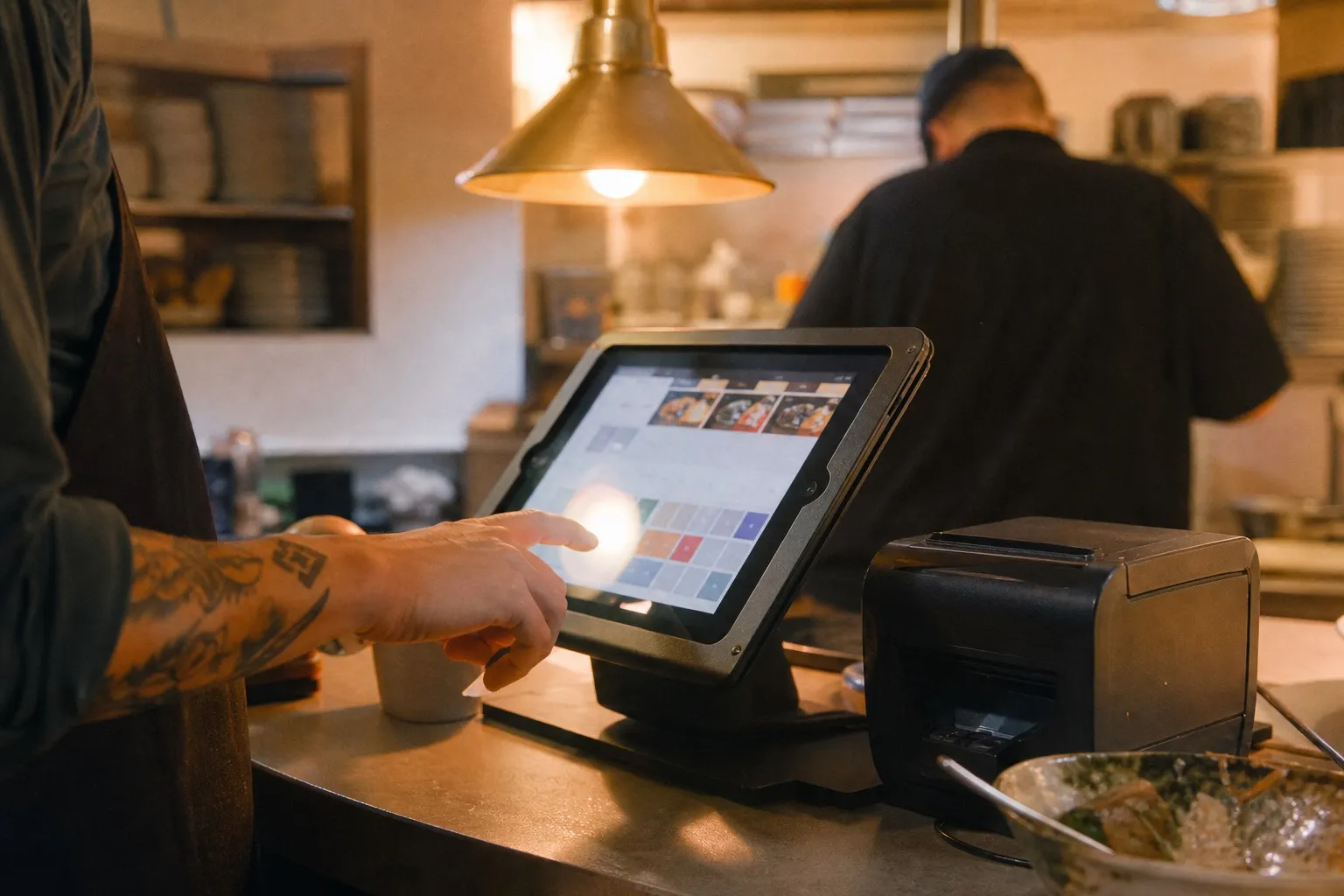
Olo Signs Chipotle Catering Pilot, Lake Street Raises PT — and the SaaS Market Remembers Olo Exists

The Olo–Chipotle Catering Plus pilot disclosed at the Q1 print is more than a brand win. It's the proof point Olo needs as the market debates whether DoorDash + SevenRooms makes Olo redundant or essential.
I had the Chipotle Q1 release queued in one tab, a half-eaten al pastor bowl on the desk, and Slack pinging in the other tab when the wire hit this afternoon. Same-store sales soft, traffic story messy, the usual analyst chorus tuning up — and then, buried in the prepared remarks, a line that made me sit up: Chipotle is piloting Catering Plus with Olo. I refreshed the Olo ticker. Up. I refreshed it again. Still up. And then I started writing.
Because here’s the thing. For the last six weeks, every restaurant-tech investor I talk to has been quietly war-gaming the same scenario: DoorDash gets serious about the full-stack pitch, the rumored SevenRooms tie-up actually closes, and suddenly Olo is the company in the middle of someone else’s roadmap. The bear case writes itself. So when Chipotle — the most operationally disciplined enterprise account in the QSR-plus tier — picks Olo as the partner to extend a brand-new catering line, that is not a brand win. That is a thesis-defining proof point.
My read: today’s pilot disclosure, combined with Lake Street nudging the PT to $10 from $9, is the first time the sell side has been forced to ask whether Olo is redundant or essential. And for now, the answer the tape is giving is essential.
What the pilot actually covers
Chipotle disclosed the partnership in the Q1 release deck and on the call, framing Catering Plus as a structured group-order offering with dedicated lead times, larger pan-format SKUs, and a separate pickup workflow. The Olo piece — and this is the part that matters — is the order-capture and routing layer. Catering doesn’t fit cleanly into a normal digital ordering stack because the cart logic, the lead-time logic, and the pickup choreography are all different from a single-entrée transaction. You either build it inside your existing OLO/POS plumbing or you ship a separate microsite and pray the data reconciles.
Chipotle did not build it themselves. That sentence is the whole article, honestly. A team that has the engineering bench to build basically anything in-house — and that famously runs its own Chipotlane and rewards stack — looked at Olo and said: you do this part. That is the “essential” framing in one decision.
The pilot reportedly covers a subset of restaurants with national expansion contingent on operational metrics. I’d expect the disclosure on scope to tighten on Olo’s May 8 print, when CEO Noah Glass will almost certainly take a victory lap. (Investors deck and dial-in are posted on Olo’s IR page for those keeping score at home.)
Why Lake Street moved first
Eric Martinuzzi at Lake Street nudged his Olo PT to $10 from $9 on the back of the disclosure — modest in absolute terms, but he’s the first to put a number on it. Why does that matter? Because the Olo bear case for the last quarter has been “great product, structurally capped TAM, GTV is the wrong unit of value.” Every analyst note had some version of “we like the platform but the comps are tough and DoorDash is breathing.”
The Chipotle pilot punches a hole in that. Catering Plus expands Olo’s GTV exposure into a higher-AOV order type — group orders run 4-8x a normal ticket — and it does so via an enterprise customer that other enterprise customers actively benchmark against. If Catering Plus works at Chipotle, Cava is asking the same question by Q3. So is Sweetgreen. So is every fast-casual operator who has been told their catering ops are a cost center.
Martinuzzi’s note also flagged the anticipated full deployment of Olo Pay card-present at a publicly-traded enterprise account as a separate catalyst into the May 8 print. That one’s been telegraphed for two quarters and the market has mostly stopped caring, but pair it with a fresh Chipotle headline and the narrative changes. My read: Lake Street is the leading indicator. Needham and Piper move next week.
Why this lands harder against the DoorDash threat
Here is the strategic point a lot of takes are going to miss today. The DoorDash plus rumored SevenRooms combination — if it materializes the way the chatter suggests — is a front-of-house plus marketplace play. Reservations, CDP, loyalty, demand generation. That is a real threat to a lot of vendors. It is not, however, a threat to the back-of-house order routing, menu management, and catering orchestration that Olo actually does for an enterprise like Chipotle.
The Chipotle pilot makes that distinction concrete in a way an analyst day deck never could. As our later piece on Olo’s positioning argues, the question isn’t whether Olo competes with DoorDash; it’s whether Olo is the connective tissue that DoorDash itself ends up depending on. Catering is exactly the kind of workflow that proves the tissue thesis.
What to watch on Olo’s May 8 print
Three things on the May 8 call. First, scope on Catering Plus — number of restaurants live, expansion timeline, whether there’s a second enterprise catering customer queued. Second, Olo Pay card-present GTV ramp and the named enterprise rollout. Third, and most importantly, the tone Glass takes on the competitive landscape. If he leans into “we are the system of record for digital order capture” framing, that is management ratifying the essential narrative.
If the print delivers on even two of those three, $10 is the floor, not the ceiling. And if the rumored DoorDash–SevenRooms move actually drops in early May, the contrast helps Olo more than it hurts.
The bowl is cold. The thesis is hot.
— Maya covers restaurant tech. Tips: [email protected].
Featured
More
Browse all 494 posts
The Voice Agent Maturity Curve
mise
·12 min read
The Four Margins of a Restaurant
mise
·14 min read
The AI Premium in Hospitality M&A: Broker Story or Real Number?
the bottom line
·9 min read
What the DoorDash/SevenRooms Deal Actually Buys
the bottom line
·11 min read