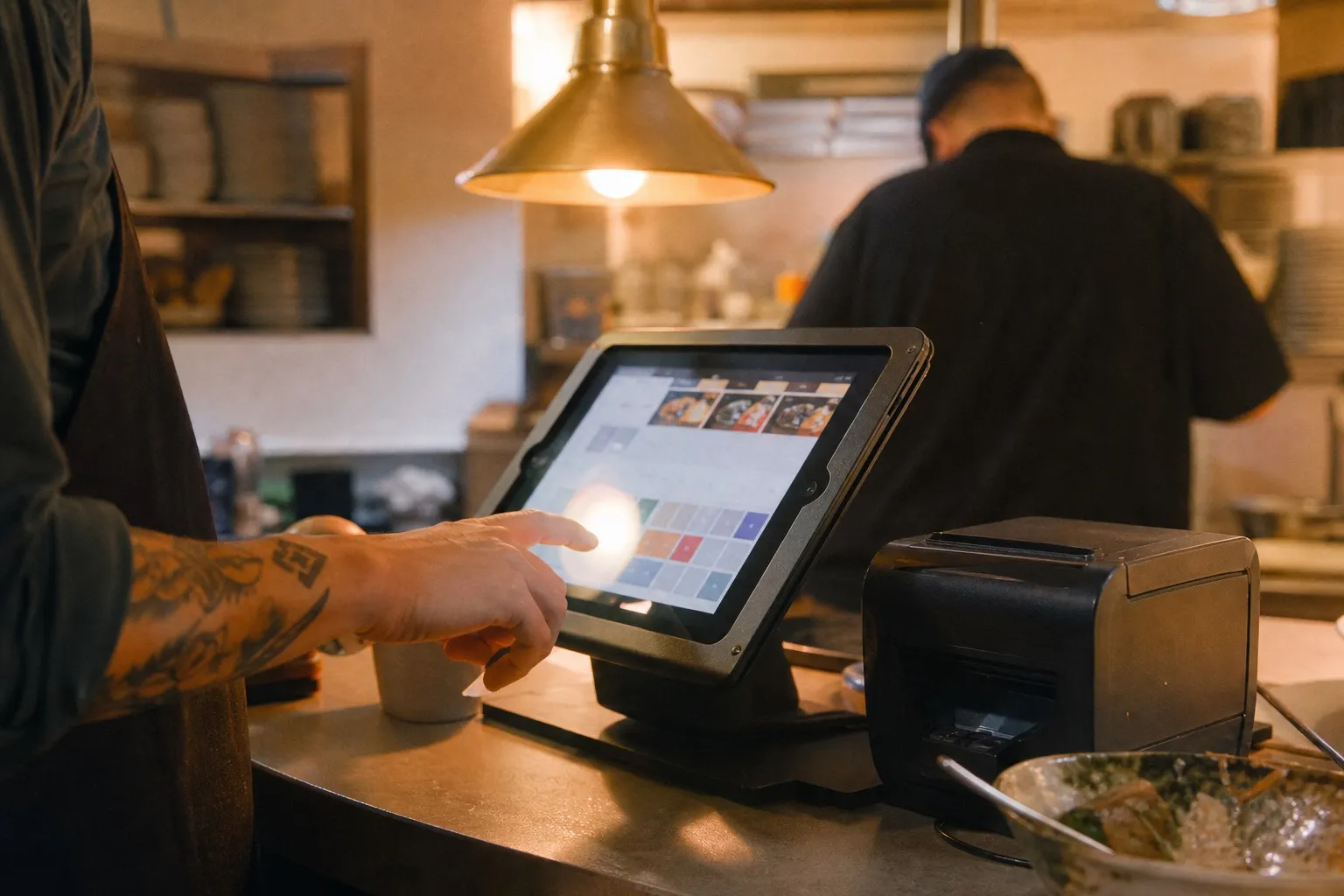
Olo under Thoma Bravo — and what restaurant-tech roll-up math looks like from the inside

Commentary, not news: Olo is wrapping its first full quarter as a Thoma Bravo portfolio company with no earnings to publish. Here's what restaurant-tech buyers should be modeling about a likely roll-up — and what we genuinely don't know yet.
It’s Thursday morning and the most interesting thing on my desk isn’t a press release. It’s a group chat. Three restaurant-tech buyers — a regional pizza chain, a 40-unit fast casual, a multi-brand franchisee — quietly comparing notes on what happens to their online-ordering contracts now that the vendor on the other side of the table is private. None of them is panicking. All of them are running the same back-of-envelope: if the largest pure-play restaurant SaaS is now sitting inside a Thoma Bravo portfolio, what does year two look like?
To be honest about what this piece is: there’s no Olo earnings call to react to. The company has been private since Thoma Bravo closed the deal on September 12, 2025, and Q4 2025 — its first full quarter under new ownership — won’t be reported publicly. What follows is commentary, not news.
What Joe Guszkowski actually said
The thesis that there’s a roll-up coming isn’t mine. It’s Joe Guszkowski’s at Restaurant Business, and he was direct about it in his 2026 predictions piece: Thoma Bravo “has a history of roll-ups — i.e., buying multiple companies in the same sector and combining them,” and “Olo makes sense as a first step in this strategy. The company already dominates the market for online ordering at chain restaurants, giving Thoma Bravo a strong foundation to build upon.” His framing of the surrounding market: a sector “still teeming with small suppliers, making it ripe for consolidation.”
That’s the opinion column. I’m taking it seriously because the macro lines up.
The +45% number
Jason Myler, a managing director at Brown Gibbons Lang who runs restaurant- and retail-tech investment banking, wrote a piece for Restaurant Technology News on January 12 that cited PitchBook data showing “mergers and acquisitions involving restaurant technology providers rose by 45% in the first half of 2025 compared to the same period in 2024.” Myler didn’t name Olo or Thoma Bravo. He didn’t have to. The directional signal is enough: deal flow is back, and the people who do this for a living are saying so on the record.
I tried to pull the Hospitality Tech consolidation piece for a third corroborating angle and got a 403. Two of three is what we have today.
What an operator should actually model
Here’s the part of the conversation operators aren’t getting from press releases. If you’re a director of digital at a 200-unit chain and your online-ordering vendor just went private under a sponsor with a roll-up history, three line items move on your spreadsheet:
Renewal optionality. Auto-renew clauses get re-read. Not because anyone expects a price hike in quarter one — Thoma Bravo isn’t in the business of scaring the installed base early — but because the option value of being able to leave matters more when you don’t know who you’ll be buying from in 24 months.
Integration roadmap. Every buyer I talk to has a shadow list of point solutions — loyalty, KDS, labor, gift cards — they assume will eventually need to talk to ordering. If a roll-up materializes, the buy-vs.-best-of-breed math changes, because some of those point solutions might end up in the same portfolio.
Vendor concentration risk. A consolidated stack is operationally easier and strategically more fragile. One throat to choke is also one throat that can choke you.
What I’m not saying
I’m not saying Thoma Bravo has identified targets. I’m not saying Olo is losing customers — I have no reporting on that and won’t speculate. I covered the broader 2025 M&A picture in January, and the honest read then is the honest read now: the conditions for consolidation are present, the largest single move already happened, and the next twelve months will tell us whether Guszkowski’s framing was prescient or premature.
If you’re a buyer, the move right now is boring and correct: read your contracts, map your integrations, and ask your account manager what their 2027 roadmap looks like. If the answer sounds rehearsed, take notes.
I’ll keep watching.
— Maya covers restaurant tech for The Pass. Tips: [email protected].
Featured
More
Browse all 494 posts
The Voice Agent Maturity Curve
mise
·12 min read
The Four Margins of a Restaurant
mise
·14 min read
The AI Premium in Hospitality M&A: Broker Story or Real Number?
the bottom line
·9 min read
What the DoorDash/SevenRooms Deal Actually Buys
the bottom line
·11 min read