Papa Johns 'Lou AI' + Toast Go 3 international: two AI launches on one Tuesday
On the same Tuesday, Papa Johns launched Lou AI to fix group-order gridlock and Toast Go 3 went live across four countries. Two very different bets on where the next dollar of restaurant tech investment should go.
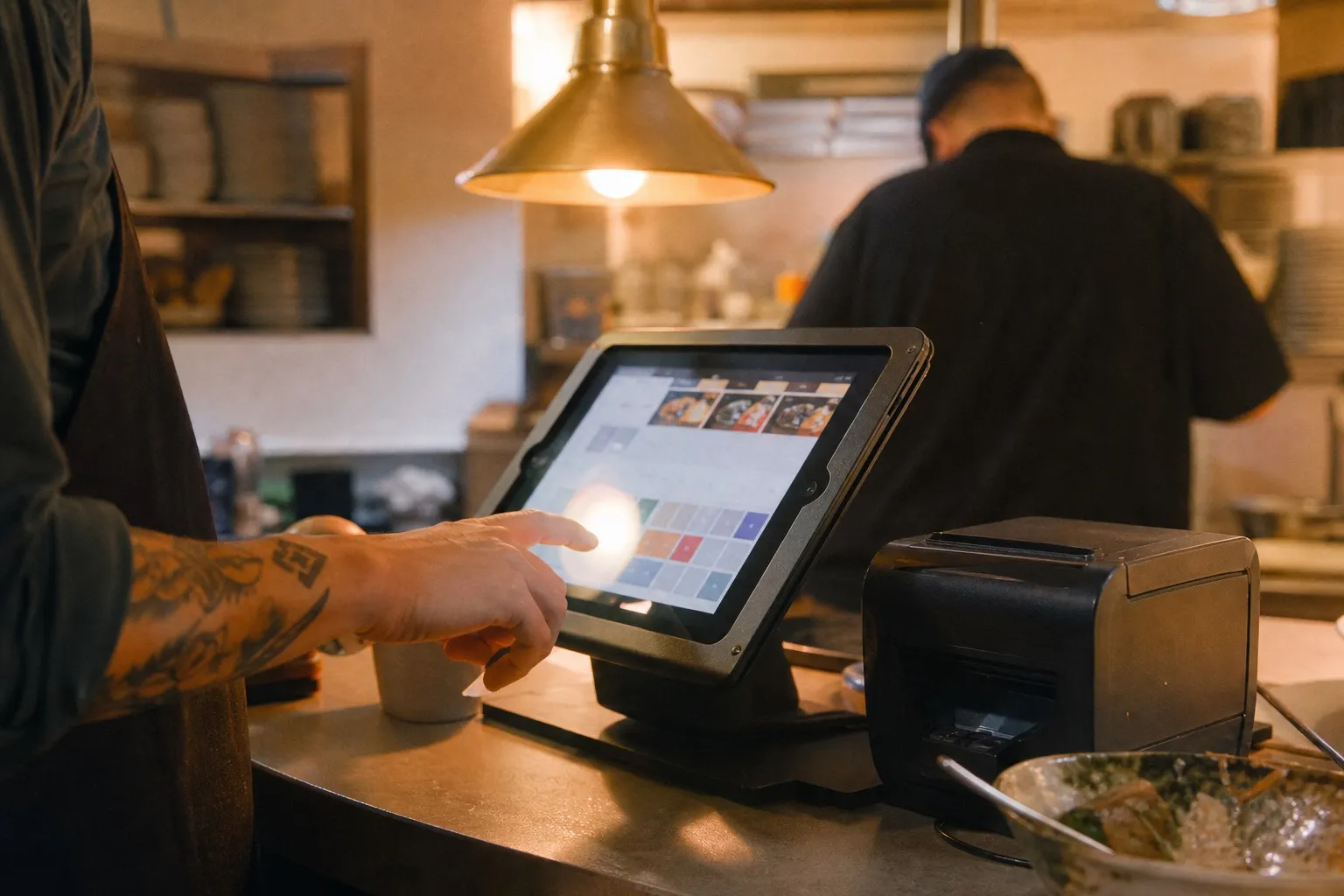
I tried to break Lou AI before I read the press release. Eight imaginary friends, three dietary restrictions, one coupon, one person who only eats breadsticks. The new Papa Johns assistant — launched this morning — took it without flinching, asked the right two clarifying questions, and produced a cart I would have actually checked out. Then I closed the tab, walked downstairs to my local, and watched a server take a five-top order on what turned out to be a brand-new Toast Go 3 handheld, also launched today, also live for the first time in this country.
Two AI launches on one Tuesday. Two very different theories of where the next dollar of restaurant tech investment should go. Papa Johns is buying the demand layer. Toast is hardening the supply layer. Both companies think they’re playing the same game. They’re not.
The Louisville bet: AI as the new menu
Papa Johns named the assistant after Louisville, Kentucky — its headquarters — and the BusinessWire announcement is careful to call Lou AI “the first AI deployment through Google Cloud’s Food Ordering agent.” That phrasing is doing real work. It tells you the architecture isn’t bespoke. It’s a Google product, configured by Papa Johns, sitting between the customer and the cart.
CDTO Kevin Vasconi frames the problem as group-order gridlock — the well-known purgatory where a Slack channel decides on pizza, someone catches half the requests, three toppings get forgotten, and the order leaves the kitchen wrong. Lou AI’s job is to remember those preferences across people, surface them at the cart, and stop the gridlock before it becomes a refund.
Read that as a CDTO telling you where the marginal customer is being lost. It’s not at the oven. It’s at the basket. The competitive frontier Papa Johns is staking out is the conversation that decides what gets ordered, and they’ve decided to rent that frontier from Google rather than build it. Compare that posture with what McDonald’s has been telegraphing on AI drive-thru, which is more vertically integrated and more cautious.
The risk: when your demand layer is a configurable cloud agent, your moat is a prompt. The upside: you ship in months, not years, and you get to claim “first” — which, in a Louisville HQ on launch day, is the only word that matters.
The Boston bet: hardware that doesn’t quit
Eleven hundred miles east, Toast announced that Toast Go 3 is live in the UK, Ireland, Canada, and Australia — the same April 28 stamp, a different theory of the business.
The spec sheet reads like a phone built by someone who has been yelled at by a line cook. Drops to 1.5 meters. IP65 against the inevitable Diet Coke spill. A 6.52-inch screen — big enough that a server reading the upsell prompt doesn’t have to squint between courses. 24+ hours of battery, which is the number that actually matters: it’s the difference between one device per shift and two.
Toast’s bet is that the AI conversation Papa Johns is staking on is, for a sit-down operator, a distraction. The bottleneck isn’t the basket. It’s the pass — the moment when an order moves from the floor to the kitchen, and a dropped handheld or a dead battery turns a 90-second ticket into a four-minute one. Mark this as the line in the sand: Toast is monetising reliability while everyone else monetises intelligence.
This is consistent with how Toast has been positioning for months. The drive-thru product shipped on April 14, the earnings setup last week was unusually quiet on AI narrative for an early-2026 quarterly, and now four new countries on the same Tuesday Papa Johns picks for its Google moment. Forthcoming pieces on Toast IQ and the Toast Go 3 desk review will dig into whether the hardware-first read holds up under sustained use.
So who’s right
Both, in different rooms.
If you run a 700-store delivery brand where the average order is a basket assembled by committee, Papa Johns’ bet is the right one. The marginal dollar lives in the cart, the AI can be configured rather than invented, and “first deployment of Google’s Food Ordering agent” buys you a press cycle worth more than the engineering cost. Lou AI is a demand-layer move, and demand-layer moves compound through reorders.
If you run a 40-cover bistro in Dublin or a pub group in Manchester, Toast Go 3 is the right one. The marginal dollar lives at the table, every dropped handheld is a comp, and a 24-hour battery is the difference between buying one device per server and two. Toast’s bet is a supply-layer move, and supply-layer moves compound through uptime.
The interesting question isn’t which bet wins. It’s whether anyone successfully runs both books at once. Papa Johns doesn’t operate the dining room — they don’t have to care about IP65. Toast doesn’t take the consumer order — they don’t have to care about group-order UX. The companies that do need to care about both, the full-service multi-unit operators rolling out AI ordering on top of hardened handhelds, are the ones who will pay twice this year. And mostly, on the evidence of one Tuesday in April, to two different vendors.
I’ll be watching whose margin compresses first.
— Luca covers restaurants for TableTransfers. Tips: [email protected].
Featured
More
Browse all 494 posts
The Voice Agent Maturity Curve
mise
·12 min read
The Four Margins of a Restaurant
mise
·14 min read
The AI Premium in Hospitality M&A: Broker Story or Real Number?
the bottom line
·9 min read
What the DoorDash/SevenRooms Deal Actually Buys
the bottom line
·11 min read