Starbucks Comp Transactions Turn Positive — Niccol's 'Back to Starbucks' Cleared a Bar
First US comp transaction growth in eight quarters. The AI press wants this to be a personalization story; read the release and it's an operations story — speed, throughput, and partners at the bar.
Tuesday night after the print and the takes are already wrong.
Starbucks reported Q1 fiscal 2026 after the close. Revenue $9.9B, up 6%. Global comp +4 — transactions +3, ticket +1. GAAP EPS $0.26, non-GAAP $0.56. Brian Niccol’s prepared line — “Back to Starbucks strategy is working and we believe we’re ahead of schedule” — was on the wires by 4:30pm Eastern. By the time I refilled my cup the AI takes were going around: Starbucks cracked personalization, Deep Brew is paying out. One newsletter writer I respect called it “the AI inflection.” That read is upside down.
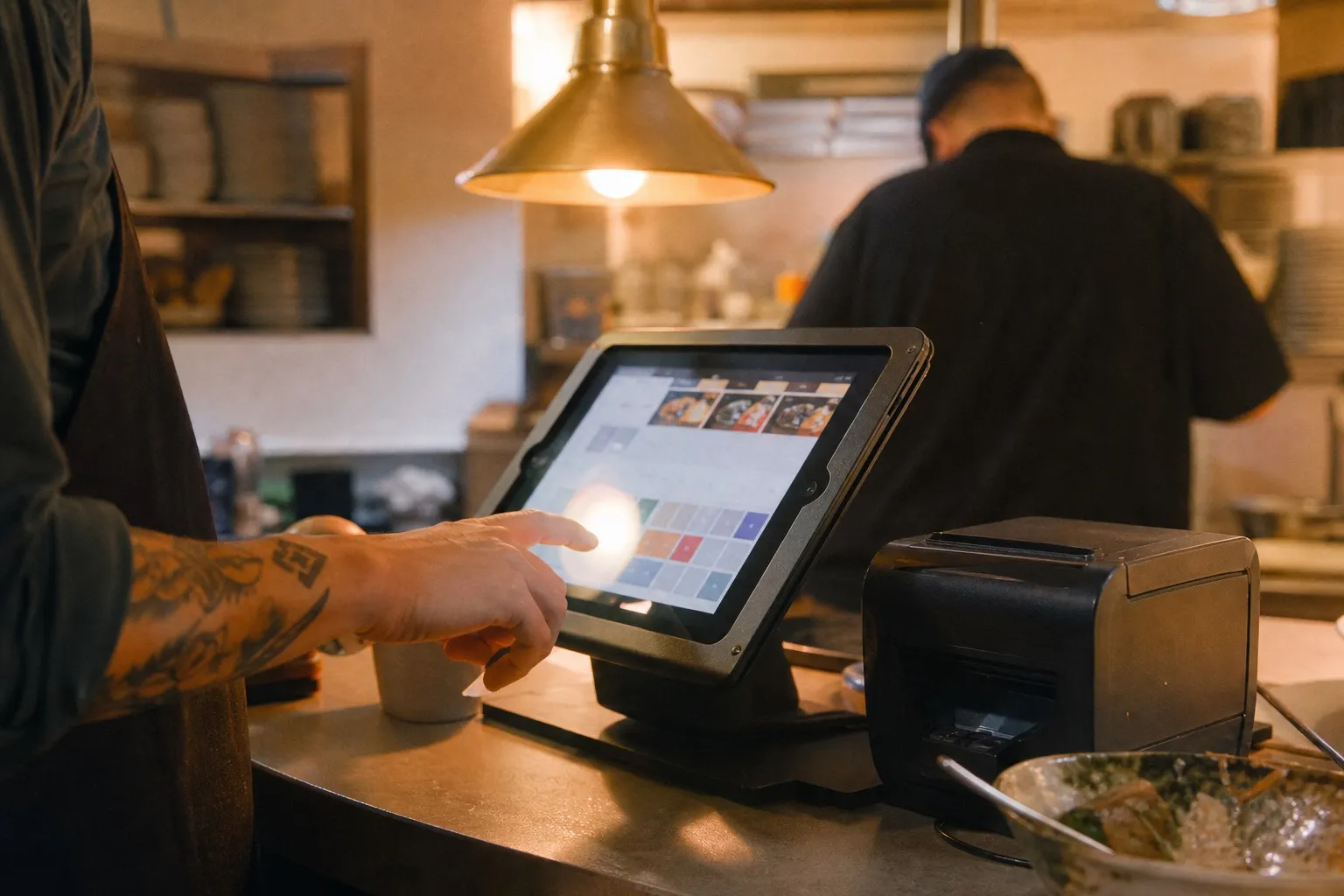
This is an operations story. Speed at the bar, throughput per shift, partners who can find the milk and the cup without three taps. Read the release with operator eyes and the move is somewhere else.
The number that actually matters
One statistic worth re-reading, and it isn’t revenue. The transaction line. Transactions +3, ticket +1. For eight quarters Starbucks’s prints had been declining transactions papered over with ticket — price up, mix up, customers fewer. The shape of a chain trading itself thinner. This quarter the shape flipped. They didn’t just spend more; there were more of them.
Niccol’s “Back to Starbucks” plan, laid out late 2024, was four things: re-establish the third-place feel, shorten the wait, simplify the menu, add partner hours on the floor. None are AI moves. The +3 is those moves working. The +1 on ticket is what happens when menu simplification holds — you don’t need price to do the comping.
Restaurant Dive’s same-store-sales tracker reads the same way: Starbucks “managed to stop recent sales slides as long-term turnaround efforts finally resulted in traffic increases,” with the company attributing gains to “investments in operations, menu design and its service model, as well as a strong lineup of seasonal LTOs and promotional items.” Operations. Menu. Service model. The word AI is not in that sentence.
The AI counter-read, fairly stated
Strongest version of the personalization story: Starbucks has the deepest mobile-order dataset in the category, Deep Brew has been recommending for years, and a loyalty inflection could plausibly show up in higher reward-member frequency and smarter promo throttling at peak. Plausibly contributing on the margin.
Two reasons that isn’t the lead. First, the recovery hits at the system level — global comp +4, US transactions up — not the cohort level you’d see if the lift were personalization-driven. A loyalty-stack inflection looks like outsized frequency from active reward members with the rest flat. Niccol’s prepared remarks are about getting the base experience right.
Second: ticket only up 1. A personalization-led recovery typically lifts ticket more than transactions — better recommendations bolt onto each order; the customer count moves slowly. This print is the inverse. Throughput shape, not targeting shape.
Flag clearly: ops-not-AI is my interpretation. The release doesn’t say “this was operations, not AI.” Niccol said the strategy is working — and the strategy is, by his own 2025 framing, an operations plan. If reward-member frequency pulls away from non-member frequency by Q2, I’ll update.
What the operator basics look like
Speed at the bar. The metric the chain doesn’t publish but every district manager tracks. Through 2024 Starbucks let peak-hour waits drift past the threshold where the marginal customer balks and walks. Niccol’s first year is the story of pulling that back — fewer modifiers in the default menu, more partner hours on espresso at morning peak, a handoff redesign rolling through stores. The +3 transactions is what happens when the bar moves faster, not when the app recommends better.
Throughput per partner. The plan added partner hours per store, costs margin short-run and earns it back through faster lines and lower attrition. The GAAP-to-non-GAAP gap — $0.26 versus $0.56 — is partly the cost of the operations investment showing up before the throughput gain is fully amortized.
Partner tech. Less glamorous, more decisive. Store-side software that lets a partner ring, modify, and route a complex order without context-switching three screens decides whether the bar runs at 90% or 70% of theoretical throughput. The effect in a print looks like this: ticket up-one, transactions up-three, a CEO using the word “execution.”
The cross-read from the rest of the category
Sanity check. Sysco’s Q2 fiscal 2026 call on the same day Starbucks printed reported “traffic to restaurants, per Black Box, declined more than 200 basis points year over year”, national chains under particular pressure. The industry was not handing Starbucks a tailwind.
Against that, Starbucks’s +3 transactions is not a rising-tide print. It’s a chain-specific recovery in a category that lost two points of traffic. Restaurant Dive’s tracker shows the divergence: Chipotle extended its declines; Dutch Bros and Black Rock outperformed Starbucks (Black Rock over 9%); McDonald’s posted 6.8% in Q4 2025. The chains winning are the ones that fixed the bar. Starbucks rejoined that side.
If this were an AI story, you’d expect the AI-forward operators to be leading. They aren’t.
What I’d watch in Q2
Three things, operator-side.
Hold the partner-hours line. If Starbucks cuts back on store labor to deliver margin, the transaction line is the first place it shows up — backwards.
Watch ticket. A second quarter of transactions +3 with ticket +1 is a healthy operations story. Transactions decelerating while ticket spikes is the old shape returning.
Read the menu count, not the menu mix. Niccol’s plan included cutting SKUs. If the count creeps back up, the throughput gain unwinds in slow motion. Menu complexity is the silent killer of every bar in this category.
This is what operations looks like when it works. Not the AI inflection some of the takes wanted. I’ve argued the same case from the other end — that AI premiums in operator M&A are mispriced because the operator layer does the work, not the tooling layer. Starbucks Q1 fiscal 2026 is that argument from the other end of the telescope. The chain spent four quarters fixing the bar. The bar started moving faster. The customers came back. That is the story.
The personalization layer will get its print eventually. Not this one.
Citation note
The Starbucks press release returned a 403 when I tried to fetch it directly. Figures and Niccol quote are sourced to the headline announcement as carried on the wires and corroborated by Restaurant Dive’s tracker; Sysco’s Q2 fiscal 2026 transcript is the category cross-read. Will update with a direct citation once the page is reachable.
— Luca covers chains and operators for The Pass. Tips: [email protected].
Featured
More
Browse all 494 posts
The Voice Agent Maturity Curve
mise
·12 min read
The Four Margins of a Restaurant
mise
·14 min read
The AI Premium in Hospitality M&A: Broker Story or Real Number?
the bottom line
·9 min read
What the DoorDash/SevenRooms Deal Actually Buys
the bottom line
·11 min read