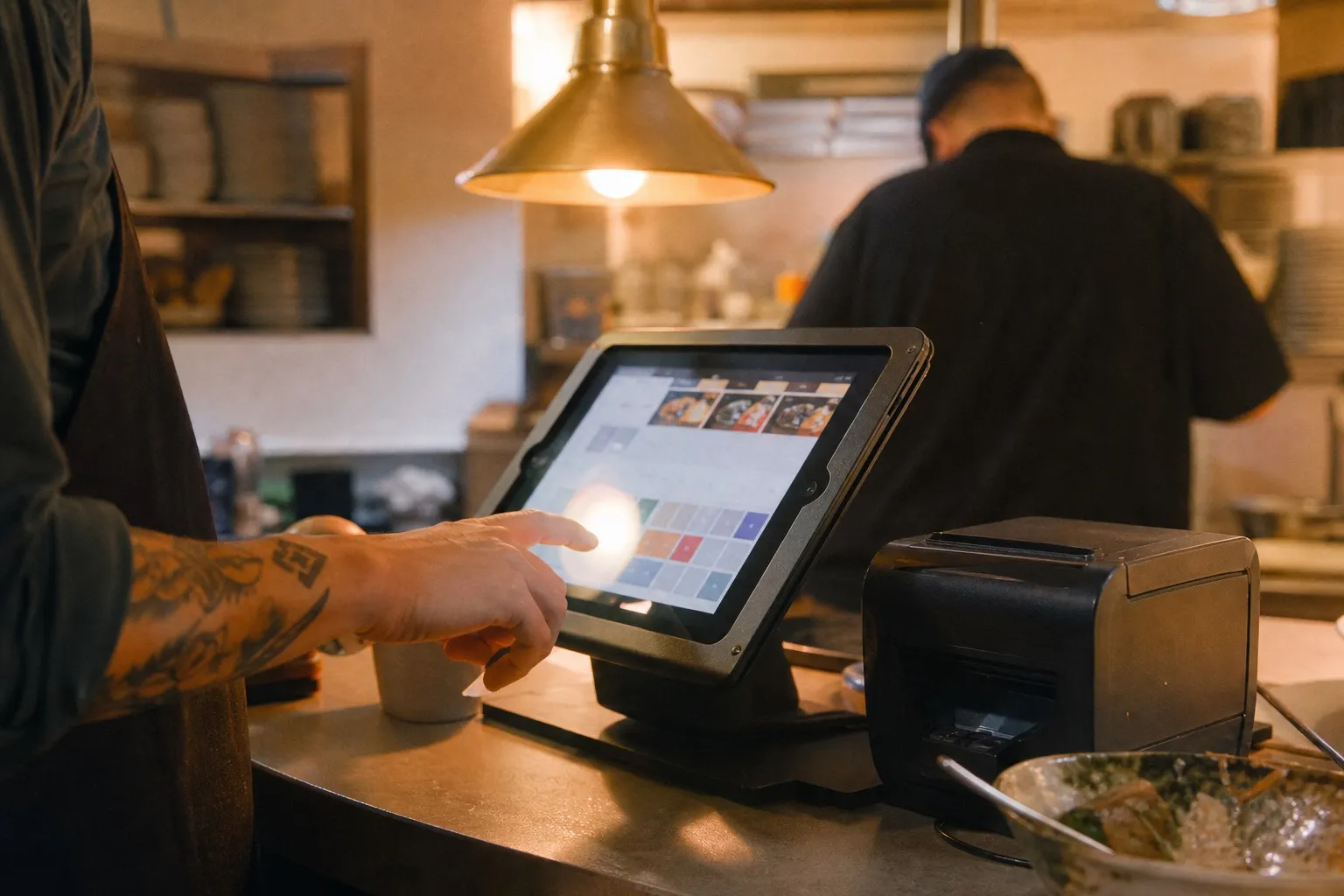
Starbucks Earnings Eve: The Data That Will Decide Brian Niccol's AI Thesis
On the eve of Starbucks' FY Q3 print, the real question isn't traffic — it's whether 'Back to Starbucks' has any room left to absorb the margin compression that voice AI and labor automation actually require to scale.
It’s a little after nine on a Monday night in Brooklyn, and I’m reading the Q2 transcript again with the kind of attention I usually reserve for indictments. Brian Niccol said “Back to Starbucks” eleven times. He said “AI” twice. Tomorrow, July 29, Starbucks reports fiscal Q3, and the analyst notes I’ve been forwarded all weekend are gaming traffic, ticket, and China. They’re asking the wrong question.
The right question — the one that will actually move the multiple — is whether the human-first turnaround Niccol has staked his reputation on has any oxygen left to absorb what AI deployment costs before it pays back. Q2 operating margin compressed to 9.9% from 16.7% a year earlier. Global comps printed -2%. Revenue beat at $9.46B; adjusted EPS missed by 22.6%, landing at $0.50. That is the financial envelope every AI dollar has to fit inside tomorrow morning.
The contrarian read
The bull case on Starbucks AI is that voice ordering at the drive-thru and predictive staffing are the only things that can structurally re-expand that 9.9% margin without rolling back the labor investments — extra baristas, four-minute service targets, the handwritten cup — that are the whole point of “Back to Starbucks.” The bear case is that those two strategies are in direct tension. You cannot simultaneously promise customers a human reconnects-with-her-barista moment and route their order through a synthetic voice that upsells an oat-milk shaken espresso.
My read is that Niccol knows this, which is why the AI talk track has been so disciplined. He’s not selling automation. He’s selling what I’d call AI-as-cover: the technology shows up in the operating model exactly where it doesn’t visibly compete with the brand promise — inventory, scheduling, predictive maintenance, the deep back-of-house — and stays out of the customer-facing moments the turnaround is built on. Toast’s restaurant AI research frames AI adoption as already-uneven across operators, with back-of-house use cases running well ahead of guest-facing ones. That’s the lane Starbucks will stay in tomorrow. Bet on it.
What I’ll be listening for on the call: any specific dollar figure attached to Deep Brew or the Microsoft-partnered platform work, any mention of voice-AI pilots at the drive-thru by name, and — most diagnostically — whether Niccol gives a margin bridge that explicitly attributes basis points to technology versus labor. If he names technology as a margin lever, the AI thesis is on. If he keeps it abstract, the lever is still labor, and the margin floor is wherever staffing investment bottoms out.
What the print can and can’t tell us
One quarter cannot validate or kill an AI thesis on a fleet of nearly 40,000 stores. What it can do is calibrate how much rope the board is giving Niccol. If comps stay negative but margin stabilizes near Q2’s 9.9%, the market reads that as evidence the labor investment has hit a plateau and the next leg of recovery has to come from somewhere — which is exactly the doorway through which AI capex gets pre-approved. If margin compresses further, the conversation tomorrow afternoon stops being about “Back to Starbucks” and starts being about cost takeout, which is a euphemism every restaurant CFO in the country understands.
The deeper signal is structural. Restaurants are moving from AI-as-feature to AI-as-substrate — see a forthcoming May piece on Toast IQ and an upcoming May piece on the DoorDash–SevenRooms integration — and the question for Starbucks is whether it builds, buys, or partners its way into that substrate. Niccol’s instinct so far has been to partner, which preserves capital but cedes the platform layer. Tomorrow’s commentary on technology spend will tell us whether that instinct is hardening into doctrine.
I’ll be at my desk at 4:30 a.m. tomorrow with the release in one window and the call audio in the other. The print will be what it is. The thesis will be in the eleven minutes Niccol spends not talking about traffic.
— Luca covers restaurants for TableTransfers. Tips: [email protected].
Featured
More
Browse all 494 posts
The Voice Agent Maturity Curve
mise
·12 min read
The Four Margins of a Restaurant
mise
·14 min read
The AI Premium in Hospitality M&A: Broker Story or Real Number?
the bottom line
·9 min read
What the DoorDash/SevenRooms Deal Actually Buys
the bottom line
·11 min read