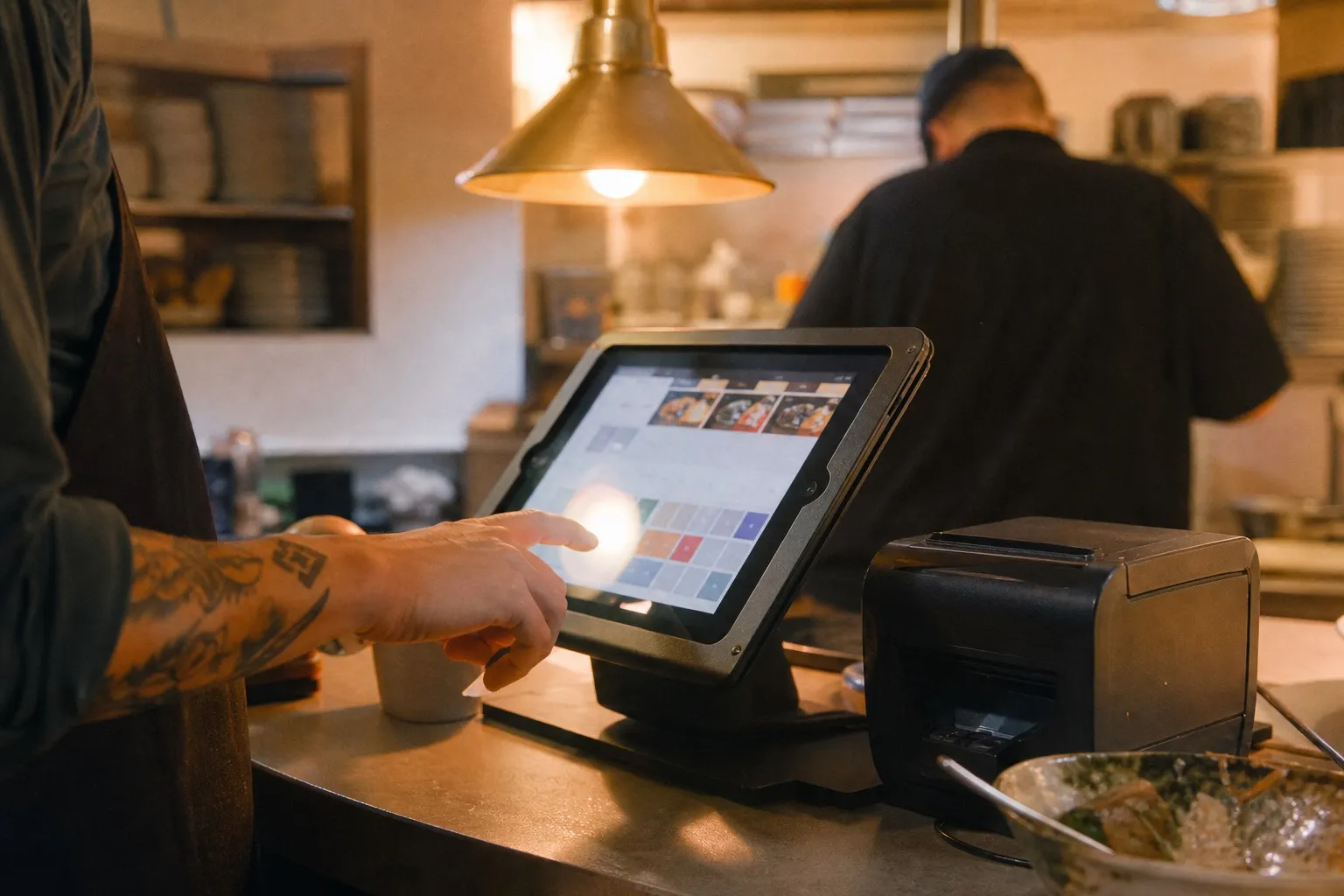
Sweetgreen's Traffic Problem

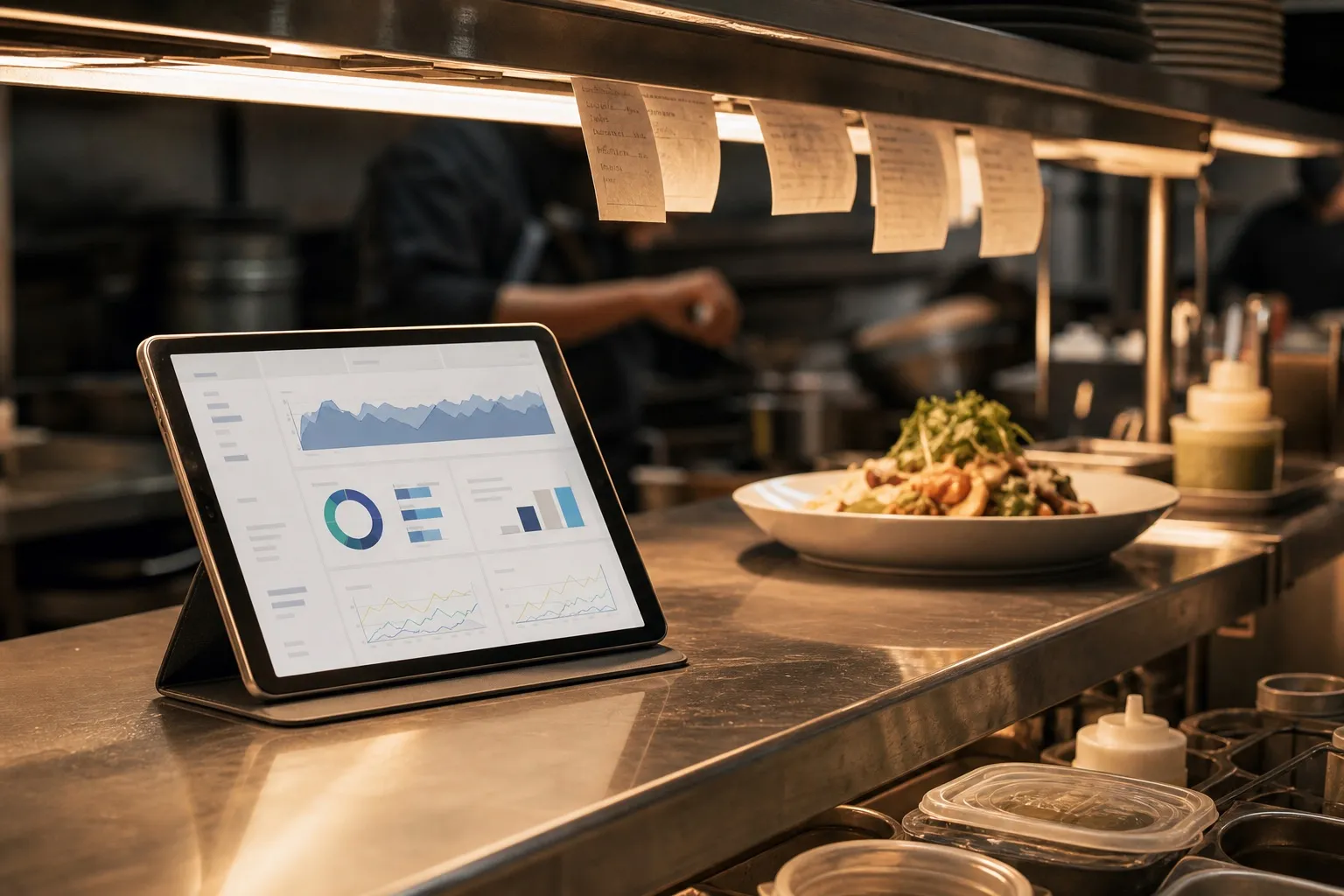
The first negative same-store quarter since 2022, combined with $13M of operating cash burn, exposes the cost of Infinite Kitchen — and asks whether automation actually saves bad concepts.
I walked into a Sweetgreen on a Tuesday at 12:07 p.m. There were three people in line. One of them was me. The kale-Caesar guy behind the counter had the slightly bored alertness of someone who had been promised a lunch rush that had not yet shown up, and the pickup shelf — usually a wall of stacked bowls with names Sharpied across the lids — held exactly two orders. The dining room had four occupied seats. The menu board glowed at no one in particular.
I bring this up because the company reported Q1 the same morning, and the print on the page lined up uncomfortably well with the print on the floor. Revenue $166.3M, up 5.4%. Same-store sales -3.1% — the first negative comp since 2022. Net loss $25.0M. Cash used in operations $13.1M. Adjusted EBITDA $0.3M, which is to say roughly zero. And capex of $19.1M, most of it still going into Infinite Kitchen.
That last line is the one I cannot stop turning over. The automation thesis is now a cost-control thesis, not a growth thesis. When you are spending $19M of capex in a quarter where traffic is going the wrong way, you are no longer building robots to serve a stampede. You are building robots to lower the cost of serving the people who are still showing up.
The comp tells on the concept
Let’s separate two things that get blurred in restaurant-tech coverage: the technology and the demand for the food the technology is making. Infinite Kitchen, the makeline that builds your bowl on a conveyor, is a real piece of engineering. It throughputs faster than humans, it portions more consistently, and — per the company’s own disclosure — it produces better margins at the store level. None of that is in dispute.
What’s in dispute is whether anyone wants the bowl.
A -3.1% comp on a brand that had been the consensus “premium fast-casual winner” is a serious signal. It is not weather. It is not a one-week calendar quirk. It is, on a two-year stack, the first quarter where the core question — is this concept still pulling its weight at $14 a salad? — gets a real answer. And the answer this quarter is: fewer people, paying about the same, in a market where the consumer is visibly trading down.
My read: Infinite Kitchen does not fix this. Infinite Kitchen makes a slow lunch cheaper to run. That is a real and respectable goal. It is also not the story the equity got priced on.
$13M of operating cash burn is the actual headline
The number I’d put on the cover, if I were running the cover, isn’t the comp — it’s the $13.1M of cash used in operations against $19.1M of capex. That is a company spending roughly $32M more than it generated in the quarter, in a business that was supposed to be approaching self-funding. Adjusted EBITDA of $0.3M technically clears zero, but it clears zero by the width of a receipt.
This is the part where Infinite Kitchen stops being an option and starts being a forcing function. If the comp doesn’t turn, the only lever left is unit-level margin, and the only way to materially move unit-level margin at Sweetgreen’s scale is to take labor out of the makeline. Which means the capex doesn’t pause. Which means the burn doesn’t pause either, not for several quarters.
My read: this is now a race between rollout speed and cash. The longer the comp stays negative, the more Infinite Kitchen has to do just to hold the line, never mind to expand it. That’s a very different investment case than the one the IPO told.
Where this leaves the multiple
I’ll come back to the broader fast-casual valuation question in our subsequent coverage of the Cava/Sweetgreen multiple gap — Cava prints next week, and the comparison is going to matter. For now, two things are true at the same time. Sweetgreen has a credible automation roadmap. Sweetgreen also has a demand problem that automation does not solve.
The market priced this name as a growth story with an automation kicker. After today, it looks more like an automation story with a demand drag. Those are not the same multiple.
I paid for my bowl. It was fine. The kale-Caesar guy wished me a good afternoon. On my way out I counted seats again: still four occupied, out of maybe forty. Tuesday, 12:23 p.m. The conveyor in the back, if there had been one, would have been idle.
— Maya covers restaurant tech. Tips: [email protected].
Featured
More
Browse all 494 posts
The Voice Agent Maturity Curve
mise
·12 min read
The Four Margins of a Restaurant
mise
·14 min read
The AI Premium in Hospitality M&A: Broker Story or Real Number?
the bottom line
·9 min read
What the DoorDash/SevenRooms Deal Actually Buys
the bottom line
·11 min read