The Hotel-PMS Map Just Tilted: Cloudbeds-Canary Strategic Alliance

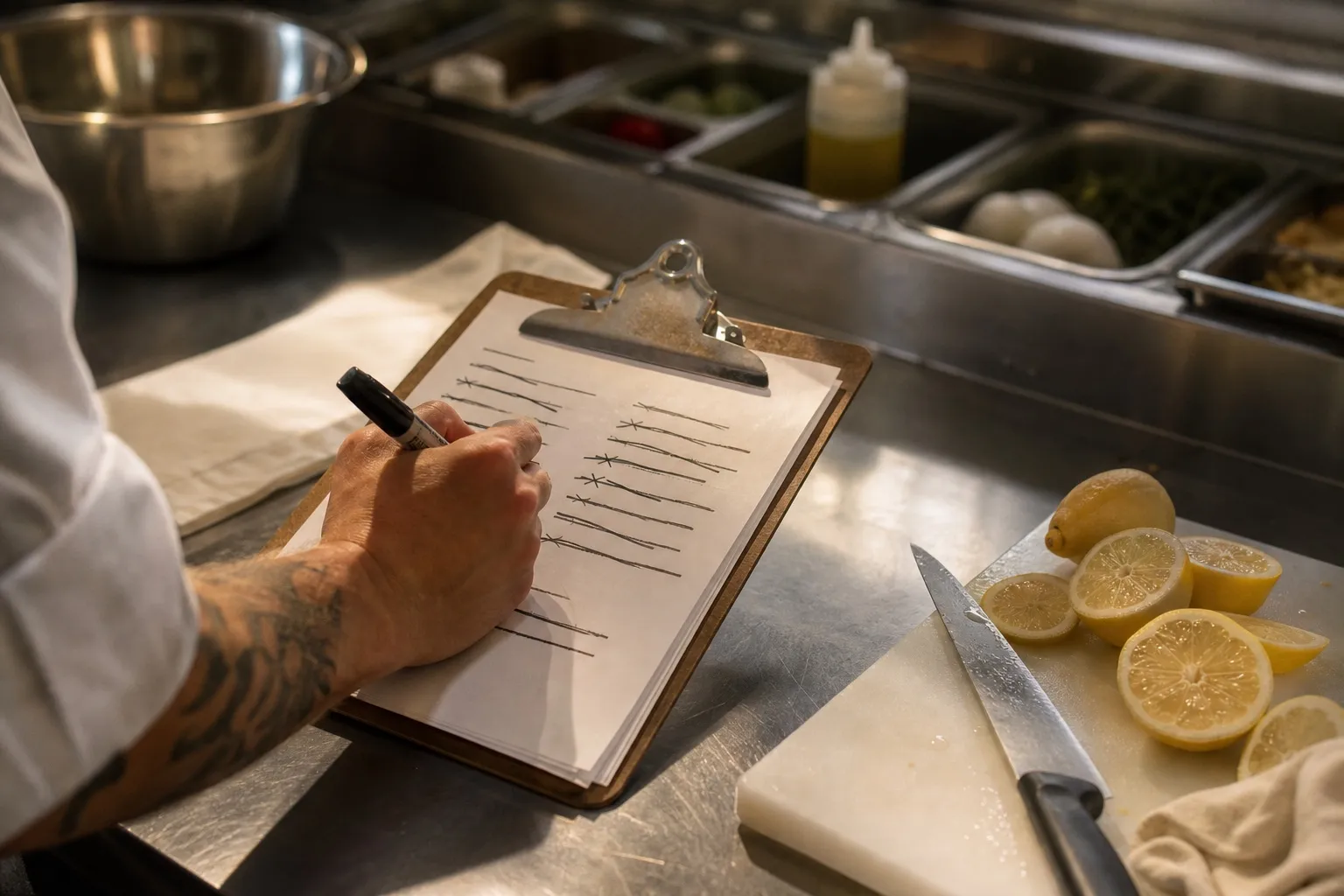
The same week DoorDash is closing on SevenRooms, Cloudbeds and Canary announce a native PMS-to-guest-experience integration. The contrarian read: independents are finally getting a stack that does not require a six-figure systems integrator on the cap table.
It was a Friday morning and I had two press releases open in adjacent tabs. On the left, the wire crossing that Cloudbeds and Canary Technologies had announced a native, two-way integration between the PMS and the guest-experience layer — mobile check-in, upsells, AI messaging, the lot. On the right, the file I had been keeping on the DoorDash–SevenRooms close, the one I have been chasing since the spring and that lands in a forthcoming May piece. I had a third tab open for the Canary $80M Series D that closed on Thursday. Three documents, one week, one map of the hospitality stack.
The contrarian read — and I will mark it as interpretation — is that the press has covered this Cloudbeds–Canary item as a press release. It is not a press release. It is the moment the independent-hotel buying motion stopped requiring a systems integrator. That sounds dramatic until you have priced the integrator line on a 40-room boutique’s first-year tech budget and watched it consume the entire AI line. The same week the restaurant-reservations category visibly consolidates under a delivery platform, the lodging side does something stranger and more interesting: two vendors with overlapping ambitions decide that not acquiring each other and instead shipping a native two-way pipe is the right answer. The market structure that produces is different from the one DoorDash is building next door.
Let me walk it.
The announcement, decoded
The Hospitality Net wire is the cleanest public account. The two sides are calling it a strategic partnership; the Cloudbeds newsroom note frames it as native integration; the Hotel Technology News weekly recap buries it in a list of items because that is what trade press does when a deal does not have a dollar figure attached. The dollar figure is exactly what makes this interesting.
What the integration actually covers, on the public read: mobile check-in flows that write back to the Cloudbeds PMS without a middleware layer. Upsell engine that reads availability and rate data live. AI messaging that hits the reservation record and the guest profile in the same call. And, sitting underneath that, Cloudbeds’ Signals AI on the analytics side talking to Canary’s guest-event stream on the operations side. If you build hotel software for a living that sentence is more interesting than the partnership headline.
The thing the announcement does not say, and the thing I think matters more than the surface: it is a native integration with no exclusivity language. Canary still talks to Mews, to Oracle Opera, to Apaleo and the rest. Cloudbeds still talks to Duve, to Akia, to the broader guest-experience field. The bet on both sides is that the quality of the Cloudbeds–Canary pipe — write-back fidelity, latency, error handling on edge cases like split folios — is good enough that operators choose it preferentially without being locked into it. That is a confident posture from two vendors who have spent the last three years watching the property-tech category fragment.
It also reads, structurally, like the shape of deal you do instead of an acquisition when both sides have just raised. Canary closed $80M on Thursday at roughly $600M post. Cloudbeds is a unicorn that has been a unicorn for a while. A merger at this stage would be priced as a strategic transaction with messy cap-table arithmetic and a year of integration before the customer felt anything. A native integration is the same product outcome at a fraction of the friction. This is interpretation: it is the smarter move at this stage of the cycle, and I would bet it is what the syndicate on the Canary round nudged toward at the board meeting.
What independents actually get
The math here is where the columnist part of my job earns its keep. Strip the partnership down to what a 60-room independent in, say, the Hudson Valley actually faces when she builds her tech stack for next season.
Pre-announcement, the buying motion looked like this. Pick a PMS — Cloudbeds, Mews, or a small handful of regional alternatives. Pick a guest-experience layer — Canary, Duve, Akia, or a brand-program equivalent. Wire them together. The wiring is the line item nobody puts on the website. You either hire a systems integrator (a five-figure setup, a four-figure annual, a delivery risk that on a small property is genuinely scary), or you accept that 30–40% of the surface area of each tool will not talk to the other one and you will run two dashboards forever.
Post-announcement, the calculation collapses. If the integration ships with native write-back the way the announcement implies, the integrator line goes to zero. Call that $15–25K of first-year cost that a 60-room property does not have to write a check for. Call it $6–10K of annual maintenance that does not recur. Add to that the soft cost — the manager who does not spend twelve hours a month reconciling two systems — and the savings against the all-in cost of running an AI-enabled hotel stack is, on my back-of-the-envelope read, in the 15–22% range for a property at that size.
That is not a small number. It is the number that decides whether the operator buys the AI stack at all this year or whether she waits.
Mark this: the precise figures above are interpretation. The directional read — that a native PMS-to-guest-experience pipe collapses the integrator line and meaningfully shifts the all-in cost — is not. Anybody who has read a property-tech RFP at the independent level has seen the integrator line. The Cloudbeds–Canary alliance is, in the cleanest reading I can produce, the line item moving toward zero for the chunk of the independent market that runs on those two vendors.
The Signals-Canary loop and why it is the real product
The part of the announcement that is going to age best is the data loop. Cloudbeds’ Signals AI is — to be generous — a revenue-management and forecasting layer that reads bookings, rates, channel mix, and on-property events to produce recommendations on pricing and inventory. It has been getting iteratively better for two years and is the kind of feature that is good but not yet decisive. Canary’s footprint, by contrast, is a stream of guest events: check-in, upsell, message sent, message replied, fraud flag raised, folio adjusted. Roughly 20,000 hotels worth of those events, on the company’s own most recent disclosure.
The two of those things connected — recommendations that read the guest-event stream, and guest-event handling that reads the rate and inventory state — is the part of the announcement that, if it works, eats a category. Specifically it eats the part of the property-tech stack that today is sold as “revenue management AI” by one vendor and “guest experience AI” by another vendor and that, in practice, has to be reconciled by a human GM at the morning meeting.
I want to be careful about how strongly I phrase this because the announcement is not the product, and the product is not the case study. What I will say is that the theoretical product surface is larger than either vendor on its own can ship, and that this is exactly the kind of integration where the surface area justifies the engineering investment on both sides. The 20,000-hotel Canary footprint plus Cloudbeds’ PMS spine is the dataset that, if the partnership ships against its promise, produces a recommendation engine an independent operator cannot rebuild in-house and cannot get from a single-vendor stack today.
That is the moat. The integrator-line collapse is the headline. The Signals-plus-event-stream loop is the moat.
The DoorDash contrast — two consolidations, two market structures
Here is where the same-week framing earns its rent. On the restaurant side, DoorDash is consolidating reservations under a marketplace owner. The forthcoming SevenRooms close piece will walk the deal mechanics; the read on it has been that the marketplace acquires the workflow tool to deepen its data spine and squeeze the OpenTable competitor on operator economics. That is one shape of consolidation: marketplace eats workflow, owns the rails, owns the demand-generation surface, owns the loyalty layer. The operator gets one throat to choke and pays for the privilege.
The Cloudbeds–Canary alliance is a different shape. Two pure-play vendors at different layers of the stack publicly committing to a native interface, with no acquirer in the picture and no marketplace owner above them. The operator still buys two tools. The two tools just stop pretending they are competing for the same dollar. The market structure that produces is meaningfully more operator-friendly than the DoorDash-SevenRooms shape, because the operator retains vendor switching cost on each layer independently. If Canary disappoints, the Cloudbeds estate keeps working. If Cloudbeds disappoints, the Canary deployment is portable to another PMS. That is not the deal you get when DoorDash owns your reservation surface.
The Yelp-stack desk review that ran upstream in an upcoming May piece made the parallel point at the restaurant level: when one vendor accumulates 35 AI features inside its own walled garden, the operator’s switching cost compounds quietly. The lodging side is, this week, deliberately not building that walled garden. Two vendors are choosing interoperability where, on the restaurant side, a third vendor is choosing acquisition. I do not think the lodging-side choice is altruistic — both sides have a strong commercial reason to do this — but I do think it produces a healthier downstream market.
It also produces a worse outcome for the systems-integrator middle layer, which is the part of the property-tech ecosystem nobody writes columns about but that has been quietly meaningful at the independent and small-chain level. The integrators have been the connective tissue precisely because the vendors did not talk to each other. When the vendors talk to each other, the integrator’s value drops by exactly the amount of the work the native pipe now does. Interpretation: the medium-term move for the better integrators is into managed-service work at the chain level, where the pipe is not the value but the operating expertise is. The marginal integrator at the small-property level has a harder year.
What this means for the Canary round, and for the round that comes next
A useful test of any strategic announcement is whether the math on the most recent venture round gets easier or harder after it. The Canary $80M Series D, at roughly $600M post, is priced on a thesis that Canary becomes the consolidator of hotel guest-management AI. The Cloudbeds alliance is a specific bet on what consolidation looks like from here: not by acquiring competitors, but by becoming the default partner across the largest PMS estates. If you are Brighton Park looking at the post-money, the Cloudbeds alliance is the kind of follow-on news that makes the round easier to defend at the next mark.
I will go further. This is interpretation: I think the round price implicitly anticipated an integration of roughly this shape with at least one major PMS, and the Cloudbeds version is at the more favorable end of what the syndicate had modeled. The price is not validated by the announcement — that is what the next twelve months of write-back fidelity will do — but the thesis is.
The next round to watch is on the PMS side. Cloudbeds has been a strategic-process candidate for two years and has been disciplined about how it talks to bankers. The Canary alliance is, among other things, a strong distribution moat to point at in any future raise or transaction conversation. The math gets cleaner.
The bet
Three things to watch over the next two quarters.
First: write-back fidelity in production. The announcement says native integration. The product is the integration. If the pipe drops 2% of upsell adds in messy edge cases — split folios, group blocks, OTA reservations that hit the inventory differently — the integrator line does not go to zero, it just gets smaller. The first GMs publicly speaking on the integration in August or September will tell you what the real number is.
Second: the independent-segment win rate. Cloudbeds has historically been strong in the independent and boutique segment; Canary has been broadening into bigger flags. If the alliance produces a step-change in the small-property segment win rate, that is the validation that the integrator-line collapse is the value. If it does not, the alliance is mostly a story for the mid-market.
Third: how the rest of the PMS field responds. Mews and Apaleo do not have a Canary-equivalent in-house and have been running their own marketplace strategies. The Cloudbeds alliance forces a response. Either they announce their own preferred-partner alliance (with Duve, or Akia, or a horizontal AI player), or they accelerate an internal build. The shape of the response is the read on whether the rest of the category sees this the way I do.
The bottom line: the same week the restaurant side consolidates under a marketplace, the lodging side picks the alternative — two pure-plays building a native pipe. The independent operator gets a better deal in the second structure than in the first. The integrator gets a worse deal in both. The hospitality-AI map tilted on a Friday, and the press release will read, in twelve months, like the moment the independent stack stopped requiring a six-figure middleware spend to function. I will be wrong on the magnitude. I do not think I will be wrong on the direction.
— Oliver writes The Bottom Line for TableTransfers. Tips: [email protected].
Featured
More
Browse all 494 posts
The Voice Agent Maturity Curve
mise
·12 min read
The Four Margins of a Restaurant
mise
·14 min read
The AI Premium in Hospitality M&A: Broker Story or Real Number?
the bottom line
·9 min read
What the DoorDash/SevenRooms Deal Actually Buys
the bottom line
·11 min read
Related posts

the bottom line
·11 min read
Darden trades like a tech company. It shouldn't.
the bottom line
·12 min read
Applebee's just became its own franchisee. The territory math is the trade.

the bottom line
·12 min read