The Olo Take-Private Template: What Restaurant SaaS Founders Should Learn from $10.25

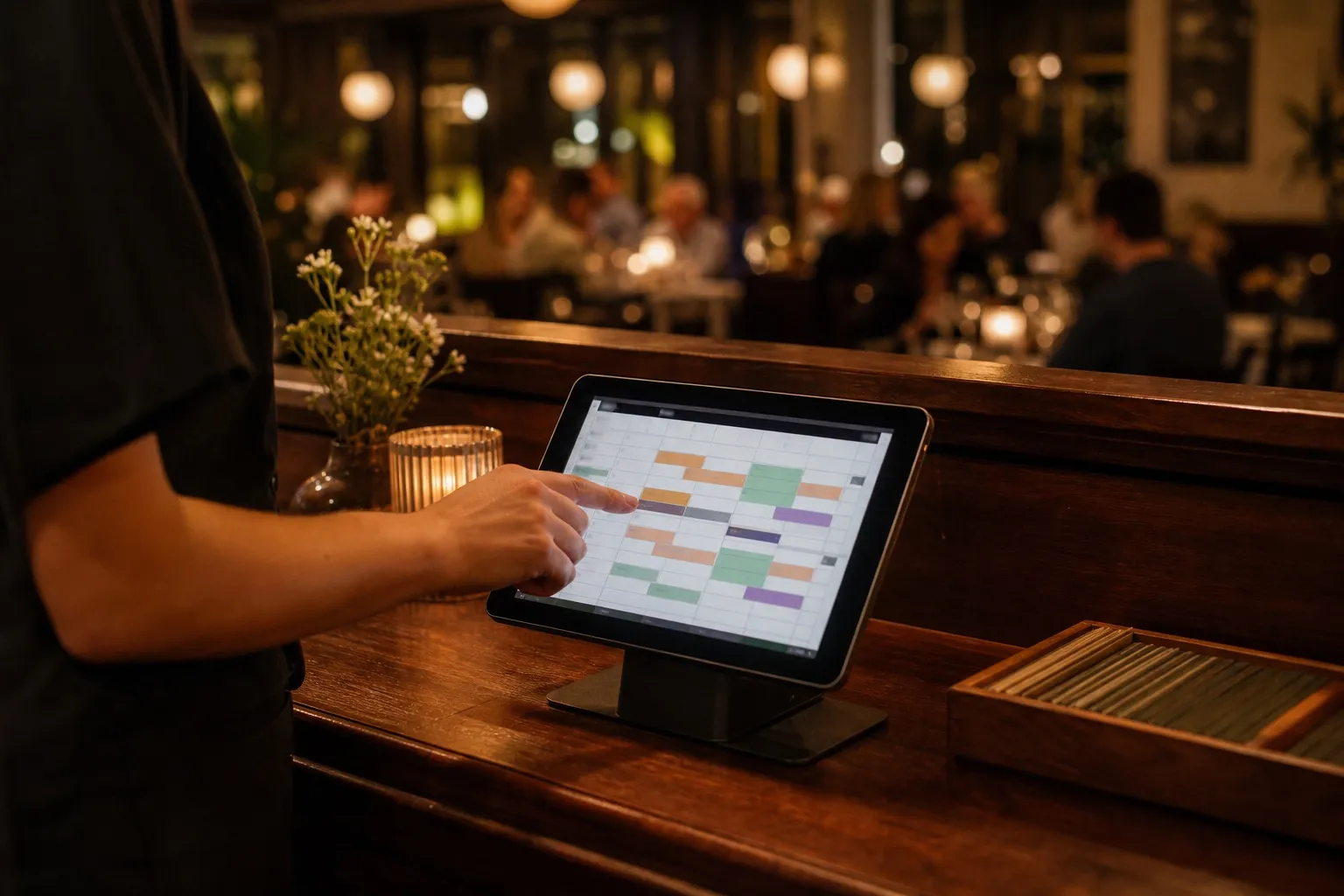
Thoma Bravo's $2B Olo deal closes a chapter on the restaurant-SaaS IPO class — and re-prices every comp. The 65% premium and the private-credit financing pattern are the new exit map for sub-$3B vertical software. Here's the math, and what founders should take from it.
I have the Olo take-private term sheet open on one monitor and the company’s Q2 2025 earnings release on the SEC EDGAR site on the other, and I keep going back and forth between them because the more times I read the two side by side the more clearly the second one explains the first. Olo is taking $10.25 a share in cash from Thoma Bravo. The equity check is roughly $2 billion. There is no earnings call this quarter, because the company is in customary blackout between signing and close. The press release went out July 17. Goodwin Law’s announcement page confirming the firm’s role on the take-private has been live since the same window. The Q2 print landed Monday August 4 as a tape-and-file affair. No call, no Q&A, no guide. Just a number, a 10-Q, and a signed merger agreement on the docket.
The contrarian read — and this is INTERPRETATION, marked as such — is that the Olo deal closes the chapter on the restaurant-SaaS IPO class of 2020-2021 and starts a different one. Every public comp in vertical software for hospitality just got re-priced against $10.25. Every private founder still pitching a 2027 IPO just had their exit map re-drawn. The premium is real (65% over the unaffected April 30 close). The financing pattern is anticipated to be private credit, which is the Thoma Bravo signature. And the absence of a financing condition in the merger agreement tells you what the seller actually negotiated for. That last point is the one founders should be reading hardest.
Let me walk the math, then the template.
The $10.25 number, decomposed
Start with what is knowable from the public file. The deal is $10.25 a share in cash. The unaffected reference point is the April 30 close of $6.20, which is the date the market started speculating in earnest. $10.25 over $6.20 is a 65.3% premium. On a roughly 196 million diluted share count, $10.25 a share is $2.01 billion of equity value. Olo carries effectively no net debt — the balance sheet at the end of Q1 had about $370M of cash and equivalents and no funded debt — so enterprise value lands within rounding distance of the equity check, call it $1.65B EV after netting cash.
Against trailing twelve-month revenue in the neighborhood of $310-315M, that is a roughly 5.3× EV/revenue multiple. Against the Q2 platform revenue line of $80.7M that anchors the new run-rate, it is approximately 5.1× forward platform revenue if you annualize. Both of those numbers are inside the band where take-private sponsors will reliably write checks for vertical SaaS with predictable retention. They are nowhere near the band the 2021 IPO crowd was underwriting. Olo priced its 2021 IPO at $25 and traded above $40 in the weeks after. The unaffected $6.20 is what five years of public-market re-rating looked like in restaurant-SaaS. The $10.25 is what an LBO sponsor is willing to pay to take that re-rated business off the board.
The premium itself — 65% — is the part that matters for every founder still on the public side or pitching a 2027 IPO. Sponsors do not pay 65% premiums on businesses they think are broken. They pay 65% premiums on businesses that the public market has stopped paying for accurately. The implicit Thoma Bravo view, which I am inferring and marking as interpretation, is that Olo’s underlying ARR per location and gross retention support a multiple meaningfully higher than 5.3× EV/revenue — and that the private-market path of cost-out, product re-bundling, and possibly a tuck-in or two gets them to a 2028-2029 secondary or strategic sale at a return that pencils on a sponsor model. That math closes inside Thoma Bravo’s standard 18-22% IRR hurdle. It does not close inside a public-investor model, which is why Olo sold.
For a useful adjacent frame, see an upcoming May piece on the AI premium across recent hospitality M&A — where a similar exercise across DoorDash/SevenRooms, Amex/Tock, and this deal lines up the multiples in one table.
Why the unaffected date is April 30, and what it tells you
The April 30 reference matters more than it looks. Olo’s stock had been drifting in the high-$5s and low-$6s through most of Q1. Starting in early May, the tape started to move on volume — not on news. By mid-May the stock had a $7 handle. By the time the deal was announced July 17, the unaffected period was contested between sell-side analysts who wanted to use the trailing-30-day VWAP and the company’s bankers who anchored on April 30. The proxy will land on $6.20 because that is the cleanest pre-leak print.
The leak window — call it 11-12 weeks between unaffected and announcement — is on the long end of what I would expect from a Thoma Bravo process. That tells you the auction was either narrow (a small set of sponsors, with one running ahead) or that diligence on the platform required real time. My read, again interpretation, is the latter. Olo’s platform exposure to enterprise restaurant brands — the part of the business that is hardest to displace once it’s installed — is the asset Thoma Bravo bought. The order channel and the payment overlay are the optionality.
The takeaway for founders: when a take-private sponsor is the natural buyer, the unaffected date is going to be set far enough back that the seller’s board is comfortable defending the premium to ISS and Glass Lewis. 65% over April 30 is a defensible number. 35% over the July 16 close — which is the number that would have come out if you used the trailing-week VWAP — is not. Bankers know this. Sponsor counsel knows this. The unaffected date is a negotiated outcome, not a market fact, and it shapes everything downstream.
The financing structure, and why no public-deal disclosure is the tell
This is the part I want founders reading carefully, because it is the structural shift.
The merger agreement is not subject to a financing condition. Read that sentence twice. Thoma Bravo signed a $2B cash deal with no out for the financing not coming together. That is only doable when the sponsor has either a fully committed bank syndicate at signing or — and this is the anticipated structure based on Thoma Bravo’s pattern across the last 24 months — a private-credit facility that is signed and underwritten in parallel with the equity check. The public deal record does not include a financing 8-K because there isn’t one of the bank-led variety. The financing details are expected to surface in trade press over the coming week as Thoma Bravo’s private-credit relationships file their participation.
The Thoma Bravo template across recent take-privates has leaned on a small handful of large private-credit shops — Blackstone Credit, Ares, Sixth Street, Blue Owl — writing unitranche facilities sized in the $500M to $1B band, sometimes with a delayed-draw component for tuck-ins. Based on the deal size and Olo’s clean balance sheet, the anticipated structure here is a single facility in the $600M range, likely unitranche, likely with a delayed-draw piece. The specifics will land in the trade press shortly. The point is not the exact dollar number. The point is that the financing for sub-$3B vertical SaaS take-privates has moved decisively away from broadly syndicated bank loans and into private credit, and the deal-execution implication is that the seller no longer has to wait on a bank book to clear before close certainty is real.
For a public-company founder thinking about the path off the public market, the implication is concrete. The financing risk that used to be the biggest objection — the sponsor signs, then can’t fund, then walks for a low break fee — is materially lower than it was three years ago. Sponsors are arriving at signing with credit committed. The seller’s leverage in negotiation has shifted, because the premium and the deal certainty are both higher than they used to be at this size.
What this re-prices for the comp set
Run the multiple across the obvious comps and you can see why every restaurant-SaaS investor I know spent the back half of July re-modeling.
- Toast: trades on a fundamentally different model — payments-led, much larger TAM, much larger ARR base — and is in no danger of being a take-private target at current levels. But the terminal multiple assumption inside long-horizon Toast models just got a real anchor. If Olo cleared at ~5× EV/revenue with a sponsor on the bid, the Toast terminal multiple in a base-case DCF is somewhere in the 6-7× band, not the 10-12× band that 2021 underwriters were using.
- SpotOn, Sunday, Tabit, the private POS bench: every one of these companies has a 2026-2027 IPO file folder somewhere. The Olo print says the public market is a thinner exit than it was. The take-private path through a Vista, a Thoma Bravo, an Apax, or a Roper rollup is more credible — and the entry multiple a sponsor will pay is set by Olo at ~5×.
- PAR Technology, TASK Group, Lightspeed: each one sits in the awkward middle — public, sub-$3B, with platform exposure to restaurants. PAR’s 2024 strategic refresh and the TASK transaction Goodwin was also involved in sit inside the same multiple band the Olo print just anchored. The market is going to re-rate all three within the next two quarters.
- DoorDash/SevenRooms: strategic, not financial — but the implied SevenRooms multiple inside the DoorDash deal is now visible against the Olo print, and the read is that strategic buyers are paying a premium to financial buyers in restaurant-SaaS today. That premium is the part that should encourage founders.
The base case I would write down: the next twelve months see two to three more take-privates in this comp set. The buyers are the usual sponsors. The financing is private credit. The multiples are 4.5×-6× EV/revenue depending on ARR mix and retention. Every founder still planning an IPO at 8-10× should rebuild the model.
What founders should actually take from this
Five things, in order of importance.
One: the take-private is now the modal exit for sub-$3B vertical SaaS, not the fallback. Five years ago, “we’ll IPO or get bought strategically” was the founder pitch. The Olo print closes that framing. The modal outcome for a $100-300M ARR vertical-SaaS company in 2026-2027 is a sponsor-led take-private if public, or a sponsor-led recap if private. Founders should plan for that, not against it.
Two: the 65% premium is not the right reference for a private-company sale. Premium-over-unaffected is a public-market construct. The closer reference for a private company is the multiple itself — and the multiple is ~5×. If your last private round was at 8-10× ARR, you have a markdown to absorb before you have a sale to negotiate.
Three: balance-sheet cleanliness wins. Olo had ~$370M of cash and no funded debt at sign. That is the cleanest possible setup for a take-private. The sponsor underwrites the LBO at full leverage, the seller gets the cash, the lawyers do not spend three weeks arguing over the working-capital adjustment. Private founders running on senior debt or convertible structures need to be cleaning those up in 2025-2026 if a 2027 sale is the plan.
Four: no financing condition is achievable, and it changes the negotiation. If your banker is telling you the buyer needs a financing-out, push back. Private credit can be committed at signing. The Olo deal proves that at $2B equity value. At $500M-$1B, it’s well inside the band where the same structure is available.
Five: the leak window matters. The April 30 unaffected and the July 17 announcement is an 11-12 week gap. That is your diligence window. Build the data room before you start the process, not during it. The buyers who win these auctions are the ones who finished their diligence two weeks before you opened the data room.
For the operating context around the Q2 print that landed inside the merger blackout, see a forthcoming May piece on what Toast’s conversational-AI pivot says about platform consolidation in this segment — same theme, different angle.
Bottom line
The Olo take-private re-prices every restaurant-SaaS comp at ~5× EV/revenue and re-draws the exit map. The premium math (65% over unaffected) is real, defensible, and reflects what a sponsor will pay for clean platform exposure with predictable retention. The financing structure — anticipated to be private credit, no financing condition, committed at signing — is the new default for sub-$3B vertical software, and it materially de-risks the close for the seller. Founders should read the deal as the template, not the exception. The next two to three take-privates in this comp set are going to look almost identical, and the multiples are going to anchor near $10.25. Plan accordingly.
— Oliver writes The Bottom Line for TableTransfers. Tips: [email protected].
Featured
More
Browse all 494 posts
The Voice Agent Maturity Curve
mise
·12 min read
The Four Margins of a Restaurant
mise
·14 min read
The AI Premium in Hospitality M&A: Broker Story or Real Number?
the bottom line
·9 min read
What the DoorDash/SevenRooms Deal Actually Buys
the bottom line
·11 min read
Related posts

the bottom line
·11 min read
Darden trades like a tech company. It shouldn't.
the bottom line
·12 min read
Applebee's just became its own franchisee. The territory math is the trade.
the bottom line
·12 min read