The Olo Trade: What Investors Got Wrong About Restaurant SaaS

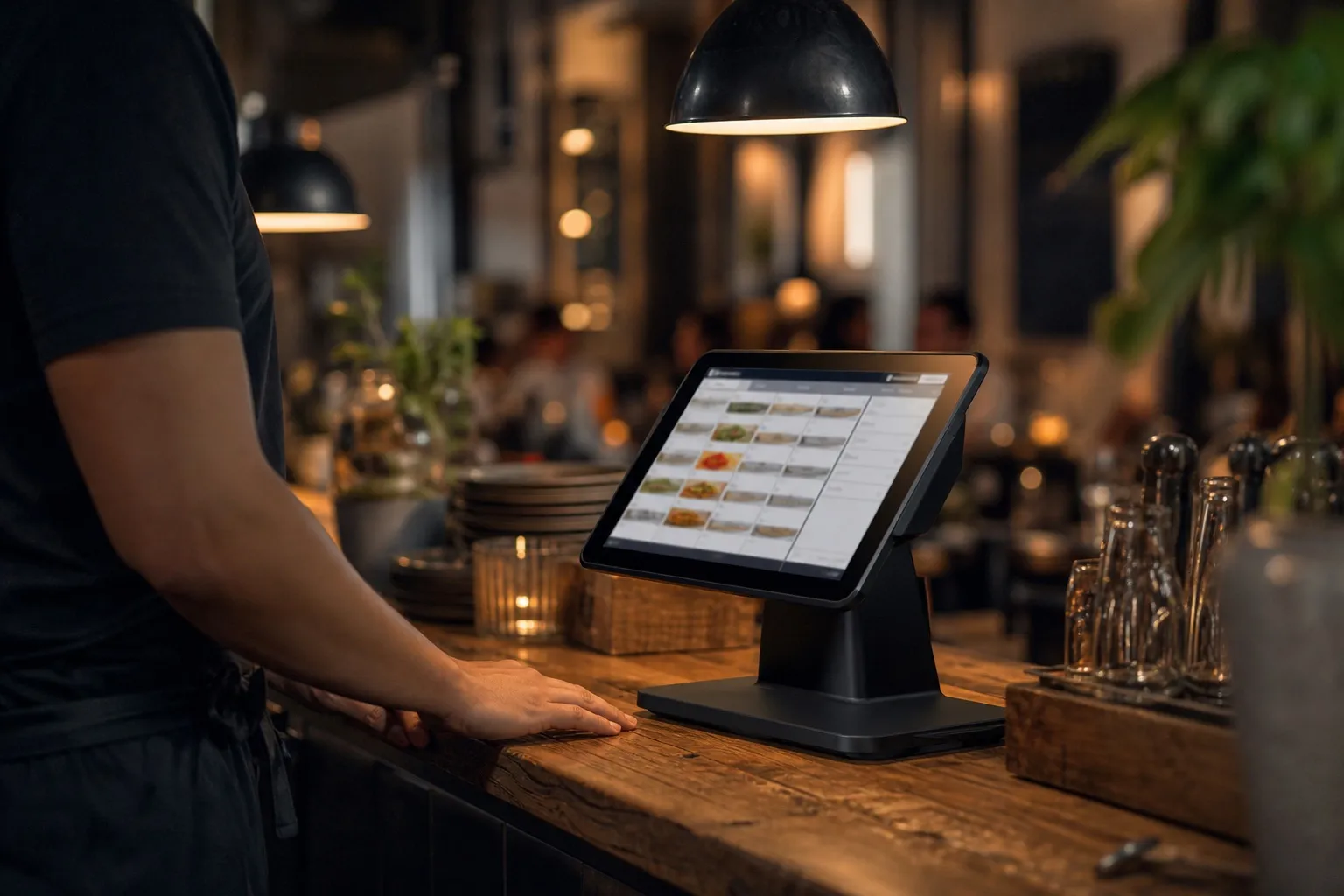
A 65% premium on Olo isn't a one-off — it's PE telling public markets that restaurant SaaS has been mispriced for two years. The cheapest multiple-upgrade trade left in the sector is AI-driven gross-margin expansion, and Toast, Lightspeed, and PAR are next.
I had Olo on the screen at 7:13 a.m. ET yesterday because a buy-side friend in Boston had been pinging me about it for three weeks. He thought the stock was a takeout, I thought the cap table looked sticky, and we’d agreed to disagree over coffee in September. Then the Bloomberg flash hit — Thoma Bravo, $10.25 a share, all cash, roughly $2.0 billion of equity value — and my phone lit up with the same three letters from four different funds: “PT?”
Here is the bottom line, stated cleanly so nobody can pretend in August that they hadn’t done the work: the 65% premium Thoma Bravo just paid for Olo is the market telling you that restaurant SaaS has been mispriced for two years, and AI-driven gross-margin expansion is now the cheapest multiple-upgrade trade left in the sector. If you cover Toast, Lightspeed, PAR Technology, or any of the still-private ordering and loyalty platforms hoping to time an IPO into a friendlier 2026, the Olo print is your new anchor — and it’s an anchor that drags every comp upward, not sideways.
Let’s walk the math, the strategic read, and the trades I’d be putting on if I ran a long-only book this morning.
The 65% number is doing more work than a one-day pop
Strip the headline of its drama and you get the numbers that matter. Olo’s unaffected stub was around $6.20 in late April. Thoma Bravo wrote a check at $10.25. That’s a 65% premium, on a name that wasn’t trading at a distressed multiple to begin with — Olo went into the rumor window at roughly 4.5x forward revenue, the cheap end of vertical SaaS but a country mile from “broken.” Restaurant Business’s deal coverage frames it as a generous take-private; my read is that “generous” is doing too much work in that sentence.
Run the comp math instead. If Olo’s standalone fair value, before any synergy or AI-driven margin lift, was around 4.5x forward sales, Thoma Bravo just paid roughly 7.5x. That’s not a control premium — that’s a thesis premium. Thoma Bravo, which closed its latest fund into a platform managing about $184 billion as of March 31, 2025, does not pay thesis premiums on accident. They pay them because they have modeled three turns of margin expansion behind a private balance sheet, and they have decided the public market won’t underwrite that math in time for the IRR clock to start ticking.
The read-through is brutal for any analyst who has been carrying a discounted multiple on Olo’s comps. Toast trades at a forward EV/sales gap that, depending on how you treat hardware revenue, is somewhere between 4 and 5 turns. Lightspeed is structurally cheaper on a sum-of-the-parts basis. PAR has been the chronic show-me name in the bunch. If Thoma Bravo will pay 7.5x for an Olo that grew Q1 ARPU in single digits, what is a buyer paying for Toast, where the Q2 print is forthcoming on August 4 and the ARPU trajectory is closer to mid-teens? The answer is “more than the screen says.”
Why this is the AI margin trade, not the consolidation trade
The lazy frame on the Olo deal is “PE buys an ordering platform.” I think that frame is wrong in a way that costs you money, because it tells you to chase the wrong follow-on trade.
Look at what Thoma Bravo’s enterprise software book has actually done with its restaurant- and hospitality-adjacent properties. The model is not “consolidate the category, fire the duplicates, run for cash.” The model is “buy a layer with switching costs, install AI-driven workflow automation on top, expand gross margin by 800 to 1,200 basis points over the holding period, sell the re-rated asset to a strategic or take it back out at a higher multiple.” That’s a margin trade dressed up as a consolidation trade.
Olo is a near-perfect canvas for that thesis. The platform sits on top of more than 750 restaurant brands; the developer ecosystem is sticky; the data exhaust from a typical enterprise franchisee — order frequency, basket composition, channel mix, daypart performance — is exactly the substrate AI needs to do useful work. The company’s own definitive agreement filing reads, between the lines, like a runway for that exact playbook: take the platform private, accelerate AI investment without quarterly-earnings supervision, and re-emerge with a margin structure that justifies a horizontal-SaaS multiple.
If that’s the trade, the implication for the public comps is straightforward. Restaurant SaaS multiples have been depressed because the market priced in two structural drags: cyclical end-market risk (restaurants miss numbers when wages spike, see the 2024 prints) and a chronic gross-margin profile in the high-60s rather than the high-70s where horizontal SaaS lives. AI-driven workflow automation — labor scheduling, menu engineering, dynamic pricing, fraud detection, inventory forecasting — attacks the second of those drags directly. Every basis point of gross margin you can pull out of customer support, professional services, and infrastructure ops shows up in EBITDA and, if the market is paying attention, in multiple. Thoma Bravo just told you they think that delta is worth more than 200 basis points of multiple expansion. You should believe them.
The Toast / Lightspeed / PAR re-rate, in plain numbers
Let me get specific about the trade, because the whole point of this column is to say something falsifiable.
Toast. The Street’s consensus has been carrying Toast at roughly 3.5x to 4.0x forward sales, with the bear case pinned to a high-50s gross-margin profile that includes hardware drag. If you back out hardware and look at the software-plus-fintech revenue stack — which is where the AI lift actually lands — the implied multiple on the recurring layer is closer to 5x. Olo’s transaction multiple, conservatively pulled back to 6.5x to strip the take-private friction, implies room for Toast’s recurring layer to re-rate by 25-30% on multiple alone, before any ARPU acceleration. With Toast’s conversational AI assistant generally available since late 2025 and shipping to its full U.S. base, the ARPU lever is real, not theoretical. A forthcoming May piece in this publication on Toast IQ’s evolution out of the Sous Chef pilot walks the product side of that lever in more detail; for the trade, the relevant fact is that the lever exists and is being pulled now.
Lightspeed. This is the cheapest name on the board on a sum-of-the-parts basis, and the one most exposed to a “you must be joking” reaction from a PE buyer if the equity stays this dislocated. Hospitality alone, carved out, is worth more than the consolidated EV implies. The Olo print gives any activist a script: file a 13D, demand a strategic review, point at the 65% premium, and ask the board why the public discount persists.
PAR Technology. The chronic show-me name, but also the one with the most operational leverage if the AI margin thesis is right. PAR’s gross-margin profile has been the weakest in the cohort; the corollary is that the basis-point recovery on offer is the largest. I’d be a buyer of PAR on weakness into the Toast Q2 print and a seller into any rip above the prior 52-week high.
The cross-cutting trade — if you can’t pick names and want sector exposure — is long the basket, short the proxy ETF. The basket re-rates because the comp sheet just moved; the proxy ETF re-rates more slowly because it weights to legacy operators and franchisor names that don’t benefit from the AI margin thesis. The spread is the trade.
The DoorDash overhang and what it does to this thesis
There is one wrinkle worth pricing carefully. The Olo deal sits inside a quarter that has already seen aggressive vertical integration moves from the demand-side aggregators — most notably DoorDash’s posture toward owning more of the in-restaurant guest data through guest-experience tooling. An upcoming May piece on the DoorDash / SevenRooms read-through gets into the strategic detail; for this column, the question is whether DoorDash’s vertical integration changes the gross-margin math behind a Thoma Bravo–style AI thesis at Olo.
My answer is “it changes the urgency, not the direction.” DoorDash is a credible threat to disintermediate the customer relationship on the demand side, but the operational data that powers AI-driven margin expansion at the restaurant — labor, inventory, menu, supply chain — is structurally upstream of the order channel. Olo (and Toast, and Lightspeed) own that data layer. The faster DoorDash moves toward the guest, the more valuable the operator-side data layer becomes, because the operator’s defense against demand-side disintermediation is to know more about its own four walls than the aggregator can. That’s an AI thesis, and it pulls in the same direction as the Thoma Bravo trade.
The companion piece in TableTransfers on yesterday’s deal — the Pass column’s same-day take on the Olo transaction — frames the strategic read in more detail. For the markets desk, the synthesis is simple: the demand-side aggregators are forcing the operator-side platforms to become better data businesses, and AI is the cheapest way to do that. Every dollar of capex Toast and Lightspeed push into AI-driven workflow tools in 2025 and 2026 is a dollar that defends their gross margin from the DoorDash overhang. The market is not pricing that defense correctly yet.
What I’d watch into the Q2 print
Here is the calendar that matters for the next eight weeks, in the order I’d watch it.
Olo’s Q2 print is forthcoming on August 4, which under normal circumstances would be the trade-defining catalyst. Under a definitive agreement, the print becomes a confirmatory data point rather than a directional one — the deal is the deal — but the ARPU line is still the cleanest read on whether the AI margin thesis has empirical legs. The setup is consistent with Olo’s prior commentary on enterprise platform ARPU, and the buy-side whisper has anticipated ARPU growth of roughly 12% year-over-year. If the print lands above that anticipated figure, every name in the comp set re-rates the following morning. If it lands meaningfully below, the trade is delayed but not invalidated, because the multiple expansion is being driven by Thoma Bravo’s underwriting model, not Olo’s standalone trajectory.
Toast’s Q2 print follows on August 4 as well (yes, the calendar is unkind). The signal to watch is not headline revenue — it’s the attach rate on the conversational AI assistant and any disclosure on ARPU lift among locations that have onboarded it. If Toast can demonstrate a measurable ARPU delta on AI-enabled locations versus the base, the Olo comp math gets applied to Toast’s recurring layer overnight.
Lightspeed and PAR are the slower compounders in this trade. I’d watch for any sign of a strategic review at Lightspeed and any contract-win announcements at PAR. Neither is binary, but both are option value.
The cross-cutting watch item is PE behavior. If Thoma Bravo’s Olo deal is the first move in a sector-wide take-private cycle, you will see a second move within ninety days — either a competing bid for an Olo adjacent name, or a take-private process initiated by another large-cap PE shop. The fact that Thoma Bravo paid a thesis premium publicly is a signal to the rest of the buyer universe that the math works. Vista, Hellman & Friedman, and Silver Lake have all underwritten this category at some point in the last five years. One of them is running the same model right now.
The bottom line: Olo at $10.25 is not the end of the re-rate, it’s the start. The cheapest multiple-upgrade trade left in restaurant SaaS is the one that gets you exposure to AI-driven gross-margin expansion before the August prints. The market is still pricing yesterday’s comp sheet. You don’t have to.
— Marcus edits The Bottom Line for TableTransfers. Tips: [email protected].
Featured
More
Browse all 494 posts
The Voice Agent Maturity Curve
mise
·12 min read
The Four Margins of a Restaurant
mise
·14 min read
The AI Premium in Hospitality M&A: Broker Story or Real Number?
the bottom line
·9 min read
What the DoorDash/SevenRooms Deal Actually Buys
the bottom line
·11 min read
Related posts

the bottom line
·11 min read
Darden trades like a tech company. It shouldn't.
the bottom line
·12 min read
Applebee's just became its own franchisee. The territory math is the trade.
the bottom line
·12 min read