Toast Crosses $2B ARR — And Tells Wall Street Toast IQ Is the Next Engine

Toast cleared $2 billion in ARR, added 7,500 net new locations, and missed on EPS. But the line management hammered on the Q3 call wasn't the GPV beat or the EBITDA guide — it was Toast IQ, the AI assistant the company says 25,000+ restaurants used 235,000+ times in its first month.
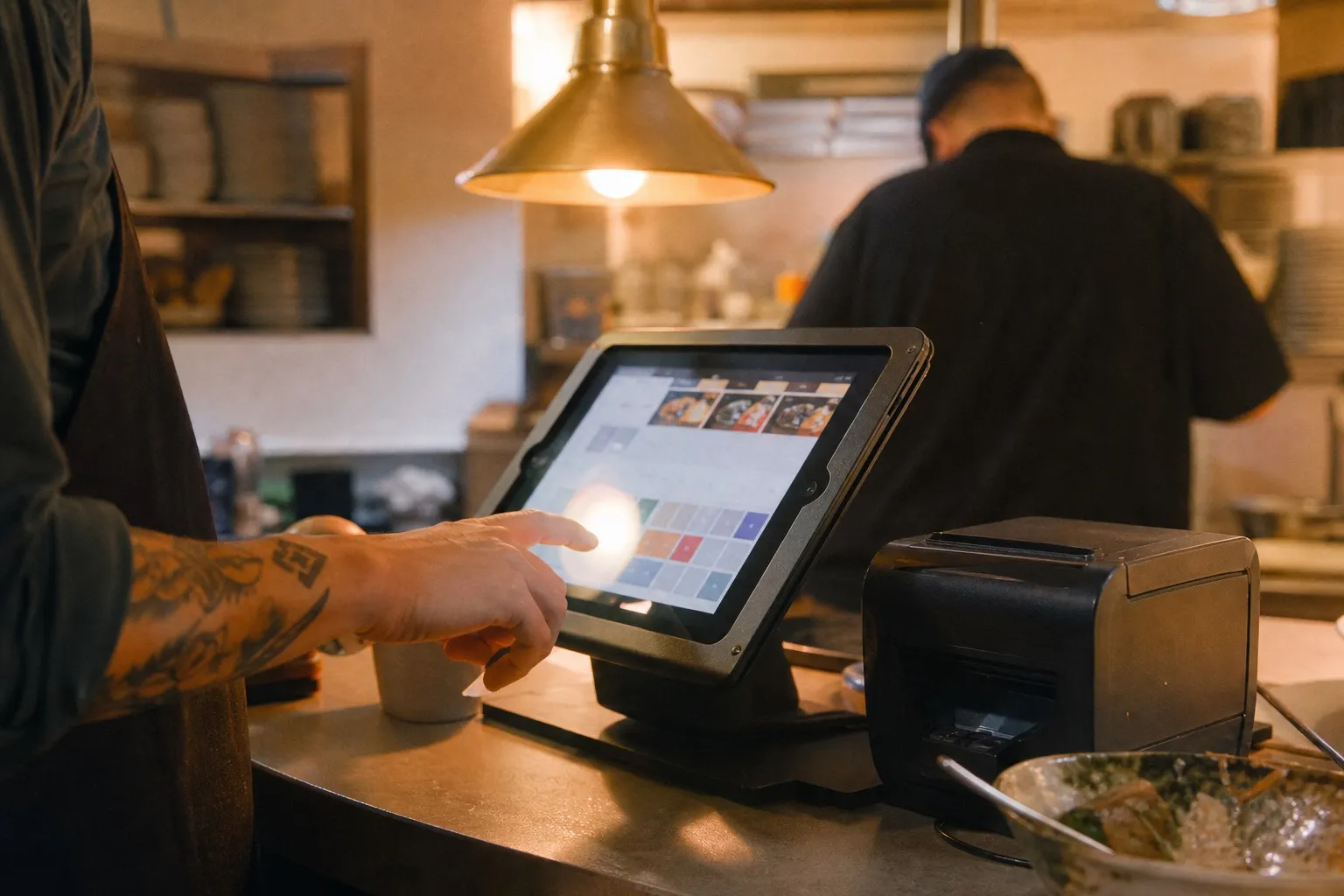
I read the Toast Q3 print on a counter in Carroll Gardens while the line cook on the other side of the pass was, I swear, asking the handheld whether to 86 the branzino. The BusinessWire release hit at 4:05 p.m. The 8-K exhibit was on EDGAR a minute later. The call started at 5:00. By the time I’d ordered the second negroni, the contrarian read was already obvious: Toast just crossed $2 billion in ARR and the equity story is no longer the GPV ramp. It’s the AI assistant.
That is not what the headline numbers tell you. The headline numbers tell you Toast did $1.63B of revenue (+25% YoY), processed $51.5B of GPV (+24%), and grew ARR to $2.016B (+30%). Adjusted EBITDA was $176M at a 35% margin. Net new locations were 7,500 in the quarter, bringing the install base to 156,000. The full-year EBITDA guide moved to $615M at the midpoint. Those are big, clean, beat-the-Street prints — except for the EPS miss, which is the one number Investing.com’s transcript coverage led on, and which StockStory’s read framed as the asterisk on an otherwise clean beat.
But Aman Narang did not spend his prepared remarks on the EBITDA margin. He spent them on Toast IQ.
The number Toast wants you to remember
The sentence from the call that I think actually matters, and that I am flagging as company-reported because it is: in Toast IQ’s first month, more than 25,000 restaurants used the assistant more than 235,000 times. That is the number management chose to put in the script. It is not yet audited. It is not yet decomposed into weekly actives, queries per active, or task-completion rate. It is, on its face, an adoption curve that is steeper than the one Toast disclosed for any prior product in the AI stack — and steeper than what the Sous Chef pilot, which I’ll cover in a forthcoming May piece, produced in roughly the same elapsed window.
Read it carefully. 25,000 restaurants is ~16% of the 156,000-location install base in the first month of general availability. 235,000 uses across 25,000 restaurants is ~9.4 uses per adopting location across the month — roughly two uses a week, which is the cadence of an operator who has wired the assistant into their Monday-morning routine but not yet into the daily prep flow. That is plausible. It is also, in my read, the lower bound of what Toast needs to clear to make Toast IQ the engine the prepared remarks are positioning it as.
The skeptic move here is to say “first-month numbers always look like that.” Sometimes. But Toast is reporting this against a 156,000-location denominator, not a 5,000-location pilot. The base rate of “operators who actually opened the new tab” inside a POS install of that size is the relevant comp, and the Toast-published number is the one we have until somebody else’s panel says otherwise. I’d take it as directionally real and reserve judgment on stickiness for the Q4 print.
What the rest of the AI stack told us
The Toast Advertising disclosure was the other piece of the call I’d flag. Management cited Pizza by the Sea — a single operator — generating roughly $400,000 in attributable revenue from the Toast Advertising network. Single-operator numbers are marketing artifacts. They are useful as proof of concept; they are not useful as run-rate math. But they do tell you which product line Toast wants analysts to model upward in 2026, and the answer is the ads stack, which is the surface area where Toast IQ’s recommendation layer will eventually plug in if the company executes the way Narang has been hinting since the spring.
The locations number — 7,500 net adds — is the floor under all of this. ARR doesn’t get to $2B without the install base, and the install base doesn’t get to 156,000 without the boring quarter-over-quarter sales machine that Toast has been refining for a decade. The AI story is the multiple-expansion story. The locations story is the revenue story. Both have to be true for the equity narrative to hold.
Mark interpretation
Toast IQ is the line management wants Wall Street to underwrite, and the 25,000/235,000 disclosure is the proof point they’re handing analysts to do it with. I think the number is real. I also think the right way to read it is as a funnel metric, not a retention metric — Toast told us how many doors opened in October, not how many of those doors are still being walked through in November. The Q4 disclosure, if it includes weekly actives or queries-per-location, will tell us whether the engine is real or whether month one was the launch-week curiosity bump. I’d watch for the next print and for an upcoming desk review reading the AI stack end-to-end from the outside.
The EPS miss is the headline the wires led with. The ARR crossing $2B is the headline Toast led with. The headline that I think will matter in twelve months is the one buried three paragraphs into the prepared remarks: that an AI assistant Toast was still calling Sous Chef in spring is now in 25,000 kitchens and being asked, on average, twice a week, whether to 86 the branzino.
— Maya covers restaurant tech for TableTransfers. Tips: [email protected].
Featured
More
Browse all 494 posts
The Voice Agent Maturity Curve
mise
·12 min read
The Four Margins of a Restaurant
mise
·14 min read
The AI Premium in Hospitality M&A: Broker Story or Real Number?
the bottom line
·9 min read
What the DoorDash/SevenRooms Deal Actually Buys
the bottom line
·11 min read