Toast Go 3 Lands: Cellular, AI Upsells, and a Clear ToastIQ Bet

Toast's third-gen handheld arrives with built-in cellular and ToastIQ-powered upsells. The price tells you everything: Toast is subsidizing hardware to keep the AI flywheel spinning.
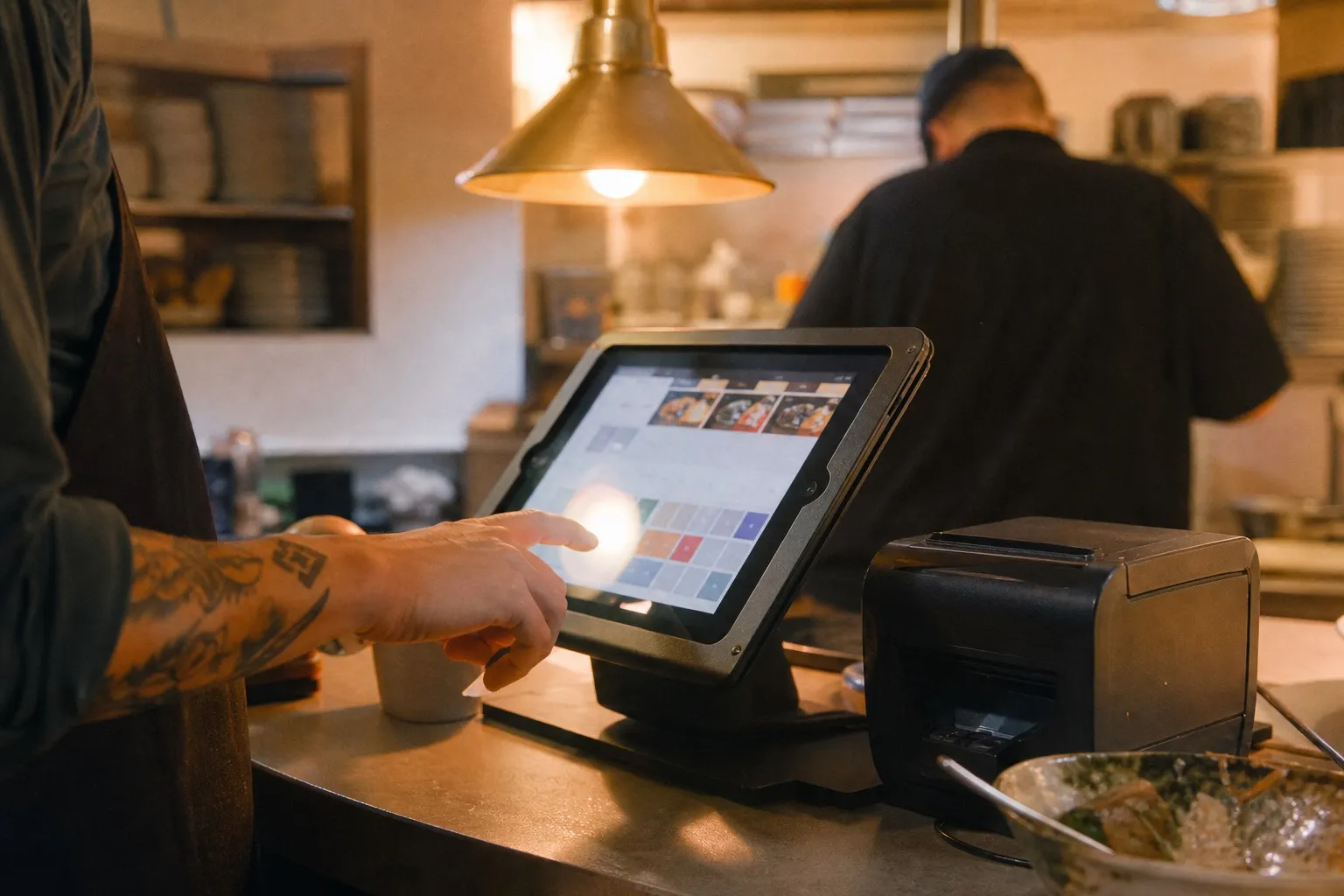
I’m watching a server at a Hell’s Kitchen trattoria thumb through a tasting-menu order on a Toast Go 3 demo unit, and the device keeps nudging her: a Barolo pairs with the short rib; the tiramisu is moving fast tonight. She rolls her eyes — politely — and then taps “add.” The check climbs eleven dollars in two seconds. That’s the whole story of Toast’s July 31 handheld launch, and the price tag is the giveaway. Toast Go 3 starts at $599 for Wi-Fi-only and $749 for the cellular model with a $20/month data plan. That is not a margin-maximizing number for a company that has historically treated hardware as a revenue line. Toast is subsidizing the handheld to keep ToastIQ — its AI layer — in front of every server, every ticket, every shift. The device is the trojan horse. The software is the bet.
The hardware is the wrapper
Let’s be clear about what Toast actually shipped. The Go 3 is a refresh — better battery, a sturdier shell, the now-table-stakes “drop it on the tile and it survives” build quality. Cellular connectivity is genuinely useful for patios, food trucks, and the third-floor rooftop where Wi-Fi goes to die. But none of that is why this device matters. The reason it matters is the three AI features Toast bolted on for the launch: Menu Upsells, Digital Chits, and Shift at a Glance. Menu Upsells is the loud one — real-time, contextual suggestions surfaced to the server mid-order, drawing on what’s selling tonight, what’s on 86, what pairs with what’s already on the ticket. Digital Chits replaces the paper ticket trail between front and back of house with a structured, queryable record. Shift at a Glance gives managers a live read on labor, sales pace, and prep load without opening a laptop.
Each of those is a small thing on its own. Together they are the operational substrate ToastIQ needs to actually do work. You cannot run a useful upsell model without knowing what’s on 86 right now. You cannot do real labor forecasting without clean ticket-to-fire-time data. You cannot give a GM a live dashboard without the underlying events being captured cleanly at the point of sale. The Go 3 is the data-collection device. The AI is what Toast plans to monetize on top of it.
Which is why the $599 sticker is so loud. Square’s Terminal sits in roughly the same neighborhood. Clover’s handhelds are higher. Toast had room to charge $899 here, and the company has not historically been shy about hardware pricing. They chose not to. The unit economics on a $20/month cellular plan are not the story either — Toast is not building a margin business on connectivity. The story is fleet penetration: more Go 3s in more sections in more restaurants means more reps for the upsell model, more chit data feeding back-of-house forecasting, more shift telemetry training the manager-side AI. The hardware loss leader pays for itself the first time a four-top adds a $14 wine pairing because the device prompted it.
Mark this as the ToastIQ inflection
I want to flag something for the record: this launch is the moment ToastIQ stops being a roadmap deck and starts being a product surface restaurants can actually feel. The branding has been around since earlier in the year — a forthcoming May piece on these pages walks through the ToastIQ pitch in detail — but until today the AI features were mostly back-office: forecasting modules, scheduling assists, the kind of thing a GM might or might not open on a Tuesday. Menu Upsells changes that. It puts the model in the server’s hand, in front of the guest, at the exact moment money is on the table. That’s a different kind of product. It is also a different kind of risk — every contextual suggestion is a tiny trust transaction with the server, and servers have very fast bullshit detectors. If the model recommends the Barolo with the salmon, the device gets put face-down on the next pass.
That’s the bet worth watching. Toast is wagering that the upsell model is good enough — on day one, in September when GA hits — that servers will tolerate the prompts, and good enough by month six that they actively rely on them. The company is not the only player making this bet on the AI-at-the-table layer. An upcoming May piece on DoorDash’s tie-up with SevenRooms reads as a parallel move from a different angle: ownership of the guest signal as the strategic prize, with the operational surface as the means. Toast is approaching it from the POS side. DoorDash from the marketplace side. Both companies have figured out that whoever holds the contextual data at the point of decision — what to order, what to comp, what to recommend — owns the next decade of restaurant tech margin.
What I’d watch between now and September GA
Three things. First, the upsell-attach number Toast publishes (or quietly stops publishing) after the first ninety days. If they lead with it on the Q3 earnings call, the model is working. If they pivot to talking about hardware unit sales, it isn’t. Second, whether the $599 price holds or quietly creeps up once fleet adoption is locked in — a classic subsidize-then-recoup move. Third, the back-of-house side. Digital Chits is the sleeper feature here. If kitchens actually adopt it — and that is a real if, because line cooks have killed more “paperless kitchen” initiatives than any other constituency in this industry — Toast gets a clean event stream from order-fire to plate-up that nobody else in the POS category has. That data is worth more than any handheld margin.
The Go 3 ships in September. The interesting question isn’t whether restaurants will buy it. It’s whether ToastIQ, riding on the back of it, becomes the layer everyone else has to compete with.
— Maya covers restaurant tech for TableTransfers. Tips: [email protected].
Featured
More
Browse all 494 posts
The Voice Agent Maturity Curve
mise
·12 min read
The Four Margins of a Restaurant
mise
·14 min read
The AI Premium in Hospitality M&A: Broker Story or Real Number?
the bottom line
·9 min read
What the DoorDash/SevenRooms Deal Actually Buys
the bottom line
·11 min read