Toast + Ike's Love & Sandwiches: 100 locations, and a sub-segment win that nobody else is talking about


Toast announced its Ike's deployment Thursday morning: 100 locations, POS terminals and Kiosks, framed as a long-term enterprise partnership. With Teriyaki Madness earlier this year, Toast has now stitched together a 50–200-unit chain segment win that Olo, NCR Voyix, and Qu have all been chasing — and the pattern is the story, not the logo.
I caught the Toast/Ike’s release on the wire just before nine on Thursday morning, a coffee going cold next to me and the Slack channel I keep open for restaurant-tech press starting to light up. The press copy read like the bigger version of a deal Toast has been doing all year: Ike’s Love & Sandwiches, 100 locations, POS terminals plus self-order Kiosks, “long-term enterprise partnership”. I have read enough of these announcements at this point to know what to skim and what to slow down on. The thing I slowed down on was not the logo — it was the segment.
The contrarian read I want to put down before this story gets pattern-matched as “Toast wins another chain”: Toast is now visibly winning the 50–200-unit chain segment, which is the segment Olo, NCR Voyix, and Qu have all been openly competing for, and the win is not luck. Teriyaki Madness — a chain north of 200 units — moved earlier this year. Ike’s is the second deployment of this size in a quarter. Two data points is not a trend; in this segment, two data points in three months is a pattern. Mark it as such.
The shape of the deal, read carefully
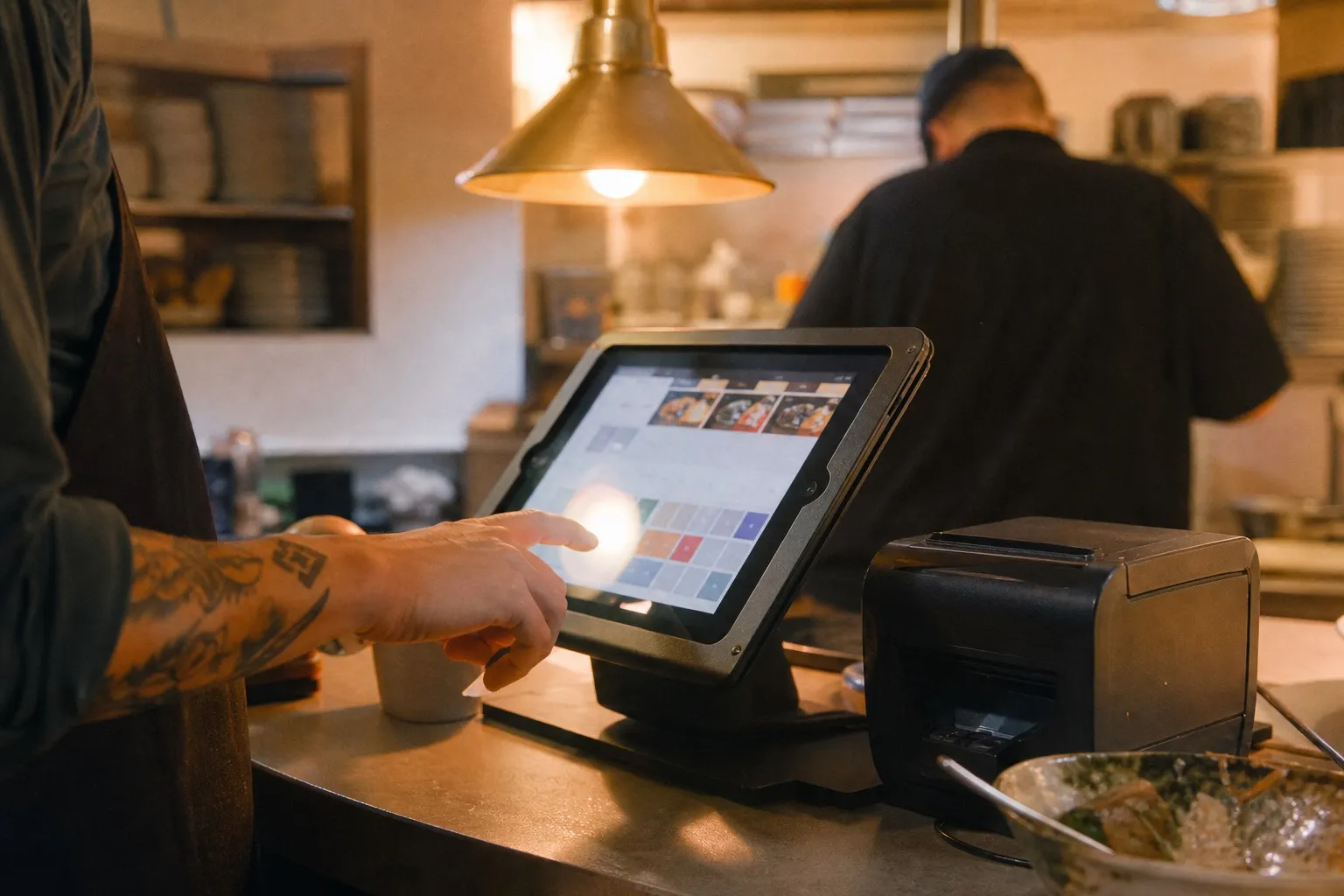
The deal terms in the release are unusually specific for a Toast announcement. POS terminals at 100 sites is the table-stakes piece — Toast wins those head-to-heads against legacy NCR and against the long tail of Square deployments most weeks. The piece that is harder to ignore is the Kiosk count. Self-order Kiosks are the lane that Olo’s Borderless and the recent Qu deployments have been pitching aggressively, and they are the lane where the hardware-and-software bundle actually has to compete on the floor of a sandwich shop at lunch rush. Toast bundling Kiosks into a 100-location enterprise deal is the company telling the analyst community that the hardware story is no longer just a front-of-house counter terminal.
A sub-segment win matters more than a logo win because it is replicable. Ike’s is not a Chipotle. It is not a Sweetgreen. It is a fast-casual chain operating at exactly the unit count where most of the U.S. restaurant industry’s growth is happening — multi-unit operators who have outgrown Square but who do not want the procurement weight of an NCR rip-and-replace. That cohort, in my reporting notebook for the last twelve months, has been the most-courted and least-decided segment in the category. Two of them just decided. Both of them picked Toast.
The narrative the numbers already told
This is the part where I think the bull case stops being about logos and starts being about ARR. Toast printed FY26 ARR growth of 26% coming out of Q4 2025, which is the disclosure operators and investors have actually been pricing against the AI-suite narrative this spring. The 26% number is not a chain-segment-specific figure, but the composition matters: enterprise wins of this size are the multiplier on net new ARR, and they are the wins that show up in next year’s print rather than this one. Two enterprise deployments in one quarter is the kind of pipeline conversion that, played out across the rest of 2026, makes 26% look conservative.
CEO Aman Narang has been on this exact strategy since the spring release. His framing through the last several quarters has been the data-graph moat — the 160,000-plus locations, the joined payment and menu and traffic data, the AI features layered on top. The chain-segment wins are the corollary that has been quieter: data-graph leverage is what an enterprise procurement team buys when it picks Toast over Olo. Ike’s is exhibit B. Teriyaki Madness was exhibit A. The Q1 disclosure on May 7 is when we find out whether exhibits A and B have started showing up in the ARR composition the way I am reading them.
What this means for the rest of the board
Olo is the company that will feel this one the hardest. The Borderless pitch and the chain-deck strategy have been built around the 50–200-unit cohort, and Olo’s investor narrative has leaned on the idea that Toast is a small-restaurant brand that does not scale into enterprise procurement cycles. Two deals of this size, in one quarter, are the kind of evidence that breaks that frame. NCR Voyix has a different problem — Toast is taking the chains that NCR is no longer the assumed default for, and the Ike’s release reads, on the floor, like another deployment NCR’s enterprise team was probably in the room for. Qu’s pitch is sharper than either, but the Kiosk bundle is exactly the territory Qu has been working to defend.
The cross-link I want operators to keep tabbed: the Toast IQ rebrand from last year framed the conversational and agent layer as the front door; the Toast AI Suite vibe check from early March laid out the data-graph moat reading underneath it; the Fast Company stamp from March 25 marked the peak of the narrative cycle. Thursday’s deployment is the first post-narrative-peak data point, and it is a chain-segment one. That is the marker. The forthcoming May desk review of the full Toast suite will read against the Q1 print and against the chain pipeline both — and the chain pipeline, on this Thursday morning, is the thing that just got more interesting than the agent.
Toast got Ike’s. Olo, NCR, and Qu all wanted Ike’s. That is the headline under the headline.
— Maya covers restaurant tech for TableTransfers. Tips: [email protected].
Featured
More
Browse all 494 posts
The Voice Agent Maturity Curve
mise
·12 min read
The Four Margins of a Restaurant
mise
·14 min read
The AI Premium in Hospitality M&A: Broker Story or Real Number?
the bottom line
·9 min read
What the DoorDash/SevenRooms Deal Actually Buys
the bottom line
·11 min read