Toast Lands Applebee's — the Biggest Deal in Its History


Applebee's choosing Toast over a refresh with NCR/Aloha is the moment Toast graduates from SMB darling to enterprise standard, and it's Q1's most important footnote.
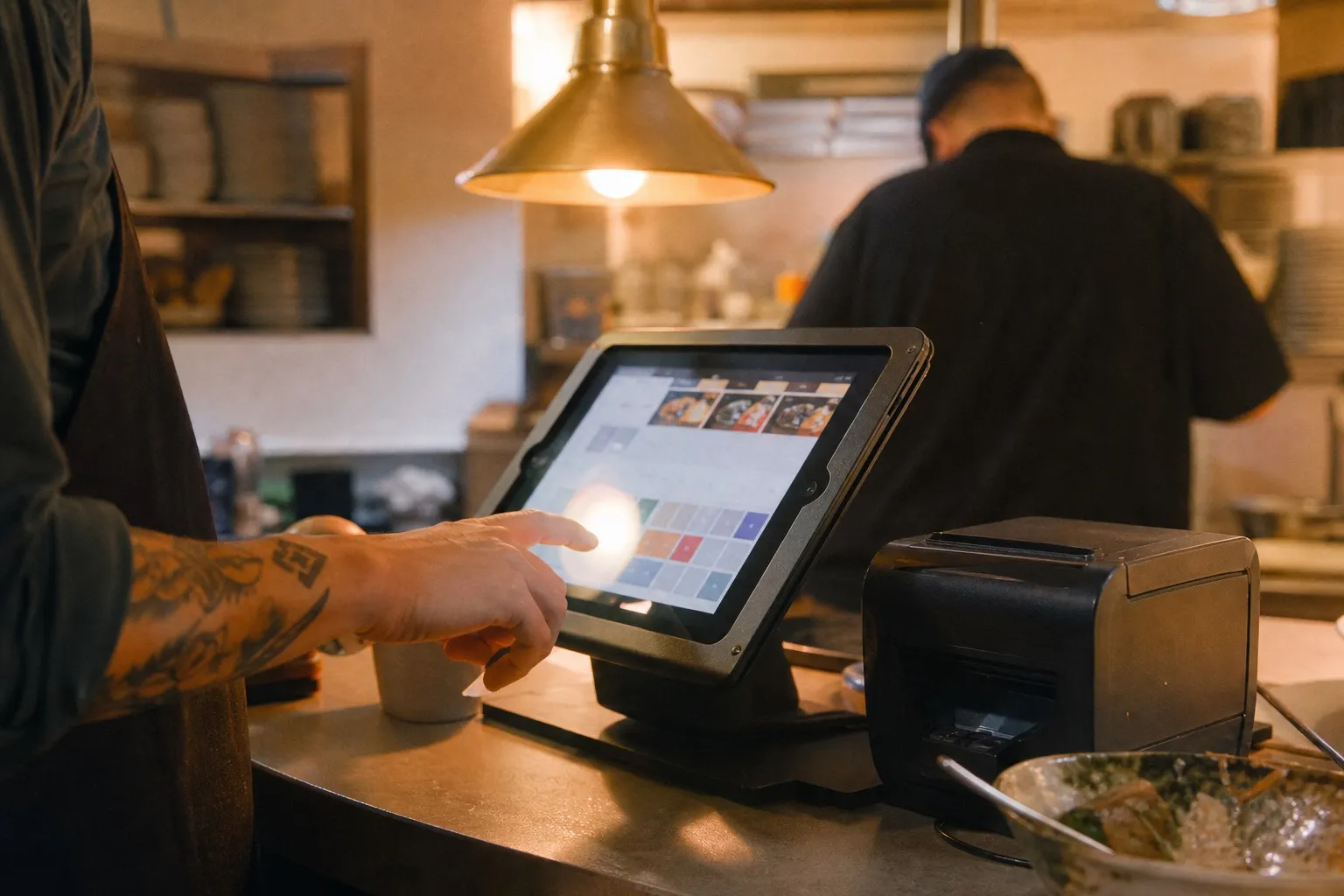
I’m sitting in a corner booth at an Applebee’s off I-95 on a Thursday at 1:47 PM when my phone lights up with the Toast Q1 release. The server — her nametag says Brianna — is punching my Bourbon Street Chicken & Shrimp into a chunky black handheld that is unmistakably an NCR Aloha terminal. She apologizes that it froze for a second. “It does that,” she says, with the resigned half-smile of someone who has worked the lunch rush for three years. I scroll to the headline line on the Toast investor release while she walks back to the line: “largest customer agreement in company history.” It’s Applebee’s. The terminal in Brianna’s hand is, effectively, already a relic.
That is the scene I want to anchor this column on, because the rest of the Toast Q1 print is almost beside the point. The numbers were perfectly good — 140,000 locations, ARR of $1.7B, adjusted EBITDA of $133M, 6,000-plus net adds in the quarter — but I have been watching this company since the IPO and I will tell you straight: the single most consequential sentence in the Q1 release on Business Wire is not a number. It is the casual aside that Applebee’s signed as the largest deal in Toast’s history, with Topgolf following as a US enterprise rollout in the same breath. My read: this is the quarter Toast graduates from SMB darling to enterprise standard, and the multiple should rerate.
The Aloha vacuum is real, and it just got a face
Casual dining’s incumbent stack has been NCR Aloha for two decades. That stack is not bad, exactly — it is just old, and the corporate parent has been sliced and rebranded enough times (NCR Voyix, the Aloha carve-out drama, the private equity overhang) that brand IT teams have spent the last three years quietly asking whether a refresh-in-place was even possible. Applebee’s, owned by Dine Brands, sits at 1,594 total restaurants per Dine Brands’ Q1 8-K filed yesterday — and the franchise base has been openly griping at conferences about POS for at least eighteen months. So the question was never if Dine moved. The question was where. Toast’s matching Q1 exhibit on EDGAR confirms the deal language in plain text.
That it went to Toast and not to one of the legacy enterprise stacks — not to an Oracle Simphony, not to a refreshed Aloha-on-cloud, not even to a multi-vendor patchwork — tells you the gravity has shifted. My read: the implicit message Dine sent the rest of casual dining is that the safest enterprise choice in 2025 is the one the independents have been voting for since 2018. The risk profile of “the SMB vendor” has officially inverted.
Why this is bigger than one logo
The pushback I’m already seeing on fintech Twitter is that 1,594 corporate-plus-franchise Applebee’s restaurants is not, in raw count, a needle-mover against a 140,000-location installed base. That is true on the spreadsheet and almost entirely wrong on the strategy.
Three reasons. First, casual-dining enterprise is the segment where Toast’s gross profit per location is highest — these are full-service, multi-revenue-center boxes with handhelds, kiosks, online ordering, loyalty, payroll, and the back-of-house Toast attaches like a vine. ARPU on a 1,500-unit casual-dining brand is not 1,500x an independent café; it is materially more.
Second, the reference effect. The cliché in B2B SaaS is that nobody gets fired for buying IBM; the corollary in restaurant tech for fifteen years has been that nobody got fired for buying Aloha. The Applebee’s logo, alongside Topgolf, ends that sentence. My read: every casual-dining CIO whose Aloha contract is up for renewal in the next eighteen months just had their decision tree pruned.
Third, and this is the one most people are missing — it shortens the sales cycle for the Buffalo Wild Wings and Chili’s and IHOP-equivalents of the world by what I’d estimate as a full quarter. The land at Topgolf, an entertainment-eatertainment hybrid with a brutally complex F&B operation, is the technical proof point. The land at Applebee’s is the franchise-relations proof point. Together they answer the two objections enterprise has always thrown at Toast: “can you handle our complexity” and “can you handle our franchisee politics.”
What Q1 actually says under the hood
Strip out the Applebee’s headline and the print is still the cleanest Q1 Toast has put up. ARR at $1.7B is +31% — accelerating relative to where the bears expected it to settle as the law-of-large-numbers kicked in. 6,000-plus net adds in a single quarter is roughly the pace of all of 2021. And the $133M adjusted EBITDA print is the part that actually changes the analyst models in the morning: this is no longer a “growth at any cost” narrative. The unit economics on the existing book are doing the work.
I keep coming back to the adjacent expansion too — the company has been quietly seeding hotels, stadiums, and convenience formats, and the platform is starting to look less like a POS and more like an operating system. That is the thesis I have been writing under for two years, and as our later coverage of the POS-side AI suite argues, the next leg is the AI layer wrapping that OS.
My read: the right comp set is no longer Lightspeed and Square; it is the vertical SaaS leaders that broke out of their mid-market origin stories — your Veevas, your Procores. Those names rerated when their largest-customer-in-history slide stopped being a one-off and became a quarterly cadence. Toast is one or two Applebee’s away from that cadence.
What I’m watching at NRA
The National Restaurant Association show opens May 17 in Chicago, and the floor energy this year will tell you whether Aloha has a credible counter-narrative or whether the franchise community has already moved on. I’ll be working the casual-dining IT manager track hard. The tells I’m watching for: how aggressively Oracle Simphony talks about its casual-dining wins, whether NCR Voyix shows up with a refreshed handheld story, and — the real one — how many Toast green polos are doing private dinners with multi-unit franchisee groups in the hotel bars off Michigan Avenue. That is where deals like Applebee’s actually get made.
The other watch item is the operator side. The kitchen-layer automation story is parallel to the POS-layer enterprise story, and the brands that are winning are coupling both — in our subsequent Operator case study on the kitchen layer I get into how Sweetgreen is pairing its kitchen platform with a POS-side stack, and the lesson there generalizes. Casual dining is next.
Brianna brought my check on the Aloha handheld. I tipped her well. The next time I sit in that booth, she’ll be holding a Toast Flex. The math says it’ll be sooner than the consensus thinks.
— Maya covers restaurant tech. Tips: [email protected].
Featured
More
Browse all 494 posts
The Voice Agent Maturity Curve
mise
·12 min read
The Four Margins of a Restaurant
mise
·14 min read
The AI Premium in Hospitality M&A: Broker Story or Real Number?
the bottom line
·9 min read
What the DoorDash/SevenRooms Deal Actually Buys
the bottom line
·11 min read