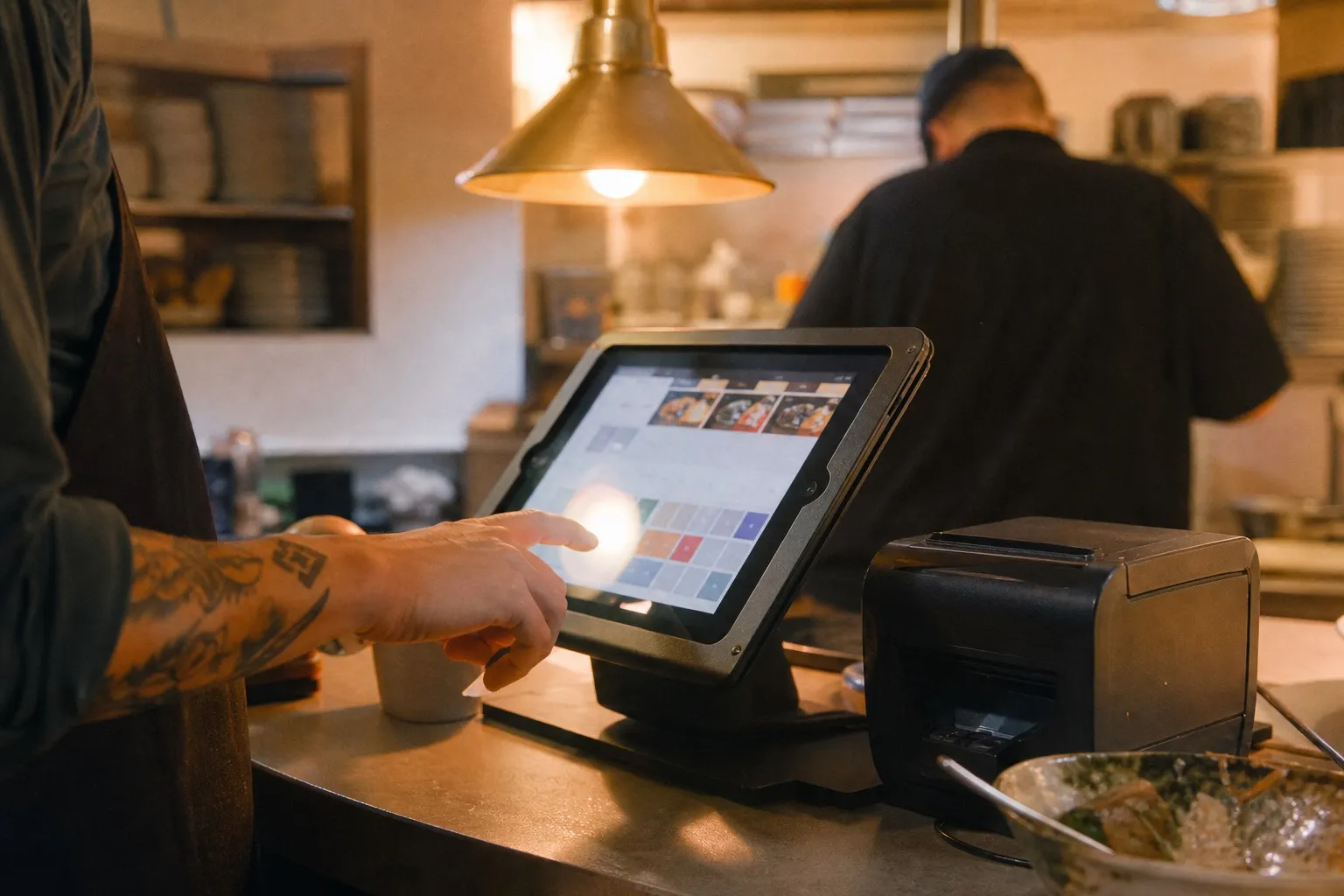
Toast Picks 14 of 20 Bon Appétit Best New Restaurants. The Marketing Flywheel Becomes a Moat.


Toast didn't sponsor Bon Appétit's Best New Restaurants list for press. It bought the most credentialed shortlist in American dining and wrapped it in a revenue claim. That's customer acquisition disguised as a campaign.
I was halfway through a tasting menu in Bed-Stuy on Thursday night when my phone lit up with the BusinessWire release: Toast and Bon Appétit, jointly celebrating the 2025 Best New Restaurants list. Fourteen of the twenty honorees, the release noted, run on Toast. The chef in front of me — not a Toast customer, for what it’s worth — shrugged and said, “Of course they do.” Then he plated the next course and walked away.
He shouldn’t have shrugged. What Toast announced today is not a co-marketing campaign. It’s a customer-acquisition strategy with a revenue claim bolted to the front of it, and the rest of the POS market should be reading it that way.
The list as a billboard
Bon Appétit’s Best New Restaurants list is, by any honest reckoning, the most credentialed shortlist in American dining. It is reported out by Leslie Yeh’s editorial team over months of travel and tasting; it lands in the September issue; it sells tables for a year. To sponsor it is to buy proximity to that judgment.
Toast didn’t buy proximity. Toast bought the punchline. Per the Toast newsroom post, 14 of the 20 honorees were already on the platform before the list was announced. The partnership wraps that pre-existing fact in a “Little Things” creative campaign featuring Keith Lee, Sophia Roe, and the team at Marea, plus a limited-time offer window running September 15-28 where diners can activate honoree menus through Toast’s surfaces.
Read the structure carefully: the headline is editorial credibility (Bon Appétit picked these restaurants), the body is operator validation (the editorial winners happen to run on Toast), and the call to action is a customer-acquisition pitch wrapped in a benchmark — that Toast restaurants generate “30% greater than average US restaurant” revenue, measured against a third-party sample of roughly 875,000 US restaurants over 2023-24.
That 30% number deserves a flag, and I’ll plant it here: it is Toast-reported, the comparison methodology has not been independently audited, and the sample-construction question — which restaurants are “Toast restaurants” and which are “the average US restaurant” — matters enormously to whether the gap is causal, selection-driven, or both. Kelly Esten, Toast’s CMO, told the trades that the campaign is meant to “celebrate the little things that make great restaurants great.” Fine. The little things on the marketing deck are the 30% claim and the Bon Appétit logo.
Why this is a moat, not a campaign
Here’s the contrarian read. POS vendors have historically competed on three axes: feature parity, pricing, and field sales. The category is now so crowded — Square, SpotOn, Lightspeed, Clover, plus a long tail of vertical specialists — that feature parity is roughly a wash for any operator under $5M in annual revenue. Pricing is converging toward a band. Field sales remains expensive and slow.
What Toast has done, quietly, over the last twenty-four months, is build a fourth axis: editorial and creator gravity. The Keith Lee partnership, the Sophia Roe activation, the Marea cameo, and now the Bon Appétit imprimatur — each of these is a stand-alone marketing beat, but stacked together they form an acquisition surface that no competitor can replicate without spending years and tens of millions of dollars on credibility infrastructure.
Mark interpretation here: the Bon Appétit deal is not the campaign. The campaign is the demonstration that Toast can land the Bon Appétit deal. Every operator opening in 2026 who sees that 14-of-20 number is being told, in advance, where the cool kids host their POS. That is not a logo on a list. That is a customer-acquisition funnel with a magazine sitting on top of it, and it compounds in a way that a discount or a hardware promo simply does not.
What I’d watch
Three things, from where I sit:
First, the September 15-28 LTO window is the actual experiment. If Toast can show measurable diner activation through its surfaces during that window — not just impressions, but bookings and check averages at honoree restaurants — the partnership template gets replayed in 2026 with a bigger creator slate. That is the playbook to track, and it’s the one I’ll be digging into in an upcoming desk review.
Second, the 30% revenue claim is going to get pressure-tested by both competitors and the trade press, including this one. I want to see the sample construction.
Third, Toast IQ — the recommendation and benchmarking layer Toast has been quietly seeding into the back office — is the connective tissue that makes a campaign like this defensible at scale. The Bon Appétit moment is the front of the store. The IQ stack is the kitchen, and I’ll have more on that in a forthcoming May piece.
For now, the read is simple. Toast didn’t pay for a press hit. It paid for a moat. Watch what the rest of the category does in the next ninety days.
— Maya covers restaurant tech for TableTransfers. Tips: [email protected].
Featured
More
Browse all 494 posts
The Voice Agent Maturity Curve
mise
·12 min read
The Four Margins of a Restaurant
mise
·14 min read
The AI Premium in Hospitality M&A: Broker Story or Real Number?
the bottom line
·9 min read
What the DoorDash/SevenRooms Deal Actually Buys
the bottom line
·11 min read