UK ETA Goes Live: A Quiet £10 Tax on Hospitality Discovery
The UK's Electronic Travel Authorisation scheme — live January 8 — adds a friction layer between European tourists and UK restaurants. Northern Ireland operators bear the disproportionate cost.
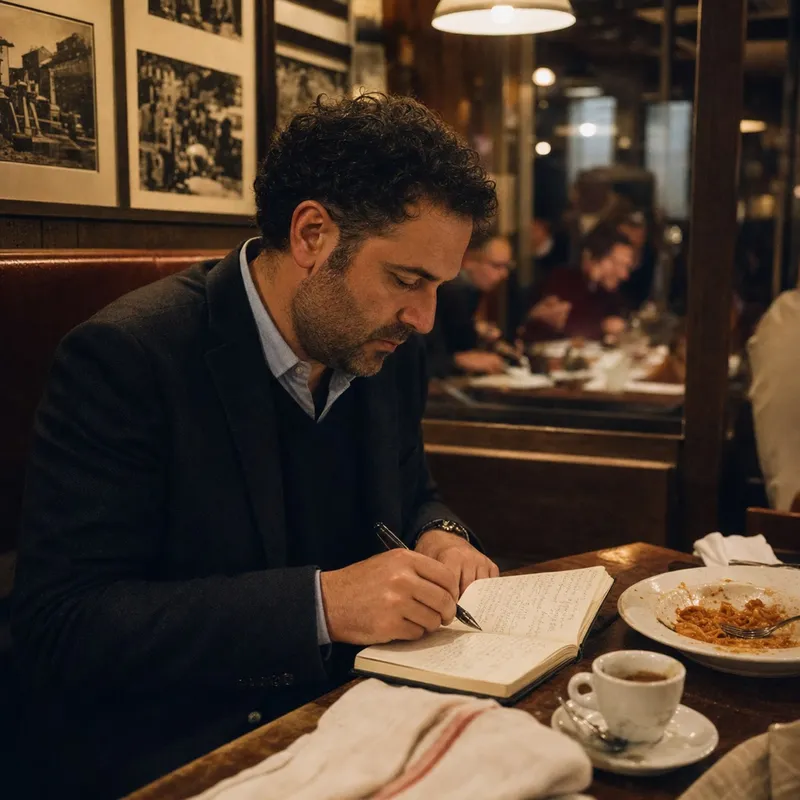
I was sitting in the half-empty front room of a Fitzrovia trattoria last Friday — eight days after the UK’s Electronic Travel Authorisation scheme went live on January 8 — when the owner slid a printout across the marble. It was a screenshot of a cancellation email from a four-top of Milanese regulars who come over twice a year for the Frieze hangover. “They didn’t know,” he said, tapping the screen. “They thought it was a scam email about a £10 charge. So they booked Paris instead.” He wasn’t angry. He was tired. And he asked me the question every UK restaurateur is going to ask in 2025: how many of these did I lose without ever knowing?
That, more than anything, is what the ETA actually is. Not a visa. Not a wall. A tollbooth on the road to discovery — and the cost shows up on a P&L the operator can’t see.
Small per visitor, large in aggregate
Let me say the contrarian part out loud, because most coverage so far has either been “it’s only £10, stop whining” or “it’s a Brexit catastrophe.” Both are wrong. The honest read is geometric.
A £10 ETA is genuinely trivial against a Eurostar fare and a two-night Bloomsbury hotel. Nobody who has decided to come to London is going to flinch. The fee, per the gov.uk guidance, is simple, the application is online, and approval is typically minutes. As friction goes, it sits well below the US ESTA and miles below a Schengen visa.
The damage isn’t at the point of decision. It’s at the point of consideration. The marginal Lyonnais couple browsing a Saturday in February — Paris, Amsterdam, or London? — now has one more box to tick for London, and they don’t even know they need to tick it until they’re mid-booking. That’s the moment the basket gets abandoned. The ETA doesn’t lose you the diner who was definitely coming. It loses you the diner who was 60/40 on coming and now drifts to 50/50. Multiply by every short-haul European trip in 2025, and a £10 fee starts looking like a discovery tax that quietly redistributes weekend covers from Soho to Saint-Germain.
My read: this is a textbook case of a cost that’s small at the line item and material at the funnel.
Northern Ireland is the canary
If the rest of the UK is going to feel this in aggregate, Northern Ireland is going to feel it acutely, and it deserves its own paragraph because the border math is genuinely strange.
A tourist flying into Dublin and driving up the M1 to a Belfast restaurant for dinner now needs an ETA to cross what is, functionally, an invisible border. UKHospitality has been raising the alarm for months — see their running coverage — and operators I spoke to in Belfast this week are blunt: the cross-border day-tripper from the Republic, the bus tour that nips up for a Titanic Quarter lunch, the wedding guest in Donegal who wanted to do a Sunday roast in Derry — these are exactly the marginal trips that ETA awareness friction will kill first. Not because £10 is the issue, but because finding out you need a £10 thing twelve hours before is the issue.
The Republic of Ireland passport-holder exemption helps. The Republic-resident non-Irish-passport friend they’re travelling with doesn’t get the same pass. That’s a household-level booking decision, and it usually rounds down to “let’s just stay south.”
Pinsent Masons’ 2025 regulatory roundup puts ETA alongside the other 2025 cost shocks, and that’s the right framing — but I’d argue ETA is the only one where the geography of the cost is this lopsided. NI operators are paying for a Westminster border policy with their dinner covers.
The cost layer no one’s pricing in
Here’s the thing nobody at the operator level is modelling yet, and it’s the bit I keep coming back to.
The ETA didn’t land in a vacuum. It landed on top of an Autumn Budget that lifted employer National Insurance Contributions and lowered the threshold at which they kick in — a meaningful payroll cost rise for a sector where wage bill is already 30%+ of revenue. Then add the National Living Wage step in April. Then add the packaging EPR fees. Then add a possibly-softer-but-still-real consumer environment.
ETA, on its own, is a £10 line item charged to the diner. Stacked on the rest, it’s another straw on a camel that’s been collecting them since Q3. As our later Mise framework on regulatory-cost layers argues, the danger isn’t any single regulation — it’s the compounding effect of small frictions that individually look survivable and collectively reshape who can afford to operate.
My read: the operators who’ll absorb this best are the ones who already have direct relationships with their international diners — newsletters, loyalty, owned channels — so they can tell their French regulars about the ETA before booking.com does it for them, badly, at checkout. We get into the mechanics of that owned-channel stack in a later piece we publish on the loyalty/payments stack, but the principle is straightforward: the more of your demand you control, the less the friction at the border becomes friction at your door.
The operators who’ll feel it worst are the ones whose international demand is entirely intermediated — OTAs, third-party booking platforms, walk-ins from hotel concierges. They won’t see the cancellations. They’ll just see a softer February than last year and assume it was the weather.
It wasn’t the weather. It was the tollbooth.
— Luca covers restaurant operators. Tips: [email protected].
Featured
More
Browse all 494 posts
The Voice Agent Maturity Curve
mise
·12 min read
The Four Margins of a Restaurant
mise
·14 min read
The AI Premium in Hospitality M&A: Broker Story or Real Number?
the bottom line
·9 min read
What the DoorDash/SevenRooms Deal Actually Buys
the bottom line
·11 min read