UK Hospitality Confidence Cratered to a Two-Year Low — and the April Cliff Hasn't Even Arrived
Per CGA for NIQ's Business Confidence Survey, just 14% of UK hospitality businesses are optimistic. The April NIC + NLW double-hit is forcing operators to fast-track AI deployments.
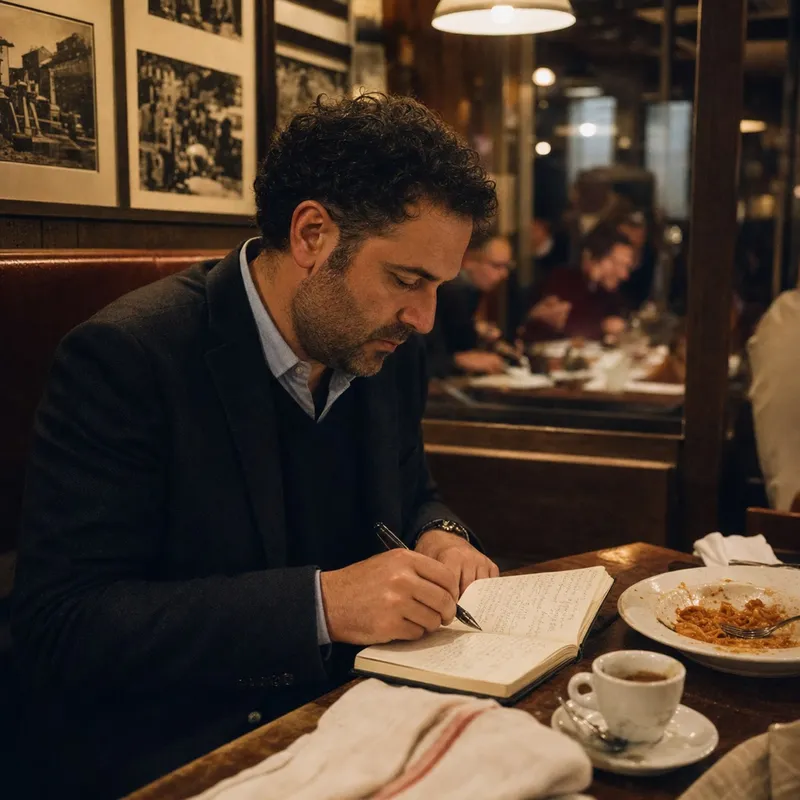
I was sitting across from a three-site operator in the Northern Quarter when the CGA number hit my phone. We were doing the kind of conversation I have a lot lately — a calm, almost clinical walk through her March P&L, the kind of meeting where the GP percentage is fine and the wage line is the entire story. She slid her phone across the table without saying anything. I slid mine back. Same headline. Same screenshot. Same flat look.
Per CGA for NIQ’s Business Confidence Survey, “a mere 14% of businesses exhibit optimism” about the year ahead — the lowest reading the index has produced in two years. And here is the part that should stop anyone reading: that number was collected before April 1. The cliff is still 20 days forward.
The Math Operators Are Doing on Napkins Right Now
Kate Nicholls, chief executive of UKHospitality, put it as plainly as she ever has: “Hospitality is facing a crisis of confidence.” That is not a quote you put out lightly when your job is to keep the trade body’s tone measured. It is a quote you put out when your members are calling you.
Here is what is landing on April 1. Employer National Insurance Contributions go from 13.8% to 15% — a 1.2 percentage point jump that sounds small until you run it across a payroll. Worse, the threshold at which employers start paying NICs drops from £9,100 to £5,000. That second move is the one operators keep underestimating, because it reshapes the economics of part-time and split-shift labour, which is most of the front of house in this country.
Stack the National Living Wage increase on top. Then stack the Employment Rights Bill changes that are still being drafted. The Ankura analysis pegs the combined hit at a level that is not survivable on existing labour models for a meaningful slice of the independent sector. My client in Manchester is not an independent — she has three sites and a head office — and she is still pulling forward decisions she had penciled in for Q3.
Why the April Cliff Is Actually an AI Forcing Function
Here is where I am going to be contrarian, because the trade press coverage is uniformly grim and I think it is missing the underlying shift. The April 1 cliff is not just a labour cost shock. It is a forcing function for the operational technology decisions that the industry has been deferring for three years.
I have watched operators sit on AI-assisted scheduling pilots, demand-forecasting tools, automated prep sheets, and till-side voice ordering since 2022. The pitch has been the same the whole time and the answer has been the same the whole time: “Interesting, send me a deck, we’ll look at it after the next quarter.” What changes in April is that the wage line stops being a variable operators can absorb and starts being a variable they have to engineer down. That is a different conversation.
The operators I am talking to this month are not asking whether AI scheduling works. They are asking how fast they can deploy it. They are asking which forecasting tool plays nicely with their existing EPOS. They are asking — and this is new — whether a kitchen display system with prep-time inference can let them run a 14-cover lunch service with one less commis. Six months ago that question would have been heretical. Now it is the question.
The 14% optimism number is not telling us the sector is broken. It is telling us the sector is finally willing to change shape. I covered the broader pattern in an earlier piece on how labour pressure compresses tech adoption timelines, and the dynamic playing out now is the most concentrated version of it I have seen.
What to Watch Between Now and the Spring Statement
The Spring Statement lands March 26 — exactly two weeks out as I write this — and UKHospitality has been clear in its position paper that without targeted relief on business rates or NIC thresholds for the sector, the April cliff becomes structural. Read Nicholls’ statement on wage increases and budget support carefully; it is laying the groundwork for a specific ask, not just airing a grievance.
A few things I am watching:
The first is whether the Treasury moves on the £5,000 NIC threshold for hospitality-coded employers. Unlikely, but the trade body is pushing.
The second is whether the larger groups — the ones with capital and a tech budget — start publicising their AI deployments. Right now those rollouts are happening quietly because no operator wants to be the first to say “we replaced a shift leader’s scheduling job with software.” After April 1, the calculus on that flips, because the alternative is closing sites.
The third is the independent sector’s response. Independents do not have the capital to deploy AI tools at speed, and they are the ones the CGA optimism number is screaming about. I covered the widening gap between multi-site groups and independents in the post-COVID recovery, and the April cliff is going to accelerate that bifurcation faster than anything we have seen since lockdown.
My Manchester client closed the laptop, paid for the coffees, and said she was going to spend the rest of her week getting quotes on three different forecasting platforms. That is the actual shape of the response. The 14% number is the headline. The pivot to AI is the story.
— Luca covers restaurant operators. Tips: [email protected].
Featured
More
Browse all 494 posts
The Voice Agent Maturity Curve
mise
·12 min read
The Four Margins of a Restaurant
mise
·14 min read
The AI Premium in Hospitality M&A: Broker Story or Real Number?
the bottom line
·9 min read
What the DoorDash/SevenRooms Deal Actually Buys
the bottom line
·11 min read